
The short answer
Cleaning robot ROI in Minneapolis comes from the janitorial hours a floor robot takes off a shift, set against a fixed lease payment that is quoted after a free site assessment. The savings range depends on how much of the floor is open enough to run autonomously, how much of the work the robot realistically covers, and how hard it is to fill janitorial shifts locally. Use the calculator range as a starting point, then confirm it against your own floor plan and crew hours before you decide.
See what a cleaning robot costsRun the numbers in the ROI calculator
Key takeaways
- The return comes from janitorial hours the robot takes over, not from a headcount cut.
- Only open, repeatable floor passes are realistic robot work, so the share of the floor matters most.
- Savings are a range set by floor layout, shift timing, staffing gaps and the lease quote.
- Vacancies and turnover make the labor side more expensive, which raises the value of covering routine passes.
- A free site assessment replaces the calculator range with a figure based on your own crew log.
Run the numbers for your site
Auto-detected from your location - we use the real BLS wage here. Not right? Pick your city or state above.
What do you want to automate?
The robot runs the open floor overnight; your crew keeps detail and edges.
What is cleaning robot ROI in Minneapolis, MN?
Cleaning robot ROI in Minneapolis is the comparison between the janitorial hours a floor robot takes over and the fixed lease payment for that robot. It is not one number. It moves with the floor layout, the shift pattern and how hard it is to keep janitorial positions filled.
The math has three parts. The first is the labor hours offset, meaning the hours of janitors and building cleaners type work the robot covers, valued at the local wage for this job from the government wage data on this page. The second is the share of that work a robot realistically takes, since it handles open floor passes and leaves restrooms, trash and spot work to staff. The third is the lease cost, which is quoted after we assess the site.
The calculator on this page is set to this city and returns a savings range. Read that range as a spread of outcomes, not a promise. A precise figure needs your own floor plan and a log of the crew's floor hours, which is what the site assessment produces.
Where in a Minneapolis building does a cleaning robot work?
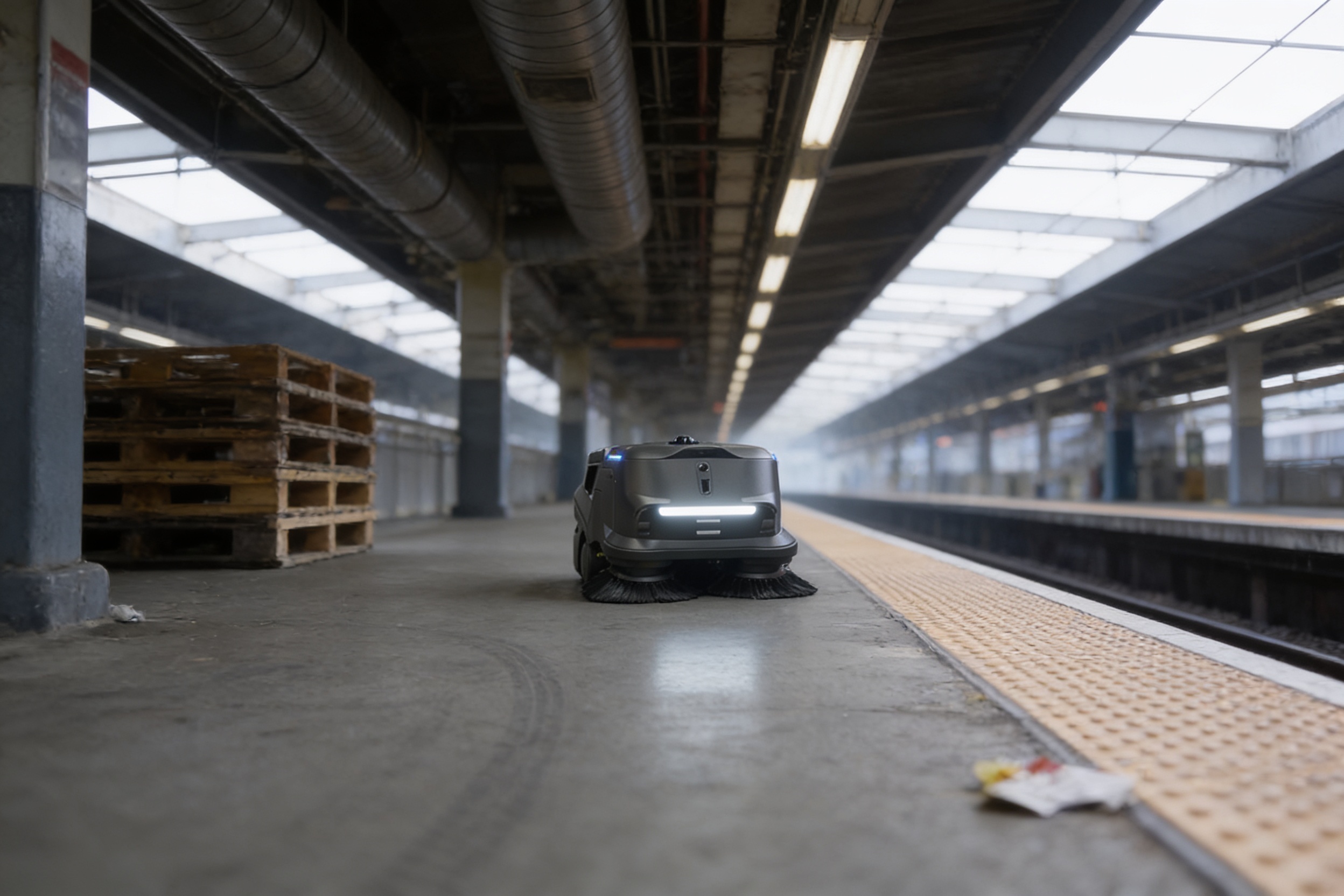
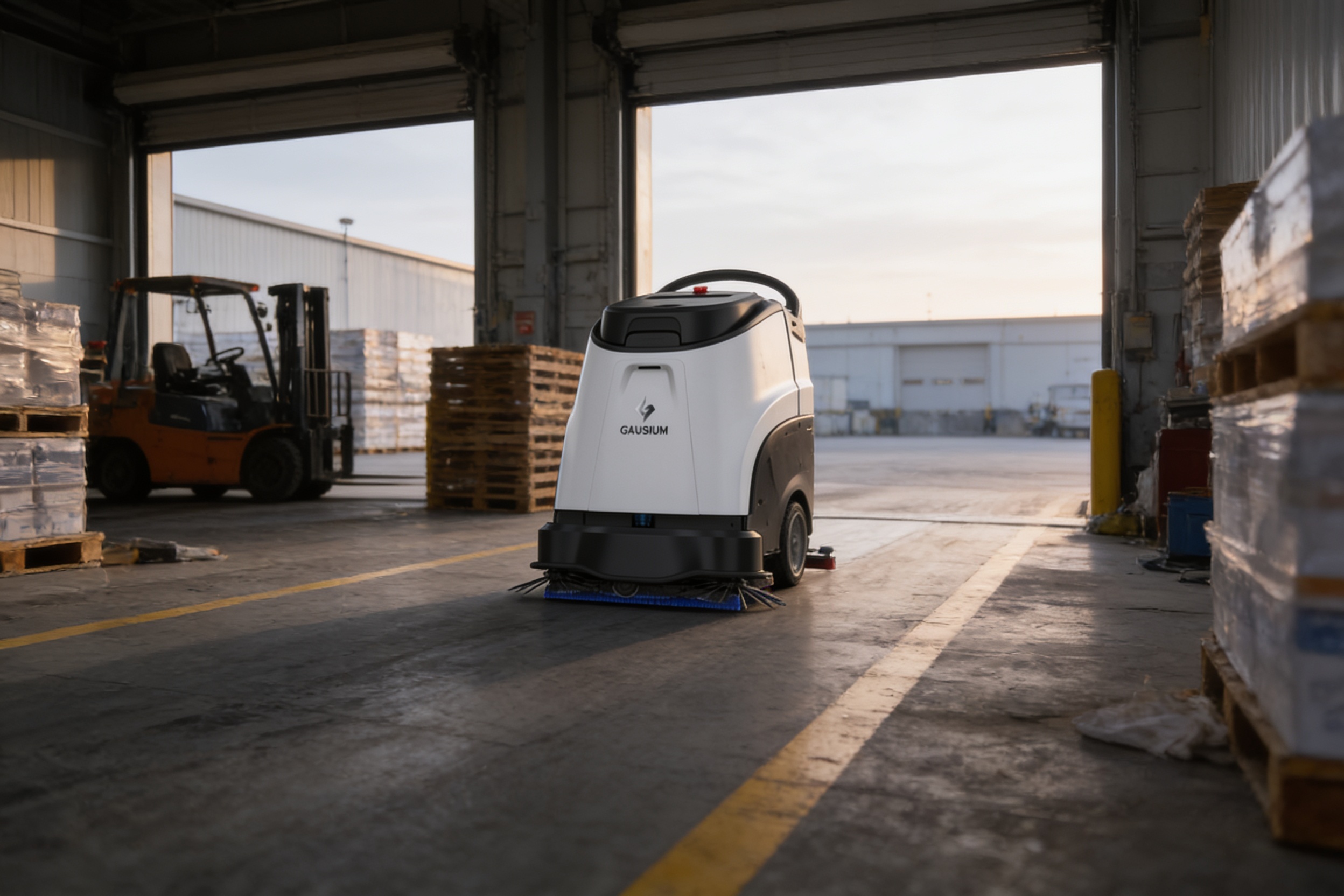
A floor robot is useful where the floor is large, open and repeatable. Long corridors, back-of-house aisles and open retail floors fit well. Spaces with dense furniture, many doorways and frequent obstacles fit poorly, and the site assessment is how we tell them apart.
Minneapolis buildings have a seasonal load that matters. Winter brings snow, salt and grit through entrances, and vestibules and lobby mats take the heaviest traffic. Those edges usually stay with staff, while the robot covers the cleaner interior passes behind them.
The six zones below are the areas we see most often in this kind of work. Each one shows what the robot does and what stays with people.
Median hourly wage, Janitors and Building Cleaners
$4,425
Monthly cost of one full-time worker in Minneapolis, MN, at the median wage plus payroll costs (an estimate, not a quote).
How many janitorial hours does a cleaning robot take off a shift?
We did not find a published figure for how many hours per night or per week this work takes in a building like this, so no hour count on this page can be quoted from a source. The number has to come from a log of the crew's floor hours during the site assessment, which is more useful to you than any average.
Janitorial work spreads across several tasks. Floor passes are the part a robot can take over. Restrooms, trash, spot cleaning and setup stay with people, so the robot takes a share of the total, not all of it. The table shows that split task by task.
Crew size is another gap in public data. We did not find a source giving a typical number of people on this work at one site, so the headcount on this page is a planning assumption. The site assessment replaces it with the count from your building.

Why do staffing gaps and injury rates affect the return?
The government outlook for this job points to steady hiring rather than fast growth. The BLS Occupational Outlook Handbook projects employment for janitors and building cleaners to grow 2 percent from 2024 to 2034, which is slower than average for all occupations. It also projects about 351,300 openings per year on average, and most of them come from replacing workers who leave.
That turnover is the real staffing signal. When most openings are replacements, churn drives hiring, and churn brings training time and gaps on the schedule. A robot that covers routine floor passes does not fill a vacancy, but it reduces how much of the shift depends on a single person being present.
Injury exposure is part of the picture too. BLS reported 21,100 nonfatal injury and illness cases involving days away from work for janitors and cleaners in private industry in 2020, an incidence rate of 191.6 per 10,000 full-time equivalent workers. The 2019 snapshot reported 18,680 such cases and a rate of 157.4. The two snapshots use different occupation labels and periods, so read the change as a direction, not a precise trend.
Firm size shapes the return as well. According to Census County Business Patterns figures republished by a third-party aggregator, there were 67,799 janitorial services establishments with paid employees in 2023, and 61 percent of them had fewer than 5 employees. By our arithmetic from those two figures, the average is about 16 employees per establishment, which hides how small most firms are. A small crew may have few repeatable floor passes to offset a lease.
How do you calculate the savings range?

Start with the hours of janitors and building cleaners type work the robot could take over each week, taken from the site log. Multiply those hours by the local wage for this job, using the government wage data on this page. That gives the labor offset. Add any overtime, open-shift cover and training time that the robot removes from the schedule.
Then apply the share the robot realistically takes. Not every hour in the log is robot work. Restrooms, trash, spot cleaning and winter entry work stay with staff, so the offset applies only to the open floor passes. Run that share at a low value and a high value so you can see how much the answer depends on layout.
Subtract the fixed lease payment and any staff time spent on setup and route checks. The lease payment is quoted after the site assessment and does not change with the hours the robot runs. Payback is the point where the cumulative offset covers the lease payments. The savings range is the spread of those outcomes, not a promise of any one of them.
What changes the number up or down?
A few factors do most of the work. Each one moves the labor offset, the share the robot takes, or the cost side. The checklist below lists them in the order we check them on site.
What are the risks to the return, and how do you avoid them?
The biggest risk is overestimating coverage. Plans that assume the robot can run every floor pass often fail on furniture, doorways and layout changes. The Nassco press release on a 2026 building service contractor study notes that adoption alone does not establish a positive return, and that obstacles, changing layouts and narrow spaces can reduce usable autonomous floor area. Map the site and fix the route before you count any hours.
Adoption numbers are not return numbers. The Nassco release reports that 32 percent of building service contractors plan to adopt robotic floor equipment within 12 months, roughly double the 2025 share, and presents that figure as vendor-reported. The 2025 CMM benchmarking survey found about 68 percent of respondents do not use autonomous equipment, about 17 percent are considering it, and under 9 percent say they do. A 2019 AACEM and ISSA survey of about 23,000 invitees found 27 percent of responding firms reported using autonomous equipment. Use these as context, and build your return on your own site log.
Operational risks are real. A unit that is down during a shift leaves floor work undone, so ask about spare unit coverage, remote triage and on-site dispatch, and how quickly a team responds. Staff acceptance is another risk. A crew that sees the robot as a threat will not clear obstacles or check routes, and the return fades quickly without that help.
How long does it take from assessment to payback?
The sequence runs in stages. First comes the site assessment, when the floor is mapped and the crew logs its hours by task. Next the lease quote is prepared. Then the robot is installed, the route is integrated and tested on the actual floor, and staff are trained on setup, checks and exception cleaning. Go-live support stays on site for the first runs.
Payback is measured against the baseline log, not against a guess. The early runs show how much of the route the robot completes unattended and how much staff still do by hand. Expect partial coverage in the first stage while routes are tuned, because obstacles and layout quirks only show up on the floor. A full return depends on the route settling and the crew working the new split.
Phased deployment keeps the exposure small. Starting with one unit on the main corridors lets you measure the offset before adding more units, and it avoids shutting the building down to make the change. Each added unit is judged on the same log, so the decision to expand rests on your numbers.
How do you get a precise figure from a free site assessment?
A precise figure needs three inputs: a walk or plan of the open areas, a log of the crew's floor hours by task, and the lease quote. Our team handles the assessment at no charge. We map the floor, check obstacles and doorways, and log floor passes with your crew, then recommend a robot that fits the floor rather than reshaping the floor to fit the robot.
The lease payment is quoted as a fixed robot lease payment after the assessment, with the service scope spelled out in the same document. We handle deployment and integration, staff training and nationwide service, including on-site dispatch when a unit needs attention. Ask what is covered before you compare any quote, including what happens during downtime.
Bring your crew log and any staffing records you already have. The assessment turns the calculator range into a figure based on your building, and that is the number to use when you decide. If the labor offset is too small for your floor, we will say so before you sign anything.
Frequently asked questions
Upcoming events in Minneapolis, MN
Put a robot to work in Minneapolis.
We walk your site, learn the job, and recommend the unit that fits. Then we quote the lease, deploy it, and keep it serviced.
Sources
- US Bureau of Labor Statistics, Occupational Employment and Wage Statistics (OEWS May 2024)
- BLS Occupational Outlook Handbook, Janitors and Building Cleaners
- BLS snapshot, janitors and cleaners, 2016 to 2020
- BLS snapshot, janitors, 2015 to 2019
- Census County Business Patterns figures via third-party aggregator
- 2025 CMM benchmarking survey article
- Nassco press release on 2026 building service contractor study
- AACEM and ISSA autonomous cleaning survey report, 2019