Skip to content

Senior-living robots · buyer guide

More care hours in every shift.

Delivery, floor-cleaning, and safety robots that run the repetitive trips and open floors - so caregivers spend their hours with residents, not carts.

All 50
US states served
11+
years in the business
10 min
24/7 triage
24/7
emergency response
No. 01Your world

Senior-living and assisted-care communities use three robot types: delivery robots that run meals, linens, mail, and supplies across a large floor plate; autonomous scrubbers that keep dining rooms and corridors clean; and safety/companion robots that support wellness checks and engagement. The bar is resident safety - quiet, predictable, fall-aware operation in an occupied community. Service Robot Co. picks the unit, finances it, deploys it to your protocol, and services it nationwide.

A senior-living community runs on care hours, and staffing them is the constant problem. Robots take the non-care trips back: a delivery robot runs meal trays, linens, mail, and supplies across the floor plate; an autonomous scrubber keeps dining rooms, corridors, and common areas clean; safety and companion robots support wellness checks and engagement between rounds. What makes senior living different is the resident. The unit shares space with people who use walkers and wheelchairs and who startle, so quiet, slow, predictable, fall-aware behavior is the whole game. The deployment and the resident-safety setup decide the outcome, not the spec sheet.

Pricing and specs on this page are publicly-reported market ranges, framed as estimates, not quotes. We confirm the real numbers for your site in an assessment.

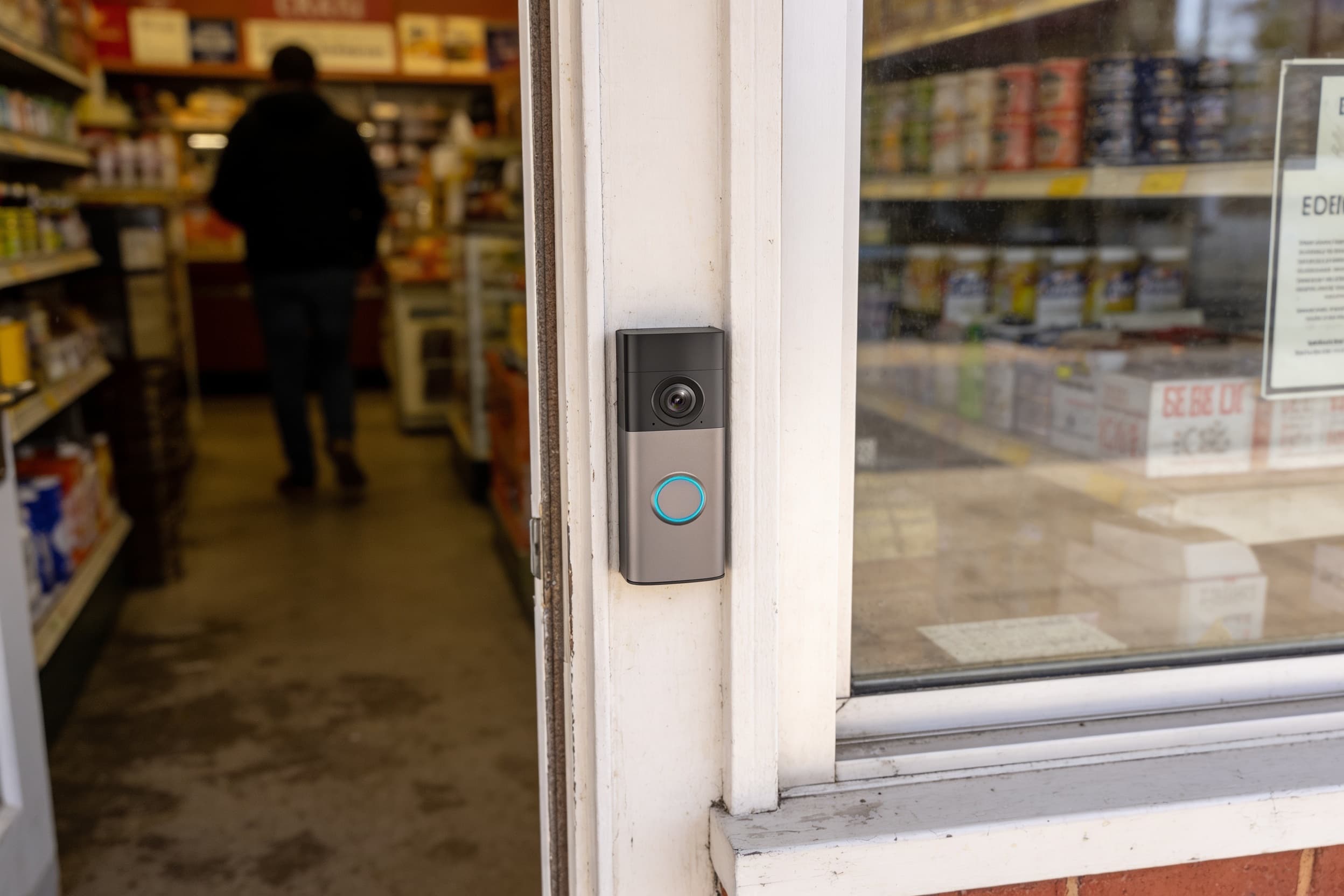
Video doorbell mounted at a small-shop entrance
Shop entrance
No. 02The shift

A shift in your community

A community runs on care hours. Here is where a robot hands the non-care trips back.

  1. Stage 01

    Breakfast service

    Meal trays move from the kitchen to the dining room and residents.

    What the robot takes

    A delivery robot runs the tray loop, calm and slow around residents.

  2. Stage 02

    Morning rounds

    Caregivers make their rounds while supplies need restocking.

    What the robot takes

    The robot takes the linen, mail, and supply runs between rounds.

  3. Stage 03

    Midday common areas

    Dining rooms and corridors need cleaning while the community is active.

    What the robot takes

    A scrubber covers the open floor on a schedule tuned to quiet hours.

  4. Stage 04

    Afternoon engagement

    Wellness checks and check-ins fill the gaps between caregiver rounds.

    What the robot takes

    Companion units support reminders and engagement, never replacing care.

  5. Stage 05

    Evening reset

    The community settles and the floors get their full pass.

    What the robot takes

    The scrubber runs the corridors so housekeeping keeps the detail work.

Field notes

Cited industry data · no house numbers

$21B

The commercial cleaning-robot market by 2030, tripling on ~24% annual growth.

Grand View Research, 2024

45-55%

Labor share of a commercial cleaning contract.

Level CFO benchmark, 2026

50%+

Two in five cleaning contractors run annual staff turnover above fifty percent.

Cleaning industry survey, 2026

No. 03The crew

The crew that works here.

Each one bought or leased, deployed by us, and backed by RoboCare™.

See the lineup
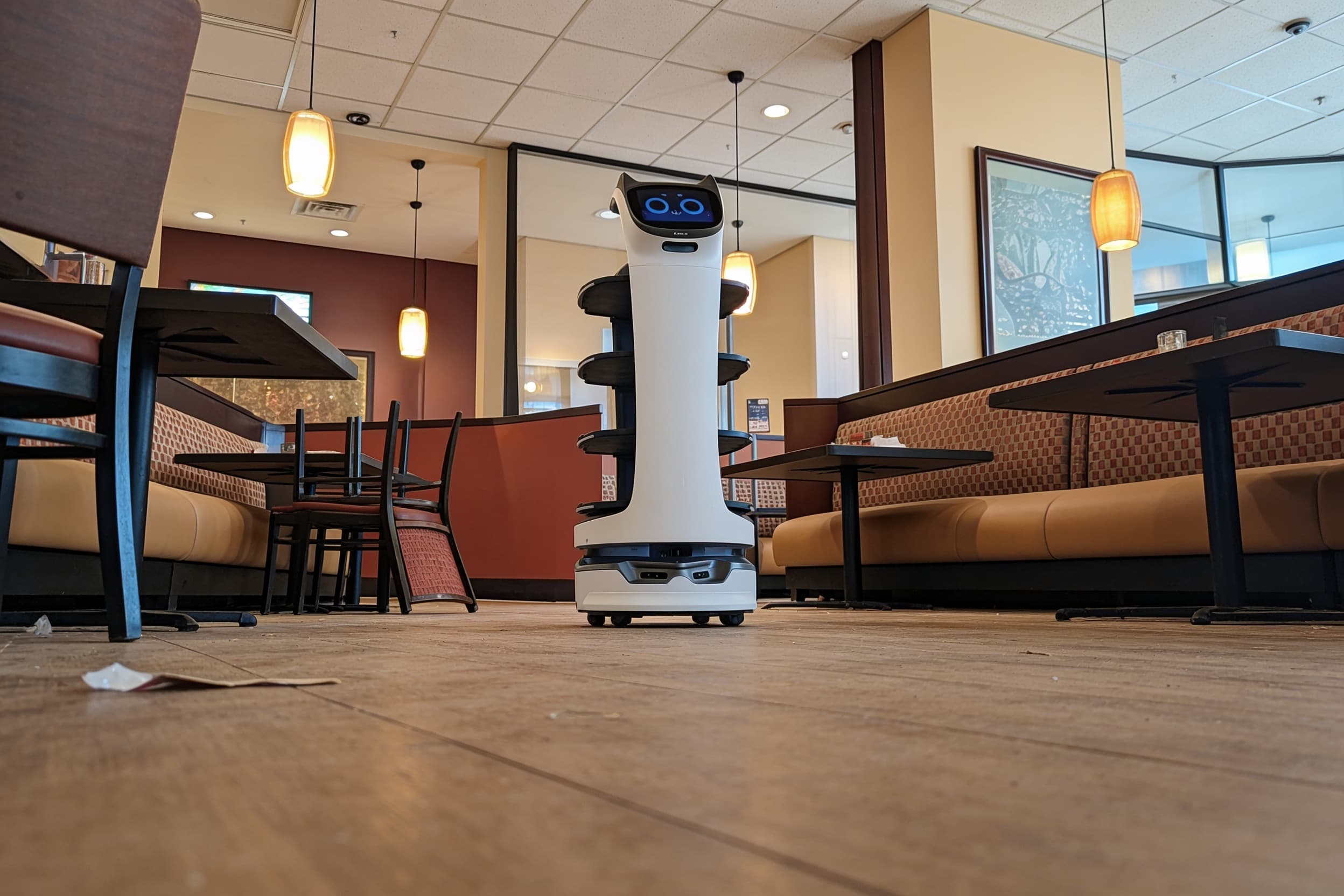
  1. Delivery robot in an empty restaurant dining roomDelivery robotsAutonomous indoor delivery for restaurants, hotels, hospitals, and offices.
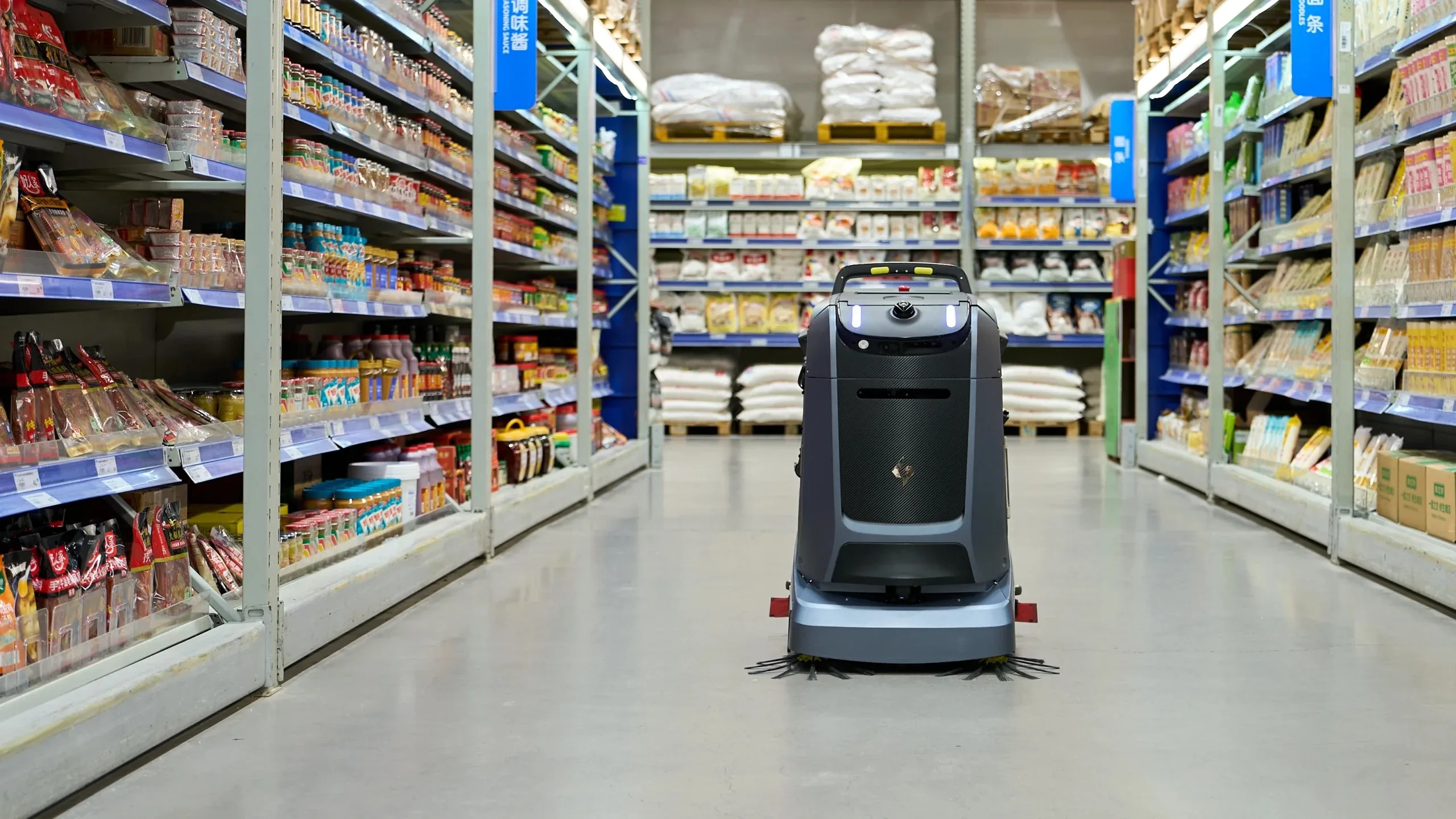
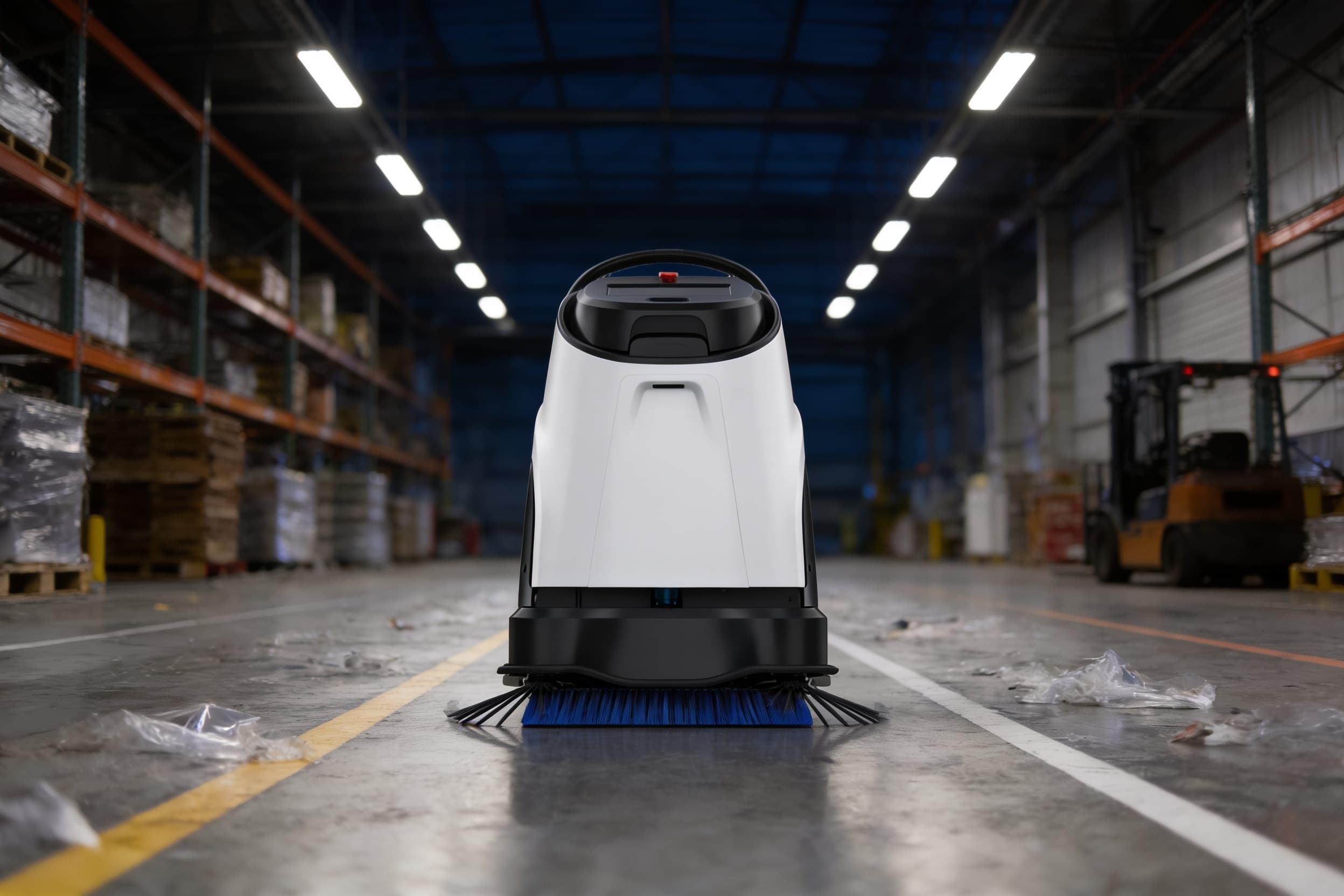
  2. Large-area scrubber in a distribution-warehouse aisleCleaning robotsAutonomous floor scrubbers and vacuums for large commercial spaces.
  3. And moreThe full lineup, from scrubbers to humanoids, every one serviced nationwide.
No. 04The site survey

What decides whether it works.

The things we check on a walkthrough, before anyone talks about robots.

  1. 01
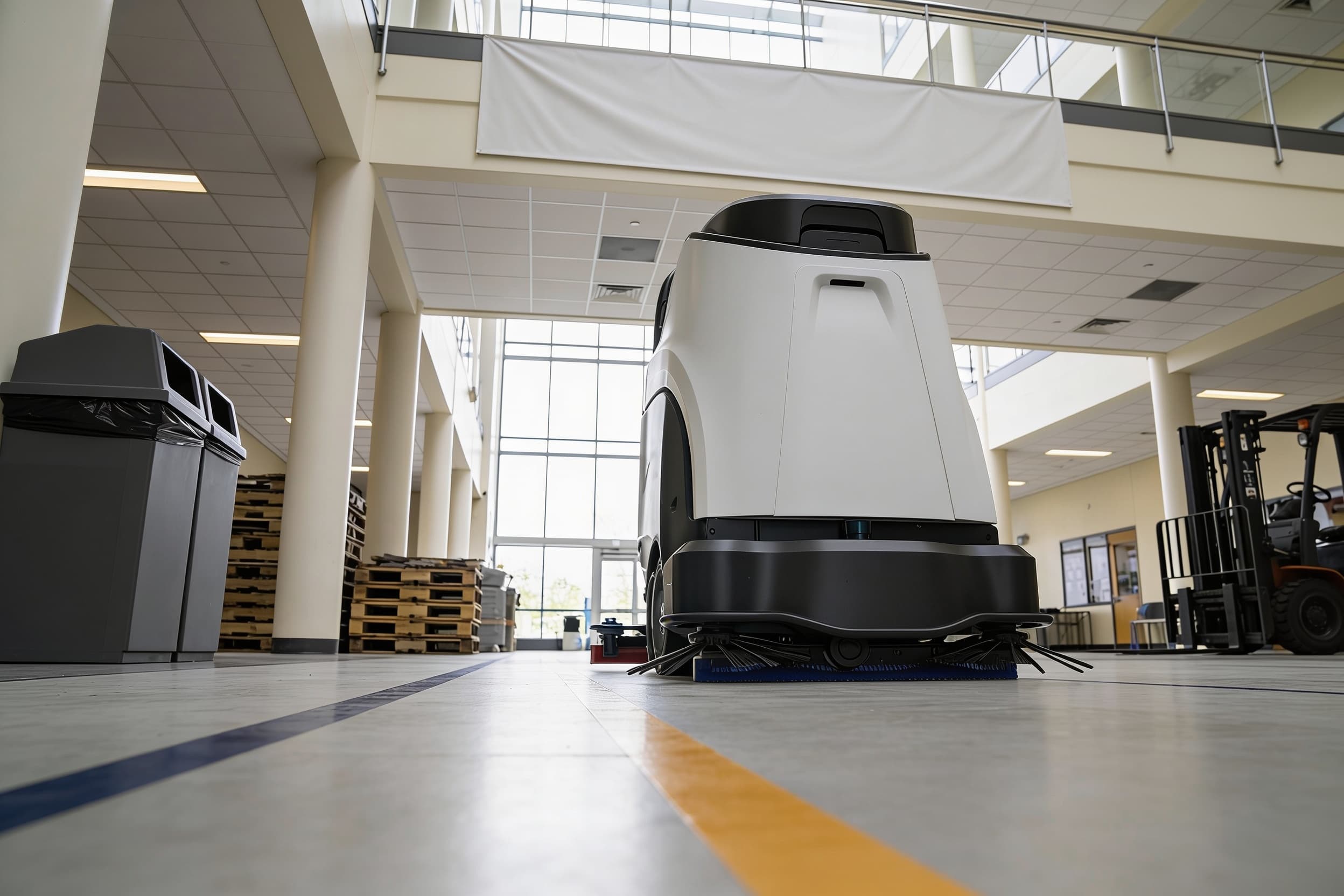
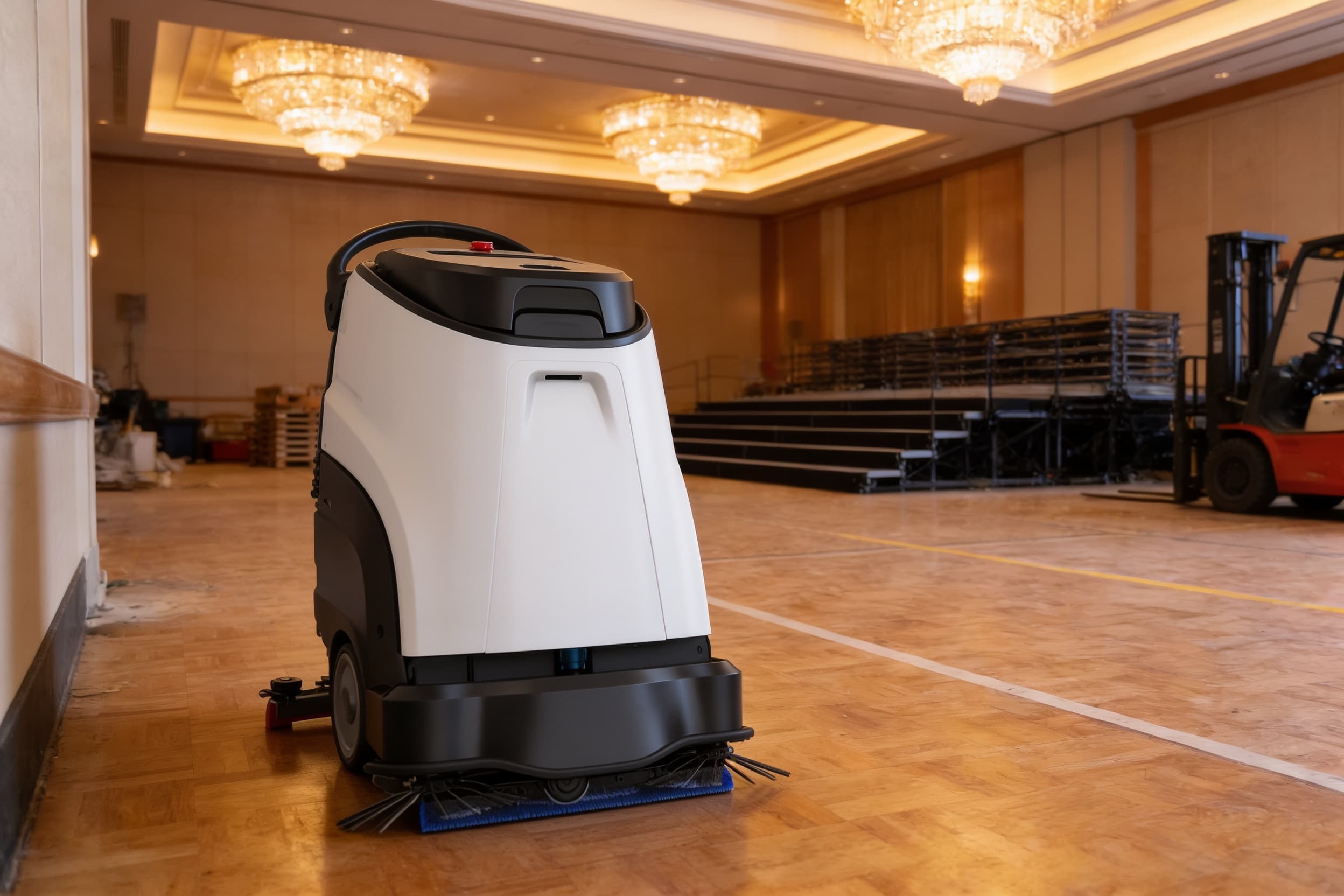
    Floor-scrubbing robot in a ballroom, generated illustration

    The corridors

    Walkers and wheelchairs need a wide, calm berth. If the halls cannot give one, resident safety comes first.

  2. 02
    Floor-scrubbing robot in a university atrium, generated illustration

    The common areas

    Lobbies and lounges are where residents and families judge the community. A compact unit keeps them during quiet hours, without a crew underfoot.

  3. 03
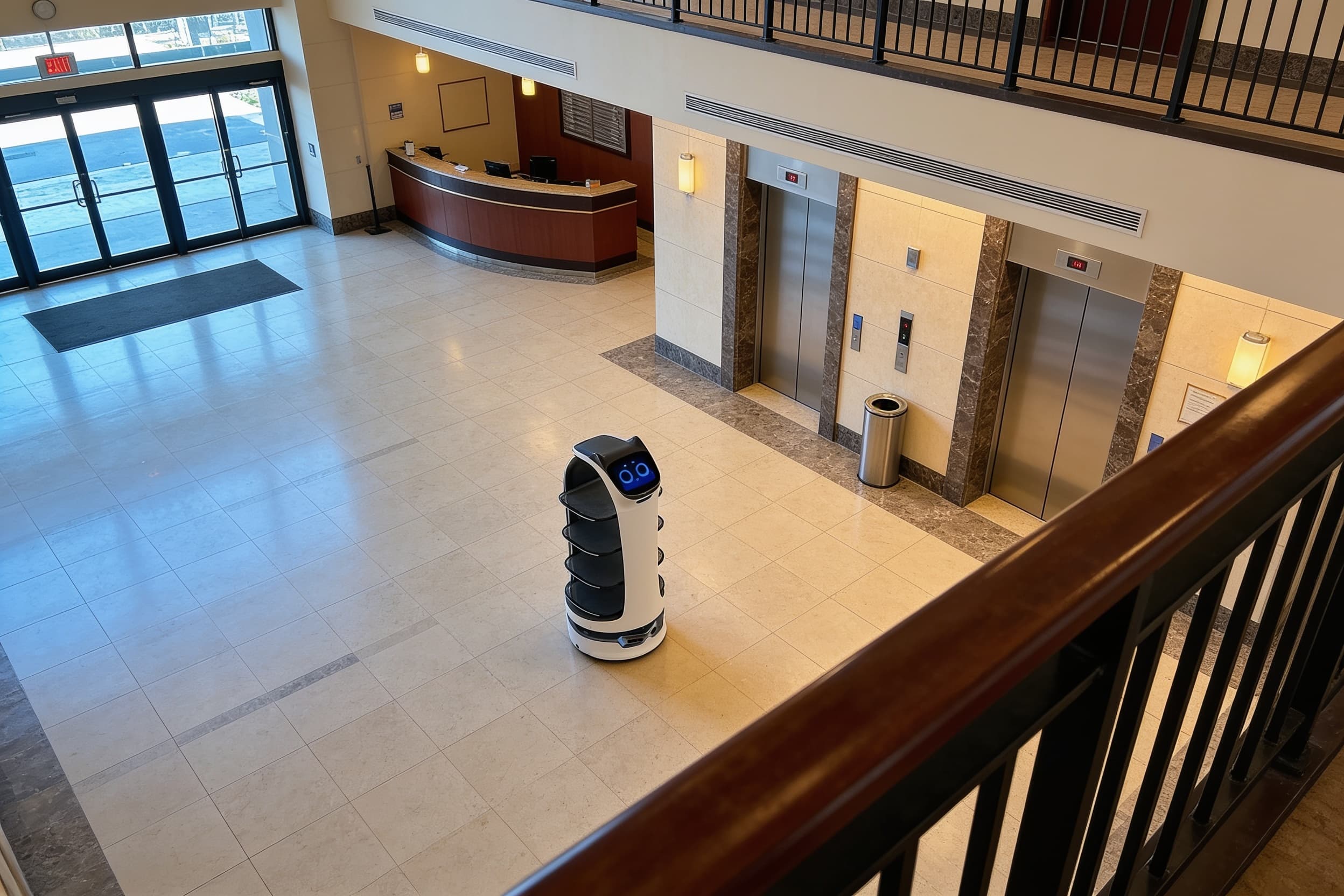
    Delivery robot in a hotel lobby near the elevators

    The meal runs

    Trays move from the kitchen three times a day. A tray-carrying robot takes the loop at a resident-safe pace, and caregivers load it between rounds.

No. 05Up close

A closer look.

Floor-scrubbing robot in a ballroom, generated illustration

In senior living, resident safety is the spec

Every other vertical optimizes a robot for throughput; senior living optimizes it for calm. The unit shares space with residents who may use mobility aids, who startle easily, and who move in ways a warehouse robot’s navigation was never tuned for. So the deciding requirements are quiet operation, slow and predictable motion, a wide berth around people, and reliable detection that yields rather than negotiates. A robot that is fast and efficient but unsettling in a resident corridor is the wrong robot, no matter how good its delivery numbers look.

This is why the deployment matters more here than almost anywhere. Speed and stop zones tuned to a community, not a loading dock; routes that avoid the most congested resident areas at the busiest times; staff trained on how the unit behaves; and a clear local owner for loading and charging. We treat resident safety as the spec for the install - and we will tell a community honestly when a space or a workflow is not ready for an autonomous unit.
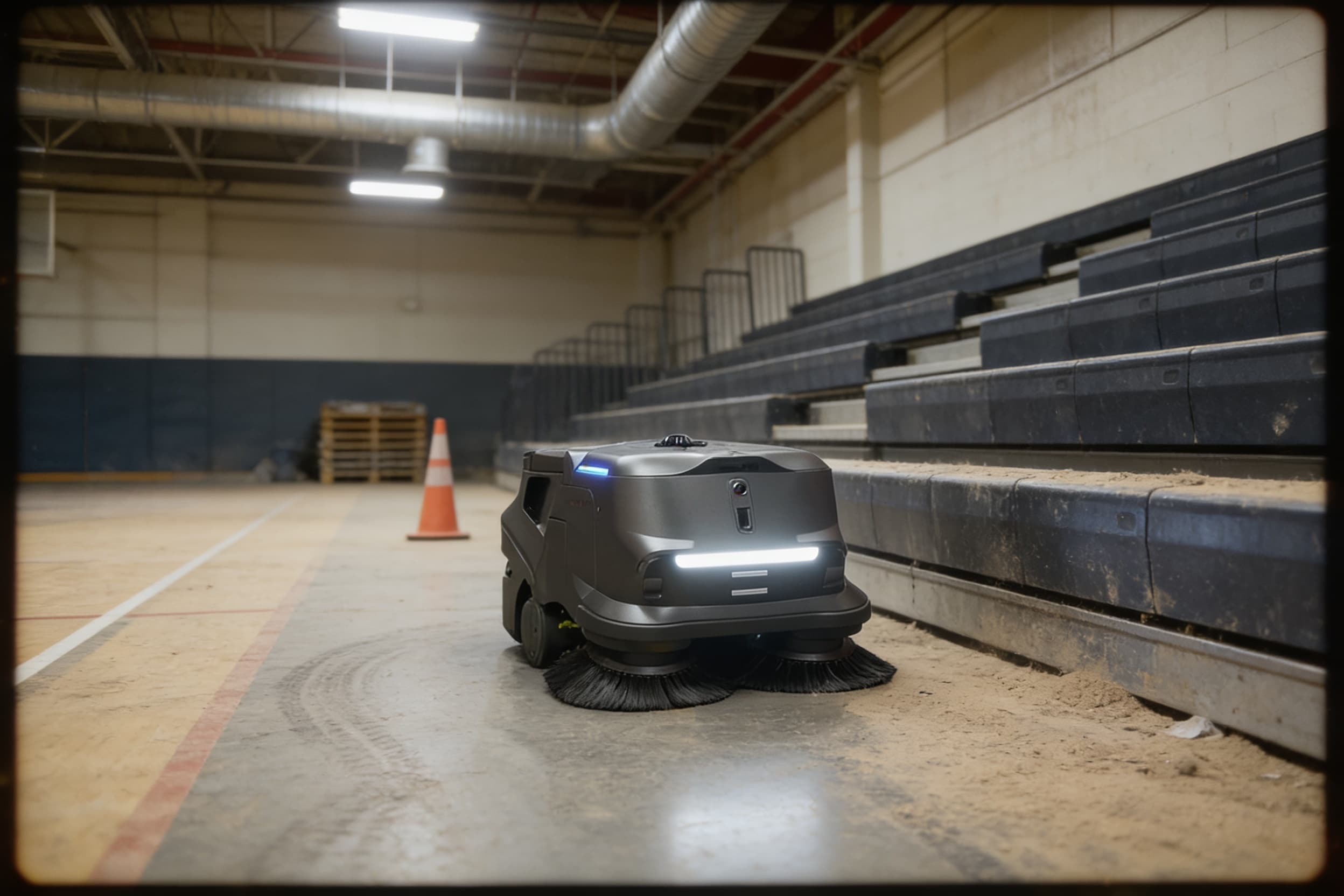
A compact sweeper covering a recreation-hall floor near the bleachers

Buy vs. lease for senior living

Senior-living operators often lease because care budgets do not absorb a fleet of machines easily and a robot that fails in a resident community cannot sit idle. A financed lease turns it into a monthly payment, with RoboCare™ covering support and service - delivery units around ~$335–$550/month, scrubbers around ~$600–$2,000/month. A larger community or a multi-site operator with steady utilization may buy outright once a model is proven. We surface both, with the per-community math, in a quote.

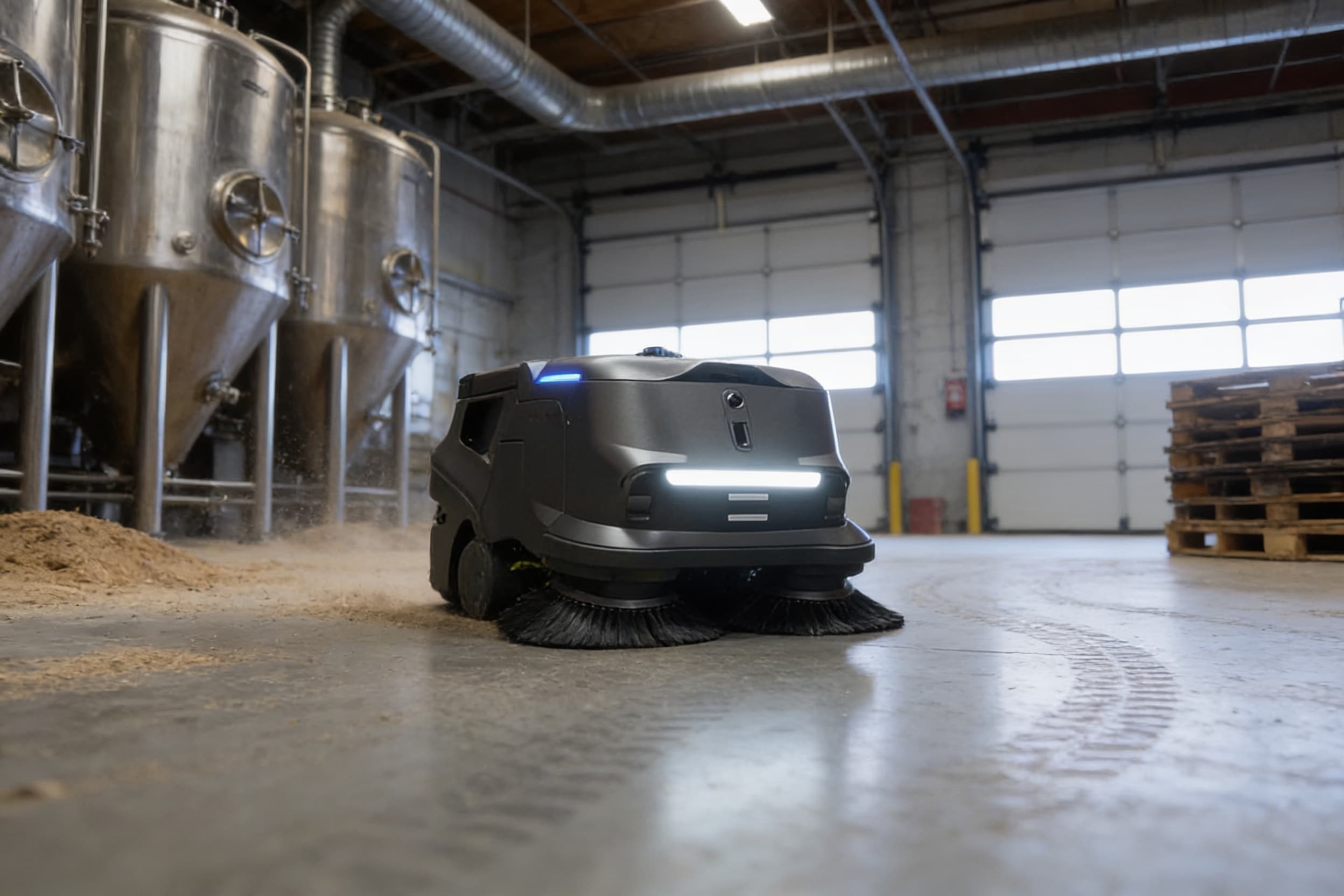
Floor-sweeping robot beside brewery tanks, generated illustration

The labor case for senior-living robots (illustrative)

The payback in senior living is caregiver hours given back to residents - the work the community exists for. A delivery robot on a lease (~$335–$550/month) absorbs the meal, linen, and supply runs so caregivers stay with residents; an autonomous scrubber on a lease (~$600–$900/month for a mid-size unit) runs roughly 4–6× cheaper than a full-time overnight cleaner (~$3,500–$4,500/month all-in) on the open-floor portion of dining rooms and corridors.

The honest framing: a robot never replaces care or a caregiver - it takes the non-care trips and the open floor so the human hours go where they matter. Companion robots supplement engagement between rounds; they are not a substitute for human contact. We build the per-community side-by-side in a quote.

  • Delivery robot on a lease: ~$335–$550 / month - illustrative.
  • Mid-size scrubber on a lease: ~$600–$900 / month - illustrative.
  • Full-time overnight cleaner (all-in): ~$3,500–$4,500 / month - illustrative.
  • Robots take non-care work; they never replace caregivers or human contact.
  • These are illustrative ranges with stated assumptions, not a guaranteed result.
Floor-scrubbing robot in a university atrium, generated illustration

Why a senior-living operator should buy through an integrator, not a bare OEM

A robot OEM ships a community a machine and a login. Tuning it for resident safety, financing it, mapping resident-safe routes, training caregivers, and fixing it fast when it fails is left to a care team that is already short-staffed - and the consequences of getting resident-safety setup wrong are not the same as a dropped plate in a restaurant.

Service Robot Co. is the one vendor for all five, and OEM-neutral about which unit. We pick the right senior-living robot, surface buy-vs-lease financing, deploy it tuned for resident safety, integrate the elevator where needed, train your caregivers, and service it under RoboCare™. You get a resident-safe, working deployment - and an honest answer when a space is not ready for one.

No. 06The requirements

What a senior-living community actually needs from a robot

A senior-living robot shares space with vulnerable residents, so the requirements are about safe, calm, predictable operation - not throughput.

  1. Resident-safe behavior

    quiet, slow, predictable navigation that yields to residents, walkers, and wheelchairs and never startles. This is the single most important requirement.

  2. Fall-awareness and obstacle handling

    reliable detection and a wide berth around people who may move unpredictably; the unit must never become a trip hazard.

  3. Multi-floor where needed

    communities with multiple floors need secure elevator integration; a single-story plate needs a unit that covers a large footprint reliably.

  4. Dignity and engagement fit

    a delivery or companion robot is part of residents’ daily environment; it should feel calm and helpful, not clinical or intrusive.

  5. A staff workflow that fits

    caregivers load, charge, and oversee the unit between rounds; the deployment has to fit how the community actually runs, with a local owner for the basics.

No. 07Compare the options

Senior-living robots by job

The robot categories a senior-living community uses, with representative OEM units and illustrative pricing. Figures are publicly-reported market ranges, framed as "starting around" - not quotes.

JobRobot typeRepresentative unitIllustrative cost
Meal / linen / supply deliveryDelivery robotA delivery robot, a food-running robot, and a guide robot~$16k–$18k buy · ~$335–$550/mo lease
Dining-room & corridor cleaningAutonomous scrubber-vacA mid-size scrubber, a compact combo scrubber, and a large-area scrubber~$22k–$96k buy · ~$600–$2,000/mo lease
Wellness checks & engagementSafety / companion robotCompanion / telepresence unitsQuote-based - varies by program

Illustrative only - publicly-reported ranges, not quotes. Exact pricing depends on configuration, term, community size, and the resident-safety work your site requires. We confirm the real number for your community in a quote; we do not publish any OEM’s exact contract price as a fact.

No. 08The cost picture

Buy it, or lease it.

Buy the robot outright, or lease it through financing. The two side by side, point by point.

Lease it through financing

Keep your capital. RoboCare™ keeps it running.

  • Upfront cost

    A monthly payment through financing.

  • Capital

    Stays free for the rest of the business.

  • Service

    RoboCare™: 24/7 support with 10-minute triage, 3 check visits a year, 12-month warranty.

  • Maintenance

    Preventive maintenance and consumables in Base Care or Full Care.

  • Growing

    Add units as the work grows.

Buy it outright

The machine is yours. RoboCare™ keeps it running.

  • Upfront cost

    The full price, up front.

  • Capital

    Goes into the machine.

  • Service

    RoboCare™: 24/7 support with 10-minute triage, 3 check visits a year, 12-month warranty.

  • Maintenance

    Preventive maintenance and consumables in Base Care or Full Care.

  • Growing

    Add units as the work grows.

Each robot has its own price. We quote the real number for your site after a free site assessment.

Want the full math? The robot pricing guide has real ranges by robot type and the buy-vs-lease breakdown.

Honest fit check

When a senior-living robot is the wrong call

A senior-living robot is the wrong fit when the community or the workflow is not ready:

  • Corridors too narrow or congested for a unit to keep a safe, wide berth around residents and mobility aids - resident safety comes first.
  • A small community with short runs - a caregiver is faster than a robot navigating the gap, with less risk.
  • Multiple floors with no elevator that supports secure integration where the work genuinely needs them.
  • A team or culture not ready to fold an autonomous unit into resident space - the resident experience has to come first, honestly assessed.
  • No local owner for loading, charging, and the daily basics - even a serviced robot needs a local hand.

RoboCare™

Service nationwide.

All 50US states covered
10 min24/7 triage
Regionalservice engineers in every state we service
24/7emergency response
  • 24/7 support.
  • 10-minute technical-specialist triage.
  • Regional service engineers in every state we service.
  • 3 check visits a year.
  • 12-month warranty.
No. 09On site

Where you'll see it working.

Video doorbell mounted at a small-shop entrance
Shop entrance
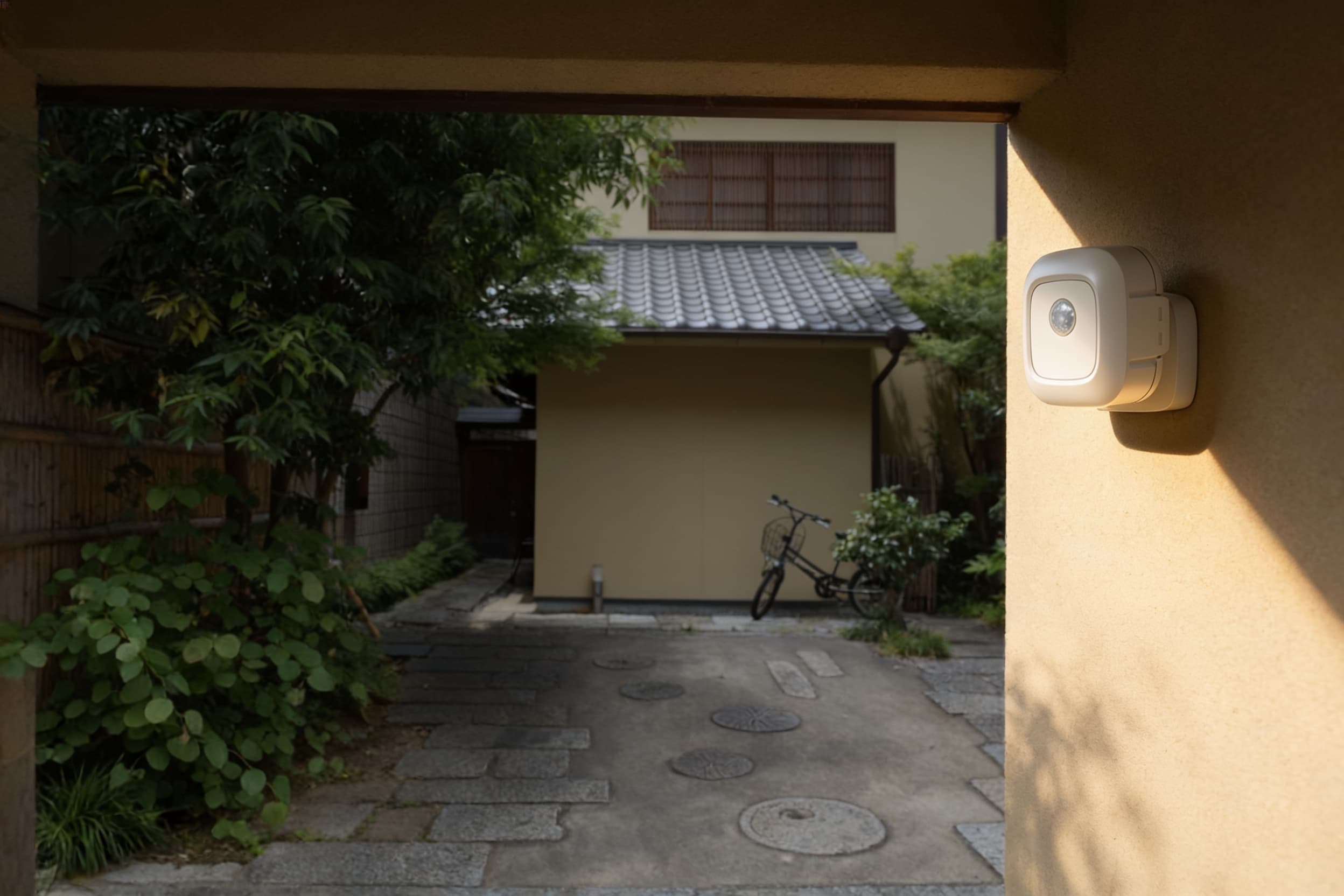
Motion sensor over a garden path
Garden path
Floor-scrubbing robot in a university atrium, generated illustration
University atrium
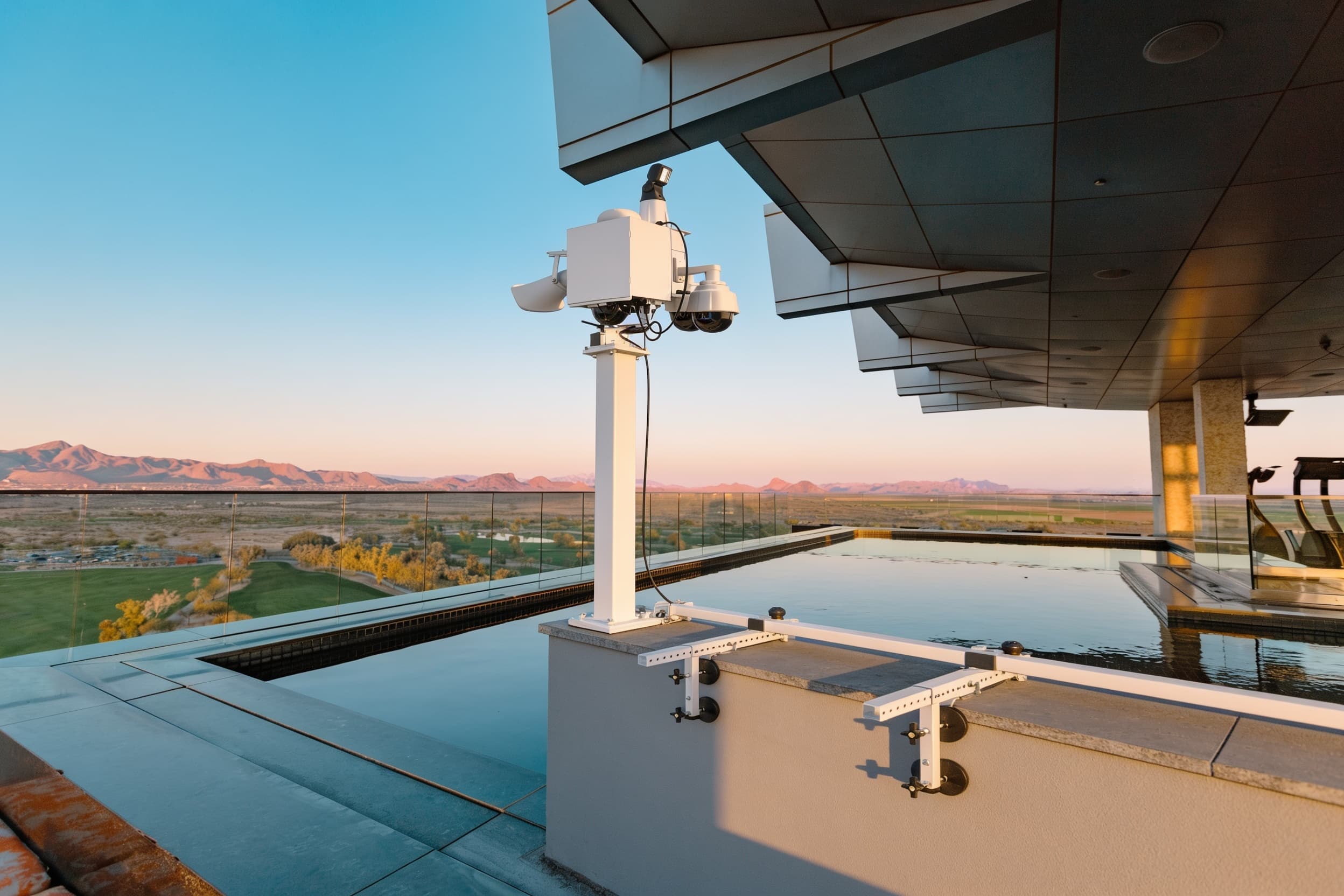
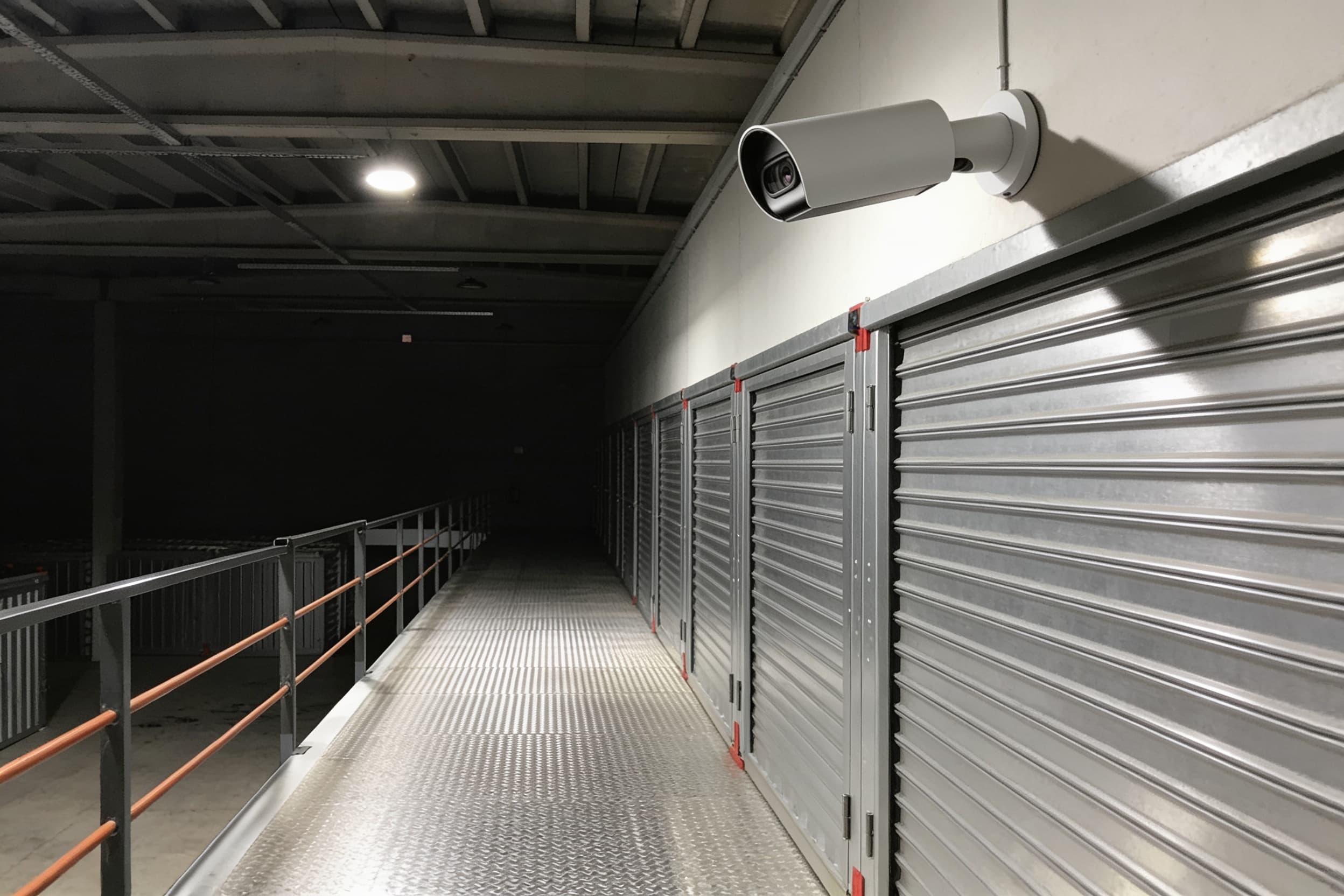
A security camera at the roof corner at blue hour
Roof corner
No. 10Proof

Deployments we can point to.

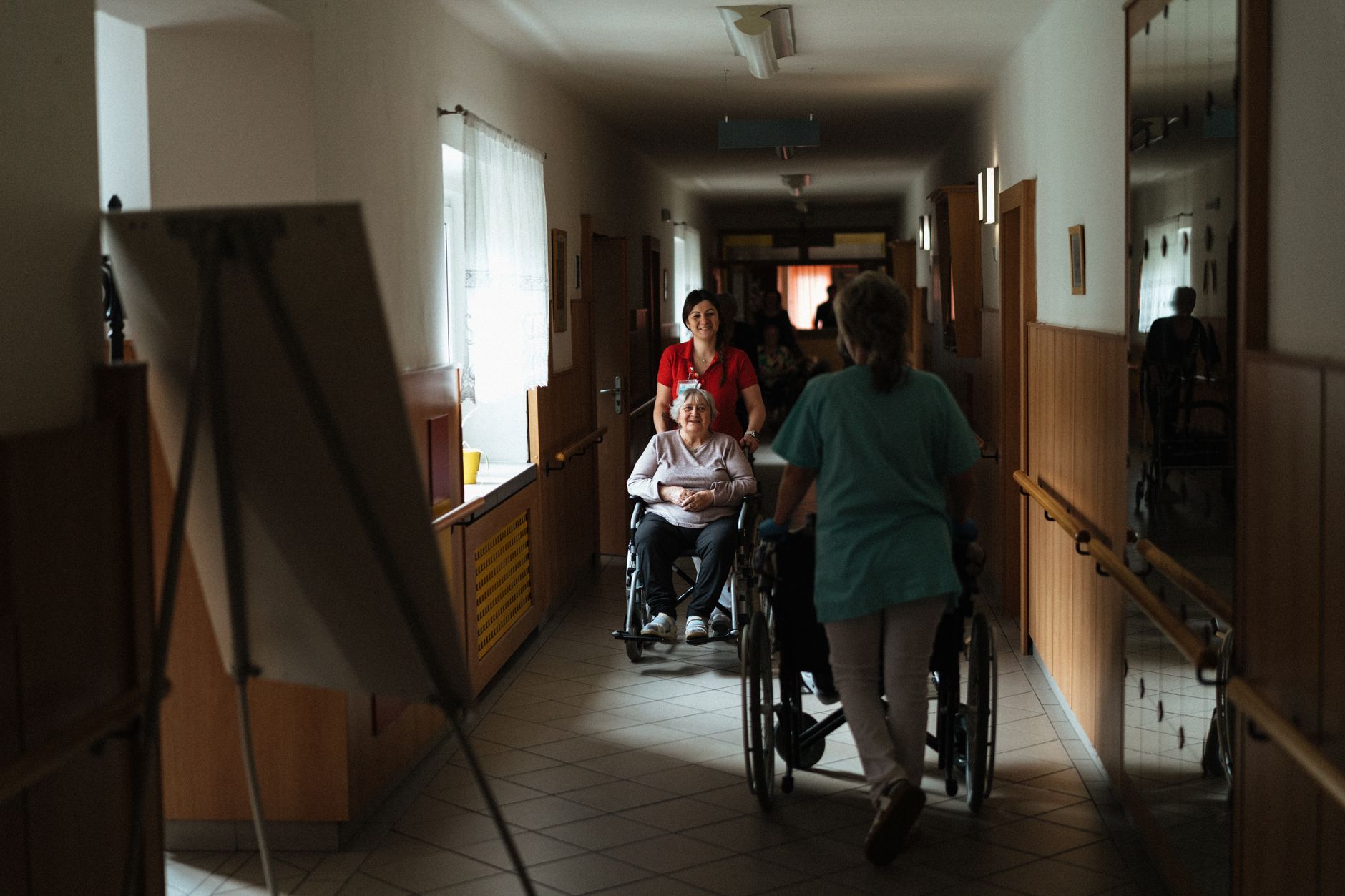
A long interior corridor in a care facility with handrails and room doors along both sides.Lead case study489 hrs Travel cut monthlyHow a Nursing Home Cut Staff Travel 489 Hours Monthly With Delivery RobotsA Japanese nursing home deployed four delivery robots for meals and supplies, logging about 2,970 monthly runs and cutting staff travel time by 489 hours.Read the case study
  1. How a Regional Medical Center Logged 41,510 Autonomous Linen and Waste Deliveries in One YearA regional hospital campus deployed 11 autonomous cart tugs for linen and waste runs, logging 41,510 deliveries and 9,400 miles in one year.41,510 deliveries
  2. How a Tertiary Hospital Cut Drug and Specimen Delivery Times 36% With Mobile RobotsA six-month hospital study compared manual couriers with a 10-robot fleet on scheduled drug and specimen routes, cutting delivery times up to 36% with full verification accuracy.36% faster runs
No. 11From our blog

Reading for the decision you are making.

All articles

October 2026 — December 2027

Events

  1. NOV17–192026

    Las Vegas, NVCleaning & facilities

    ISSA Show North America 2026

    The cleaning industry’s biggest show and a direct buyer floor for Pudu and Gausium.

  2. 2027TBA

    TBACleaning & facilities

    ISSA Show North America 2027

    The cleaning industry’s biggest show and a direct commercial floor-care buyer audience.

    Usually held in November

Common questions

Senior-living and assisted-care communities use three main robot types: delivery robots that run meals, linens, mail, and supplies across a large floor plate; autonomous scrubbers that keep dining rooms and corridors clean; and safety/companion robots that support wellness checks and engagement between rounds. The bar throughout is resident safety.

Want one working for you?

We walk your site, learn the job, and tell you which unit fits, OEM-neutrally, before you commit a dollar. If nothing fits yet, we say so.

Free site assessment. We tell you what actually works before you spend a dollar.