Skip to content

Retail robots · buyer guide

Clean floors, full shelves, open doors.

Floor-scrubbing and inventory-scanning robots that run safely near shoppers - keeping floors clean and shelves accurate without pulling staff off the floor.

All 50
US states served
11+
years in the business
10 min
24/7 triage
24/7
emergency response
No. 01Your world

Retail uses two robot types: autonomous floor scrubbers that keep grocery and big-box sales floors clean - often during open hours, safely near shoppers - and inventory/shelf-scanning robots that drive the aisles capturing out-of-stocks, price errors, and planogram gaps. Scrubber buy prices run roughly $22k–$96k, or ~$600–$2,000/month on a lease. Service Robot Co. picks the unit, finances it, deploys it, and services it nationwide.

A retail floor has two never-finished jobs: keeping the sales floor clean and keeping the shelves accurate. An autonomous scrubber-vac covers the first, increasingly during open hours, running safely near shoppers on a schedule. An inventory robot covers the second, driving the aisles to capture out-of-stocks, misplaced items, price-label errors, and planogram gaps so staff fix problems instead of hunting for them. Retail is a daytime, public, mixed-surface environment, so the fit turns on safe, unobtrusive operation around shoppers and aisles that get reset, plus someone to map the floor and keep the unit serviced. That last part is what a bare-OEM purchase leaves to the store team.

Pricing and specs on this page are publicly-reported market ranges, framed as estimates, not quotes. We confirm the real numbers for your site in an assessment.

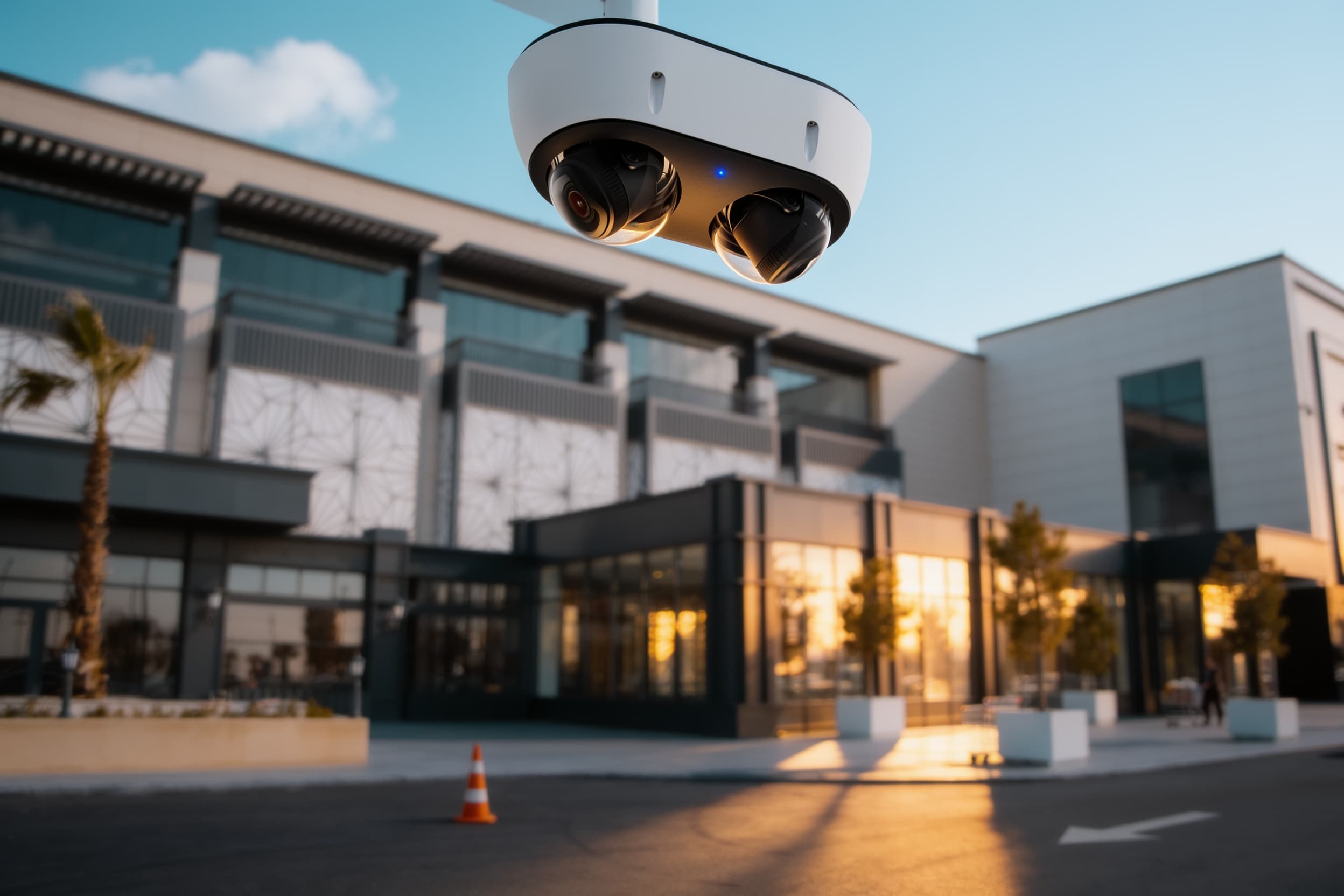
Multisensor camera above a mall entrance
Mall entrance
No. 02The shift

A shift on your sales floor

Two jobs on a retail floor never finish: the floor and the shelves. Here is where each automates.

  1. Stage 01

    Before open

    The sales floor needs a full pass before the first customer.

    What the robot takes

    A scrubber runs the overnight route so the floor opens clean.

  2. Stage 02

    Open hours

    Shoppers track in dirt and spills happen in the aisles.

    What the robot takes

    A daytime-safe scrubber-vac runs on schedule, quietly, near shoppers.

  3. Stage 03

    Restock

    Staff work the backroom and the shelves through the day.

    What the robot takes

    The robot owns the open floor so labor stays on stock and service.

  4. Stage 04

    Shelf audit

    Out-of-stocks, price errors, and planogram gaps hide in plain sight.

    What the robot takes

    A shelf-scanning robot drives the aisles and flags what to fix.

  5. Stage 05

    After close

    The whole floor gets its deep pass before tomorrow.

    What the robot takes

    The scrubber covers the open area; the crew keeps the detail work.

Field notes

Cited industry data · no house numbers

$21B

The commercial cleaning-robot market by 2030, tripling on ~24% annual growth.

Grand View Research, 2024

45-55%

Labor share of a commercial cleaning contract.

Level CFO benchmark, 2026

50%+

Two in five cleaning contractors run annual staff turnover above fifty percent.

Cleaning industry survey, 2026

No. 03The crew

The crew that works here.

Each one bought or leased, deployed by us, and backed by RoboCare™.

See the lineup
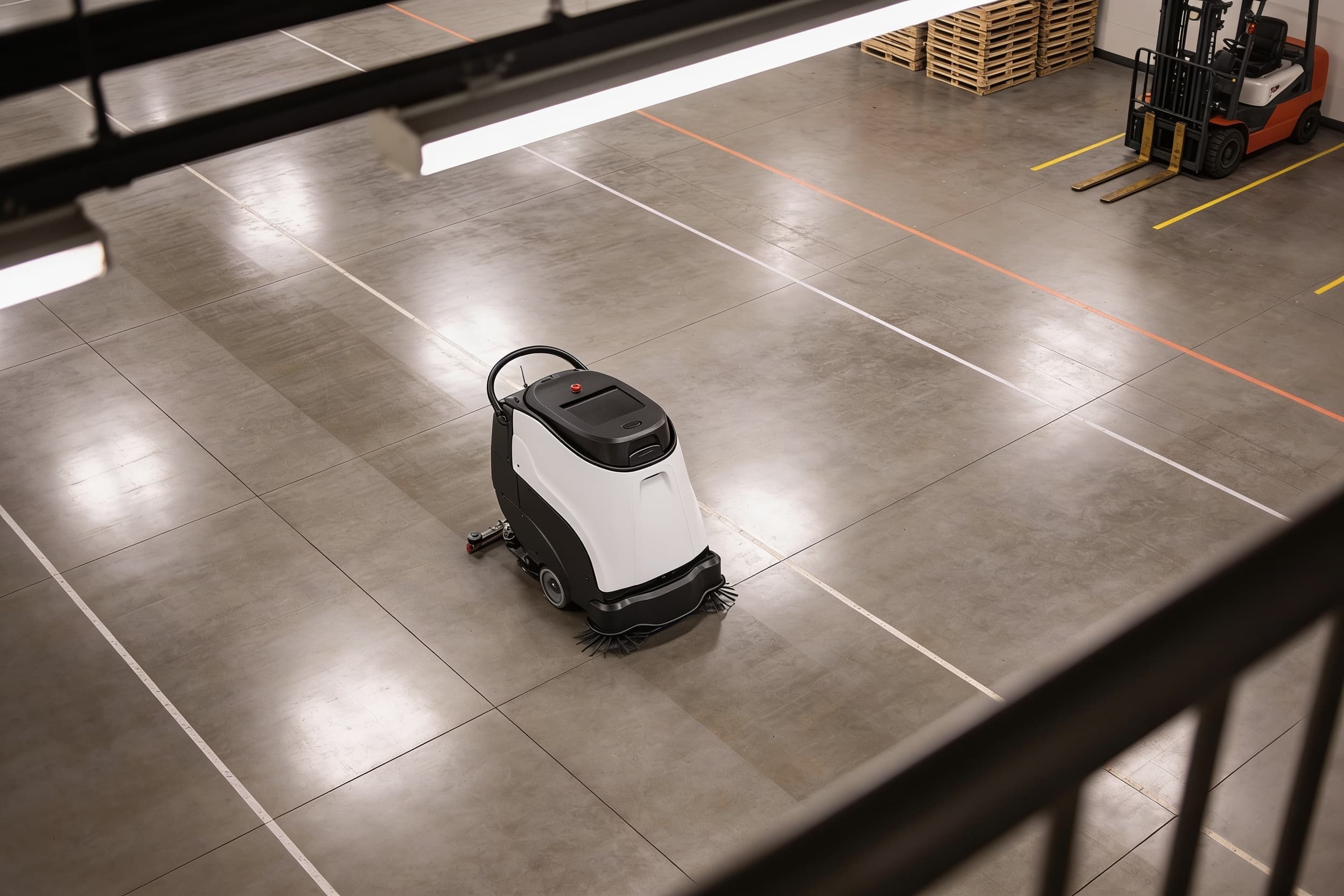
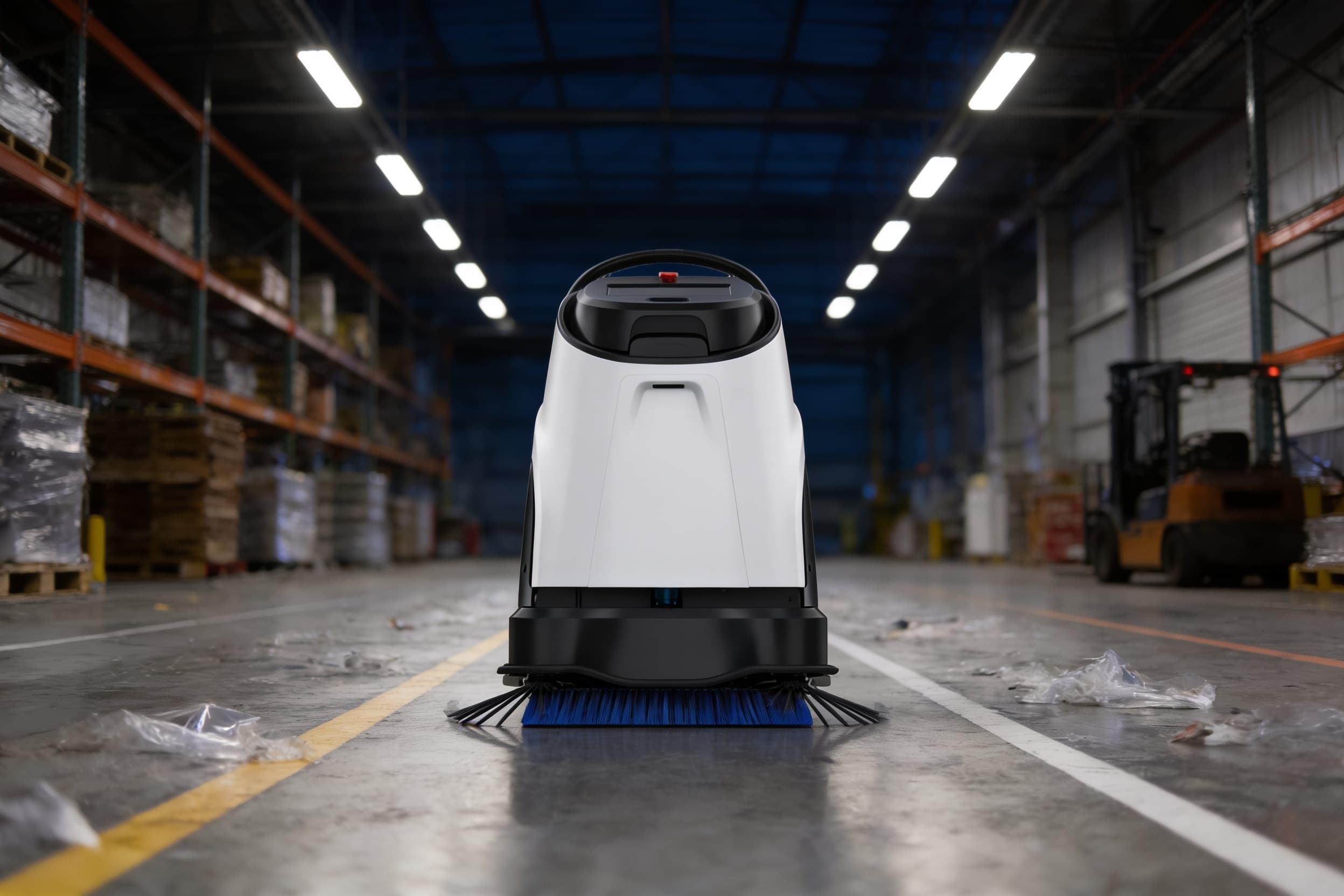
  1. Large-area scrubber in a distribution-warehouse aisleCleaning robotsAutonomous floor scrubbers and vacuums for large commercial spaces.
  2. And moreThe full lineup, from scrubbers to humanoids, every one serviced nationwide.
No. 04The site survey

What decides whether it works.

The things we check on a walkthrough, before anyone talks about robots.

  1. 01
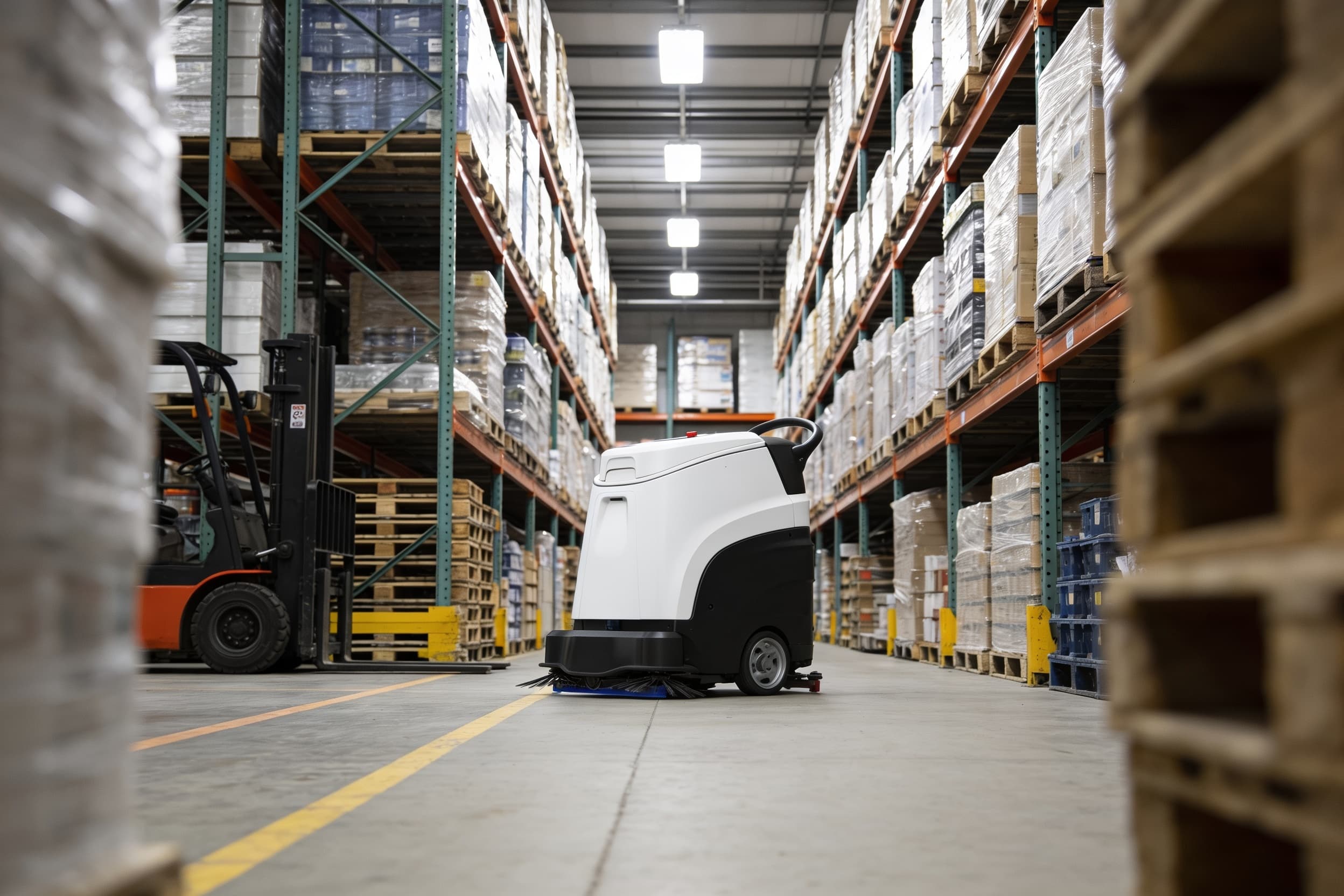
    Large-area scrubber in a warehouse-club stockroom

    Daytime traffic

    The unit runs while the store is open, so predictable behavior around shoppers matters more than coverage rate.

  2. 02
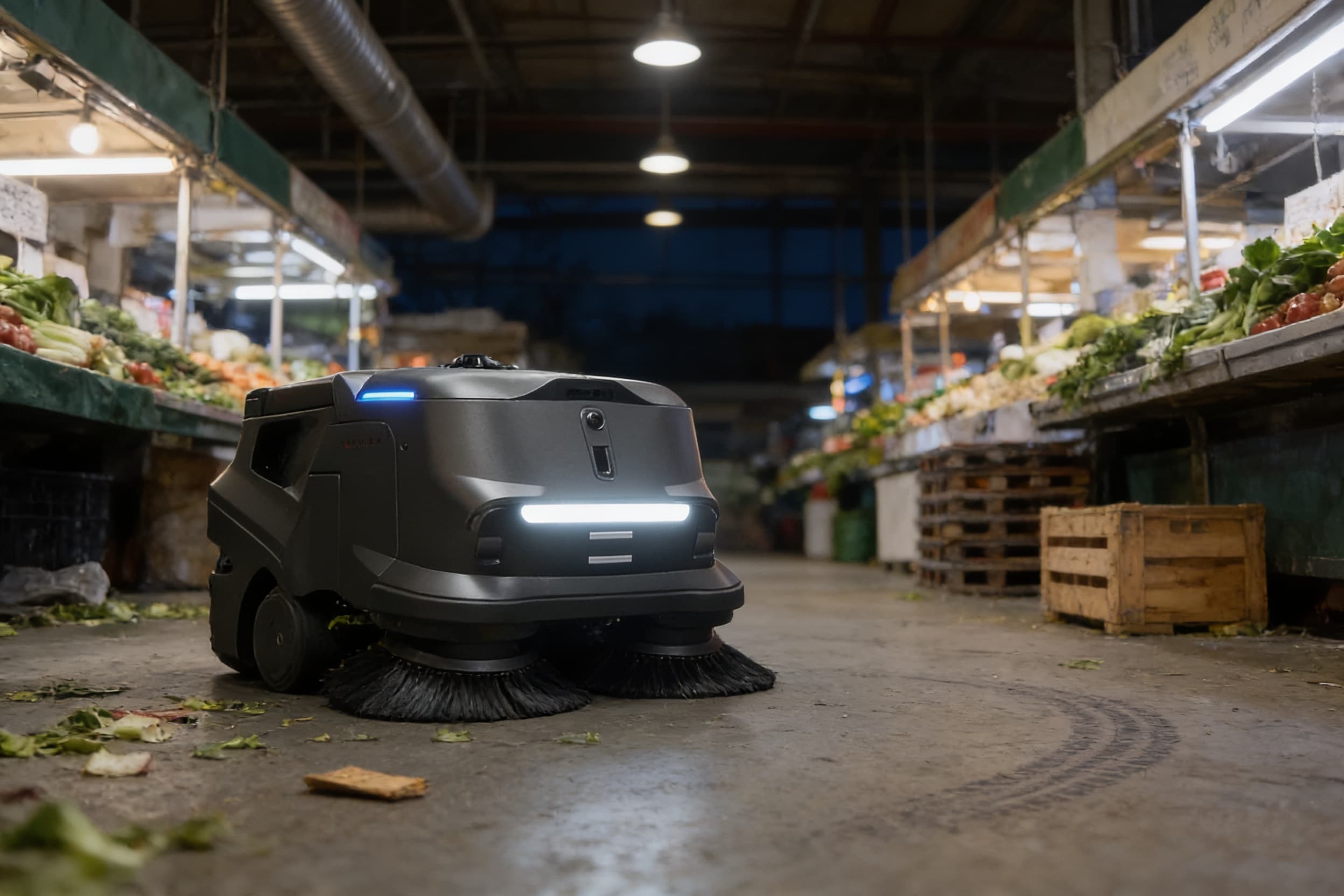
    Floor-sweeping robot in a produce market, generated illustration

    The surfaces

    Polished floor, entrance mats, tile, and the occasional spill are different jobs. The unit has to handle yours.

  3. 03
    A floor scrubber working a back stockroom aisle between pallet racks

    The back of house

    Stockrooms and receiving feed the sales floor. The same machine covers the back-of-house aisles after the front, one map for both.

No. 05Up close

A closer look.

Large-area scrubber in a warehouse-club stockroom

Cleaning during open hours is the retail shift that changed the math

Retail cleaning used to mean an overnight crew. The newer compact scrubber-vacs changed that: they run safely near shoppers during open hours on a schedule, which means a store can keep the floor clean continuously instead of only after close - and skip a chunk of the overnight labor that is hardest to staff. The unit owns the open sales floor; staff handle spills, restrooms, and detail. A mid-size scrubber-vac is the typical fit for a grocery or big-box footprint.

The honest caveat: a daytime cleaning robot has to be genuinely unobtrusive and reliable around shoppers, or it becomes a liability instead of an asset. This is exactly why the deployment - mapping the floor, setting the schedule, validating the behavior around people, and keeping it serviced - matters as much as the machine. A scrubber that freezes in a busy aisle is worse than no scrubber.
A compact sweeper working an indoor market hall after close

Buy vs. lease for retail

Multi-store retailers often lease because it standardizes the fleet across locations on one monthly payment (~$600–$2,000/month per scrubber) with RoboCare™ on every unit - no capital tied up per store. A single high-volume store with steady utilization may buy outright (~$22k–$96k). For inventory robots, pricing is typically a per-store subscription. We surface both, and the per-location math, in a quote.

Floor-sweeping robot in a produce market, generated illustration

The labor case for retail robots (illustrative)

A retail cleaning robot earns its keep on the open sales floor - the repetitive 70–80% of floor area a crew burns out on. A mid-size scrubber-vac on a lease (~$600–$900/month) runs roughly 4–6× cheaper than a full-time overnight cleaner (~$3,500–$4,500/month all-in) on that open-floor portion, and running it during open hours skips a chunk of the hardest-to-staff overnight labor. An inventory robot’s payback is different: it surfaces out-of-stocks and price errors continuously, so staff fix lost-sale problems faster instead of hunting for them.

The honest framing: the robot does not replace the store team, it redeploys it - off the open floor and the aisle-by-aisle audit, onto service, spills, detail, and acting on what the inventory scan finds. We build the per-store side-by-side in a quote.

  • Mid-size scrubber-vac on a lease: ~$600–$900 / month - illustrative.
  • Full-time overnight cleaner (all-in): ~$3,500–$4,500 / month - illustrative.
  • Inventory robots pay back on lost-sale recovery and labor freed from manual audits.
  • These are illustrative ranges with stated assumptions, not a guaranteed result.
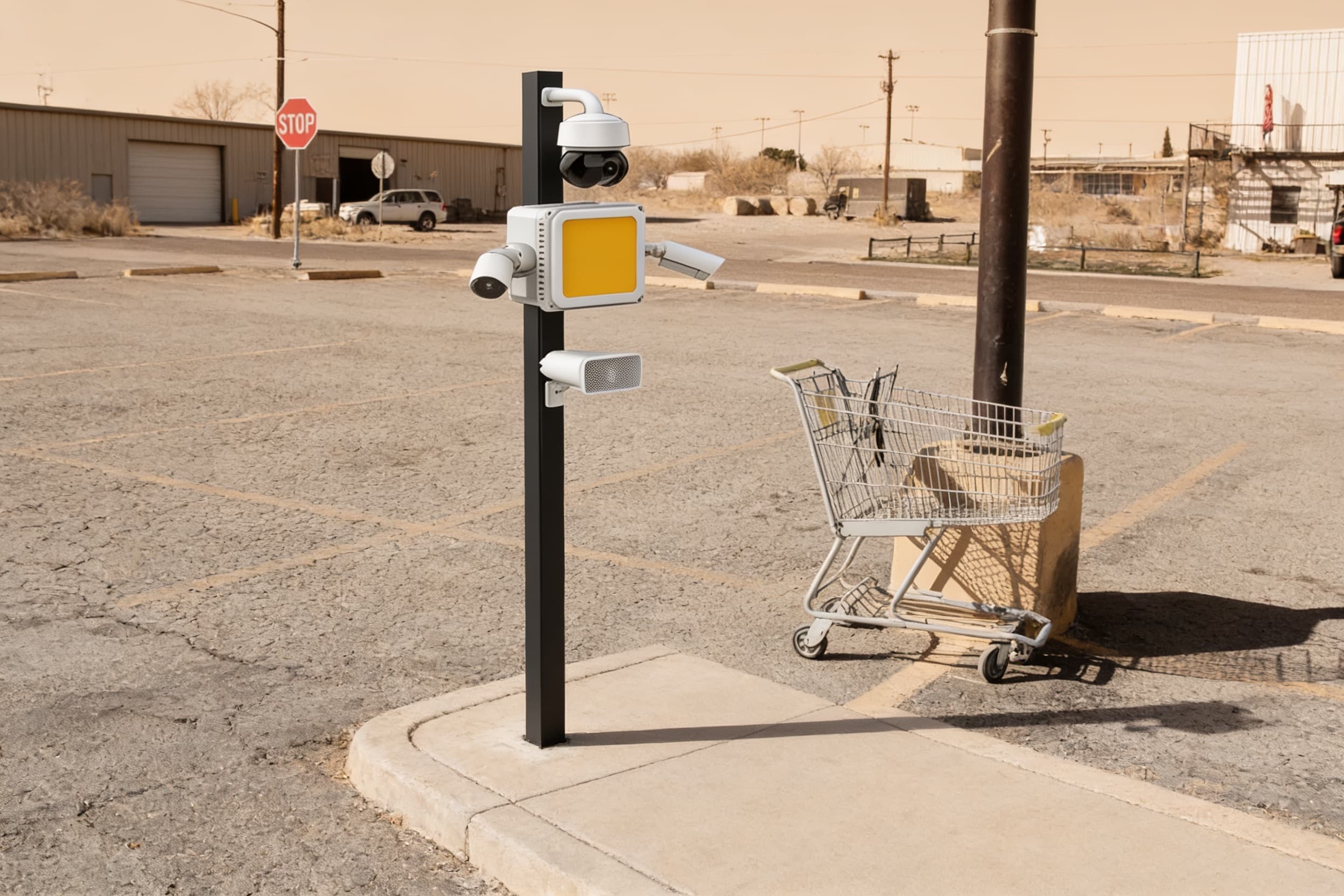
A pole-mounted camera unit at the corner of a retail parking lot

Why a retailer should buy through an integrator, not a bare OEM

A robot OEM ships a store a scrubber and a login - and a multi-store retailer ends up with a different vendor, a different support queue, and a different maintenance story per location. Picking the right daytime-safe unit, financing a fleet, mapping each floor, training each store team, and getting a fast fix when one goes down is left to the retailer to coordinate at scale.

Service Robot Co. is the one vendor for all five, and OEM-neutral about which unit. We pick the right retail robot, surface buy-vs-lease fleet financing, deploy and map each store, train the team, and service the fleet under RoboCare™ - one contract and one number across locations. You get a standardized, serviced fleet, not a different robot problem in every store.

No. 06The requirements

What a retail floor actually needs from a robot

A retail robot works a public, daytime floor, so the requirements are about safe, unobtrusive operation around shoppers - not just coverage rate.

  1. Safe daytime operation around shoppers

    the unit runs while the store is open, so reliable obstacle avoidance, predictable behavior, and a non-intrusive footprint matter more than top speed.

  2. Mixed-surface handling

    polished sales floor, entrance mats, tile, and the occasional spill are different jobs; confirm the unit handles your real surfaces.

  3. Aisle navigation through resets

    shelves get re-merchandised and aisles get reconfigured; the unit (and its map) has to keep up without a re-survey every week.

  4. For inventory robots

    accurate shelf-scanning that feeds your systems (out-of-stocks, price errors, planogram compliance) in a form your team can act on, not a data dump.

  5. A charging dock out of the shopper path

    the unit needs a home base that does not block an aisle or an entrance.

No. 07Compare the options

Retail robots by job

The robot categories a retail floor uses, with representative OEM units and illustrative pricing. Figures are publicly-reported market ranges, framed as "starting around" - not quotes.

JobRobot typeRepresentative unitIllustrative cost
Sales-floor cleaning (daytime-safe)Compact scrubber-vacA compact combo scrubber, a mid-size scrubber, and a large-area scrubber~$22k–$96k buy · ~$600–$2,000/mo lease
Inventory / shelf scanningAisle-scanning inventory robotA shelf-scanning robotPer-store subscription · quote-based

Illustrative only - publicly-reported ranges, not quotes. Exact pricing depends on configuration, term, store count, and region. We confirm the real number for your stores in a quote; we do not publish any OEM’s exact contract price as a fact.

No. 08The cost picture

Buy it, or lease it.

Buy the robot outright, or lease it through financing. The two side by side, point by point.

Lease it through financing

Keep your capital. RoboCare™ keeps it running.

  • Upfront cost

    A monthly payment through financing.

  • Capital

    Stays free for the rest of the business.

  • Service

    RoboCare™: 24/7 support with 10-minute triage, 3 check visits a year, 12-month warranty.

  • Maintenance

    Preventive maintenance and consumables in Base Care or Full Care.

  • Growing

    Add units as the work grows.

Buy it outright

The machine is yours. RoboCare™ keeps it running.

  • Upfront cost

    The full price, up front.

  • Capital

    Goes into the machine.

  • Service

    RoboCare™: 24/7 support with 10-minute triage, 3 check visits a year, 12-month warranty.

  • Maintenance

    Preventive maintenance and consumables in Base Care or Full Care.

  • Growing

    Add units as the work grows.

Each robot has its own price. We quote the real number for your site after a free site assessment.

Want the full math? The robot pricing guide has real ranges by robot type and the buy-vs-lease breakdown.

Honest fit check

When a retail robot is the wrong call

A retail robot is the wrong fit when the store or the floor does not suit it:

  • A small footprint chopped into tight aisles - a person is faster than a robot that spends its run turning and re-docking.
  • Floors that are mostly detail (lots of edges, fixtures, and mats, little open run) - robots own open floor, not corners.
  • Aisles reconfigured constantly with heavy daily resets - re-mapping overhead can outweigh the savings.
  • A single low-traffic store with a cleaner already on staff and no plan to redeploy them - utilization is too low to pay back.
  • No one will own the daily empty/refill and the basics - even a serviced robot needs a local hand.

RoboCare™

Service nationwide.

All 50US states covered
10 min24/7 triage
Regionalservice engineers in every state we service
24/7emergency response
  • 24/7 support.
  • 10-minute technical-specialist triage.
  • Regional service engineers in every state we service.
  • 3 check visits a year.
  • 12-month warranty.
No. 09On site

Where you'll see it working.

Large-area scrubber in a warehouse-club stockroom
Retail stockroom
Floor-sweeping robot in a produce market, generated illustration
Market floor care
Multisensor camera above a mall entrance
Mall entrance
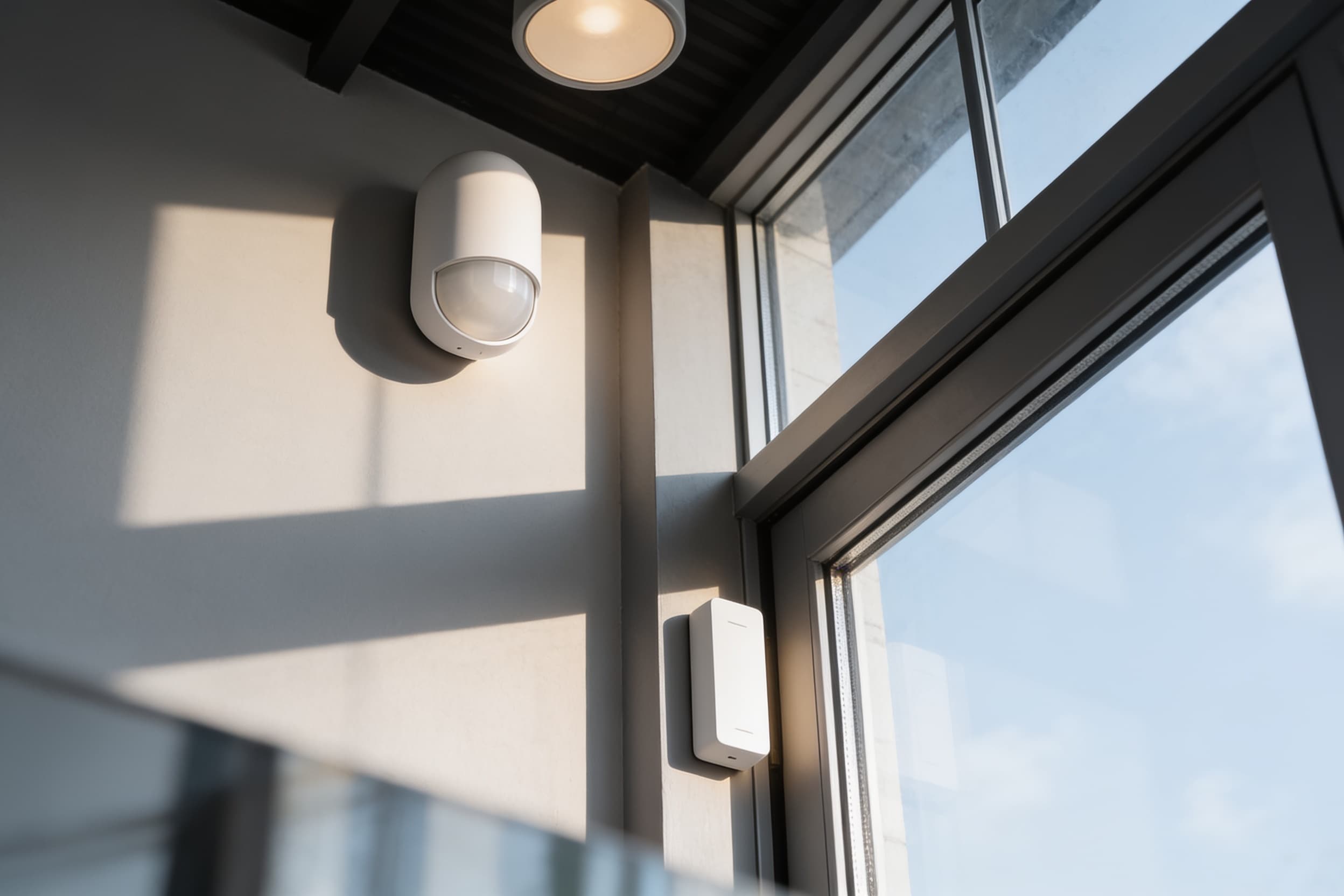
Intrusion sensor mounted at an office window
Window sensor
Building-mounted security camera above a retail service door
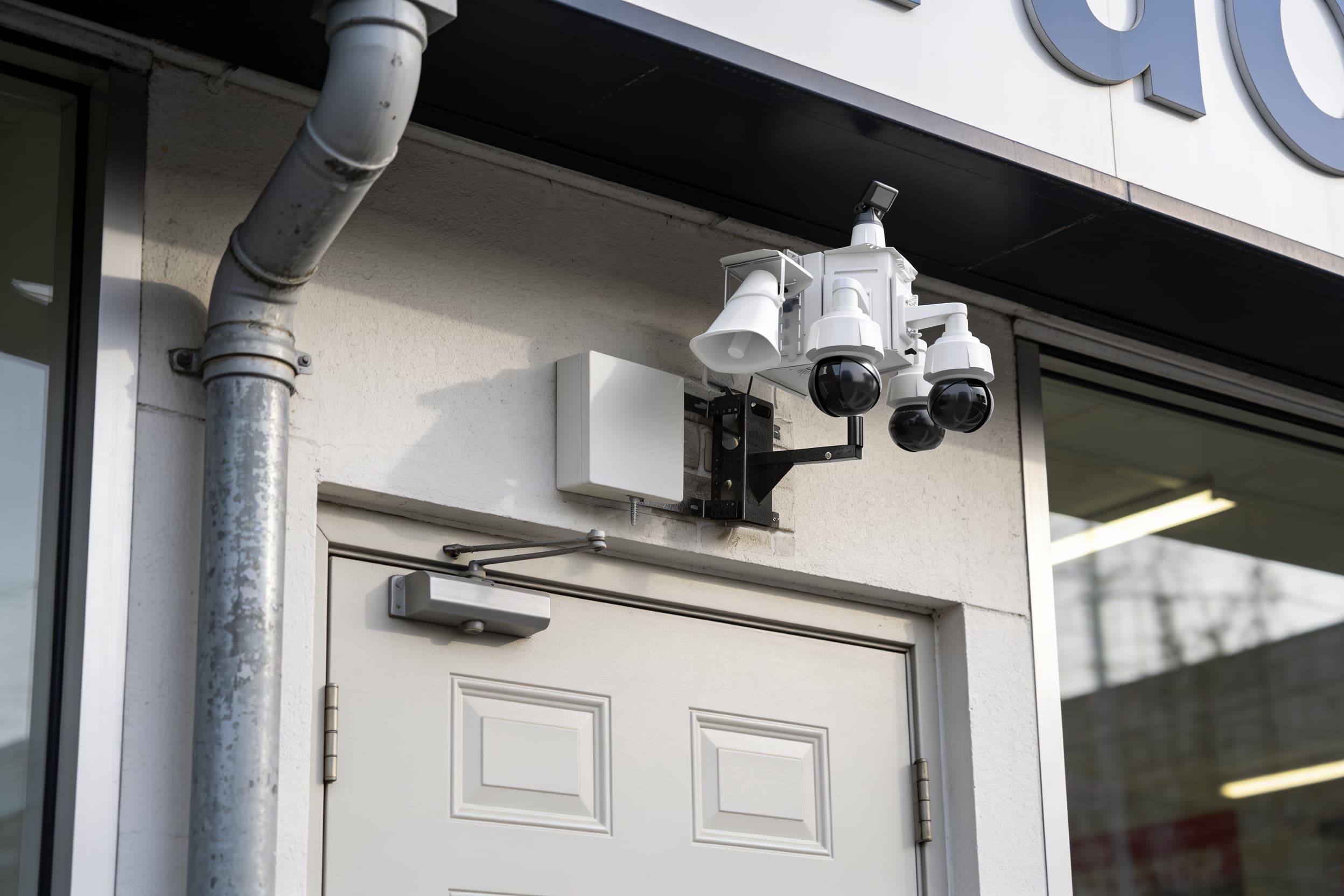
Retail service door
Mobile security unit beside a retail parking-lot walkway
Retail parking
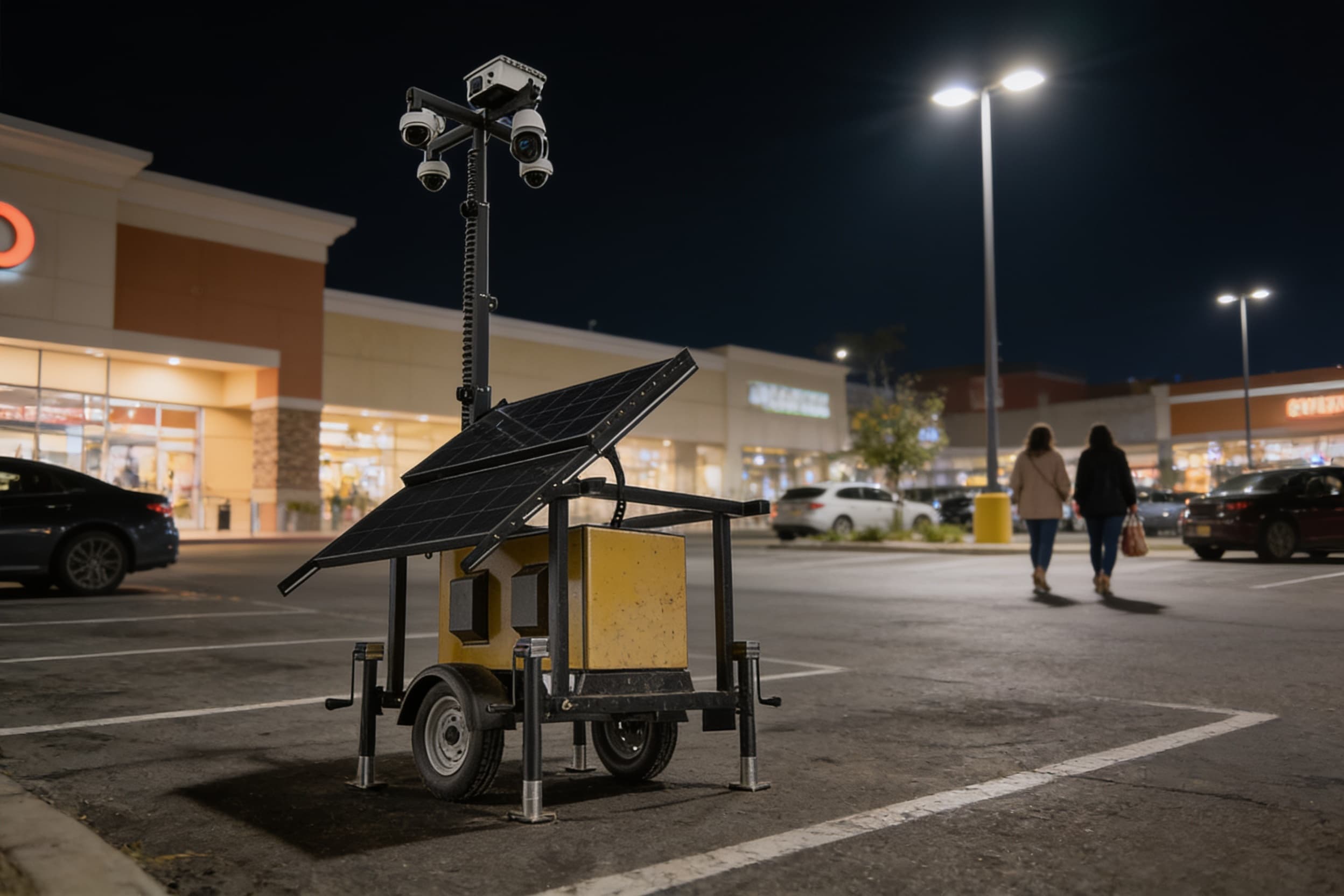
Solar surveillance unit in a mall lot at night
Lot, night
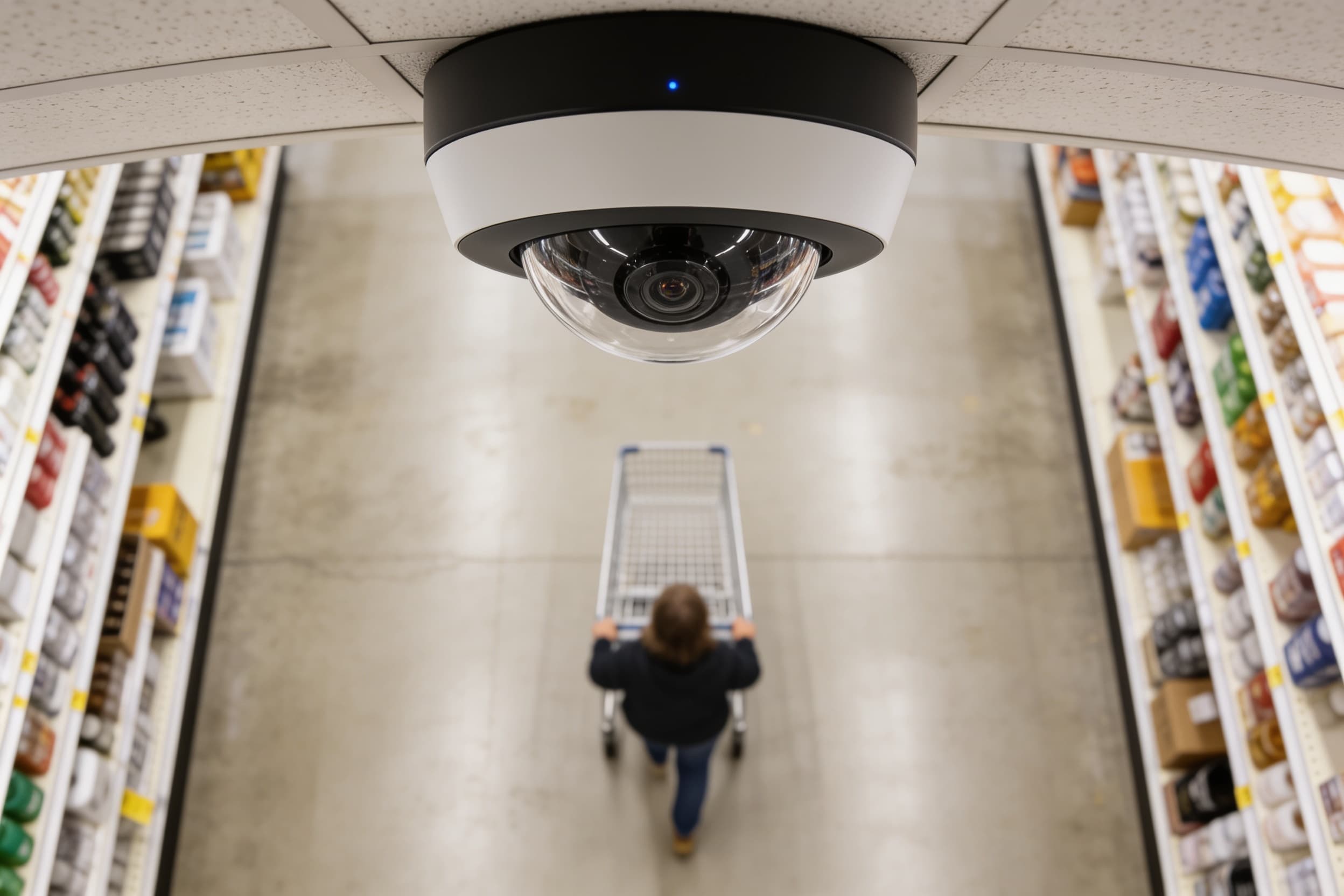
Ceiling-mounted security camera overlooking supermarket aisles
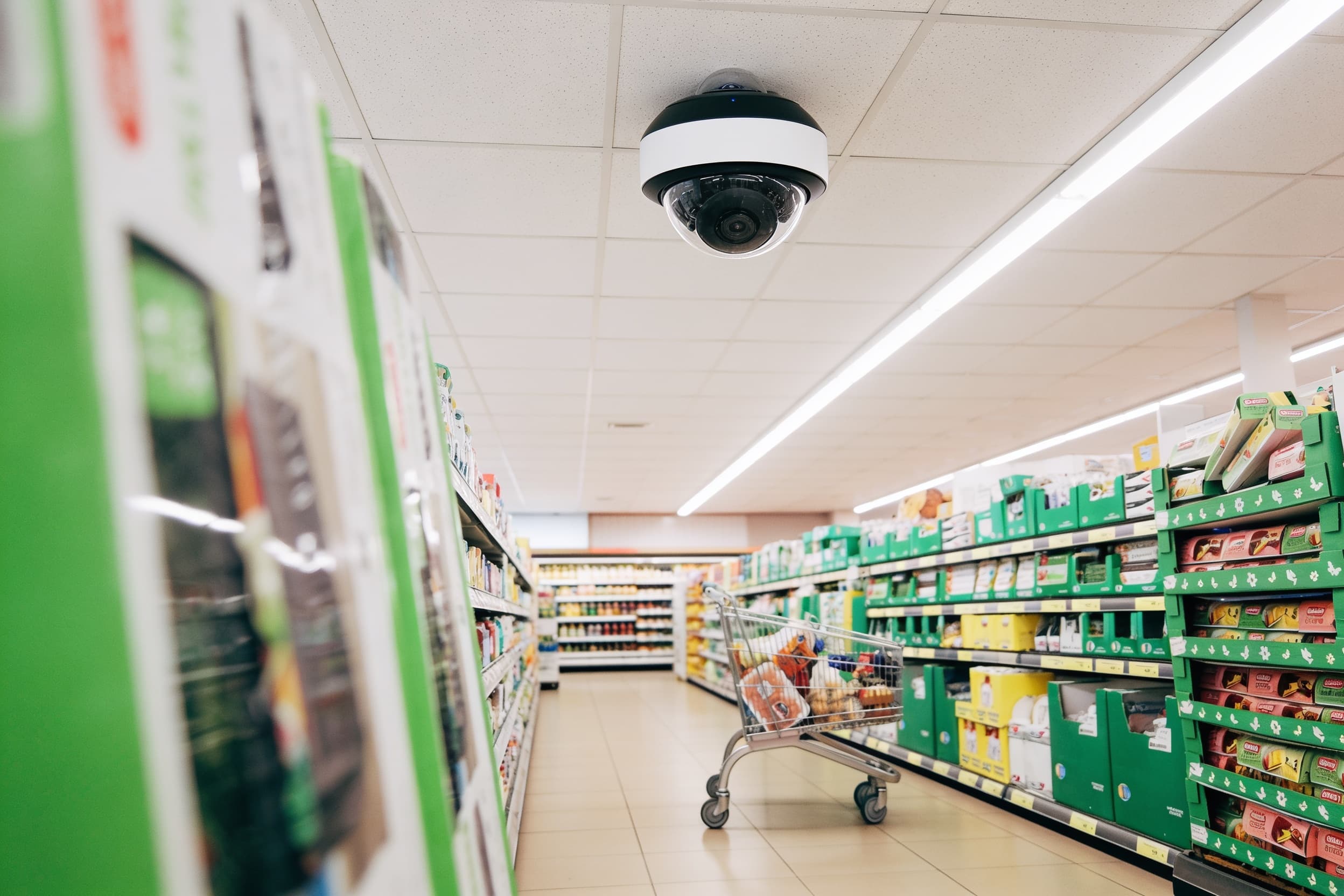
Supermarket aisles
No. 10Proof

Deployments we can point to.

A wide grocery aisle with polished floors, the environment this small-town supermarket automated with an overnight scrubber.Lead case study1 hr Robot runtimeHow a Single-Site Supermarket Cut Floor Mopping From 16 Hours to OneA small-town grocery store cut overnight floor mopping from up to 16 hours to about one hour with an autonomous scrubber built into a 2,000 sq m layout.Read the case study
  1. How a National Grocer Autonomously Cleaned 366 Million Square Feet in One YearA national grocery retailer scaled T380AMR scrubbers across dozens of stores and reported 366M+ sq ft cleaned autonomously in 2024 with 33,649 hours reallocated.366M+ sq ft/yr
  2. How a National Grocery Chain Completed 92,000 Autonomous Cleaning Routes Across 215 Million Square FeetA Central European grocer scaled autonomous scrubbers across hundreds of stores and reported 215M+ sq ft cleaned with 92,000+ routes before nearly doubling its fleet.215M sq ft
No. 11From our blog

Reading for the decision you are making.

All articles

October 2026 — December 2027

Events

  1. NOV17–192026

    Las Vegas, NVCleaning & facilities

    ISSA Show North America 2026

    The cleaning industry’s biggest show and a direct buyer floor for Pudu and Gausium.

  2. JAN10–122027

    New York, NYRobotics & automation

    NRF 2027

    Retail’s biggest show, with buyers for security and cleaning robots.

  3. 2027TBA

    TBACleaning & facilities

    ISSA Show North America 2027

    The cleaning industry’s biggest show and a direct commercial floor-care buyer audience.

    Usually held in November

Common questions

Retail uses two main robot types: autonomous floor scrubber-vacs that keep grocery and big-box sales floors clean - increasingly during open hours, safely near shoppers - and inventory/shelf-scanning robots that drive the aisles capturing out-of-stocks, price errors, and planogram gaps. The right mix depends on your footprint and where your labor goes.

Want one working for you?

We walk your site, learn the job, and tell you which unit fits, OEM-neutrally, before you commit a dollar. If nothing fits yet, we say so.

Free site assessment. We tell you what actually works before you spend a dollar.