
Material-handling automation · education hub
AMR or AGV - which fits your floor.
AMR, AGV, ASRS, goods-to-person, autonomous forklift, tugger - what each one is, how it navigates, and when to pick it. Vendor-neutral, no spin.
- All 50
- US states served
- 11+
- years in the business
- 10 min
- 24/7 triage
- 24/7
- emergency response
What it is
An AMR (autonomous mobile robot) navigates freely with onboard SLAM and LiDAR, routing around people without fixed infrastructure. An AGV (automated guided vehicle) follows a fixed path - wire, magnet, or track. Choose an AMR for changing, mixed-route floors; an AGV for fixed, high-volume routes. This guide also covers ASRS, goods-to-person, autonomous forklifts, and tuggers, and where each one wins.
Pricing and specs on this page are publicly-reported market ranges, framed as estimates - not quotes. We confirm the real numbers for your site in an assessment.
See it running on your floor.
We scope the work on a site assessment and prove the system on your operation before you commit.
Inside the operation
How a free-navigating robot runs a floor.
The whole AMR vs AGV decision lives inside this loop. Watch where the two categories split.
Field notes
4.6M
Projected US supply-chain worker shortfall by 2030.
US BLS projection, via LogisticsIQ
$10B
The AMR market crosses ten billion dollars by 2030, about half a million robots shipping a year.
LogisticsIQ, 2024
15.6%
Annual growth in AMR adoption through 2030.
Mordor Intelligence, 2025
RoboCare™
Service nationwide.
- 24/7 support.
- 10-minute technical-specialist triage.
- Regional service engineers in every state we service.
- 3 check visits a year.
- 12-month warranty.
The operation, up close
What actually decides the outcome.
The one question that decides AMR vs AGV
Strip away the marketing and it comes down to one thing: does your floor and route change, or is it fixed? An AGV follows a guide path you install: magnetic tape, embedded wire, or a painted/QR track. Reliable and cheap on a route that never changes, but moving the route means reinstalling the guide, and it stops dead when blocked. An AMR carries its own map. It navigates freely with SLAM (simultaneous localization and mapping) over LiDAR and cameras, routes around obstacles, and adapts as the floor changes, with no infrastructure to install.
- Fixed, high-volume, rarely-changing route: an AGV is often cheaper and perfectly good.
- Changing layout, mixed routes, or no room to shut down for installation: an AMR.
- Most growing facilities pick AMRs because the flexibility matches how a real floor behaves, but a fixed lane can still be the right, lower-cost AGV call.
How SLAM / LiDAR navigation actually works
An AMR localizes itself the way you would in an unfamiliar building: it builds a map and constantly checks its position against it. LiDAR measures distances to walls, racks, and obstacles; cameras add detail; SLAM software fuses it into a live map that updates many times a second. That lets an AMR route around a stray pallet, slow for a forklift, and pick a new path, none of which an AGV on a wire can do.
The trade-off is honest: that intelligence costs more per unit than a guide-follower, and a very high-volume fixed lane may not need it. Match navigation capability to the job, not the hype.
Buying vs. leasing here
Across all of these categories you can buy outright or lease through financing. In material handling the deployment (mapping, integration, route-building) and the upkeep are where the real cost lives - the robot is the small part. Integration is quoted separately per project, and every robot comes with RoboCare™. The full buy-vs-lease math is in our pricing guide.
What the OEM does not do
Five things an integrator carries that a bare OEM does not.
Buying the robot is the easy part. This is the rest of the job.
Sales, neutrally
We pick the right unit for your floor from the whole market, instead of fitting your operation to the one product a maker happens to sell.
Integration
We wire the robot into the software that runs your operation, so it knows what to do next. A robot with no hook-up is an expensive paperweight.
Financing
Buy outright or lease through financing, surfaced honestly with the real total-cost math, so your finance team picks the structure that fits.
Deployment
Mapping, setup, safety, and commissioning on a live floor. The part most direct buyers underestimate, and where projects stall.
Nationwide service
RoboCare™: 24/7 support with 10-minute triage and regional service engineers in every state we service. The one thing most OEMs cannot offer a US customer.
All five, carried for you.
Tell us the floor and the job. We answer with the unit, the math, and the plan.
Get a quoteFrom our blog
Reading for the decision you are making.
 ComparisonAMR vs. AGV for Repetitive Factory Milk RunsCompare flexible AMRs with fixed-route AGVs for line-side milk runs. See when route stability, traffic, payloads, and layout changes should drive your choice.
 Trends & dataThe $14B Forecast: Why the AMR Market is Set for 19% Annual GrowthA new report forecasts 19% annual growth for mobile robots through 2030. We unpack the market data, from the AGV to AMR shift to warehouse demand.
 Industry newsWhat BHR Hospitals' 2026 Robot Expansion Means for US FinancingBHR Hospitals doubled surgical robots in 2026 with pay-for-instruments financing. See what US sites can borrow for delivery and cleaning automation budgets.
 Industry newsWhat LPP's 1,600-Robot Fulfillment Rollout Means for US RetailLPP Logistics scaled more than 1,600 warehouse robots across two Polish fulfillment centers in 2026. Lessons for US fashion and e-commerce operators on waves and WMS.
Two ways to buy
An integrator, or direct from the OEM.
A comparison of the two purchasing models, not a knock on any one maker. Many OEMs partner with integrators precisely to close this gap.
Robots on this operation
The machines doing the work.
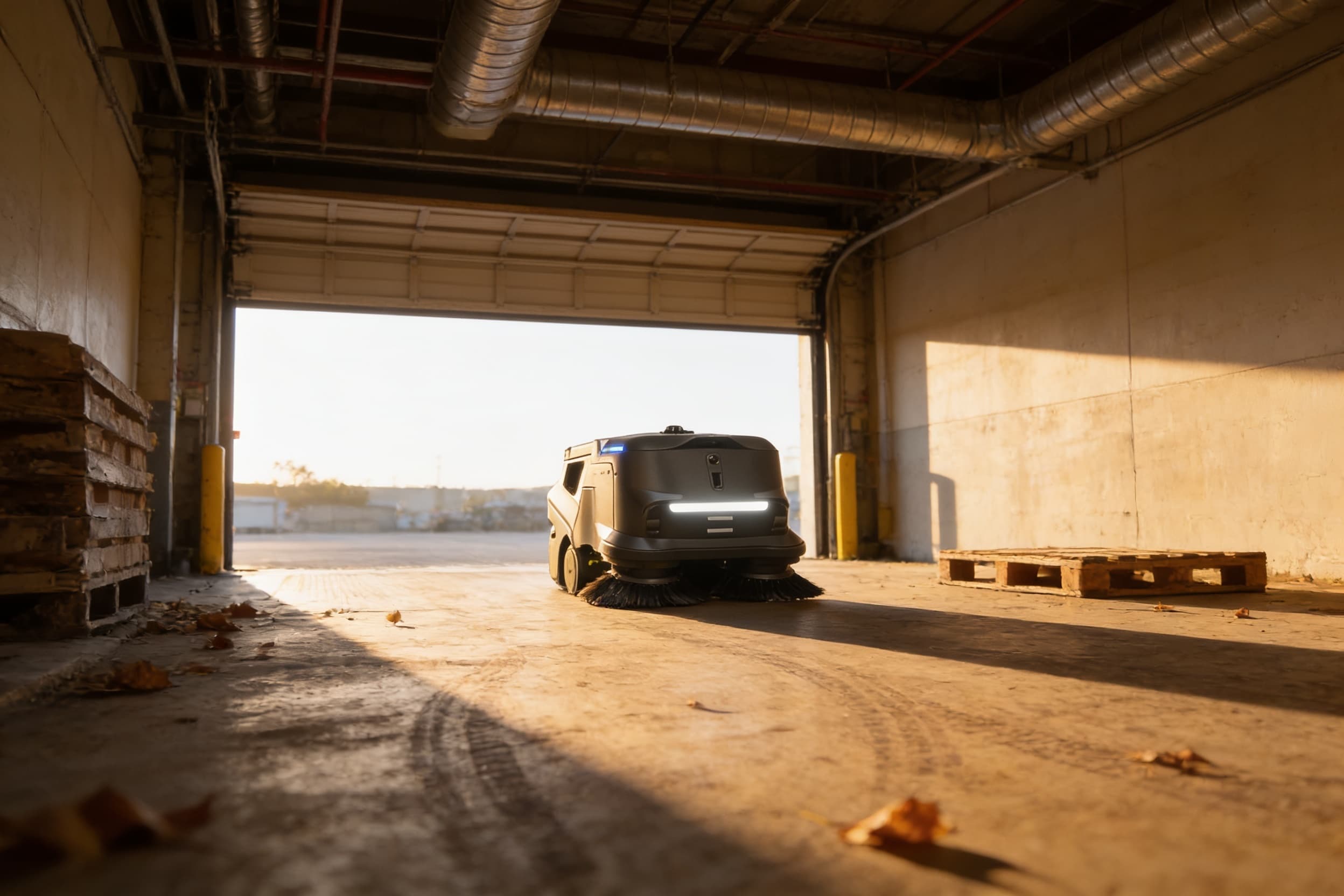
Autonomous forklifts - placeholder
Autonomous forklifts working this operation at a real site (de-branded).
swap for real, de-branded media before deploy - design-language §8.3
Glossary
The categories, defined
Every acronym in one place - what it is and when to pick it.
AMR - autonomous mobile robot
Navigates freely with onboard SLAM + LiDAR, carrying its own map and routing around people and obstacles with no fixed infrastructure.
Pick it when: Your layout changes, you run mixed routes, or you can’t shut down to install track.
AGV - automated guided vehicle
Follows a fixed guide path installed in or along the route - magnetic tape, embedded wire, or a painted/QR track. Stops when the path is blocked.
Pick it when: The route is fixed, volume is high and steady, and the path rarely changes.
ASRS - automated storage & retrieval system
Fixed infrastructure (cranes, shuttles, vertical lifts) that automatically stores and retrieves goods in dense racking. Maximum density, minimum floor.
Pick it when: You need to pack the most storage into the least space with automated put-away/retrieval.
Goods-to-person (G2P)
Instead of walking pickers to shelves, the system brings stored goods (shelves or totes) to a stationary picking station - often AMR-driven.
Pick it when: Picker walking time is your bottleneck and you want to cut steps, not add pickers.
Autonomous forklift
A self-driving forklift that picks up, moves, and stacks pallets without a driver, navigating autonomously or along set routes.
Pick it when: You move and lift pallets and forklift drivers are hard to staff or expensive.
Autonomous tugger
A self-driving tow tractor that pulls a train of carts/trolleys point-to-point - typically zero infrastructure change.
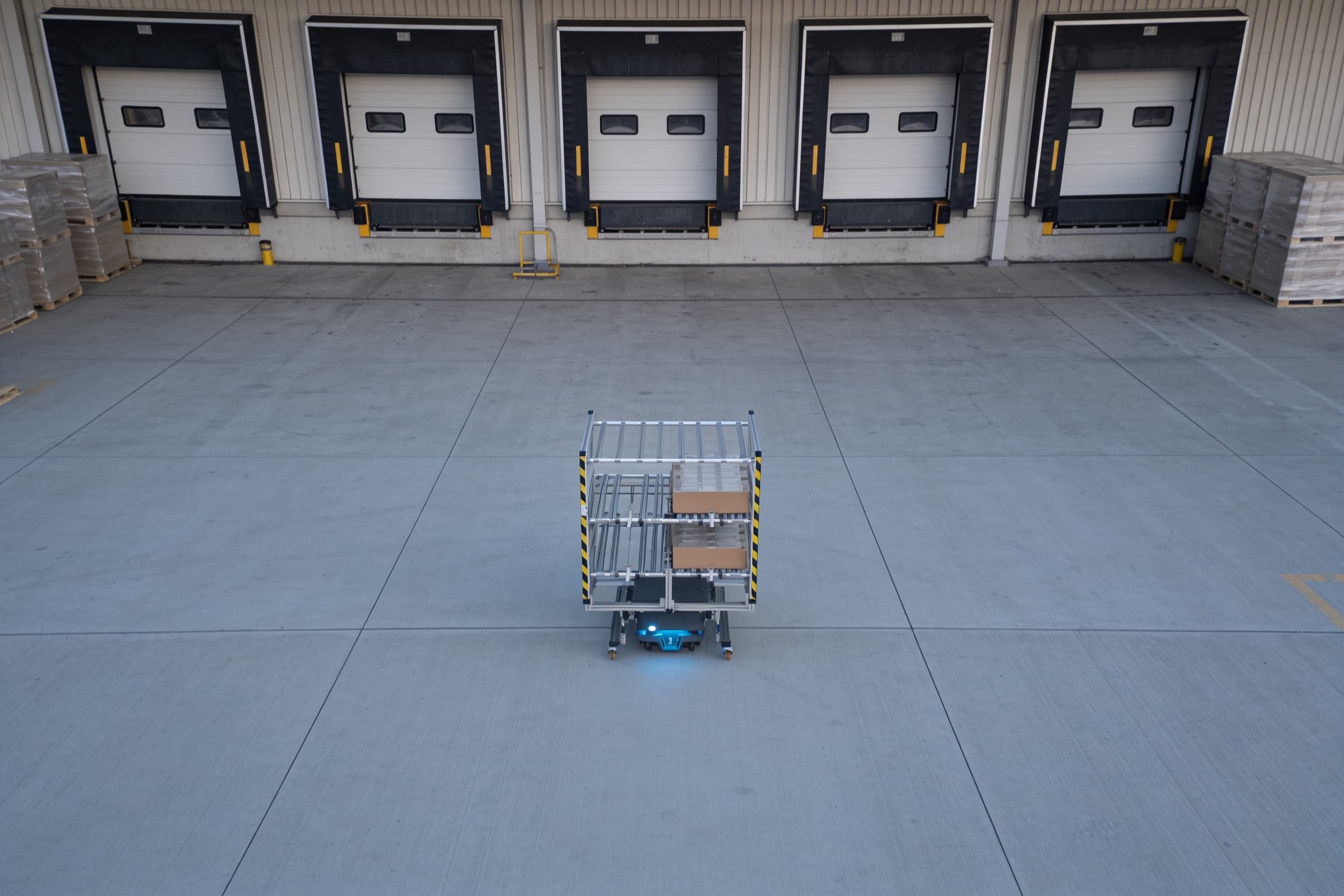
Pick it when: You tow carts on repetitive milk runs and want automation without re-laying the floor.
Compare the options
Comparison
AMR vs AGV, head to head
The factor-by-factor difference. Neither is "better" - they fit different floors.
| Factor | AMR | AGV |
|---|---|---|
| Navigation | Free / SLAM + LiDAR - carries its own map | Fixed guide path - wire, magnet, or track |
| Infrastructure | None to install - runs your existing aisles | Guide path must be installed + maintained |
| Obstacles / people | Routes around them, keeps moving | Stops and waits until the path clears |
| Changing the route | Re-map in software | Re-install the guide path |
| Best when | Layout changes, mixed routes, no shutdown possible | Fixed route, very high steady volume |
| Up-front cost | Higher per unit, no infrastructure | Lower per unit, plus infrastructure to install |
A general guide, not a substitute for sizing against your real floor - which we do on a walkthrough.
On the floor
Where you'll see it working.

Decision guide
Which material-handling robot do you actually need?
Match the job to the category. When you know the category, the application hubs go deeper.
Floor layout changes; mixed routes; can’t shut down to install track
An AMR (autonomous mobile robot) - free navigation, no infrastructure.
One fixed, very high-volume route that rarely changes
An AGV (automated guided vehicle) - cheaper per unit on a fixed lane.
Dense storage + automated put-away/retrieval in a fixed structure
An ASRS (automated storage & retrieval system) - built infrastructure, maximum density.
Bring stored goods to a stationary picker instead of walking pickers to shelves
A goods-to-person system - often AMR-driven shelf or tote movers.
Move and lift pallets where forklift drivers are hard to staff
An autonomous forklift - see the material-handling hub.
Tow carts/trolleys point-to-point with no infrastructure change
An autonomous tugger - see the material-handling hub.
Honest fit check
When automation is NOT the answer (yet)
A neutral guide owes you the honest "not yet" cases. Hold off when:
- Your volume is low and irregular - the payback period stretches past the point it makes sense.
- The route is genuinely one fixed lane at modest volume - a simple conveyor or a person may beat any robot.
- You are mid-redesign of the operation - automate the stable process, not the one you are about to change.
- You need it live next week - deployment and integration take real time; rushing it produces shelf-ware.
Proof
Deployments we can point to.
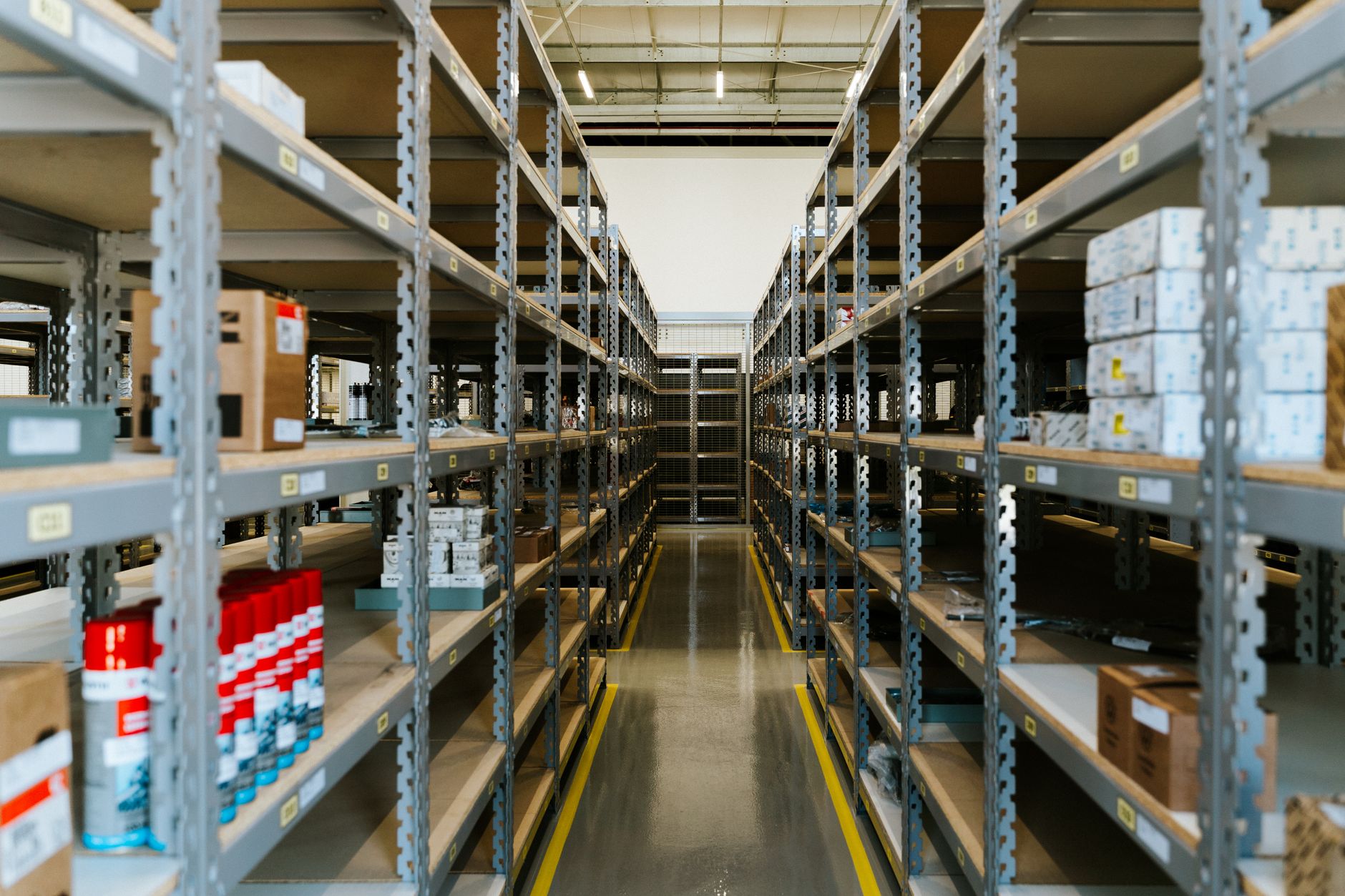 Featured case study210 UPH Units pickedHow a Bedding Fulfillment Center Raised Pick Rates 87% With a 33-Robot AMR FleetDocumented home-goods fulfillment: paper picking and chaotic putaway gave way to 33 warehouse AMRs, 210 UPH, 50% faster cycles, and 30-minute training.Read the case study
Common questions
Start with a free site assessment.
We walk your site, learn the job, and tell you which unit fits - OEM-neutrally - before you commit a dollar. If nothing fits yet, we say so.
Find the robot that fits your site.
Free site assessment. We tell you what actually works before you spend a dollar.