
The question, in the buyer's words
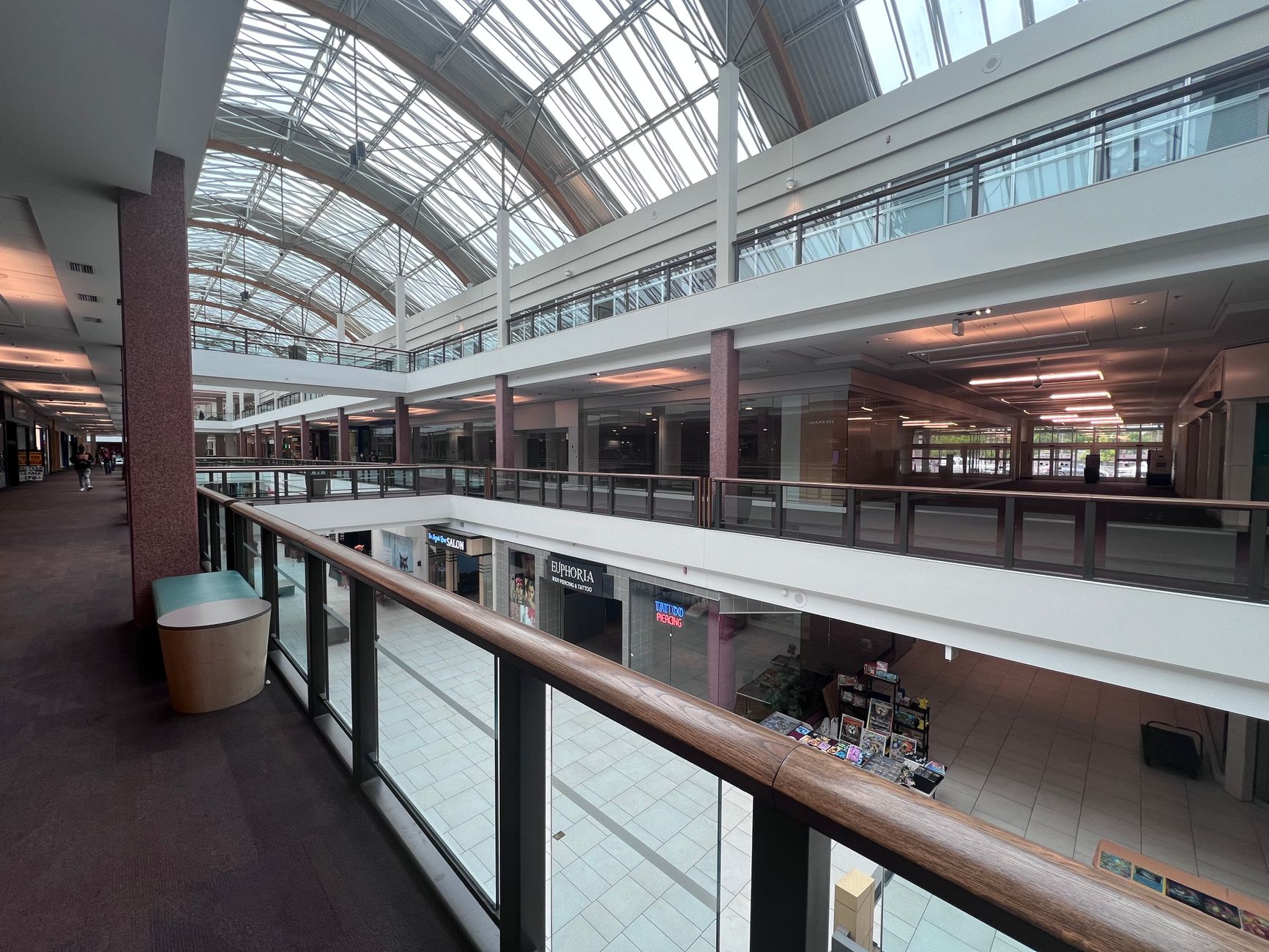
I manage an indoor mall, and the food court and center court get sticky and gritty after close, while our night crew of three covers sixty stores; could a cleaning robot work those floors after close without blocking carts or maintenance?
Key takeaways
- A cleaning robot can take the open hard-floor passes in a food court after close, but not the grease and spill work.
- Plan the route and the cart and maintenance schedule first, because the route determines whether the run works.
- Published robot hour savings are vendor-reported, so test the timed pass on your own floors before deciding.
- With three people covering sixty stores, a robot returns hours to the crew rather than adding a fourth person.
- Lease quotes follow a free site assessment, so the numbers come from your floor plan.
How many indoor malls and food courts are there in the US?
Counts depend on what you call a mall. A retail research article citing International Council of Shopping Centers data puts the number of US malls at about 1,221, though the article's date is not shown. A local Orlando news report puts enclosed malls near 1,000 and says there were once as many as 1,500. The exact total matters less than the direction: enclosed malls have been shrinking, and many surviving centers are reworking their food courts and common areas.
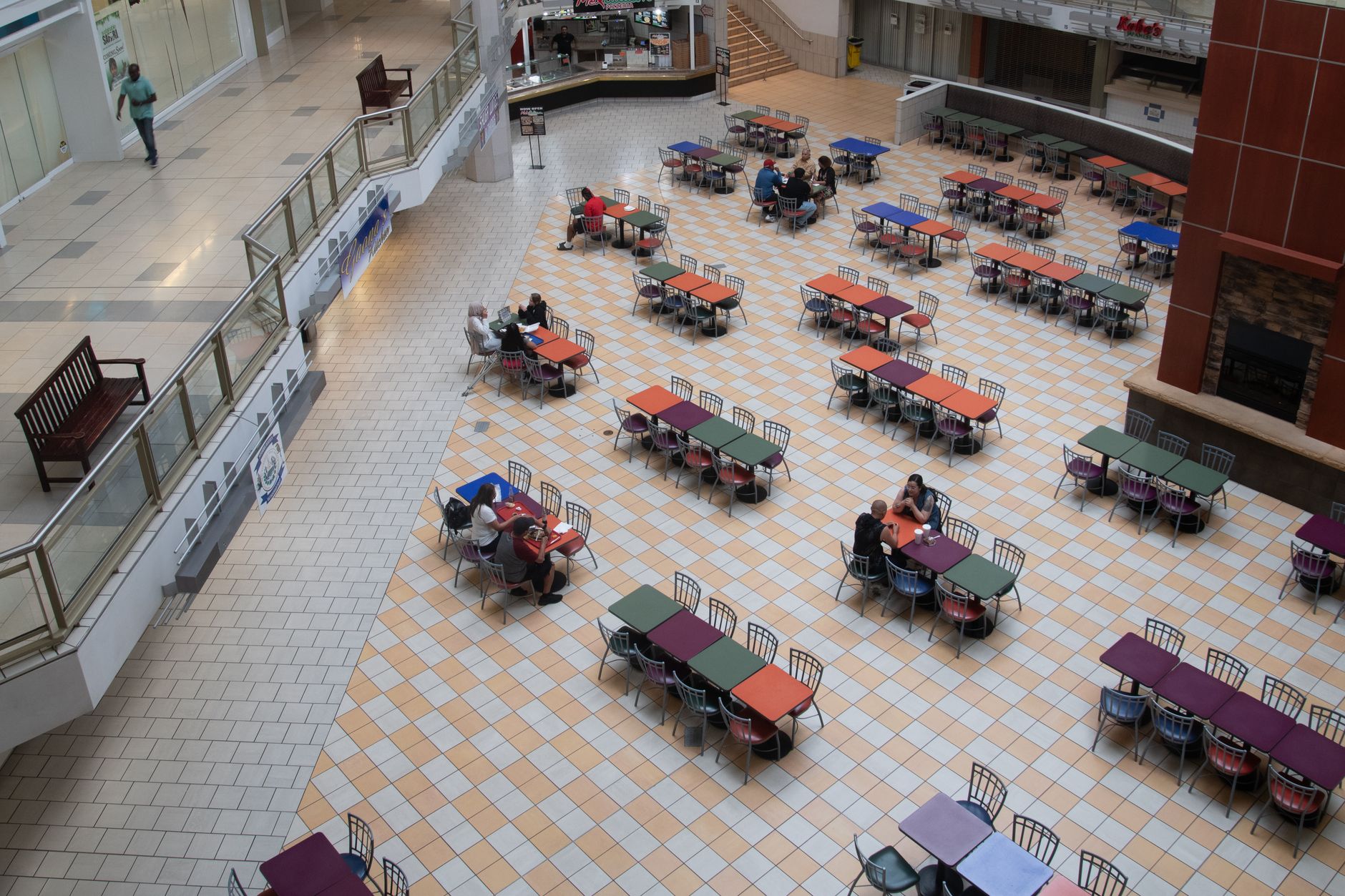
For a manager, the figure that matters is the one you run. A food court after close usually means a shared hard floor, tables and benches, seating edges where crumbs and sugar collect, grill and fryer runoff near the counters, and a center court where carts and kiosks are cleared only at close. These floors are large but simple, and the grime clusters in a few predictable zones, which suits a floor robot better than a whole building.
Keep the scale in view. The food court is one bounded piece of a larger building, and the robot's job is to cover that piece reliably, not to take over the whole mall.
What does night cleaning in a food court actually involve?
Staffing is the pressure point. According to Bureau of Labor Statistics estimates summarized by an occupational data site, about 2,432,600 US jobs were held by janitors and cleaners, excluding maids and housekeeping cleaners, in 2025. That occupation is projected to grow about 2% from 2024 to 2034, with about 351,300 openings a year, so hiring is an ongoing task rather than a one-time gap.
Turnover is harder to pin down. A vendor blog on janitorial turnover says commercial cleaning turnover typically runs 50% to over 100% a year, but it cites no federal source, so treat that as an assumption to check against your contractor or payroll data. A janitorial trade blog reports that turnover stayed relatively steady after 2020, unlike most industries, which suggests your own records matter more than national averages.
Your three people do more than food court work. Their sixty stores need trash, restrooms, spot checks and locked-up checks, so floor passes in shared spaces compete with everything else. Every hour a robot takes off the floor pass is an hour the crew can spend on the rest, and that is the realistic gain.
Injury exposure is also a factor. A janitorial safety summary reports employers recorded 2.5 work-related injuries and illnesses per 100 full-time workers in 2024. That is an industry-wide total, not a figure for this occupation. The Bureau of Labor Statistics reports 157.4 days-away cases per 10,000 full-time janitors and cleaners in 2019, up from 137.1 in 2018. Repetitive scrubbing, bending and lifting are the exposures a machine can reduce.
How many hours does after-close floor cleaning take, and can a robot cut them?

Published hour figures for robots come from vendors, and no independent food court study turned up in the research. One Australian shopping center operator's case study reports 15 autonomous scrubbers deployed across 8 shopping centers starting in 2017. The vendor says one unit can absorb the 5 to 6 hours a night otherwise spent on an industrial scrubber. Treat that as the vendor's estimate for one operator, not a promise for your floors.
A second vendor case study, from an Ottawa shopping center cleaning contractor, reports about 20 hours a week of typical autonomous cleaning, sometimes over 30. That source does not say whether those hours are labor saved or simply machine runtime. Read it as a measure of how much floor a unit can work, not as crew hours returned.
Your own hours come from a timed walk. Time one full after-close pass on the food court and center court with today's crew, including setup, carts and returns. Then compare that with the robot's mapped run time on the same floor, using the site assessment to measure it.
Can a cleaning robot work around carts and maintenance crews?
The route is the job. A cleaning robot follows a mapped path, so the first step is a site survey that marks cart parking, maintenance staging, charging locations, and the doors and gates your crew uses. Carts and staging areas should sit outside the mapped run, or the robot will stop and wait, and the night is lost to a blocked aisle.
Schedule the robot around maintenance, not the other way around. Run the food court first after the last vendor closes and before maintenance starts its heavy work, then move to center court once carts are cleared. Your crew should know the robot's start and stop times and the zones it will be working, so no one walks into an active run without warning.
Blocking is not only about carts. Stools, loose bags and seating pushed into aisles create stops and missed areas. A short pre-clear checklist protects the run, and a person should walk the route at the end of the shift to confirm every zone was covered.
Robot or person: which fits a three-person night crew?
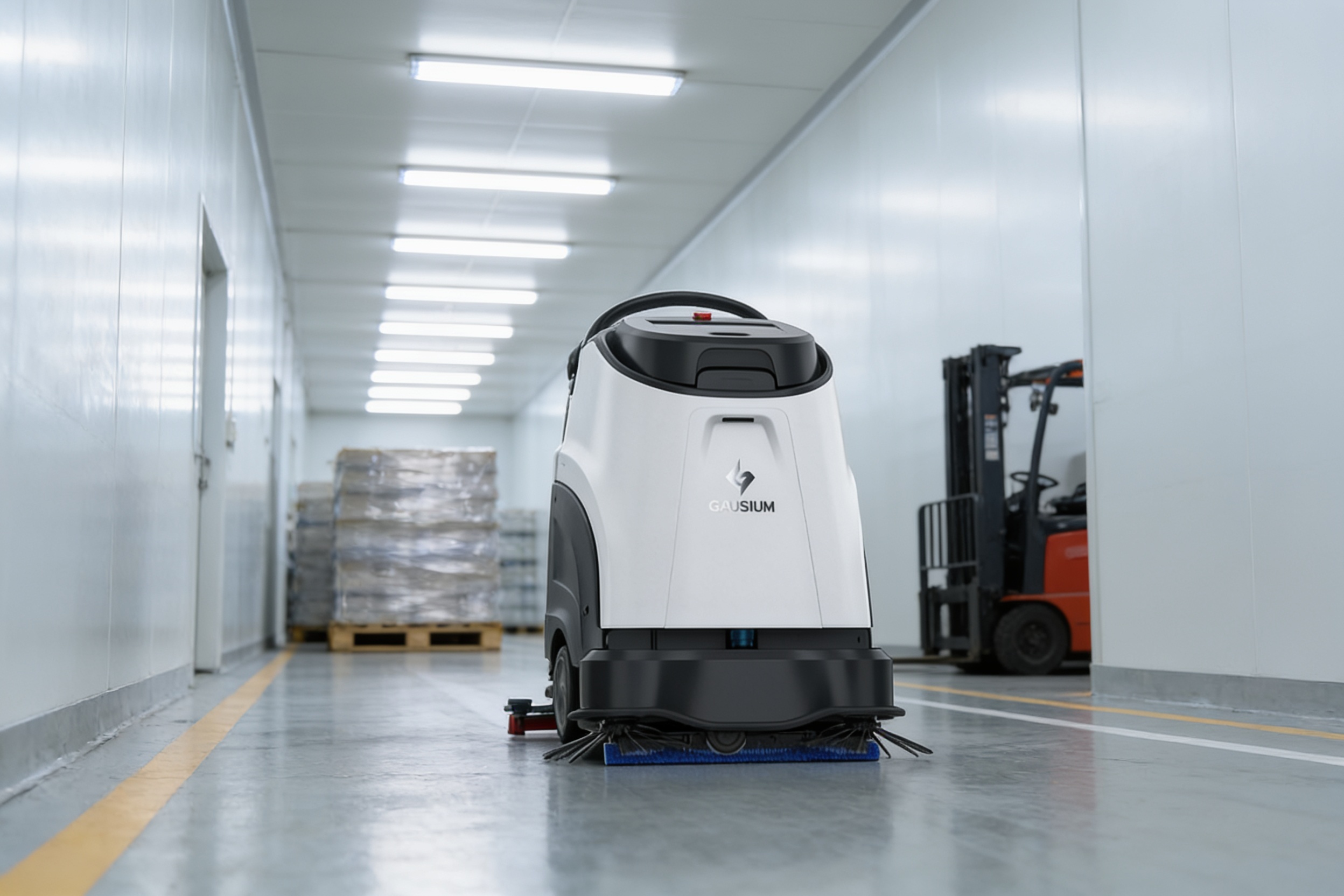
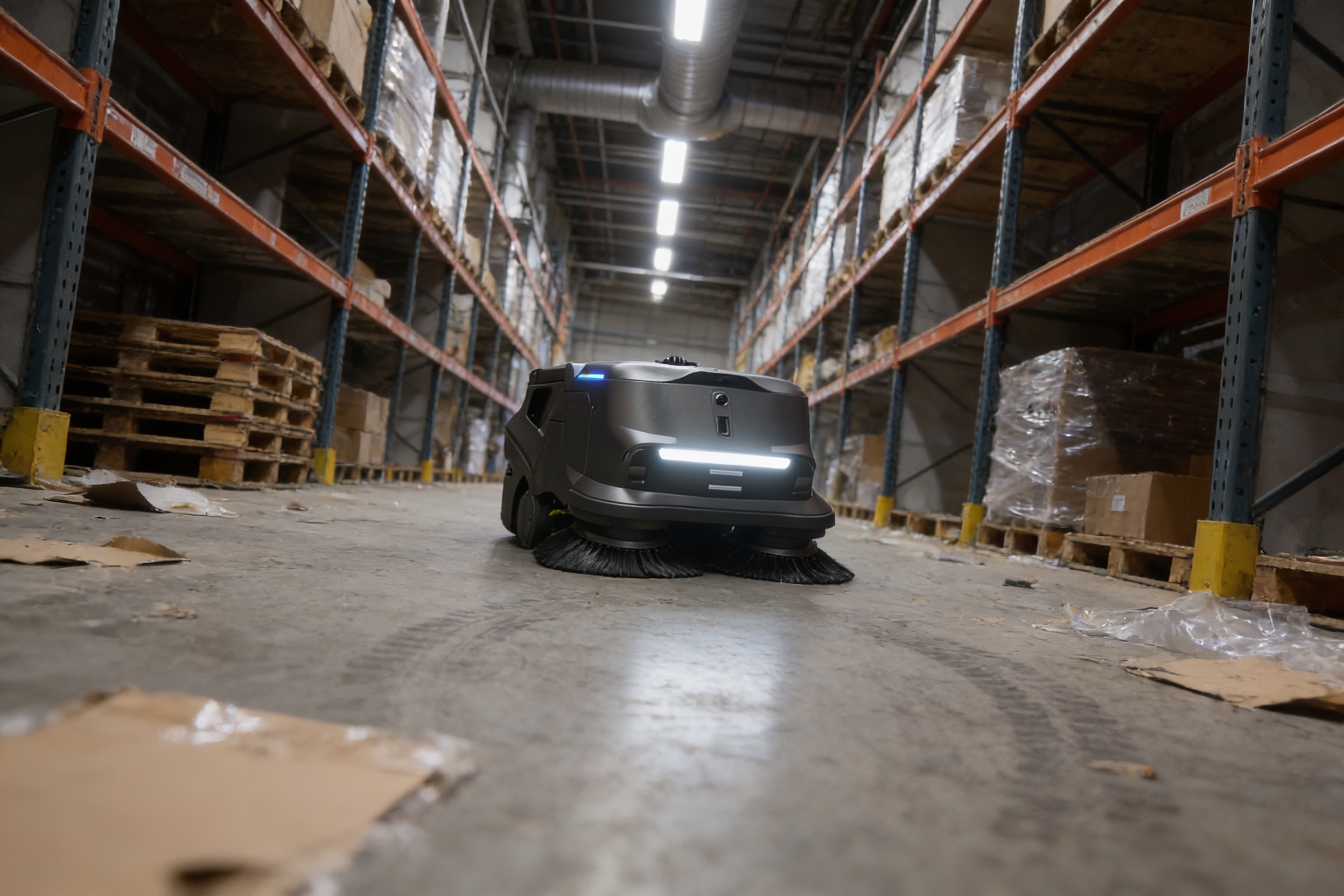
A robot and a person are not interchangeable here. Robots are strong on repeatable, mapped floor passes that run without breaks. People are strong on judgment, reach and quick fixes: a dropped tray, a spill on a bench, a loose seat, or a shopper who needs help.
A three-person crew covering sixty stores cannot be split to cover everything, so the robot is most useful when it takes the most predictable work and frees people for the variable work. The question shifts from whether the robot replaces a person to which hours it returns, and whether those returned hours close real gaps in the rest of the building.
- Hours covered
Cleaning Robot
Repeats mapped floor passes without breaks, within battery and charging limits
Staff
Covers any task in any zone, but tires and is split across sixty stores
- Odd spills and surprises
Cleaning Robot
Stops or skips what it cannot assess
Staff
Spots and fixes a spill on the spot
- Sticky and grease residue
Cleaning Robot
Weak on baked-on residue; needs a separate spot clean
Staff
Can apply the right chemicals and scrub by hand
- Carts and crew traffic
Cleaning Robot
Needs a clear, planned route
Staff
Works around carts and staff by sight
- Consistency
Cleaning Robot
Same route and pass each night
Staff
Varies with fatigue and turnover
- Staffing gap
Cleaning Robot
Does not replace a person on the crew
Staff
Covers the rest of the sixty stores, plus trash, restroom and check work
What can a cleaning robot not do in a food court?
Be specific about the limits before committing. A floor robot does not reliably clean grease-baked spots near fryers, hardened gum, sticky drink spills or puddles it cannot judge, and it does not handle bulk debris like broken containers. Those jobs still need a person with the right chemicals and tools, before or after the robot pass.
Stickiness is the hardest part of a food court floor. Residue often needs chemical dwell time and hand scrubbing, which a general floor pass may not deliver. Test the robot on a worst-case section before relying on it, and treat grease and sugar as a separate spot-clean task in your plan.
Expect exceptions. A robot may stop at unexpected obstacles, so someone should check the floor each morning to catch anything it left behind.
What does getting a cleaning robot involve?
Start with a free site assessment. For a food court and center court, that means mapping the floors, marking carts and staging, and measuring the sticky zones so the robot is tested on the hardest areas. The assessment shows whether one unit covers the run or whether the robot should be scoped to the open floor only.
We pick the robot for the site across manufacturers, lease it through financing, deploy and integrate it, and train your night staff. The unit is serviced under our service plan, backed by regional service engineers in every state we service. The lease payment is a fixed amount quoted after the assessment, so you can compare it with the hours it returns to the crew.
A phased start limits your risk. Begin with one leased unit on the food court and center court, measure the timed pass for several weeks, and add coverage only if the numbers hold. Ask whether the service plan covers a spare unit, so a single failure does not leave the floor uncleaned.
What should a manager check before deciding?
Confirm four things before deciding: the floor types and sticky zones in the food court, the cart and maintenance schedule the route must work around, the hours your crew actually loses to these floors, and who will handle the spot cleaning the robot skips.
Check the insurance and liability questions too. Ask whether the lease and service plan address damage to the mall and who is responsible for an incident in a public area. Get the service response terms in writing before signing.
Decide in advance what success means. A reasonable test is whether the crew gets back the timed hours without more missed spots or tenant complaints. If sticky zones still need people, that is a useful result, because it tells you where to keep your staff.
Frequently asked questions
Want a cleaning robot at your indoor mall food courts?
Tell us about your site. We will recommend the robot, quote the lease, and keep it serviced.
Sources
- Retail research article citing International Council of Shopping Centers data
- Orlando local news report on enclosed malls
- Occupational summary of Bureau of Labor Statistics janitor and cleaner estimates
- Bureau of Labor Statistics injury and illness snapshot, janitors and cleaners
- Janitorial safety statistics summary
- Vendor case study, Australian shopping center operator
- Vendor case study, Ottawa shopping center cleaning contractor
- Vendor blog on janitorial turnover (vendor reported, unverified)