
The question, in the buyer's words
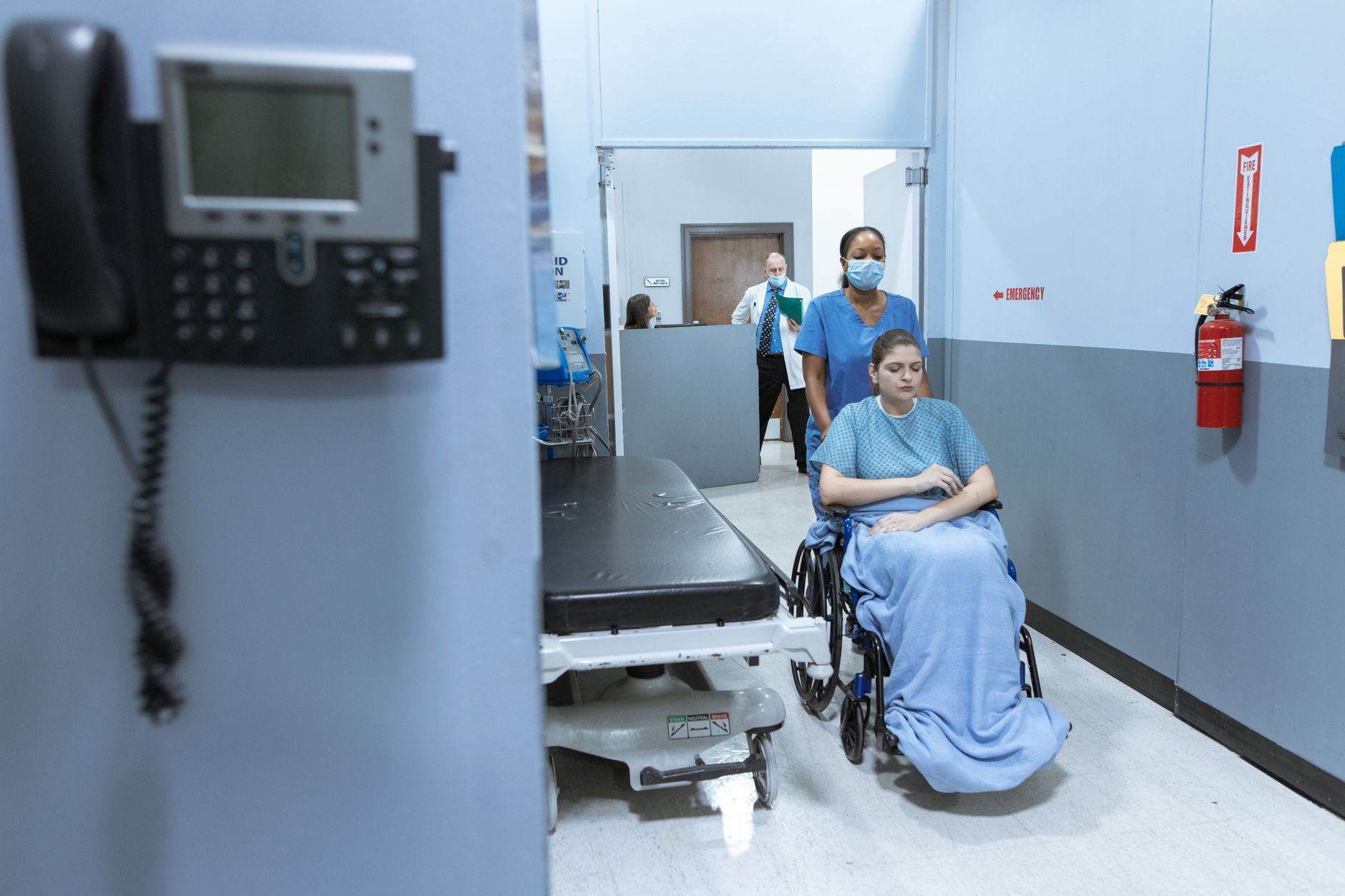
I'm the risk manager for a 300-bed hospital in Greenville, South Carolina, and delivery robots would run through public corridors with visitors and staff; if one clips someone, who carries the liability, and what should we ask insurers before we start?
Key takeaways
- No US hospital ruling we found settles who pays when a delivery robot injures someone, so your contracts and insurance terms carry the risk.
- Someone must be able to see and stop the robot every hour it moves, and that role needs a named owner.
- Homeowners and auto policies may not clearly cover robot accidents, so check your own liability policies in writing.
- Greenville's wettest month is March, so plan dry routes and wet-floor handling at the entrances before launch.
- Start with one leased unit on a low traffic route and expand to visitor corridors only after insurers confirm the scope.
Who pays if a Greenville hospital delivery robot injures someone?
Greenville hospital delivery robots liability questions have no settled US answer yet, at least none that we could find. We searched for hospital-specific case law on who pays when a hospital delivery robot injures a visitor, patient or employee and found none. The outcome depends on the jurisdiction, on whether the robot runs on private grounds or in public space, on who operated or monitored it, and on the vendor contract. That makes your own contracts and insurance terms the main tools you control.
The setting is common even though the case law is thin. According to the American Hospital Association's Fast Facts on U.S. Hospitals, 2024 edition, which uses 2022 survey data, the country has 6,120 hospitals. Expect insurers and counsel to ask for a written position on robots rather than general reassurance.
We did not verify how South Carolina courts would treat a hospital delivery robot injury, and that gap matters. Treat the points on this page as questions to put to counsel, not as a legal opinion for your state.
Who is liable if the hospital, the maker or the operator is involved?
Four parties can be pulled into a claim: the hospital that deploys the robot, the manufacturer that built it, the integrator or financing partner that set it up, and whoever operates or monitors it day to day. An injured person can allege negligence against whoever controlled the robot and product liability against whoever designed or made it. A contract can shift costs among you and those parties, but it does not change what an injured person may allege against the hospital.
Location changes the legal frame. A Danish hospital report, seen only in search results without a usable link, said robots operating only in a hospital's private area fall under general negligence rules rather than road-traffic liability rules, and that injured people may also sue manufacturers or intermediaries under product liability. Visitor corridors are shared space, so do not assume a private classification will protect you. Ask counsel how South Carolina would classify each route.
Fault allocation is the hardest part. Commentary on delivery robot injuries says the difficult question is how to divide fault among robot design, company monitoring and the injured person's own conduct, such as someone who stepped into a route while looking at a phone. Your incident records will shape how that split is argued.
- Hospital: decides routes, staffing, signage and corridor safety duties.
- Manufacturer: design, warnings and product liability exposure.
- Integrator or financing partner: installation, mapping, configuration and service.
- Operator or remote monitor: whether anyone could see the robot and stop it.

What does the campus lawsuit tell a hospital about remote monitoring?
The clearest recent template is a lawsuit over a campus incident in Arizona. It is not a hospital case, and its allegations are unproven. A parking attendant says a food delivery robot ran her down. She is suing the robot maker for strict product liability and negligence, and she names an unnamed remote operator, alleging the operator failed to intervene or steered the device into her path. Read it as a complaint, not a finding.
Monitoring is the part to carry into your planning. The reporting notes that Arizona law requires an agent who actively monitors the device and can physically control it. For a hospital, that means your staffing plan has to show who watches the fleet during every hour robots move, how quickly a unit can be stopped, and whether that person is trained to take over. If the honest answer is that no one watches, expect a plaintiff to focus there.
A second example points at routes rather than monitoring. A news report from Hollywood, California described an ambulance on its way to a hospital colliding with a food delivery robot. We did not verify the details. Use it as a reminder that patient transport routes and delivery routes can meet, and that emergency access must stay clear by design.
What do insurers need to confirm before a robot enters our corridors?
Your existing policies may not answer this cleanly. A South Carolina personal injury law firm's blog on robot deliveries says homeowners and auto policies may not clearly cover robot accidents, and that delivery companies may use waivers or contracts to limit their liability. That is a lawyer's warning, not a coverage ruling. It is still the right warning for a risk manager: the policies you already hold may be silent on a robot.
Ask your broker in writing whether the hospital's general liability and professional liability policies cover injuries caused by autonomous robots on hospital property, whether the vendor and any operator can be named as additional insureds, and how a claim is shared if it touches both the vendor's policy and yours. A verbal yes from an agent will not hold up in a board review or a legal file.
Limits are another open item. Sources we reviewed disagreed on the general liability minimum an Arizona robot operator must carry, with one stating a far lower figure than another. We could not confirm which applies today. Do not copy any limit from a blog into your contract. Ask your insurer what limits they require for your specific risk and get the answer on letterhead.
- Route consistency
Delivery Robot
Repeats a mapped route on schedule, with no break or shift handover.
Staff
Adapts on the fly, such as detouring around a gurney or a family group.
- Unplanned events
Delivery Robot
Stops when sensors detect an obstacle, then waits for a monitor or a person to clear it.
Staff
Judges context quickly, such as a confused visitor or a spilled tray, and speaks to people directly.
- Incident record
Delivery Robot
Logs its events, which helps an investigation if the logs are kept and preserved.
Staff
Gives witness accounts and incident reports, which can vary and be contested.
- Dependence on staffing
Delivery Robot
Still needs a trained monitor and on-site staff for loads, resets and dispatch.
Staff
Is affected by turnover too. According to NSI, hospital employee turnover was 18.5% in calendar 2025.
- Where the person wins
Delivery Robot
Not suited to clinical judgment, patient handoffs or consent.
Staff
Clinical staff handle patient needs, infection control and anything that cannot wait for a monitor.
What is different about a Greenville hospital site?
Greenville has a humid subtropical climate, and that shapes floors and entrances. According to WeatherSpark's Greenville climate summary, March is the wettest month at an average of 4.2 inches, and May is the driest at 3.2 inches. Weather2Travel gives different values, so the figures vary by dataset. Wikipedia's climate table for the regional airport lists relative humidity from about 61% in March and April to about 76% in August and September.
Wet weather is a floor condition to plan for. Rain carried in on shoes, umbrellas and wheels collects just inside entrances, which is where a delivery robot is most likely to meet a visitor. Weather sources also describe afternoon thunderstorms as common in summer, so arrival and loading timing can shift. We did not verify how humidity affects any robot's sensors, so put that question to the vendor.
Local growth changes the map. According to Healthcare Design Magazine, a 2025 announcement for a hospital in nearby Greer describes 93 added beds, a pediatric unit, a cardiology unit and expanded emergency, intensive care, surgical and labor and delivery areas. Greenville also has a new inpatient behavioral health hospital on a large campus, with a bed count we could not verify. Route maps should be reviewed when units open or move, not only once at launch.
How does Service Robot Co. handle the operations side?
Service Robot Co. (servicerobotco.com) is an OEM-neutral integrator for US businesses. We pick the robot across manufacturers rather than pushing one brand, then lease it through financing, deploy and integrate it, train staff, and service each unit under RoboCare, our service plan, backed by regional service engineers in every state we service. The payment comes in a quote after a free site assessment.
A lease or service plan does not decide who pays in a claim, and we will not tell you it does. What we can provide is the operating record your insurer and counsel will ask for: how the robot was mapped and configured, who was trained, how remote monitoring and on-site dispatch work, and how incidents are logged and reviewed. Ask for those documents in writing before you compare any offer.
What should be in writing before go-live?
Put the terms in writing before a robot moves through any shared corridor. Name who monitors the fleet during each shift and how fast a unit can be stopped. State which party carries liability and indemnity under the contract, what insurance each party holds, and whether additional insured status applies. Define how incidents are logged, preserved and shared, how emergency routes stay clear, and who responds if a unit blocks a corridor.
Start with one leased unit on the lowest exposure route, such as a loading dock or staff service corridor. A phased pilot with a defined stop process and a named monitoring owner gives you real incident data and a documented record. Move into visitor corridors only after your insurer confirms the scope in writing. If the insurer will not confirm, the robot is not ready for that corridor, whatever the vendor says.
Frequently asked questions
Upcoming hospitals & healthcare events
- ConferenceNew England College Health Association (NECHA) 2026 Annual MeetingNov 11 to 13, 2026Newport Marriott Hotel & Spa, Newport, RI
- ConferenceHLTH USA 2026Nov 15 to 18, 2026The Venetian Expo, Las Vegas, NV
- ConferenceIndiana Safety and Health Conference & Expo, 2027Feb 8 to 10, 2027Indianapolis, IN
- ConferenceHealthcare Project Delivery Conference 2027Feb 10 to 11, 2027Manchester Grand Hyatt, San Diego, CA
Put a robot to work in Greenville.
We walk your site, learn the job, and recommend the unit that fits. Then we quote the lease, deploy it, and keep it serviced.
Sources
- Fox 10 Phoenix news report on the ASU delivery robot lawsuit
- Steinberg Law Firm blog on South Carolina robot delivery personal injury risks
- American Hospital Association, Fast Facts on U.S. Hospitals, 2024
- Healthcare Design Magazine, Prisma Health Greer Memorial expansion
- Becker's Hospital Review, NSI 2026 nurse turnover report
- OR Manager, NSI hospital staffing report
- Missouri Independent, Missouri hospital workforce turnover 2026
- WeatherSpark, average weather in Greenville, South Carolina