
The question, in the buyer's words
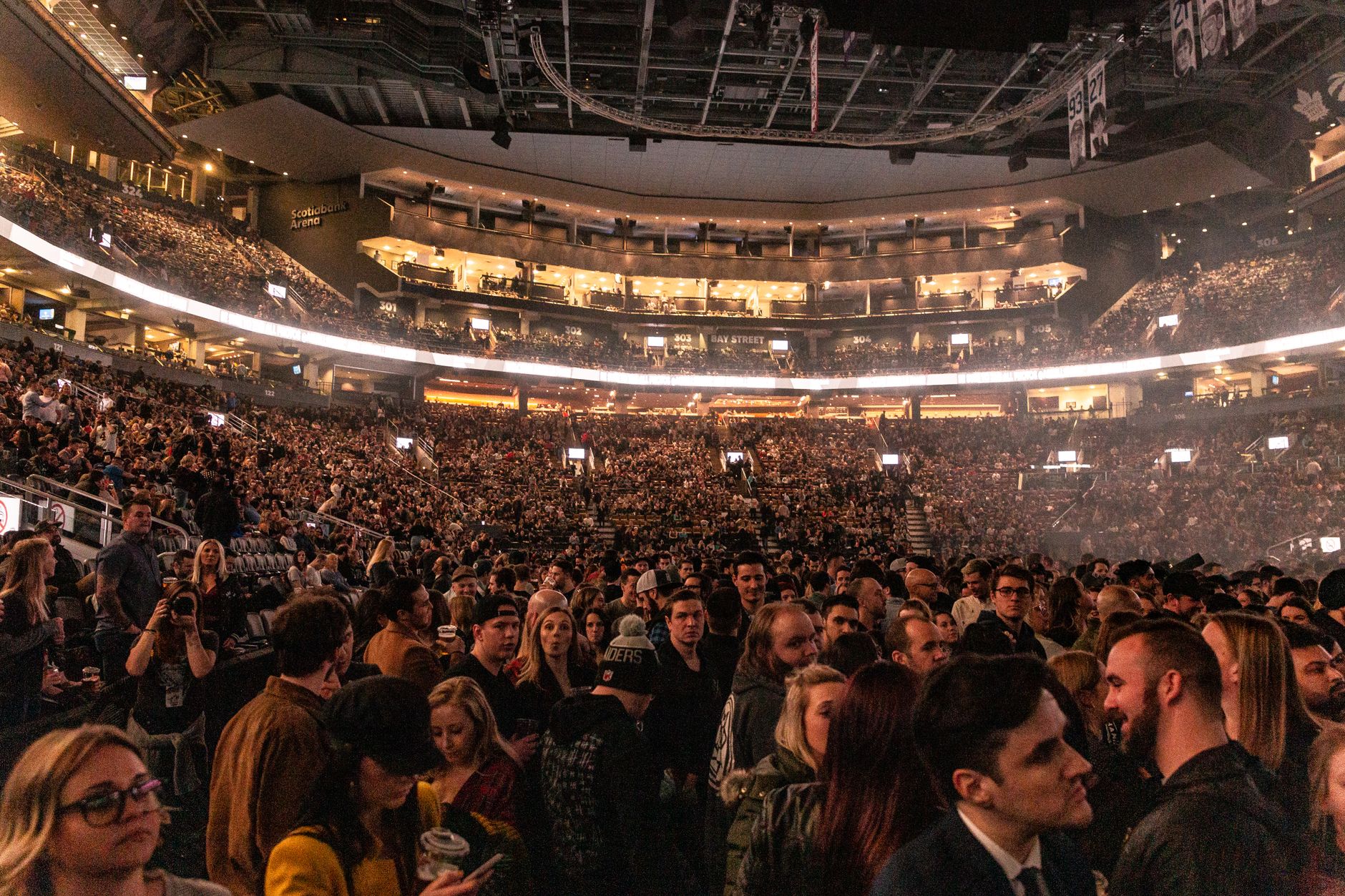
I run concessions for a 50,000-seat arena, and runners can't keep up with suite and club-level orders between periods while fans wait at the concourse; could delivery robots carry those orders from the kitchen to suite doors without blocking concourse traffic?
Key takeaways
- Suite and club orders are the strongest case, run from kitchen to suite door on separated routes.
- The public concourse at peak is the weak point, so keep fan-facing hand-offs with staff.
- Arena pilots from 2021 and 2022 showed suite service, not full concourse autonomy.
- High food service separations make a fixed suite route less dependent on any one runner's shift.
- Safety guidance for mobile robots is general, so your own route review carries most of the risk test.
Can delivery robots handle arena suite orders between periods?
Between periods the demand is concentrated. Suite and club orders arrive in a short window, and a runner who walks from the kitchen to the suite level, waits for a lift and walks back has little time left for the concourse orders fans are waiting on. A delivery robot is a sensible tool for the first part of that run. It carries sealed orders along a fixed route while the runner stays near the kitchen pass and turns the next ticket faster.
Robots fit the suite leg of the job, not the whole job. Concourse orders travel through the most crowded space in the building, and that is where a robot is least predictable and a person is most useful. Plan the robot around the back of house and the suite corridors, and keep runners on the public floor. Most arenas will end up with a split crew, not a robot-only service.
The gain from a robot is an earlier and steadier break, not a larger crew. Expect the unit to shorten the trip and remove one walk, but expect the break to still need people for every exception. For a food runner robot to earn its place, the route has to repeat, the hand-off has to be simple and the staff have to trust the timing. Plan for orders that cannot wait for the unit to return, and for nights when a unit is out of service, before the first event.
What have arena robot pilots already shown?
The evidence is older than most people expect. A 2021 team announcement described robot-assisted food and beverage service inside the all-inclusive suite club of a professional basketball arena, presented as the first robot-assisted food and beverage service inside a stadium or arena. That is the closest match to your situation: a premium suite tier with a fixed set of orders and a known service window.
According to a 2022 venues trade report, delivery robots were used at a large arena during a 2021 tournament to take bottled water and protective supplies to suite patrons. The same report describes a playoff test at another large arena, where the units were not autonomous and were run by a joystick-style controller on site. That detail matters for your evaluation, because some pilots are remote-driven rather than self-navigating delivery.
I did not find a recent pilot that runs fully autonomous suite delivery through a live concourse. Treat the precedents as proof that suite service works, and test every claim against the route you actually have.
Why does the concourse decide the answer?
A concourse is a shared, open walkway with the heaviest foot traffic in the building, and the crowd changes minute by minute. Fans stop at the rail, step out of line, pick up trays and carry drinks, so a robot has to stop and reroute often. Each stop adds delay, and each near miss pulls a staff member's attention away from the orders.
Service corridors and the suite level are different in kind. They are narrower but more controlled, with known staff traffic, staged carts and fixed doors. A unit can be given a fixed path, a schedule and a call-in at the suite door, which removes most surprises. Map those routes first, then decide whether any part of a concourse route is worth the risk.
Ask whether the route crosses a fan path at all. If one leg does, plan that leg with a person, even if the rest of the trip is automated. The hand-off at the edge of the concourse is where a runner adds the most value, so keep that job with a person.
How does the kitchen to suite chain actually run?
The chain has four links: order entry, kitchen build, transport and suite hand-off. A robot touches only the transport link, so the gain depends on how well the other three run. If tickets reach the kitchen late or plates wait at the pass, a faster carrier only moves the wait somewhere else.
Packaging matters. Suite orders often need heat holding, lids and a clear tag for the suite number. Choose containers that stay level and sealed in transport, and set a rule that open or unsealed items go by hand. Test the container on the actual route, including the lift leg, before the first event.
The hand-off is the failure point to plan. Decide who confirms the order at the door, what happens when no one answers and how long the unit waits before it returns. A unit that arrives at a closed suite is slower than a runner who knocks, so the call-in and timeout need to be written down before go-live.
How hard is runner staffing in food service?
Staffing is the core problem. According to the Bureau of Labor Statistics, through its JOLTS series for accommodation and food services, the seasonally adjusted total separations rate was 6.1 in January 2026, 5.4 in February 2026, 5.9 in December 2025, 5.6 in November 2025 and 4.8 in October 2025. These are sector figures, not arena figures, but they describe the labor pool you hire from.
The Bureau of Labor Statistics reports that the accommodation and food services quits rate was 3.5 percent in August 2026, down from 3.9 percent in August 2025. A lower quits rate can ease hiring, but separations stayed between 4.8 and 6.1 percent across the months listed, so a break plan built on specific people is fragile. That is the strongest argument for a route that does not depend on one runner's shift.
The sources I reviewed did not give an official count of arenas or stadiums in the US, so size the opportunity from your own circuit of venues and from the events you already serve.
What do the safety rules say about robots near fans and staff?
There is no robot-specific OSHA standard for this work. Employers are generally pointed to ANSI R15.06-2012 as the consensus reference, according to law firm commentary on robotics and employee safety. That document is written for industrial robots, so your site team has to apply its principles to a mobile unit that shares space with fans and staff.
An OSHA alliance page says its group addresses autonomous mobile robots alongside industrial robots and human-robot collaboration, which shows the agency treats the category as in scope. According to trade press, OSHA updated its Technical Manual chapter on industrial robot systems in 2022. Use both as reference points, not as a complete rulebook.
According to SHRM, OSHA has not addressed hazards from autonomous vehicles at facilities. No injury or pedestrian incident rates specific to delivery robots were available in the sources I reviewed, so do not let a vendor's safety summary replace your own risk assessment. Put the route, speed limits, stop behavior and fan exposure into your site review.
Robot or runner: which one wins where?
Neither wins everywhere. The robot wins on repeatable legs with fixed routes and staff who can load it in advance. The runner wins on anything that needs judgment: a fan with a question, a changed order or a closed door. The comparison below sets out the trade-offs without favoring either side.
- Route flexibility
Delivery Robot
Fixed routes and mapped paths, less suited to crowds that change by the minute
Staff
Adapts on the fly around people, carts and closed doors
- Consistency on a repeat run
Delivery Robot
Same path and timing each run, which helps when the break clock is tight
Staff
Varies with fatigue and staffing on the night
- Handling exceptions
Delivery Robot
Needs a staff member to fix a stuck order or a missing item
Staff
Solves problems on the spot, including changed or split orders
- Fan-facing service
Delivery Robot
Limited, since a unit can alert staff but cannot read a guest's request
Staff
Reads the room, answers questions and handles complaints
- Covering a short-staffed night
Delivery Robot
Keeps the suite route running when a runner is missing, if the site is set up for it
Staff
Has to be scheduled, recruited and trained for each season
- Setup effort
Delivery Robot
Site mapping, route tests and staff training before go-live
Staff
Onboarding time for each new hire on the suite route
- Safety responsibility
Delivery Robot
Route, speed and stop behavior need a documented site review
Staff
Covered by existing staff safety training
How would a robot pilot start in an arena?
Start small and bound the test. Pick one suite level and one route, and run the unit in the back of house before any concourse leg. Measure the break window before and during the pilot, and count exceptions as well as completed deliveries. A pilot that only logs successful runs will look better than the service really is.
We are an OEM-neutral integrator for US businesses. We pick the robot that fits the site rather than a favored brand, lease it through financing, deploy and integrate it, train your staff, and service every unit under our service plan through regional service engineers. The first step is a free site assessment that maps the route. The lease quote comes after that assessment, not before.
Phased deployment means you can begin with one leased unit, and a spare unit arrangement can cover downtime on a busy night. Ask for the route map, the exception log and the service response terms in writing before you commit.
What would change this answer?
Several conditions would move the answer toward a robot or away from one. Check these before you commit to a pilot, because each one changes whether the suite leg saves enough time to matter during a break. The checklist below lists the questions to settle first.
If the suite orders are few and the break peak is short, a runner may still be the faster option. If the route is long, repeatable and mostly indoors, the case for a robot gets stronger.
Frequently asked questions
Upcoming event venues & stadiums events
- Trade showBrats & RobotsNov 10, 2026Alliant Energy Center Exhibition Hall, Madison, WI
- MeetupMPI Virginia Morning Brew Meet-Up, November 2026Nov 10, 2026Hampton, VA
- SummitVA1 Governor's Tourism Summit 2026Nov 18 to 20, 2026Kalahari Resorts & Conventions, Spotsylvania, VA
- ConferenceVirginia Association of Fairs ConventionJan 14 to 17, 2027Williamsburg Lodge, Autograph Collection, Williamsburg, VA
Want a delivery robot at your arena concourses?
Tell us about your site. We will recommend the robot, quote the lease, and keep it serviced.
Sources
- Bureau of Labor Statistics JOLTS, accommodation and food services total separations rate (series JTS7200TSR)
- Bureau of Labor Statistics, Economics Daily, accommodation and food services quits rate, August 2026
- OSHA alliance page on autonomous mobile robots
- Trade press report on the 2022 OSHA Technical Manual update for industrial robot systems
- SHRM, how to keep employees safe around robots
- Law firm commentary on robotics, automation and employee safety
- 2021 team announcement on robot-assisted food and beverage service in an arena suite
- 2022 venues trade report on robotic delivery at sports venues