
The question, in the buyer's words
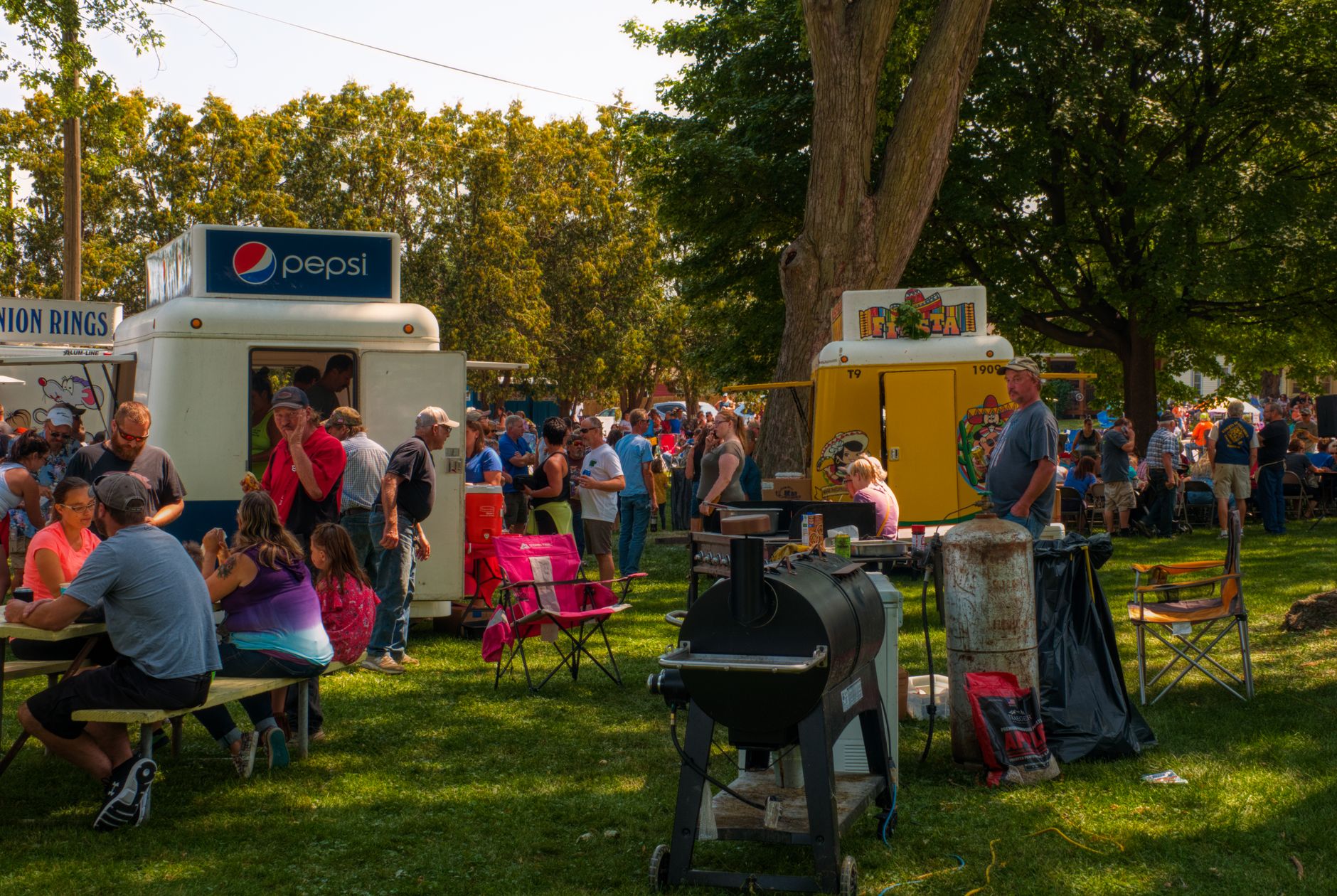
I run a food truck park with fourteen trucks, and during the lunch rush orders stack up at the windows while runners cross the lot; could delivery robots carry orders from the windows to the picnic tables without tangling with guests?
Key takeaways
- A robot helps most on one fixed, mapped lane between the windows and a pickup point, not across open guest seating.
- Check whether the window or the walk is your real bottleneck before deciding on any hardware.
- Federal turnover data for food service is volatile, so plan runner coverage with your own roster log.
- Accuracy and handoff speed decide whether a robot saves time or just moves the wait.
- Pilot one lane with a clear fallback plan before you scale to more robots.
Can delivery robots work a food truck park lunch rush?
A food truck park lunch rush is a dense burst of orders from fourteen trucks, with guests arriving together and taking the same paths. Delivery robots can carry food from a window to a picnic table, which replaces the walk runners make across the lot. They cannot take an order, check a ticket or fix a mistake at the window, so they shorten the trip without shortening the queue.
Most parks find that the lunch rush breaks down in three places: orders waiting at the windows, food sitting while a runner crosses open ground, and guests stepping into the path of anyone carrying a tray. A delivery robot addresses the second problem directly and the third only if its route is planned around people. For the first problem, it helps only when your windows already move tickets quickly.
The rest of this page explains how to find which of the three problems is yours before you spend time on any robot.
Where does the lunch rush time actually go?
Start by timing one lunch rush from the moment an order is placed to the moment it reaches a table. Log how long each order waits at the window, how long it sits before a runner picks it up, and how long the runner spends on the walk there and back. Those three numbers show whether a robot would attack the real bottleneck or just move the wait somewhere else.
The research behind this page did not turn up verified hours figures for runner work at outdoor food truck parks, so your numbers have to come from your own lot. A stopwatch log across three lunch services gives you a baseline that is more useful than any general average. Count orders per minute as well, because a busy window and a slow runner can look identical to a guest and need different fixes.
Once the log exists, the decision gets simpler. If the window is the slow step, a robot will sit idle while tickets pile up. If the walk is the slow step and the route is predictable, you have a real candidate for a robot lane.
What do federal staffing and turnover figures say about food service?
According to the Bureau of Labor Statistics Economics Daily, the accommodation and food services quits rate was 3.5% in August 2026, down from 3.9% in August 2025. The total nonfarm quits rate was 1.9% in the same month. Accommodation and food services led private-sector quits rates, ahead of retail trade at 3.0%.
Turnover in this sector moves a lot from one month to the next. The Bureau of Labor Statistics September release shows quits in accommodation and food services rising by 197,000 that month, which was over half of the overall rise in quits. Its February 2026 release shows the same sector's quits falling by 119,000. A park that plans runner coverage around one month will be wrong about the next.
The Occupational Employment and Wage Statistics survey counted 267,840 food servers, nonrestaurant, nationally in May 2023, according to the Bureau of Labor Statistics. That survey has no separate category for food runners, so the federal numbers describe the labor pool but not your roster. They tell you turnover is a recurring cost to plan for, not what your lunch rush needs in a given week.
For planning, treat the federal figures as background risk and build your own log. Track how many runner shifts you fill each week, how many runners leave within a few months, and how often a lunch rush runs short-handed. That record will tell you more about your park than a national quits rate.
How do guests and diners react to robot delivery?
Guest acceptance is mixed, and the public numbers are not specific to outdoor food truck parks. A restaurant industry news report cites a finding that one-third of diners do not want robots preparing their food. That finding is about kitchens rather than carrying trays, so read it as a sign of discomfort, not a verdict on delivery.
A payments industry news report says 65% of consumers who are not interested in robot delivery cite reliability and order accuracy. The report's date could not be confirmed, so treat the figure as directional. At a food truck park, accuracy is what guests notice first, because a wrong order carried across the lot means a second wait and a refund request.
Plan for curious guests in the first weeks. Keep a staff member near the robot's route during peak hours so people know who to ask, and post simple signage that explains where the robot goes and where it should not be approached.
How do robots and runners compare on a crowded lot?
For a fourteen-truck park, the honest comparison is straightforward. A robot wins on a fixed, predictable path and on tireless repetition. A person wins on anything that needs judgment, flexibility or conversation, and a crowded lot produces plenty of all three.
Where a robot is most likely to help is the stretch with the most traffic and the least variety, usually between the windows and a pickup point. Where it is least likely to help is the table area, where guests change requests and runners do their most valuable work. Put the robot where the path is predictable and keep people where the conversation is.
A robot is not automatically faster. On a clear route it may match a runner's speed, but stops for people can erase the gain at peak, so time both during the pilot.
- Route
Delivery Robot
Fixed, mapped lane between the windows and a pickup point, planned in advance
Staff
Walks any path and adjusts around crowds, spills and parked carts
- Order accuracy at the window
Delivery Robot
Carries what the window hands it and cannot check the ticket
Staff
Can check the bag, confirm the name and catch a missing item
- Crowded moments
Delivery Robot
Slows or stops when a person is in the path, which costs time at peak
Staff
Weaves through a crowd and picks a faster line
- Special requests and changes
Delivery Robot
Needs a new order sent to the route
Staff
Takes a note and tells the window directly
- Guest interaction
Delivery Robot
Limited to fixed messages and signage
Staff
Answers questions, handles complaints and watches for children and unsteady guests
What does a robot lane need on a food truck park lot?
A lane needs a clear, mapped path from the window to a fixed pickup point, with no guest seating crossing it at peak. Surfaces matter. Gravel, uneven pavers, wet grass after rain and steep ramps all change how a robot moves, so the route should follow pavement that stays flat in service.
Plan the layout first. Put the pickup point close to the windows, keep the drop-off zone at the picnic tables along a defined edge, and mark the lane so guests and staff can see it. A lane that runs past a generator, a dumpster enclosure or a fire lane is a conflict that will show up at peak.
Limit the first pilot to one lane. One lane tests the route without committing the whole lot, and it shows you how many trucks and windows genuinely feed it. Confirm power for charging, network coverage along the route and a backup plan for a stopped unit before the pilot starts.
How would a pilot start with a leasing partner?
We are a vendor-neutral integrator. We choose the robot for your lot across manufacturers instead of pushing one brand, then lease it through financing, deploy and integrate it, train your staff, and service it under our service plan with regional service engineers in each state we cover.
The first step is a free site assessment, where we map your lot, check the lane, power and network, and review your lunch rush log. The payment comes as a quote after that assessment, so you can weigh the lease against your current staffing costs using figures for your own site.
Start with one lane and one leased unit, then decide after pilot data whether a spare unit or a second lane is worth adding. If the assessment finds that your lot or order flow does not fit a robot, we will tell you so, and runners may remain the better answer for your park.
Whatever the outcome, the lunch rush log you build this week is yours to keep and will make any comparison sharper.
Frequently asked questions
Want a delivery robot at your outdoor food truck parks?
Tell us about your site. We will recommend the robot, quote the lease, and keep it serviced.
Sources
- Bureau of Labor Statistics, Economics Daily: accommodation and food services quits rate, August 2026
- Bureau of Labor Statistics, JOLTS September 2026 news release
- Bureau of Labor Statistics, JOLTS news release
- Bureau of Labor Statistics, Occupational Employment and Wage Statistics: food servers, nonrestaurant, May 2023
- Bureau of Labor Statistics, injury factsheet: full-service restaurants, 2018
- Restaurant industry news report on diner attitudes toward robots
- Payments industry news report on consumer interest in robot delivery