
The short answer
Cobot ROI in Milwaukee comes mainly from labor hours: the share of laborers, freight, stock and material mover work that a leased cobot takes over, valued at the local wage for that job. The savings range depends on how many of those hours a site actually has, how much of that work the arm can realistically run unattended, and the lease cost quoted after a free site assessment. Savings are ranges, not promises.
Key takeaways
- The return is the repeat hours a cell takes over, priced at the local wage for that job.
- Milwaukee's production and material moving shares point to cell-level fit, not whole-building fleets.
- Measure the share the arm can run unattended before you trust any savings range.
- Lease length, financing terms and go-live timing set the payment, and the quote is written after a free site assessment.
- Use sector injury rates as context only, not as a savings figure.
Run the numbers for your site
Auto-detected from your location - we use the real BLS wage here. Not right? Pick your city or state above.
What do you want to automate?
The cobot stacks the repetitive end-of-line pallets; your team handles changeover and QA.
What return can a cobot deliver in Milwaukee?
Cobot ROI in Milwaukee comes from one place: the hours of laborers, freight, stock and material mover work that a collaborative robot arm takes off the floor. The return is the labor that moves to the robot, valued at the local wage for that job shown in the government wage data panel on this page.
A cobot is not a general warehouse fleet. It is a fixed arm at a work cell, usually used for palletizing, case handling and machine tending. Its return is limited by how much of the day is one repeatable motion at one station, so the fit is often at the end of a line or a packing cell rather than across a whole building.
Expect a range, not a single number. The savings range on this page moves with three things you can measure: the qualifying hours at the cell, the share of that work the arm can realistically take, and the lease cost quoted after a site assessment.
Where does the labor sit in the Milwaukee metro?
According to the BLS Midwest regional release for Milwaukee-Waukesha (May 2024 OEWS), transportation and material moving was 8.8% of metro employment, production was 9.0%, and office and administrative support was 11.6%. The survey covered 4,593 establishments with a 64% response rate. The production and material moving shares matter most for a cobot, because they hold the repeatable handling work.
Census QuickFacts reports 20,466 employer establishments in Milwaukee County and 435,400 total employment in 2023, across all industries. That is the pool of sites where a cell-level deployment could fit, though the count does not show how many have a qualifying cell.
The Wisconsin Policy Forum found that Milwaukee metro manufacturing employment fell by more than 6,200 between 2019 and 2023, to 113,866. Fewer people on the line makes staffing repeatable handling work harder, which is why many plants test one cell before deciding on more. Local staffing supports testing the return case, but it does not prove the case will pay.
Median hourly wage, Laborers and Freight, Stock, and Material Movers, Hand
$4,729
Monthly cost of one full-time worker in Milwaukee, WI, at the median wage plus payroll costs (an estimate, not a quote).
Which hours does a cobot take over?
We found no published source that gives hours per shift for cobot work in this setting, so the hours in the table below are measured at your site during the assessment rather than taken from a national average. The table names the tasks that usually qualify.
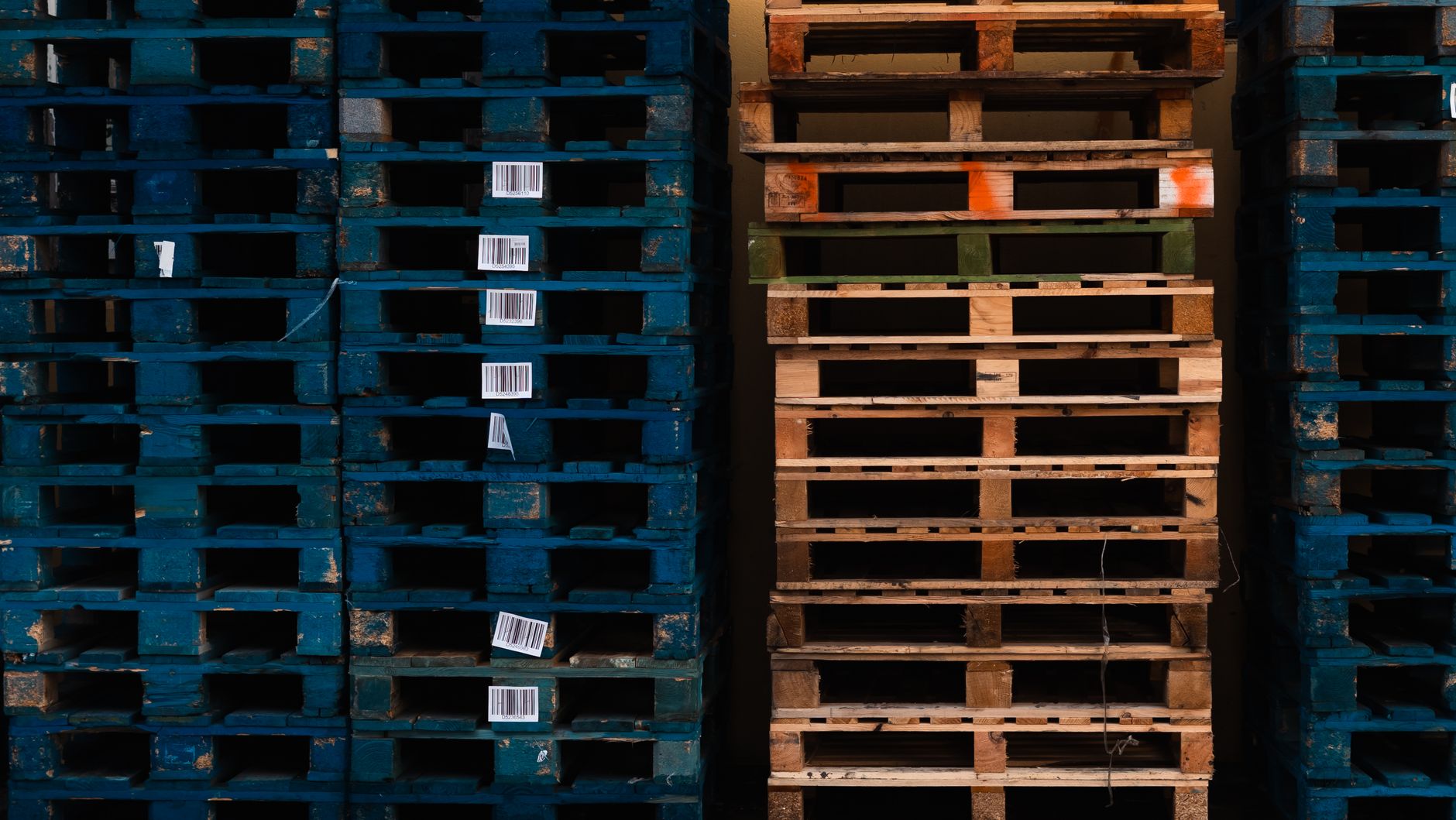
The hours that offset labor are the ones a cell repeats at a steady rate: stacking cases onto pallets, feeding a machine, moving product from a station to a staging point. Intermittent work such as inspecting odd product or clearing jams stays with people.
For planning, the offset is the qualifying hours multiplied by the local wage for the laborers, freight, stock and material mover job, then multiplied by the share of those hours the arm can run unattended. Our research did not turn up a verified count of these workers per site, so the planning headcount of four people is an assumption for a site of this kind. The assessment replaces it with your actual roster.
How does the savings math work?
The core formula is simple. Start with qualifying hours per week at the cell. Multiply by the local wage for the job. Multiply by the share of those hours the arm can take over reliably, which is almost never the full amount. Then subtract the lease payment and any site costs listed in the quote, and read the result as a range.
Take the share seriously. A cell that runs unattended for long stretches but still needs a person for changeovers and exceptions saves less than its uptime suggests. Ask for the share to be measured during the assessment, not estimated from a demo.
Lease cost is quoted after the site assessment, so the payment in the range is the real payment, not a list price. Financing terms, lease length and the number of arms in the cell all change the result, and they are fixed in the written quote.
Each lever pushes the range in a known direction. More qualifying hours and a higher share of unattended time raise it. A short lease with high payments, or a cell that stops often, lowers it.
What changes the number up or down?
Four things move the range most. The first is how many hours the cell actually runs. The second is product consistency, since variable parts push work back to people. The third is the local wage, which the government data panel shows. The fourth is how quickly the cell goes live, because every idle week delays the start of payback.
Staffing turnover also matters. Instawork's 2025 State of Warehouse Labor report, based on its own survey, says most respondents reported turnover under 10%, with a notable share reporting higher. Where turnover is high, onboarding and training time is part of the labor picture, but that is a site fact to measure, not a given.
The checklist below lists what to confirm before you accept any range.
Does a cobot change injury exposure?
The BLS industry page for warehousing and storage (NAICS 493) reports a 2024 total recordable case rate of 4.8 per 100 full-time workers, with cases involving days away, job restriction or transfer at 4.1, and days-away cases at 1.5. These figures cover the whole sector, not the Milwaukee metro or cobot cells, so use them as context only.
Repetitive lifting is the exposure a cobot reduces most directly, because the arm takes over the lift and the placement at the station. Keep the safety case honest. A cell still needs guarding, a safety review and trained people at the handoff points. Injury reduction is a benefit to record, not a number to add to the savings range.
Where does a person still do the work?
A cobot is good at a narrow repeat. People handle variation, exceptions and judgment. In most cells the person stays for setup, changeovers, damaged or off-spec product, and checking output. Their time on the repeat moves to the arm, but their time on the rest of the job does not disappear.
The IFR's World Robotics 2024 report, covering 2023 global data, put collaborative robots at about 10% of installations and traditional industrial robots at about 90%. Cobots are a niche within industrial robotics, which is one reason the fit must be checked cell by cell.
The IFR's preliminary 2025 figures show U.S. industrial robot installations rose 11% to 38,000 units, with automotive the largest adopter at 13,500 units and food installations up 30%. Those figures cover all industrial robots, not cobots, so they show market direction rather than a cobot payback.
- Repeat case stacking
Cobot
Holds one pattern at a steady pace through a full shift
Staff
Pace varies over a shift and fatigue builds
- Off-spec or damaged product
Cobot
Needs a clear rule or it stops
Staff
Judges and sorts on the spot
- Product changeover
Cobot
Needs re-teaching or a fixture change
Staff
Adapts quickly with a short handover
- Extra shift coverage
Cobot
Runs when staffing is short, if the cell is loaded
Staff
Limited by availability and fatigue
- Repetitive lifting exposure
Cobot
Takes the lift and placement at the station
Staff
Carries the strain of the same motion
- Oversight needs
Cobot
Needs a trained operator and routine checks
Staff
Needs no added oversight for the same task
What are the risks to the return, and how do you avoid them?
The main risk is a cell that runs fewer hours than planned. Avoid it by measuring the baseline before deployment and writing the qualifying hours into the plan. A pilot on one cell is a sound way to test the range before committing to a larger program.
The second risk is downtime. An arm that stops waits for a person, and the return stalls with it. Service Robot Co. selects the robot for the site, deploys and integrates the cell, trains the staff who run it, and services the unit nationwide with on-site dispatch and remote triage. Ask for the response terms in writing before you sign.
The third risk is product change. A new package size or part can break the pick. Plan for a re-teach or fixture change during the lease, and ask how much change the cell handles before a visit is needed.
How long from assessment to payback, and how do you get a precise figure?
The timeline runs in phases: site assessment and mapping, a written quote for the lease and integration, deployment and go-live support, staff training, and then a measured period in which the hours are checked against the baseline. The length of each phase depends on the cell and the site, so the assessment sets the schedule. Payback begins when measured hours start to offset the lease.
Published payback figures for cobots vary widely, and vendor claims are not a substitute for your own numbers. Ask for the method behind any payback figure you see, including the hours counted and the share assumed.
A free site assessment produces a precise figure. We time the qualifying hours at your cell, confirm the share the arm can take, and quote the lease and financing terms. Service Robot Co. turns that data into a savings range for your site, not a promise. Ask for the quote in writing before you decide.
Frequently asked questions
Upcoming events in Milwaukee, WI
Put a robot to work in Milwaukee.
We walk your site, learn the job, and recommend the unit that fits. Then we quote the lease, deploy it, and keep it serviced.
Sources
- US Bureau of Labor Statistics, Occupational Employment and Wage Statistics (OEWS May 2024)
- BLS Midwest regional release, Milwaukee-Waukesha OEWS, May 2024
- BLS Industry Injury and Illness Data, Warehousing and Storage (NAICS 493), 2024
- IFR press release, U.S. robot industry returns to double-digit growth
- IFR World Robotics 2024 press conference
- Wisconsin Policy Forum, job recovery in Wisconsin
- Census QuickFacts, Milwaukee County, Wisconsin
- Instawork 2025 State of Warehouse Labor Report