
The short answer
For most Milwaukee plants, the cobot vs palletizing worker choice depends on steady case volume, a small number of pallet patterns and how hard the stacking shift is to staff, not on a single hourly figure. A palletizing cobot suits repetitive, predictable stacking, while a person still does better with mixed loads, frequent pattern changes and odd cases. In most cases the sound plan is a robot plus fewer staff, not a robot that replaces the whole crew.
Key takeaways
- A palletizing cobot fits steady, repetitive stacking with few pallet patterns.
- A person still wins on mixed loads, odd cases, wrapping, labels and exceptions.
- Turnover is real, but national separations sat at 3.3 percent in 2025, so it is one cost among several.
- Plan for a robot plus fewer staff, never zero staff.
- Set the hour estimates from a timing study on your own line.
Cobot vs palletizing worker in Milwaukee: which makes sense?
A cobot is a collaborative robot arm that stacks cases onto pallets in a fixed cell, usually working beside people without a safety cage. A palletizing worker does the same stacking by hand and adjusts to whatever arrives from the line. For a Milwaukee business the choice is rarely about the robot alone. It is about whether your stacking work is steady enough for a robot to repeat, and whether you can keep trained people on the line for everything the robot cannot do.
A robot makes sense when case volume holds steady across shifts, the pallet patterns are few, and night or weekend stacking is hard to fill. It does not make sense when orders change every day, when loads are irregular, or when there is no one to supervise a cell. The government wage data on this page gives the local wage for this job, which is one input to the comparison. Coverage, strain and turnover usually decide the rest.
What does a palletizing worker actually do in a shift?
The Bureau of Labor Statistics covers hand laborers and material movers in its Occupational Outlook Handbook, and that group is the closest federal match for hand palletizing. The agency describes the work as usually repetitive and physically demanding, with lifting, bending, kneeling, crouching and crawling. At the end of a line, a worker takes cases from a conveyor, places them in a pattern, adds slip sheets or layers, and hands the finished pallet to a wrapper or forklift driver.
Most of the shift is the same motion repeated, broken up by jams, short cases, pattern changes and restocking of pallets and slip sheets. Published data does not give hours per palletizing shift or palletizer headcounts for Milwaukee in our research pass. Any hour figure for your line should come from a short timing study, not a national average. Time the stacking cycle, the wrap and label steps, jam clearing and changeovers across at least one full week of production.
Median hourly wage, Laborers and Freight, Stock, and Material Movers, Hand
$4,729
Monthly cost of one full-time worker in Milwaukee, WI, at the median wage plus payroll costs (an estimate, not a quote).
Which parts of palletizing can a cobot take, and which can it not?
A cobot handles the repeating part well. It picks cases from a fixed infeed, places them in a stored pattern and builds layers inside its reach and payload. Stacking that stays in one footprint, with cases of similar size and weight, is where repeatability pays off. The robot does not need breaks, so placement holds late in the shift, though it still stops for faults and routine maintenance.
A cobot does not handle the whole job. Wrapping, labeling, checking for damaged cases, building pallets with odd shapes, moving finished loads to a truck or staging area, and clearing jams that need judgment usually stay with people. Reach and payload are set by the robot model we select after the site assessment, so any load near those limits needs a separate check before a decision is made.
What do turnover, overtime and shift coverage look like for this job?
National figures give the backdrop. According to the BLS JOLTS release, the total separations rate was 3.3 percent in 2025, unchanged from 2024, and quits made up 60.6 percent of those separations. Layoffs and discharges were 33.8 percent. On a hand-stacking line, every quit means retraining, and each new person needs time before they stack at full pace.
The Milwaukee metro shows the local picture. According to the BLS regional summary for the Milwaukee-Waukesha area, total nonfarm employment was 857,400 in December 2025, about 0.9 percent lower than a year earlier. According to FRED, manufacturing employment was about 110,100 in December 2025 on a seasonally adjusted basis, roughly flat from August through December. Flat factory headcount is not the same as a labor shortage, so the case for a robot here rests more on shift coverage and repeated strain than on a headline shortage.
Overtime, sick days and night-shift fill rates are the costs a line feels most. We did not find published overtime or absence figures for palletizing in Milwaukee in this research pass, so use your own timekeeping records for those. Set the cost of unfilled stacking shifts, extra overtime and training for replacements against a lease quote for a cell, which comes after a site assessment.
- Repetitive stacking across a full shift
Cobot
Holds the same placement pattern late in the shift without fatigue, though it stops for faults.
Palletizing Worker
Slows down over a long shift and needs breaks, but adjusts when a case is off.
- Mixed loads and odd cases
Cobot
Weak when case size, shape or weight varies.
Palletizing Worker
Handles odd cases, damaged cartons and unusual stacks by judgment.
- Pattern changes
Cobot
Needs a recipe change, a gripper change and a test pallet before full speed.
Palletizing Worker
Changes pattern quickly once trained, though changes still cost time.
- Night and weekend coverage
Cobot
Runs unattended only when a trained person can respond to faults.
Palletizing Worker
Needs a shift staffed, with fill risk on hard-to-staff hours.
- Lifting strain
Cobot
Takes the repeated lift and place motion off the person.
Palletizing Worker
Carries the repeated lifting, bending and crouching the BLS describes.
- Judgment on faults and exceptions
Cobot
Stops and waits for a trained person to clear the fault.
Palletizing Worker
Diagnoses a jam or a misplaced layer and fixes it on the spot.
When does a palletizing cobot make sense, and when does it not?
A palletizing cobot makes sense when a few products leave the line in predictable patterns, case volume is steady, and stacking is the bottleneck or the most repetitive task. It also fits when stacking shifts are hard to keep full, or when repeated lifting and bending drive strain claims. Because the BLS describes the work as physically demanding, cutting repeated lifting is a legitimate reason on its own.
It does not make sense when SKUs change every week, when pallets mix many case sizes, or when the line runs in short bursts with frequent changeovers. A cell with no room for guarding, no one to supervise it, or no trained staff to clear faults will struggle. In those cases a person with a lift aid, or a simpler manual process, is usually the better first step.
How does a palletizing team work with a cobot?
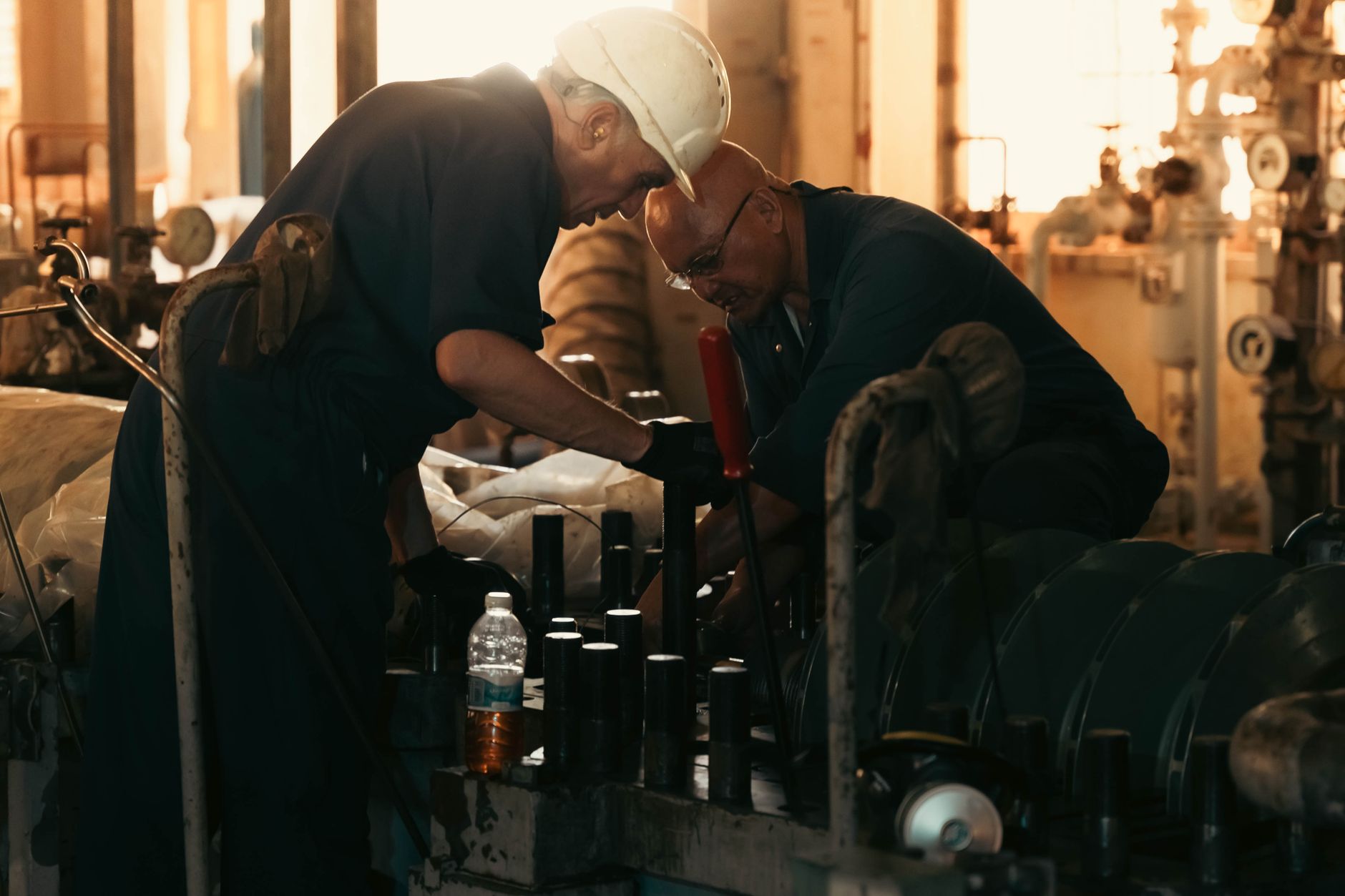
The team is a cobot plus fewer staff, never zero staff. One operator watches the infeed, the wrap station and product quality, while the robot takes the repeating stacking. A lead or technician handles pattern changes, fault clearing and daily checks. The realistic saving is fewer hands on the stacking work, while the roles that remain need more training.
Roles shift from lifting to supervising. People who stacked all shift often take on the cell, the wrap station, quality checks and the exceptions the robot cannot handle. That change needs a planned training period before the cell runs for long stretches without a person close by. Build that training into the rollout rather than treating it as a side task.
What can a cobot not do on a palletizing line?
A cobot cannot judge a damaged case the way a person can, and it adjusts poorly when the next product has another shape. Pattern changes take time because recipes, grippers and the infeed may need changing. Heavy or oversized loads can sit outside a cobot's payload, and a high stack can exceed what one arm reaches from a fixed base.
It also does not remove the need for safety work. Collaborative operation still needs a site risk assessment that sets speed limits, guarding and staff rules. The robot does not wrap pallets, load trucks or move finished goods to staging. Downtime happens, and a cell without a spare plan or a fast service response will lose output. Settle those limits before you commit to a plan.
How common are palletizing cobots, and what do the adoption numbers show?
Adoption is real but still a minority of robot installs overall. According to IFR, collaborative robots were 10 percent of 2023 installations in its World Robotics 2024 release. According to IFR's 2025 presentation, about 542,000 robots were installed in 2024. Those figures cover robots broadly, not palletizing alone, so treat them as context rather than a forecast for your plant.
A3 data gives a North American view, reported here through a secondary summary. Cobots were nearly one in four robots sold in the second quarter of 2025. In the first nine months of 2025, cobots were 16.1 percent of units and 9.4 percent of revenue. The summary also says cobots were nearly 20 percent of total robot orders in 2025, dominated by material handling. The second and third quarter shares are not directly comparable, so read the trend rather than one quarter.
What does injury and safety look like for this work?
Fatal injuries in this occupational group are few in number but real. According to the BLS snapshot covering 2016 to 2020, hand laborers and freight, stock and material movers recorded 113 fatal injuries in 2018, 102 in 2019 and 88 in 2020. These are counts, not rates, so they cannot tell you how a single Milwaukee line compares. They do show the wider occupation carries serious exposure.
For palletizing, the more common risk is repeated strain from lifting, bending and crouching, as the BLS description of the work notes. A cobot can take over the repeated lift and place motion, but it does not remove the need for guarding, lockout procedures or training. Your own injury log and any strain claims on the floor belong in the decision, next to the site assessment.
How do I get started with a palletizing cobot in Milwaukee?
Start with a free site assessment. We map the line, measure the infeed and pallet staging, review case sizes and patterns, and check your timing study against the robot options that fit the floor. The robot is leased through financing, and the payment comes in a quote after the site assessment, so the decision rests on your numbers rather than a generic estimate.
We are a US commercial robot integrator. We pick the robot for the site, deploy and integrate it with your line, train the staff who will run and supervise the cell, and service it nationwide. Start with one leased unit on the line that causes the most strain or missed shifts, then expand once the numbers hold. Spare unit coverage keeps the line moving while a service visit is scheduled.
Frequently asked questions
Upcoming events in Milwaukee, WI
Put a robot to work in Milwaukee.
We walk your site, learn the job, and recommend the unit that fits. Then we quote the lease, deploy it, and keep it serviced.
Sources
- US Bureau of Labor Statistics, Occupational Employment and Wage Statistics (OEWS May 2024)
- BLS Occupational Outlook Handbook, hand laborers and material movers
- BLS JOLTS news release, 2025 annual rates
- BLS Midwest regional summary, Milwaukee-Waukesha metro
- FRED, Milwaukee-Waukesha manufacturing employment
- IFR World Robotics 2024 press conference
- IFR 2025 press conference presentation
- A3 robot orders data, secondary summary
- BLS fatal injury snapshot, hand laborers and material movers, 2016 to 2020