

The short answer
Cobot ROI in New Orleans, LA comes mainly from labor hours on fixed, repetitive material handling tasks, priced at the local wage for laborers and freight, stock, and material movers, hand. The return is the hours a collaborative robot realistically takes over, valued at that wage, minus the fixed lease payment and the staff time the robot does not remove. Savings are shown as a range, and a free site assessment measures the hours on your floor to turn that range into a quote.
Key takeaways
- The return comes from labor hours on fixed, repetitive tasks, valued at the local wage for this job.
- Set the offset from the share of work the robot realistically takes on a live shift, not from a demonstration cycle.
- Shift coverage and layout move the number more than any feature list on the arm.
- Savings are ranges that a free site assessment narrows into a quote.
- Pilot one cell first and measure a full set of live shifts before expanding.
Run the numbers for your site
Auto-detected from your location - we use the real BLS wage here. Not right? Pick your city or state above.
What do you want to automate?
The cobot stacks the repetitive end-of-line pallets; your team handles changeover and QA.
What is cobot ROI in New Orleans, LA?
Cobot ROI in New Orleans, LA is the return a business earns when a collaborative robot takes over repetitive material handling work that people would otherwise do by hand. The return shows up as labor hours. It is not a single headline saving, and it depends on how much of each task the arm can realistically handle on your floor.
The work at the center of this calculation is laborers and freight, stock, and material movers, hand. The government wage data for that job sits in the panel beside this page, and every hour the robot takes over is valued at that local wage. The return is strongest where the work is steady, repetitive and spread across more than one shift.
How many people do this work in New Orleans?
The New Orleans metro had 11,200 jobs in this occupation in May 2019, according to the U.S. Bureau of Labor Statistics regional news release published in 2020. An archived BLS table for May 2011 listed 9,750 jobs for the same metro, so the pool has been large for a long time. We did not retrieve the May 2024 count for the metro, so read 11,200 as a 2019 reference point, not a latest count.
Nationally, the BLS Occupational Outlook Handbook lists 2,988,900 jobs for hand laborers and material movers. The handbook excerpt we reviewed did not confirm the reference year, so use that figure only as a scale check against the metro numbers.
Turnover drives the cost of training. According to the BLS Job Openings and Labor Turnover Survey, the 2025 annual average total separations rate across all industries was 3.3 percent, with quits at 2.0 percent and layoffs at 1.1 percent. We found no occupation-level turnover figure for this job, so measure turnover at your own site.
For a typical site of this kind we plan on four people doing this work. That is our working assumption, to be confirmed during the assessment, not a published count.

Median hourly wage, Laborers and Freight, Stock, and Material Movers, Hand
$3,966
Monthly cost of one full-time worker in New Orleans, LA, at the median wage plus payroll costs (an estimate, not a quote).
How does the payback math work?
The calculation has four inputs. The first is labor hours offset: the hours per week that the robot takes over on a fixed, repetitive task. The second is the share of that work the robot realistically takes, which is rarely all of it. The third is the local wage for laborers and freight, stock, and material movers, hand, taken from the government wage data on this page. The fourth is the fixed lease payment, with service and integration covered in the quote.
The offset hours are valued at the local wage. From that value, subtract the staff time the robot does not remove, such as setup, exception handling and quality checks, and then subtract the lease payment. What remains over a year is the savings. We show that result as a range, because both the hours and the share of work move with each site.
The lease payment is quoted after a free site assessment, so it is not printed on this page. It depends on the cell design and the term. Ask for the hours offset and the lease payment together, so that the payback comes from one consistent set of assumptions.
What changes the number up or down?
Hours are the largest lever. A task that runs across two or three shifts gives the robot more hours to cover than a task that runs only on days, and a station that sits idle for long stretches returns little. Cycle time matters too. A faster cycle covers more of the line for the same lease payment.
The share of the task the robot takes is the second lever. A station where the arm handles the repetitive lift and staff handle only exceptions returns more than a station where the arm performs one small step and people still run the rest. Layout is the third. Conveyors, guarding and pallet staging are real costs that sit outside the arm, and they belong in the quote.
What are the risks to the return, and how do you avoid them?
The most common risk is overstating the share of work the robot takes. Build the offset from timed observation of the real task, not from a demonstration cycle. A demonstration runs clean, while a live shift includes changeovers, damaged cartons and short staffing.
Downtime is the second risk. A cell that stops for a fault, a sensor problem or a missing pallet returns less than planned. Ask how faults are triaged, who dispatches on-site service, and whether a backup unit is covered. We service robots nationwide, and the service terms and any spare coverage should be written into the quote, not left to a verbal promise.
Training and turnover are the third risk. If people turn over often, each new hire needs training on the cell. Build training into the deployment and keep more than one person trained on exceptions on every shift.
Which hours does a cobot take over?
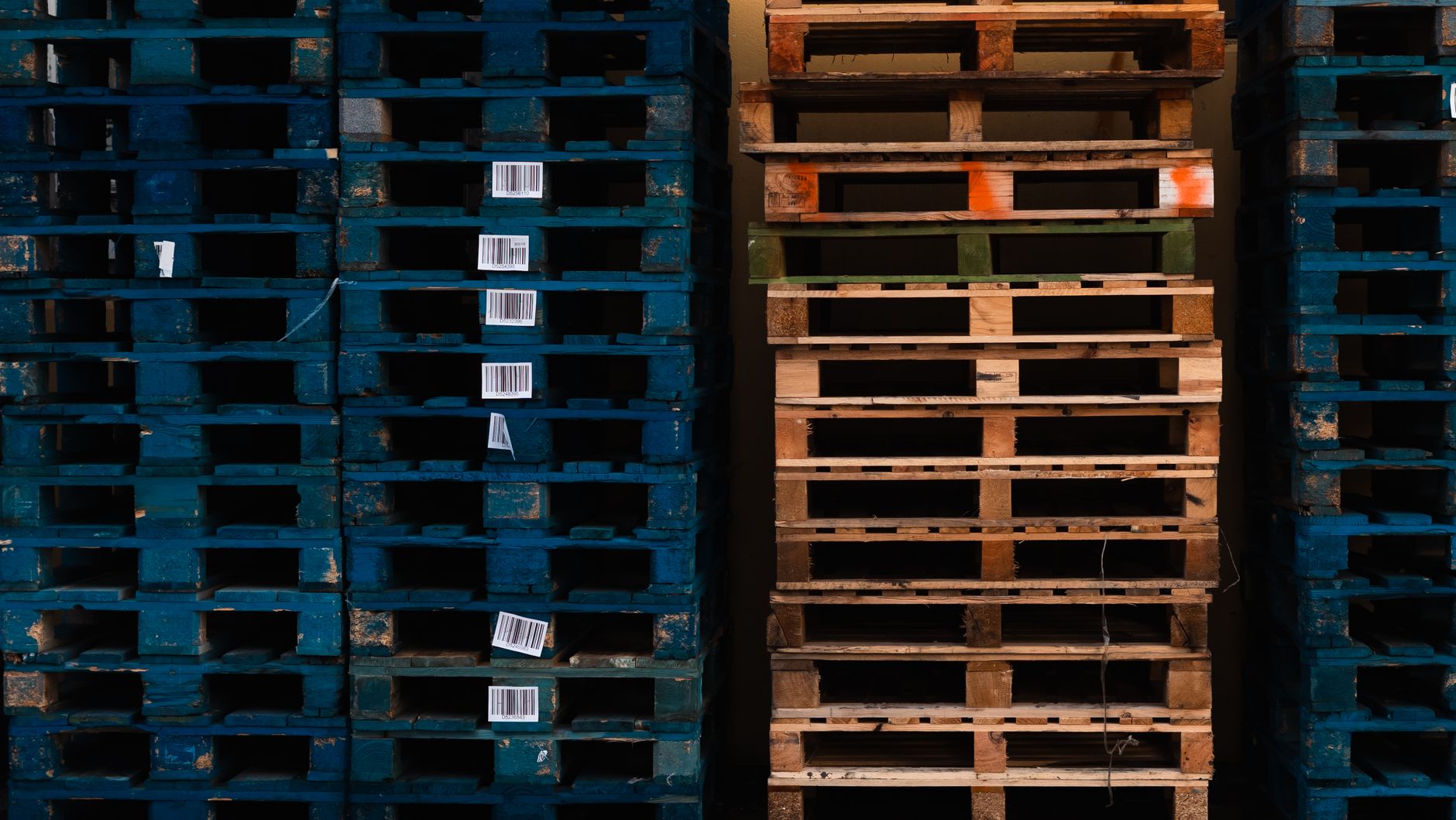
Cobots suit fixed stations with repetitive motion. The common cases in this setting are palletizing, end of line case handling, machine tending and loading at a fixed dock point. In each one the arm repeats the same motion, while people keep the setup, the checks and the exceptions.
Hour figures for a specific site come from timing the work on your floor. We did not find a verified hour count for these tasks in New Orleans, so the table below describes the work and how it changes, and leaves the hours to the assessment.
How safe is this kind of work, and does that affect the return?
Injury cost is real but usually sits outside the lease math. The BLS Industry at a Glance page for warehousing and storage (NAICS 493) reports a total recordable case rate of 4.8 per 100 full-time workers, with days-away-from-work cases at 1.5 and cases with days away, job restriction or transfer at 4.1. The reference year was not confirmed in the excerpt we reviewed, so check the latest release before quoting it in a proposal.
A cobot reduces how often a person repeats the same lift at a fixed station. It does not remove every injury risk, since people still handle setup, pallets and exceptions. Keep the ergonomic gain as a separate line in the business case, not as part of the lease math.
Adoption is growing. According to the International Federation of Robotics, in a secondary summary of its data, 66,000 collaborative robots were installed in 2025, 11 percent of industrial robot installations, and total industrial robot installations reached 603,000 units, up 11 percent. We have not checked those figures on the federation's own site.
How long does it take from assessment to payback?
A typical path runs in stages: a site assessment that times the work and maps the cell, a quote with the lease payment and service terms, integration and installation, training, then go-live support. The assessment decides whether the rest is worth doing, so treat it as the decision point.
Payback starts after go-live, when the robot runs real shifts. The first weeks run slower while staff learn the exceptions, so judge the return across a full set of shifts, not the first few days. Measure the offset against the timed baseline from the assessment.
Phased deployment limits the risk. Starting with one cell lets you measure the offset on a live line before you commit to more. Ask for a pilot scope and a defined measurement period in the quote.
How do I get an exact figure from a free site assessment?
A free site assessment turns the range on this page into a precise figure. We time the task on your floor, map the cell, count the shifts the robot would cover, and confirm the local wage that applies to your job titles. The result is a quote with the lease payment and the expected savings range.
Bring what is easiest to pull: the shift schedule, staffing by station, the task list with rough cycle times, turnover over the last year, and any injury log for the stations in scope. Those inputs shorten the assessment and tighten the range.
Read the quote against the four inputs on this page. When the hours offset, the share of work, the wage and the lease payment are written out, you can check each assumption and see which one carries the result.
Frequently asked questions
Upcoming events in New Orleans, LA
Put a robot to work in New Orleans.
We walk your site, learn the job, and recommend the unit that fits. Then we quote the lease, deploy it, and keep it serviced.
Sources
- US Bureau of Labor Statistics, Occupational Employment and Wage Statistics (OEWS May 2024)
- U.S. Bureau of Labor Statistics, New Orleans metro regional news release (2020)
- U.S. Bureau of Labor Statistics, archived New Orleans occupational employment table (2011)
- U.S. Bureau of Labor Statistics, Occupational Outlook Handbook: Hand Laborers and Material Movers
- U.S. Bureau of Labor Statistics, Industry at a Glance: Warehousing and Storage (NAICS 493)
- U.S. Bureau of Labor Statistics, Job Openings and Labor Turnover Survey
- International Federation of Robotics, President's Report (secondary summary of IFR data)