
The short answer
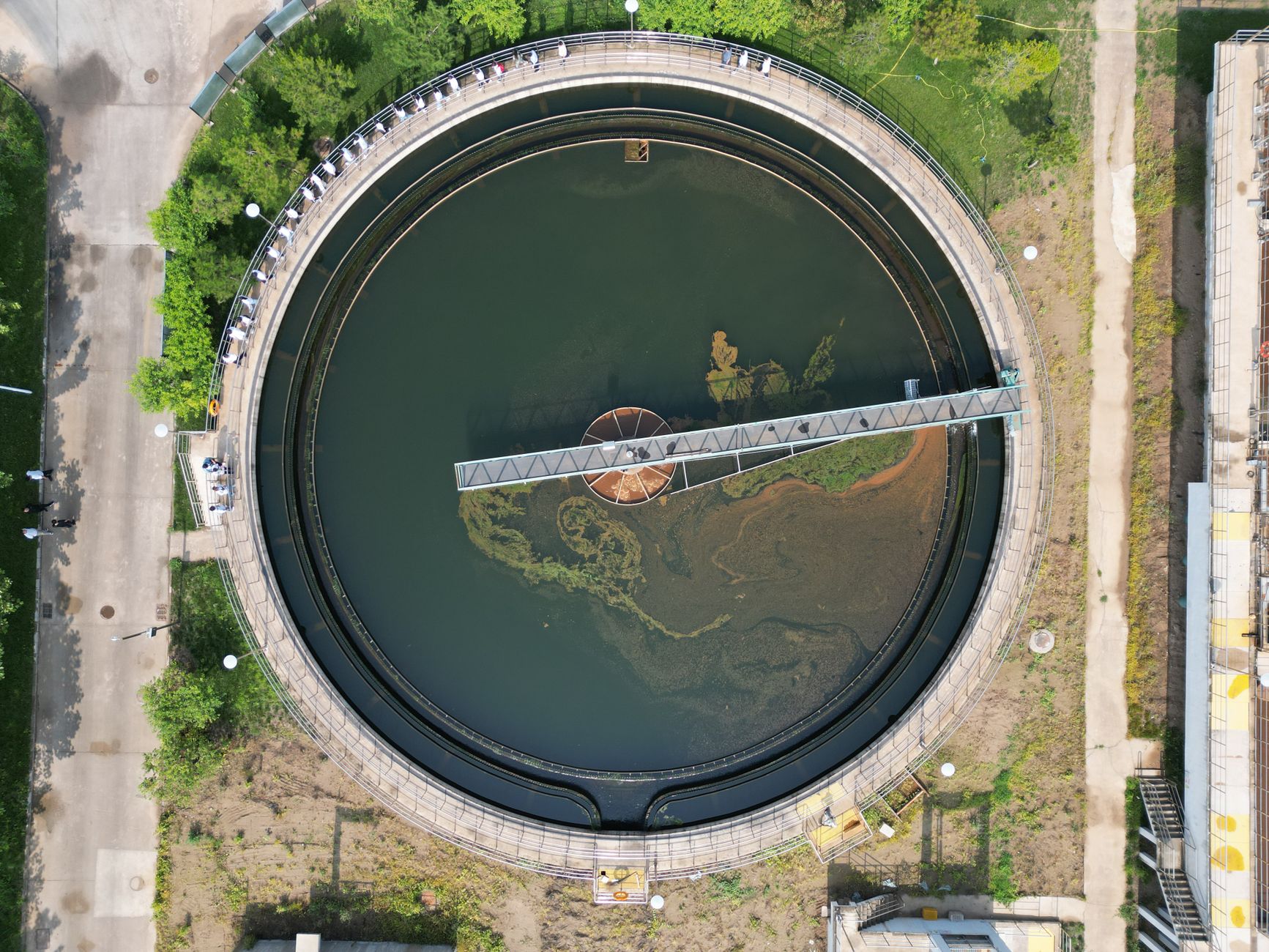
A robotic lawn mower makes sense at a wastewater treatment plant when the job is routine mowing of open turf on fixed boundary paths, such as grassed buffers and fence lines, and the plant has operators on site to handle everything else. It does not replace a groundskeeper who trims tight edges around structures, clears debris, spots washouts or makes judgment calls. For most plants, the robotic lawn mower vs groundskeeper choice is a matter of task fit, and the mower takes the repetitive boundary cutting so the person can focus on the rest.
Read the commercial robot lawn mower guideSee what a robotic mower costsRun the numbers in the ROI calculator
Key takeaways
- Mowing set boundary paths and open buffers is the part of groundskeeping a robot takes over most cleanly.
- Trimming tight edges, clearing debris, and spotting washouts or damaged fence still need a person on site.
- Operator staffing is thin and projected to shrink, so grounds work competes for limited attention.
- Grounds work carries higher injury rates than the all-industry average, which favors moving repetitive mowing off the crew.
- The realistic model is a robot plus fewer staff, never zero staff.
Does a robotic lawn mower make sense at a wastewater treatment plant?
The short version: a robotic mower fits the open, repetitive part of the grounds at a wastewater treatment plant, and it does not fit the whole job. Plant grounds are usually a mix of grassed buffers, long fence lines, embankments, and tight areas around tanks and buildings. Only some of that is open turf that a mower can cover on a fixed path.
It makes sense when the boundary paths are clear, the turf is mostly open, the ground is reasonably level and drains well, and the plant already has operators on site who can handle exceptions. It does not make sense where the grass is mostly tight around process equipment, where slopes are steep or washed out, or where the plant relies on a groundskeeper to haul debris and make calls on the spot.
The honest frame for a robotic lawn mower vs groundskeeper decision at this kind of site is coverage and task fit, not replacement. A mower can keep the buffers cut between crew visits. It does not remove the need for someone who knows the site.
What does a groundskeeper actually do in a shift at a wastewater plant?
A groundskeeper at a treatment plant rarely spends a shift on one job. The day is usually split between mowing and trimming open turf, edging along paved or gravel borders, clearing debris from buffers and drainage edges, pulling weeds where grass cannot grow, and checking the fence line for damage, gaps, or washouts. Some of this happens close to process structures, where the person has to watch for hazards that an operator would flag.
The mowing itself is the repetitive part. Crossing the same open buffers and boundary paths on a schedule is what a robot does well, and it is also the work that absorbs the most hours when a plant is short on staff. The rest of the shift depends on the site and on what the operators ask for that day.
Groundskeeping is a broad occupation. The Bureau of Labor Statistics, in its Occupational Outlook Handbook, estimates about 1.3 million grounds maintenance workers in 2024 and projects 4 percent growth from 2024 to 2034, about as fast as average. That breadth is the reason to separate the mowing task from the rest before deciding anything.
Which grounds tasks can a robotic lawn mower take, and which can it not?
Open turf on set boundary paths is the clear fit. A robotic mower handles grassed buffers and fence lines when the boundary is defined by a physical edge, a buried wire, or a mapped perimeter, and when the grass sits within the slope and surface limits of the machine. Cutting the same buffer every week is the task that frees the most time for a person.
Tight work near structures, mowing around tanks and process equipment, edging, and handling debris stay with a person. So do repairs after storms, erosion repair on embankments, and any cut that needs a judgment about a bad spot. A robot on a fixed path does not notice a washout, a leaking valve box, or a fallen fence post unless it has been set up to report one.
Coverage depends on mapping. A site assessment should record where the boundary runs, which zones are off limits, where the mower charges, and what happens when it stops. Those details decide whether the robot covers the whole buffer or only part of it.
- Repeated boundary mowing
Robotic Lawn Mower
Repeats the same path on a schedule without a crew on site
Groundskeeper
Notices a change in the ground and adjusts the cut on the spot
- Working near tanks and structures
Robotic Lawn Mower
Needs clear, mapped keep out zones and is weak at tight edges
Groundskeeper
Trims and edges by hand around obstacles and equipment
- Night and weekend coverage
Robotic Lawn Mower
Can run when no one is on site
Groundskeeper
Needs a scheduled shift or overtime, and can respond to alarms
- Reporting problems
Robotic Lawn Mower
Logs only what it is set to log and does not diagnose faults
Groundskeeper
Spots washouts, leaks, damaged fence, and debris, then reports them
- Debris and hauling
Robotic Lawn Mower
Does not collect or haul clippings and debris
Groundskeeper
Clears debris, bags waste, and moves material
- Absence and continuity
Robotic Lawn Mower
Keeps its schedule unless it faults and needs service
Groundskeeper
Can be out sick or on leave, which removes that shift's work
How many treatment plants are there, and how thin is operator staffing?
The 2022 Clean Watersheds Needs Survey from the EPA counts 17,544 publicly owned treatment works in the US. Other sources report varying totals because they define facilities differently, so treat the EPA count as a scale check rather than an exact census.
Operators are the core staff. The BLS Occupational Outlook Handbook reports about 131,000 water and wastewater treatment plant and system operator jobs in 2025, and projects employment to decline 6 percent from 2023 to 2033, or about 7,500 fewer jobs. The same handbook says entry needs at least a high school diploma or equivalent, a license, and on-the-job training. That is a slow pipeline, so a thin operator bench leaves little slack for tasks that are not regulatory.
Grounds work sits outside the operator bench. When operators are stretched, grounds work is the work most likely to slip, and it is rarely the first line of hiring.

Are grounds workers hurt more often than other workers?
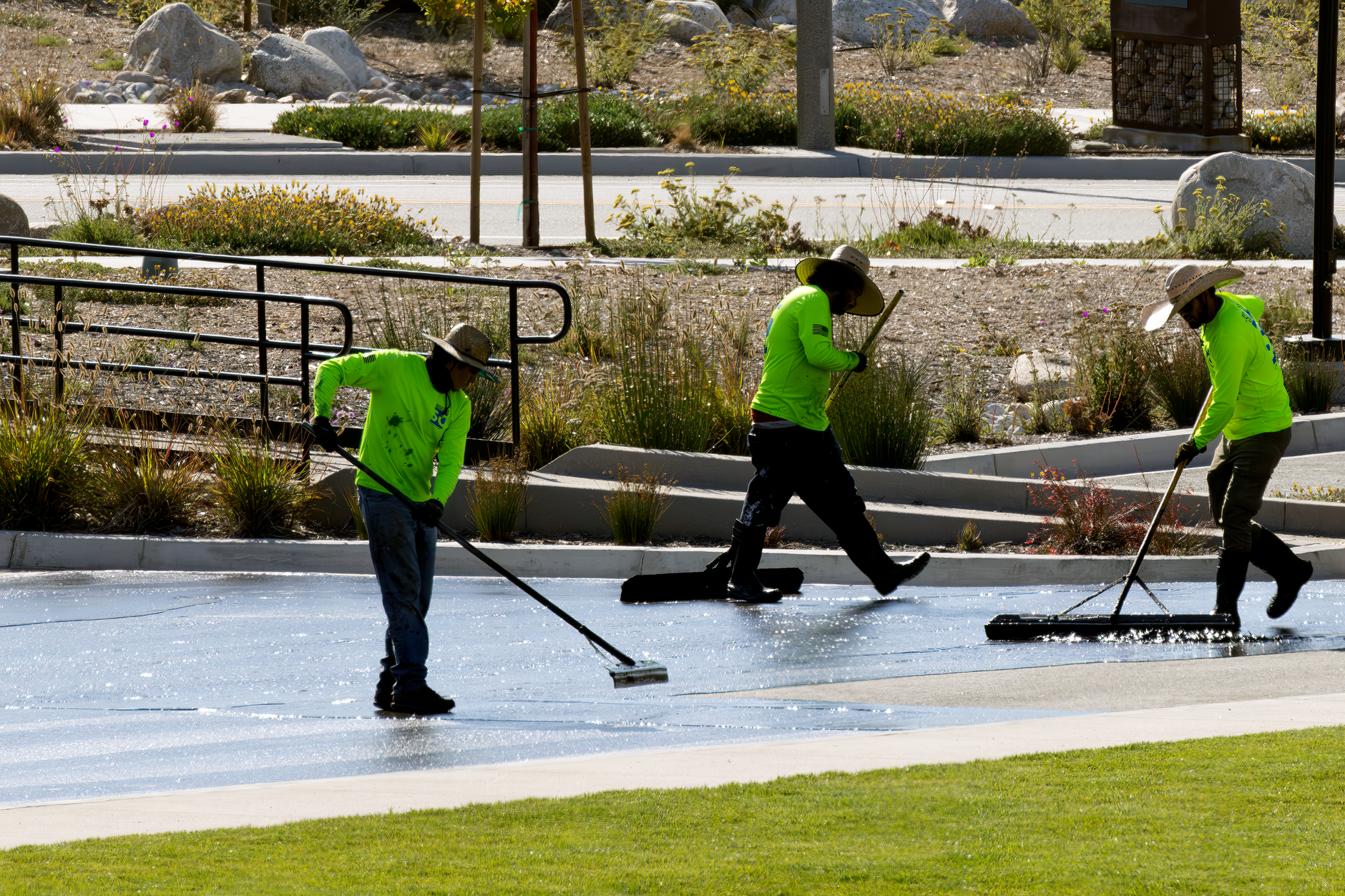
Grounds work carries real injury risk. The BLS injury snapshot for landscaping and groundskeeping workers reports 185.0 nonfatal cases per 10,000 full-time equivalent workers in 2019, and 12,380 nonfatal cases with days away from work in private industry that year. These are 2015 to 2019 figures, the most recent BLS snapshot found in this check, so they show the pattern more than today's rate.
A CDC-hosted paper put the 2018 nonfatal rate for landscaping services at 176.8 per 10,000 full-time workers, against 89.7 for all private industry. That is about double the all-industry rate, which is one reason to take repetitive mowing off the crew wherever the site allows it.
Fatal risk is also rising in the trade. An analysis of BLS data, republished by a newspaper group, reports 20.9 fatalities per 100,000 for grounds maintenance workers in 2024, up from 13 in 2014. That analysis is secondary and covers a broader group than landscaping, so read it as a direction rather than a precise rate.
What do turnover, overtime, and night shifts look like for this work?
The honest answer is that the data here is thin. No verified US turnover or overtime rate for groundskeeping was found in this review, and no verified figure exists for how often grounds shifts fall at night or on weekends. Plans should be built on the plant's own records: sick calls, overtime hours on grounds tasks, and how often a boundary cut slipped.
For operators, the best-documented turnover figure comes from a comparable jurisdiction. An analysis for New South Wales, Australia, estimated annual turnover in the water operator workforce at 19 percent per annum, and noted that average operator pay sits well below other stationary plant operators. That is not a US figure, but it describes the same pressure: a plant losing close to one operator in five each year cannot easily hold a grounds crew through the gaps.
Night and weekend coverage is where a robot earns its place. A plant that cuts buffers only during day shifts depends on a person being free at those hours. A scheduled mower does not need overtime to run a Saturday cut, though it still needs a person to check it, which is the team model below.
How does a team work with a robot on a treatment plant?
The model we recommend is always a robot plus fewer staff, never zero staff. The robot takes the repetitive boundary cuts. The people on site keep the exceptions, the reporting, the debris, and the repairs. A plant that removes all grounds staff to save labor usually finds that the robot cannot respond to a washout or a fallen fence, and nobody is left to call in the problem.
We are a US commercial robot integrator. We assess the site, pick the robot that fits its ground, lease it through financing, deploy and integrate it, train the staff who will run it, and service it nationwide. For a plant, training matters most: the operator who reads the alerts and the groundskeeper who clears the lanes both need to know what the machine does and what it will not do.
Give the robot a fixed schedule and a named owner. Otherwise the cut drifts, and the buffer can grow past its cut height before anyone notices. The timeline below is an illustrative shift, not measured data, and the times will follow the plant's own operating hours.
What can a robotic lawn mower not do at a treatment plant?
A mower cannot judge a problem. It cuts what it is set to cut, inside the boundary it has been given. It does not decide whether a bare patch on an embankment is erosion, whether a fence panel is down, or whether a cap is leaking under the grass. Those judgments belong to the person on the grounds.
It also cannot handle slopes or surfaces beyond its design limits, wet or washed-out ground, very tight areas around process structures, or the collection of clippings and debris. Plants with steep berms or heavy vegetation may still need a hand crew for parts of the site, and that comes from the site itself, not from a failure of the method.
Expect some manual work to remain on every site and build the plan around it. Seasonal growth and wet weather also change the cut schedule, and a fixed schedule can fall behind in a wet spring unless someone adjusts it.

Is a robotic mower worth leasing at a wastewater plant?
Whether it is worth it depends on how much of the grounds work is open, repeatable boundary mowing, and on how often that work is missed or pushed back. A plant with a large grassed buffer, long fence lines, a thin operator bench, and no night coverage for grounds has the strongest case. A plant with mostly tight grounds around process equipment has a weaker one.
We lease robots through financing, so the plant does not carry the cost up front. The lease figure is set in a written quote after a free site assessment, which covers the area, the boundary, the slope, the keep out zones, and the service plan. Compare that quote against the crew hours and missed cuts the plant already tracks, not against a general figure that ignores the site.
Adoption data for commercial landscapers is thin. A product manager at a mower maker, quoted in Total Landscape Care, described landscaper adoption as moving from fairly low to medium-high. That is a vendor view rather than a survey, so use the plant's own records to measure the case.
How do you get started with a robotic mower at a plant?
Start with a site walk. Mark the boundary, the keep out zones, the charging location, the access gates, and any areas that flood. Note where the grass is tight around equipment and where the crew already does edging. That map becomes the basis for the site assessment and for any pilot.
Pilot one zone first. A single grassed buffer or one fence line run lets the staff learn the alerts, the boundary edits, and the handover to the hand crew. Expand only after the first season shows that the cut schedule holds through wet weeks and that operators know who responds to a fault.
For a free site assessment and a written lease quote, contact us with a rough estimate of the grounds, a sketch of the boundaries, and the cut schedule the crew runs now. We will walk through the fit and the staffing plan, and we will say so if a mower is the wrong tool for the site.
Frequently asked questions
Want a robotic mower at your wastewater treatment plant?
Tell us about your site. We will recommend the robot, quote the lease, and keep it serviced.
Sources
- EPA Clean Watersheds Needs Survey dashboard
- BLS Occupational Outlook Handbook: Water and Wastewater Treatment Plant and System Operators
- BLS Occupational Outlook Handbook: Grounds Maintenance Workers
- BLS Injuries, Illnesses, and Fatalities snapshot: Landscaping and Groundskeeping Workers, 2015-19
- Analysis of BLS fatality data, republished by a newspaper group
- CDC-hosted paper on landscaping services injury rates
- New South Wales water operator workforce analysis summary report
- Total Landscape Care: How perceptions are changing about robotic lawn mowers