
The short answer
A robotic lawn mower makes sense at an RV park when the open turf is large, level and cut on the same route between site turnovers, because that repeat cutting is the part of the job a groundskeeper otherwise does by hand. It does not make sense on small, cluttered or steeply sloped grounds, or where the layout changes from week to week, and a person with a walk-behind or riding mower wins there. For most parks the realistic result is a robot plus fewer mowing hours on staff, never a site with zero staff.
Read the commercial robot lawn mower guideSee what a robotic mower costsRun the numbers in the ROI calculator
Key takeaways
- The mower takes repeat cutting on open turf, while the groundskeeper keeps edges, obstacles, hookups and guest work.
- No public source we could verify gives hours per turnover for RV parks, so time the mowing on your own grounds first.
- Grounds work carries a higher injury rate than all occupations, which adds a safety case to the labor case.
- The realistic model is a robot plus fewer mowing hours, not zero staff.
Robotic lawn mower vs groundskeeper at RV parks: which makes sense?
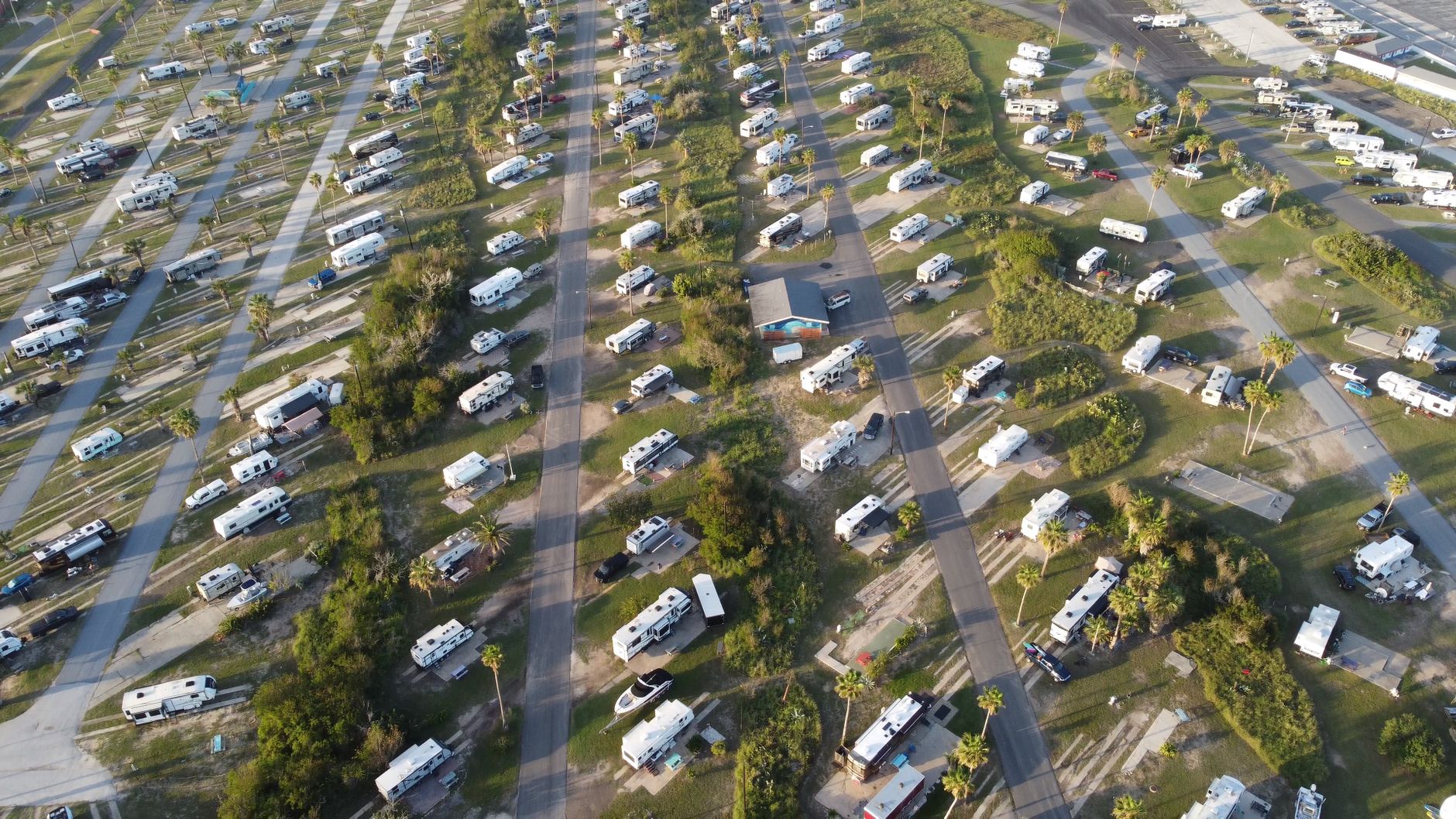
A robotic lawn mower makes sense at an RV park when a large share of the grounds is open turf that gets cut on the same route again and again. The mower can follow that route between site turnovers, which frees the groundskeeper for work that needs judgment: trimming around hookups, clearing debris after storms, checking the dump station and answering guests. The useful question is not whether a robot can mow. It is whether the grounds are regular enough to let a robot handle the repeat part of the day.
It does not make sense when the grounds are small and cluttered, when slopes are steep, or when the layout shifts from week to week because of tent pads, temporary fencing or rotating seasonal sites. In those parks a groundskeeper with a walk-behind or riding mower usually finishes faster and misses fewer patches. Expect a robot to take the repeat cutting on a stable lawn, not the whole grounds job.
What does a groundskeeper actually do in a shift at an RV park?
At a typical RV park the groundskeeper is rarely only a mower operator. A shift usually mixes mowing, string trimming along site edges and fences, blowing debris off gravel and pads, watering, checking lights and clearing windfall after storms. Turnover work, such as tidying a site after a guest leaves and checking hookups for trash or damage, often falls in the same hours as the mowing because both happen on the same grounds.
The work is physical and repeated. Much of it is walking and pushing, with long stretches on a machine and short stretches of hand work in tight spots around picnic tables, posts and utility pedestals. The office, the dump station and guest requests also pull a grounds worker off a planned task, so the day breaks up and is hard to schedule in advance.
No public source we could verify breaks this down into hours for RV parks. Treat this task list as the starting point for a site walk, not as a finished time study.
Which parts of the grounds can a robot take, and which can't it?
A robot can take the repeat cutting on open, level turf where the boundary is clear and the path stays put. On many parks that is the largest and most predictable block of grounds work. It can also run on a schedule, so the cut happens between turnovers rather than waiting for a person to finish other tasks.
It cannot take the edges, the obstacles, the hand work or the judgment calls. Someone still trims around posts, pads and pedestals, clears debris before a mow, checks for damage and decides when grass is too wet or too tall. Those tasks stay with the groundskeeper, and they are often the reason a park needs a person on site at all.
- Repeat route on open turf
Robotic Lawn Mower
Follows a fixed route on a schedule and does not tire
Groundskeeper
Follows the same route but tires and gets pulled to other jobs
- Early or late cutting windows
Robotic Lawn Mower
Can run between turnovers if the site allows it
Groundskeeper
Needs to be scheduled and may not want early or late shifts
- Edges and obstacles
Robotic Lawn Mower
Needs a clear boundary and still misses tight spots
Groundskeeper
Trims around posts, pads and pedestals by hand
- Judgment on conditions
Robotic Lawn Mower
Cannot decide when grass is too wet, too tall or unsafe
Groundskeeper
Decides and adjusts the plan on the day
- Guest contact and turnovers
Robotic Lawn Mower
Cannot talk to a guest or check a site
Groundskeeper
Handles guests, checks sites and reports damage
- Storm cleanup and weather
Robotic Lawn Mower
Needs debris cleared first and may stop in heavy rain
Groundskeeper
Clears debris and works around weather where it is safe
How many RV parks are there in the US, and how big is the segment?
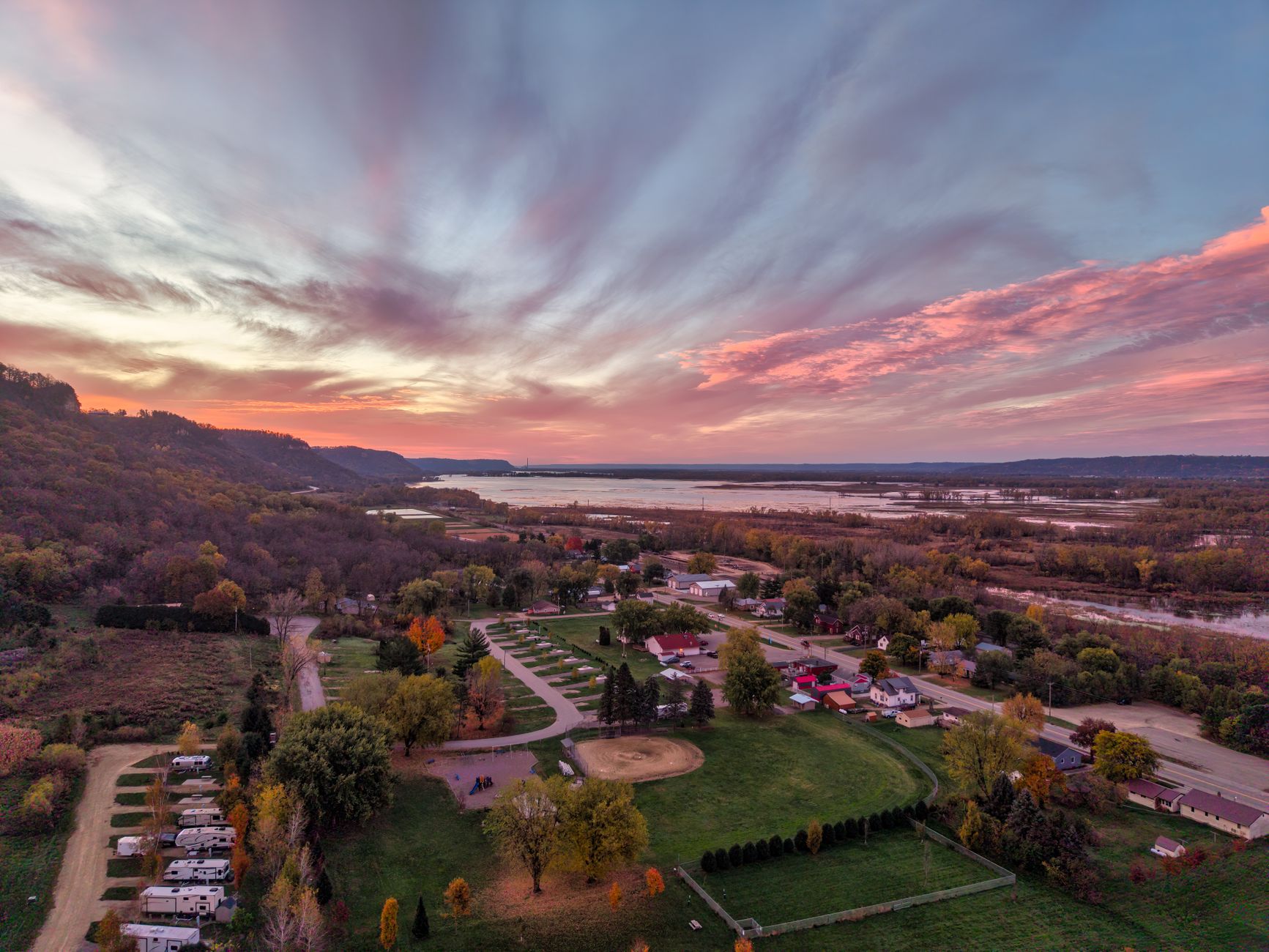
According to IBISWorld's May 2026 report, there were 17,037 US campgrounds and RV parks businesses under NAICS 72121, with a 2021 to 2026 compound annual growth rate of 2.9%, after a 2025 figure of 16,419. A narrower and older count also exists. According to Census County Business Patterns, 2016 data, there were 4,396 recreational vehicle campgrounds in the US. The gap between the two shows how much the category definition matters, so check which list a source uses before comparing numbers.
According to VerticalIQ, a third-party industry estimate rather than government data, about 7,245 firms in RV park and campground operations employ about 48,990 workers, and 95% of those firms have 20 or fewer employees. In a park with a handful of staff, one person often covers mowing, turnovers and guest questions in the same shift, which is where a repeat task can come off their plate.
On the demand side, according to RVIA with Ipsos, its Go RVing 2025 study estimated about 8.1 million US RV-owning households, or 6.7% of 121.6 million vehicle-owning households, against 11.2 million in its 2021 study. RVIA says the survey method changed in 2025, so the two results are not directly comparable. The same study put median RV use at 30 days per year. A business count says nothing about turf per park, so that question has to be answered on site.
What are the hours and labor realities at RV parks?
The hour picture is the part public data does not answer. No source we could verify gives hours per turnover or per mowing cycle for RV parks, and none gives a turnover rate for campground groundskeeping staff. Any hour figure from a vendor or trade article should be checked against a timed walk of your own grounds.
The labor pressure is documented in adjacent settings. According to NRPA's seasonal hiring report, which covers park and recreation agencies rather than RV parks, 9 in 10 agencies reported challenges hiring and/or retaining summer seasonal staff in its 2023 data. Parks that rely on summer seasonal labor may feel similar strain, but that is an inference from adjacent data, not a measured result for this segment.
Overtime, night shifts and sick days are the costs that appear when one person is the only grounds worker. A missed day pushes mowing and debris clearing into the next shift, and a turnover can wait until the person returns. Shared coverage across staff reduces that exposure, though we have no verified figure for how much.

Is groundskeeping risky enough to change the math?
Grounds work carries a higher injury rate than most jobs, which matters when you weigh moving repeat mowing to a machine. According to NIOSH, grounds maintenance workers are more than two times as likely to be injured on the job as all workers, at 189 injuries per 10,000 full-time employees vs 87 for all occupations. That covers the broader grounds maintenance group, not RV park staff specifically.
The BLS snapshot for landscaping and groundskeeping workers, using 2015 to 2019 data, shows the rate moving over that period. Its days away from work incidence rate was 185 per 10,000 full-time equivalent workers in 2019, down from a peak of 218.8 in 2016 and a low of 149.0 in 2018. These are national occupation figures, so your own injury log is the better test for your site.
News coverage citing BLS data reported that 239 grounds maintenance workers were killed by work injuries in 2024. That is a national count for the occupation, not an RV park figure, but it shows why repeat tasks that a machine can take deserve a look on safety grounds as well as cost.
How does a team work with a robot at an RV park?
The team does not shrink to zero. The model is a robot plus fewer staff hours on mowing, with the same people covering turnovers, edges, guest contact and condition checks. The groundskeeper stops being the person who drives the mower every morning and becomes the person who sets the route, checks the output and handles the work the robot cannot.
Setup matters more than most people expect. The site needs a mapped boundary, clear no-go zones around pads, posts and hookups, and a schedule that fits the turnover windows. Someone on site needs to know how to pause the mower, clear it when it gets stuck and report a problem. That training is part of the job, not a one-time event.
The rhythm of a day is easier to see in the timeline below, which is illustrative rather than measured on any particular park.
What can't a robot do at an RV park?
A robot cannot do work that needs hands, eyes or a conversation. It cannot trim around posts and pedestals, lift debris off a pad, check a hookup for damage, talk to a guest about a noisy neighbor or decide that a storm has left the route unsafe. Those limits are why staff stay on the grounds.
Terrain and layout set real limits too. Steep grades, deep ruts, standing water, very tall or uneven grass and tight gaps between sites all reduce what a mower can cover without help. Obstacles that move, such as seasonal tents, trailers left in odd places or temporary fencing, can stop a route until someone clears them.
Robots also stop for their own reasons. A sensor, a battery or a boundary setting can halt the mower mid-route. A plan that depends on zero human intervention will fail on the first bad day, so the groundskeeper still needs the skill and time to take over the work.
How do we get started with robot mowing at an RV park?
Start with the site, not the machine. Walk the grounds with a timer running on the repeat mowing, map the open turf, mark the edges and no-go zones, and note the turnover windows. That gives you a real baseline before anyone talks about a robot.
We are a US commercial robot integrator. We pick the robot for the site, lease it through financing, deploy and integrate it, train your staff and service it nationwide. The lease is quoted after a free site assessment, and we do not give a robot figure before we have seen the grounds. Service covers fault response and maintenance under the plan.
A pilot on one leased unit over a season shows how the route behaves before you commit the whole grounds. Ask for an assessment that covers your turf, your turnover windows and your staff hours, then compare the quote against the hours you measured, not against a guess.
Frequently asked questions
Upcoming property management events
- Trade showMinnesota Buildings & Facilities Management Trade ShowNov 19, 2026Minneapolis Convention Center, Minneapolis, MN
- WorkshopIREM Boston Chapter No. 4 Fair Housing Corporate OfferingDec 2, 2026The Simon Companies, Braintree, MA
- ExpoMontana Green EXPO 2027Jan 5 to 7, 2027Hilton Garden Inn, Missoula, MT
- ExpoPittsburgh Remodeling ExpoFeb 5 to 7, 2027Acrisure Stadium, Pittsburgh, PA
Want a robotic mower at your RV park?
Tell us about your site. We will recommend the robot, quote the lease, and keep it serviced.
Sources
- IBISWorld, Campgrounds and RV Parks in the US (May 2026)
- US Census Bureau, County Business Patterns (2016 data)
- VerticalIQ, RV Park and Campground Operations industry profile
- RVIA with Ipsos, Go RVing 2025 study
- National Recreation and Park Association, Summer Seasonal Hiring Report
- BLS, Injuries, Illnesses and Fatalities snapshot: landscaping and groundskeeping workers, 2015 to 2019
- NIOSH bulletin on heat illness in landscaping
- CBS17, coverage citing BLS data on grounds maintenance worker deaths