
The short answer
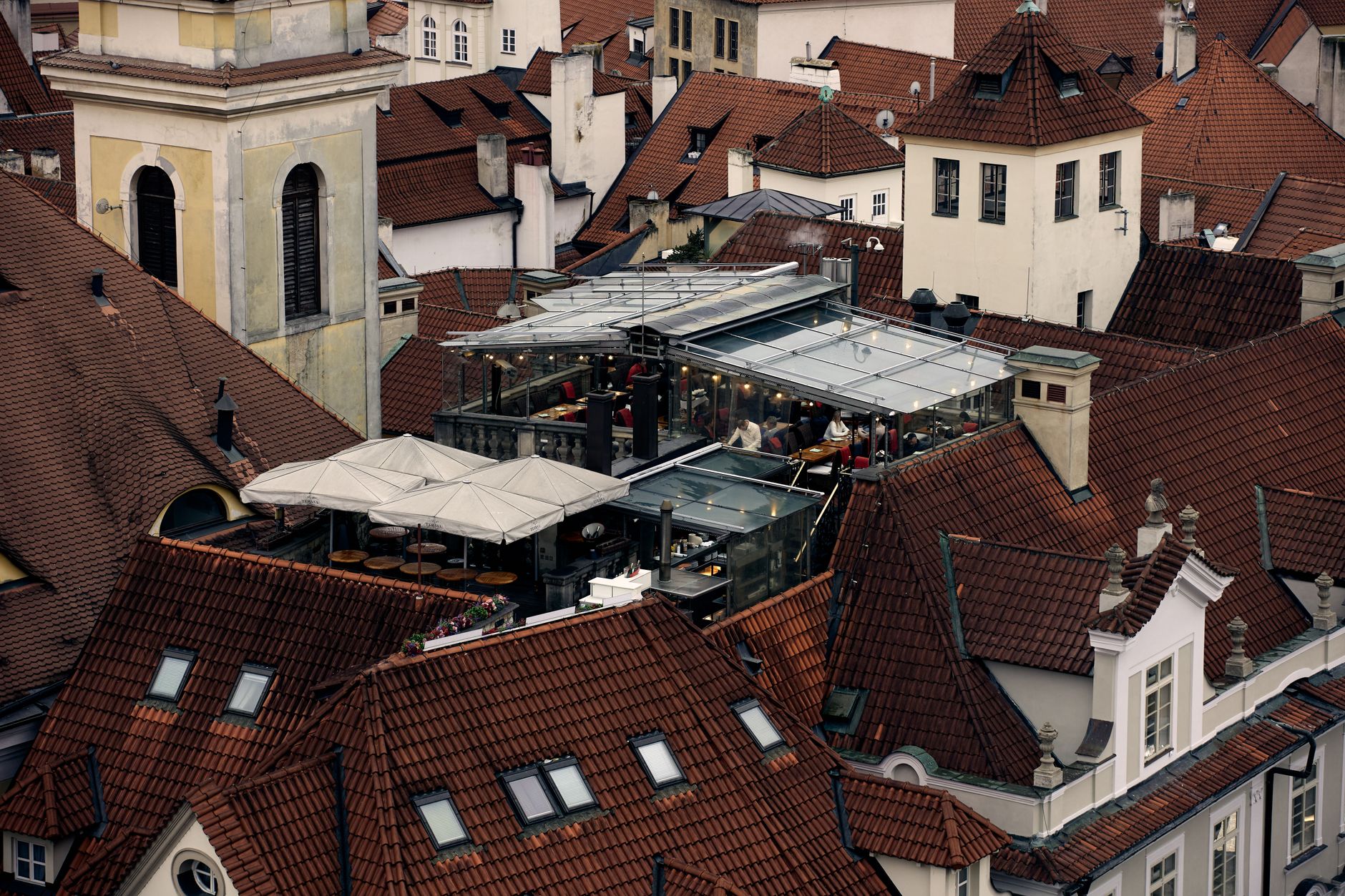
For a rooftop restaurant, the delivery robot vs food runner choice turns on the route. A delivery robot makes sense when the kitchen-to-roof trip is fixed, the robot can reach the deck by elevator or a level path, and the trip repeats often enough to matter. It does not replace the food runner on a packed night, because people still handle stairs, crowded decks, plate checks and guest contact, so the practical answer is a robot plus fewer runners.
See what a delivery robot costsRun the numbers in the ROI calculator
Key takeaways
- A robot fits a rooftop only when the route is fixed, an elevator or level path reaches the deck, and floor space is clear at both ends.
- A food runner still does what a route cannot: tables, guest questions, stairs and plate checks.
- Plan for a robot plus fewer runners, never zero staff, on a packed night.
- Turnover in this job is high, so every shift you can cover without a new hire lowers risk.
- Time your own busiest night before deciding, because public figures describe the whole industry, not rooftops.
Delivery robot vs food runner at rooftop restaurants: which makes sense?
A delivery robot makes sense on a rooftop when the trip from kitchen to roof is the same on every service, the path is clear, and the robot can reach the deck by elevator or a level route. It makes less sense when the trip needs stairs, when the deck is crowded at the peak hour, or when most of a runner's time goes to tables rather than walking.
The key point is that the robot takes the trip, not the service. A food runner on a packed weekend night does three jobs at once: carrying plated food and drinks, clearing and resetting tables, and answering what guests ask while a plate is in hand. A robot can do the first job well on a fixed route. The other two stay with people.
For most rooftop operations, the sensible answer is a robot plus fewer runners, not a robot in place of the whole team. Plan the robot around the longest and most repeated trip, and keep enough people on the floor to cover the tables.
What does a food runner actually do on a rooftop shift?
On a rooftop, the runner's day is set by distance and height. Food leaves a kitchen pass one or more floors below the dining area, travels a service corridor and an elevator or stairs, and arrives at a deck where tables are spread out and the weather can change. The trip repeats all night, and each run carries plates or trays that must stay hot and level.
The core of the work is the fixed route: kitchen to tables, and tables back to the kitchen with empties. Runners also carry drinks, check that the plate matches the ticket, and hand dishes to a bar or bussing station. These movements are predictable, which is why the route is the part a robot handles best.
Many of the runner's minutes go to things that are not trips: waiting at the pass when a ticket is late, finding the right table on a crowded deck, and stopping to answer a guest. A shift review should separate these, because a robot removes only the walking and carrying on a set path.
Median hourly wage, Waiters and Waitresses
$3,798
Monthly cost of one full-time worker, at the median wage plus payroll costs (an estimate, not a quote).
Which parts of the runner's work can a robot take, and which can't it?
A delivery robot can take the repeat carry on a fixed path. That covers plated food and drinks moved from the pass to a set of tables or a service station, and used dishes and glassware moved back. Each trip follows the same route, and the robot can be scheduled to run when the kitchen calls it.
It cannot take the parts that need a person. It cannot place a plate in front of a guest, confirm a drink order at the table, clear a spill, or decide that a table is ready for the next course. It cannot read a crowded deck where guests step into its path, and it cannot balance a plate that needs a steady hand.
Access is the deciding factor. The robot needs an elevator or level route it can use with a person at each end, a door it can open or that staff can hold, and clear floor space at both ends. If any of those is missing, the robot's share of the work shrinks quickly, and the remaining trips still need a runner.
What does the labor picture look like for this job?
According to the U.S. Bureau of Labor Statistics Occupational Outlook Handbook, there were about 2,329,700 waiter and waitress jobs in 2024, and projected employment change for 2024 to 2034 is a decline of 1%. The same source projects about 456,700 openings a year on average over the decade, mostly from people leaving and needing replacements rather than from growth. Work is often part time, and seasonal establishments may employ servers for only a few months a year.
Turnover is where the staffing pressure sits. According to a payroll vendor's turnover analysis that cites industry data, annual food-industry turnover was about 75% in 2025, with front-of-house turnover at 41% and back-of-house at 43%. That is a vendor estimate, not a government series, but it points the same way as the federal quit data.
Federal monthly data on quits in accommodation and food services moved sharply in 2025. According to the BLS Job Openings and Labor Turnover Survey release, quits fell by 140,000 in August and rose by 208,000 in November. Those swings are why a site should plan for shift gaps, not only average headcount. The sources reviewed for this page do not give overtime or sick-day rates for this job, so measure those on your own schedule.
For the wage side, use the government wage data on this page for the local wage for this job, and set it against the hours a runner covers on a packed night. The lease payment is quoted after a site assessment, so the real comparison is between a fixed lease payment and the shifts you cannot fill.
How many hours does the robot take off the runner's shift?
We did not find published counts of rooftop restaurants, deck floor area, or runner hours per shift, so the figures on this page describe the broader food service workforce and the job. The only reliable hour number for your site comes from a timed walk on your busiest night, recording each trip, its length and what the runner does at each end.
Once you have that, the question is narrow: how many of those trips are on a fixed, reachable route, and how much of the rest of the shift stays with people. Most of the time saved sits in repeat carries. Time spent on tables, guests and the pass does not move to the robot.
Use the table below as a planning frame. It shows which tasks move and which stay, and leaves the minutes blank for your own measurements.
How risky is the job for staff, and does a robot change it?
According to the BLS injury table for food services and drinking places, the 2024 total recordable case rate was 2.4 per 100 full-time workers. Cases with days away, restriction or transfer ran at 1.0, and cases with days away alone at 0.7. According to Business Insurance, reporting on BLS data, the all-industry 2024 rate was 2.2 per 100 full-time workers, so this setting sits above the all-industry average.
The exposures a runner faces are stairs, hot trays carried over distance, and crowded decks. A robot takes the repeated carry, which may reduce some of those exposures, but it adds exposures of its own: staff standing near a moving unit, loading at doors, and keeping paths clear. Walk the route with the team before deciding.
Do not promise a safety gain the data cannot yet show. Ask for the injury log for the runner role, and record near misses on the robot route from the first day it runs.
Will guests accept a robot on a rooftop, and what do people worry about?
Guest acceptance is mixed but not hostile. According to Restaurant Dive, a survey found that about 47% of customers would order from a restaurant that uses drones or autonomous vehicles for delivery. The survey date is not stated in the report, so treat it as a direction rather than a precise measure.
On the operator side, a 2025 survey reported by Restaurant Dive found that 50% of U.S. restaurants plan to adopt some form of automation within two to three years. That is a plan, not current use, and it says little about how any single rooftop will perform.
The common worries rest on three assumptions. The first is that guests will not want a robot bringing their food. Survey data shows many are open to it, but the real test is whether the food arrives hot and a person still greets the table. The second is that the robot runs the floor alone. It does not: staff load, unload, clear paths and handle exceptions. The third is that a robot removes the need to recruit. It can cover some repeat trips, but turnover in this job is high, so the team still needs recruiting and training, and zero staff is not a workable plan.
How does a team work with a robot on a packed night?
The working pattern is a robot plus fewer runners, never zero staff. On a packed night the kitchen loads the robot at the pass, a runner or busser unloads it at the deck, and the robot returns empties on a fixed schedule. People keep the tables, the drinks and the guest contact.
Staffing changes are the part to plan carefully. If you run one runner fewer per shift, the others and the bussers must cover the tables that runner used to reach. That is the situation to test in a pilot with your own covers before committing to a staffing change.
Our integration team sets the route, the loading points and the staff steps during the site assessment, then trains the team and supports go-live. We select the robot for the site and service it nationwide, so the staffing plan and the equipment plan are built together.
What can a delivery robot not do on a rooftop?
It cannot replace the parts of the job that depend on a person. On a rooftop it cannot climb stairs, manage a crowded deck, clean up a spill, or decide that a table is ready for a plate. It needs a route it can reliably use, and it needs staff for loading, unloading and exceptions.
Weather is a real limit. An open deck may be exposed to wind, rain and heat, and the robot needs a route that stays dry and clear. Test that on the worst night of the season, not the mildest one.
Speed is also a limit. A robot moves at a steady, measured pace, while a runner can cut across an open area. Test the pace on your own floor during the pilot, and check how it behaves near guests and chairs.
- Fixed kitchen-to-roof run
Delivery Robot
Repeats the same route on schedule without fatigue
Food Runner
Flexible, can change path when the route is blocked
- Stairs and uneven paths
Delivery Robot
Needs an elevator or level route it can use with staff at each end
Food Runner
Handles stairs and uneven decks
- Guest contact
Delivery Robot
Does not greet, answer questions or fix an order
Food Runner
Greets guests, reads the table and recovers a mistake
- Peak-hour crowds
Delivery Robot
Slows and stops around people, and can get in the way
Food Runner
Moves around guests and adjusts to the flow
- Night and weekend coverage
Delivery Robot
Runs when charged and loaded, with staff for loading
Food Runner
Needs scheduling, breaks and time off, and turnover is high
- Plate and order checks
Delivery Robot
Carries what is loaded, without checking the plate
Food Runner
Checks the plate, the ticket and the table before leaving the pass
How do you start, and what happens after the site assessment?
Start with a free site assessment. We map the kitchen pass, the route to the deck, the elevator or stairs, the doors and the tables, then time the runner's trips on your busiest night. The lease payment is quoted after that assessment, based on the route and the service plan, so the numbers reflect your site rather than an average.
Pilot with one leased unit on one route, and keep human runners on the rest of the floor. Measure trips taken, staff steps, guest feedback and any near misses for several weeks before changing the staffing plan.
Go-live support, staff training and nationwide service are part of the deployment. Set a fallback before go-live, including a backup unit or runner coverage for the route, so a failure on a packed night does not leave the kitchen without a way to get food to the deck.
Frequently asked questions
Upcoming hotels & hospitality events
- MeetupMPI Virginia Morning Brew Meet-Up, November 2026Nov 10, 2026Hampton, VA
- SummitVA1 Governor's Tourism Summit 2026Nov 18 to 20, 2026Kalahari Resorts & Conventions, Spotsylvania, VA
- ConferenceVirginia Association of Fairs ConventionJan 14 to 17, 2027Williamsburg Lodge, Autograph Collection, Williamsburg, VA
- ConferenceIHLA Convention and Exposition, 2027Feb 8 to 10, 2027Indianapolis, IN
Want a delivery robot at your rooftop restaurant?
Tell us about your site. We will recommend the robot, quote the lease, and keep it serviced.
Sources
- US Bureau of Labor Statistics, Occupational Employment and Wage Statistics (OEWS May 2024)
- U.S. Bureau of Labor Statistics, Occupational Outlook Handbook: Waiters and Waitresses
- U.S. Bureau of Labor Statistics, Survey of Occupational Injuries and Illnesses: Food services and drinking places
- U.S. Bureau of Labor Statistics, Job Openings and Labor Turnover Survey release
- Business Insurance, work injuries reporting on BLS data
- Restaurant Dive, diners and robot-prepared food survey
- Restaurant Dive, customer acceptance of automation
- Restaurant turnover rates article from a payroll vendor blog