
The short answer
A delivery robot makes sense at a hotel lobby lounge when drink and snack trips follow a flat, fixed route between the bar or kitchen and a set group of tables, and staff are stretched thin at predictable peaks. A food runner still makes more sense when the room is crowded in unpredictable ways, when orders need a conversation, or when one runner already covers a small room well. In most lounges the answer is a robot plus fewer staff, never zero staff.
See what a delivery robot costsRun the numbers in the ROI calculator
Key takeaways
- A delivery robot fits a lobby lounge best as a helper on a fixed route, not as a replacement for the whole runner role.
- Sector turnover runs high, so a robot on fixed trips reduces reliance on any single hire.
- Staff still handle pouring, seating, order changes and spills.
- Time your own trips before a site assessment or a lease quote.
Delivery robot vs food runner at hotel lobby lounges: which makes sense?
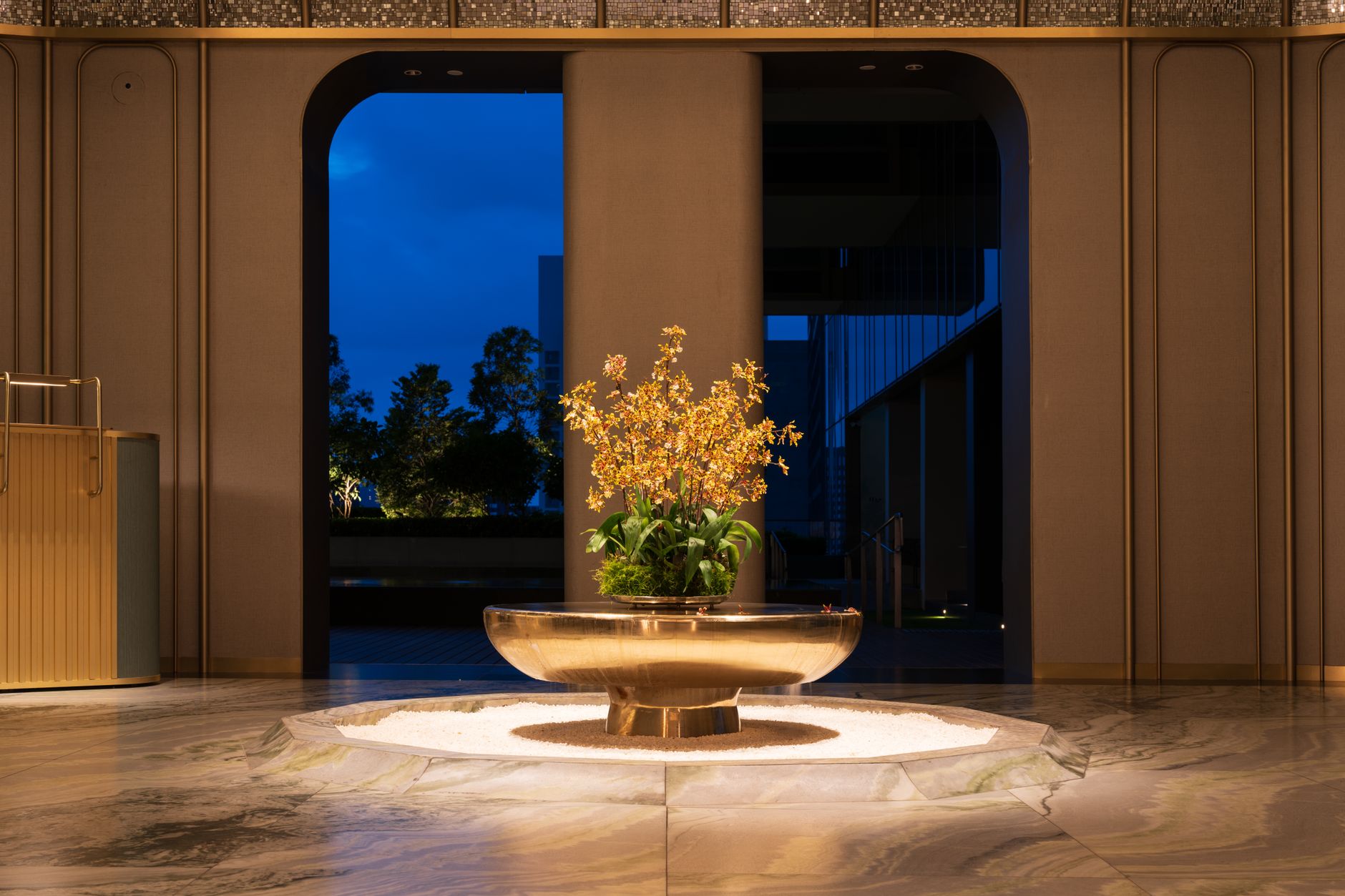
For most hotel lobby lounges, a delivery robot makes sense as a helper on the drink and snack trips between the bar or kitchen and the tables, not as a replacement for the people on the floor. The fit is strongest when the route is flat, fixed and fairly quiet, and when the lounge runs short of runners at the same hours each day.
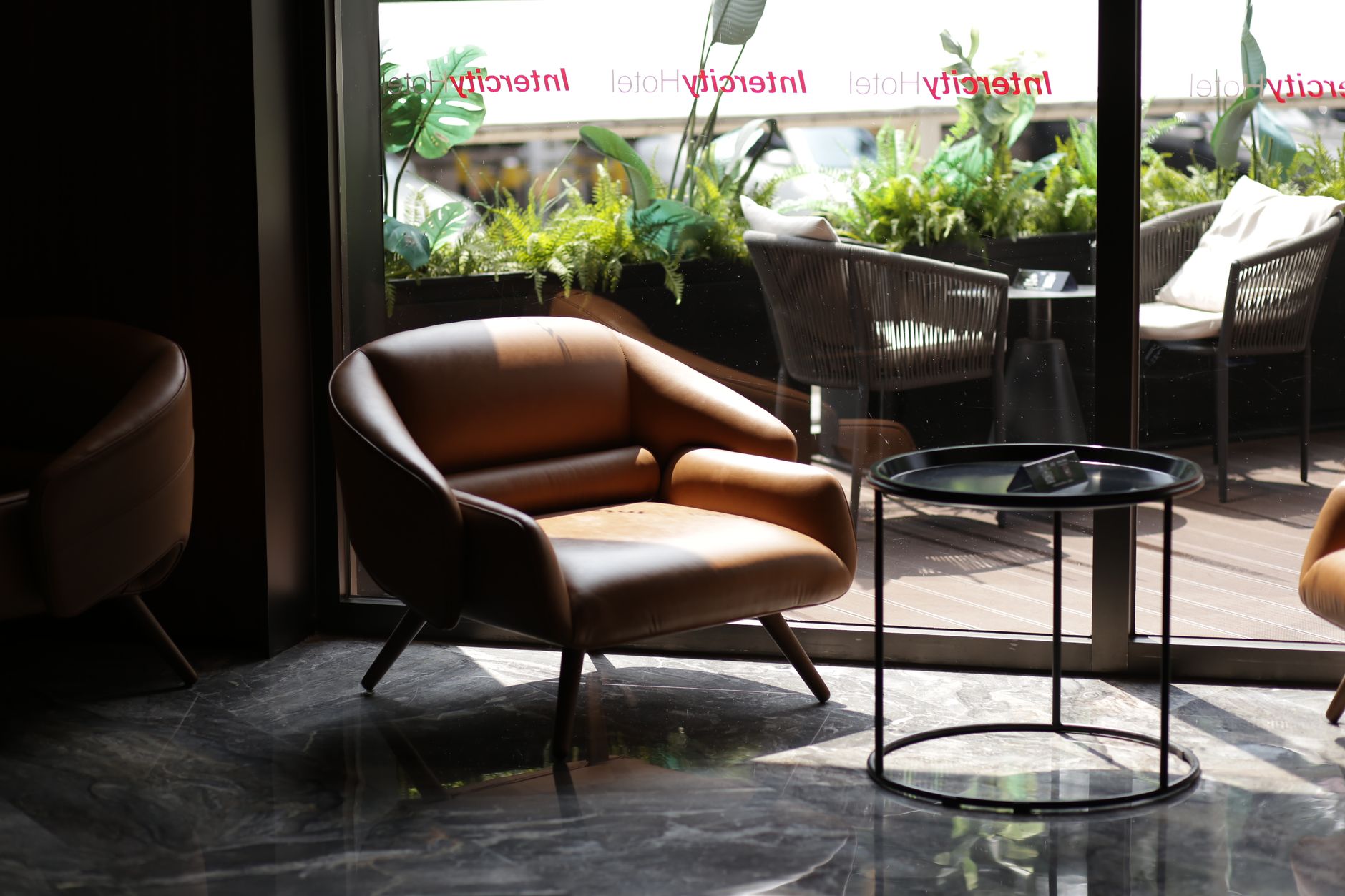
A lobby lounge is a different job from a restaurant floor. Orders are small and frequent, the room often shares space with a host stand, a bar and guests walking through to the elevators, and the same staff member may seat guests, pour and clear tables. According to IBISWorld, about 46,091 hotel and motel businesses operated in the US in 2025, up 0.8% from 2024. Not every hotel has a lobby lounge, so check the room layout before assuming a fit. That mix is why the useful question is which trips to move, not whether the whole role can go.
When does a delivery robot make sense in a hotel lobby lounge, and when does it not?
A delivery robot makes sense when the drink and snack trips repeat, the path from the pass or bar to the tables is mostly flat, and the lounge cannot cover a runner for every busy stretch. It also helps when a runner's time goes to empty trips, such as walking back to the bar with a tray that carries nothing. Sites with a set layout and stable table numbers are the easiest first step.
It is a poor fit when the lounge is a few tables under one roof with a runner already close to every seat, when the floor is rearranged for events most nights, or when the guest mix depends on in person attention at every order. A route that crosses many doors, thresholds or uneven rugs will also fail often, and each failure costs the order time.
The best test is one evening peak. If a runner makes the same bar to table trip many times between the early evening rush and the dinner lull, the trip count is clear enough to size the job before anyone signs anything.
- Good fit: a fixed route between the bar or pass and several fixed tables
- Good fit: a flat floor with few thresholds, ramps or doors on the path
- Good fit: a known staffing gap at predictable peaks such as early evening
- Poor fit: a small room with a runner already near every table
- Poor fit: a floor layout that changes most nights for events
Median hourly wage, Waiters and Waitresses
$3,798
Monthly cost of one full-time worker, at the median wage plus payroll costs (an estimate, not a quote).
- Repeated trips on a set route
Delivery Robot
Strong: same route and same stops every time
Food Runner
Good, but slower and tired by the end of a long shift
- Fixed stations to fixed tables
Delivery Robot
Strong while the layout does not change
Food Runner
Adjusts quickly when a table moves or a guest changes seats
- Crowded lobby traffic
Delivery Robot
Weak: stops and reroutes around people, which slows the trip
Food Runner
Strong: steps around guests and keeps the tray level
- Hand-off conversation
Delivery Robot
Cannot confirm a drink change or a guest's request
Food Runner
Strong: confirms the order, offers honest suggestions and fixes mistakes
- Spills and breakage
Delivery Robot
Depends on the tray, the holder and the route
Food Runner
Cleans up, reports and resets the table
- Late hours and staffing gaps
Delivery Robot
Runs on schedule when charged and serviced
Food Runner
Depends on the schedule, call-outs and fatigue
What does the food runner actually do in a lounge shift?
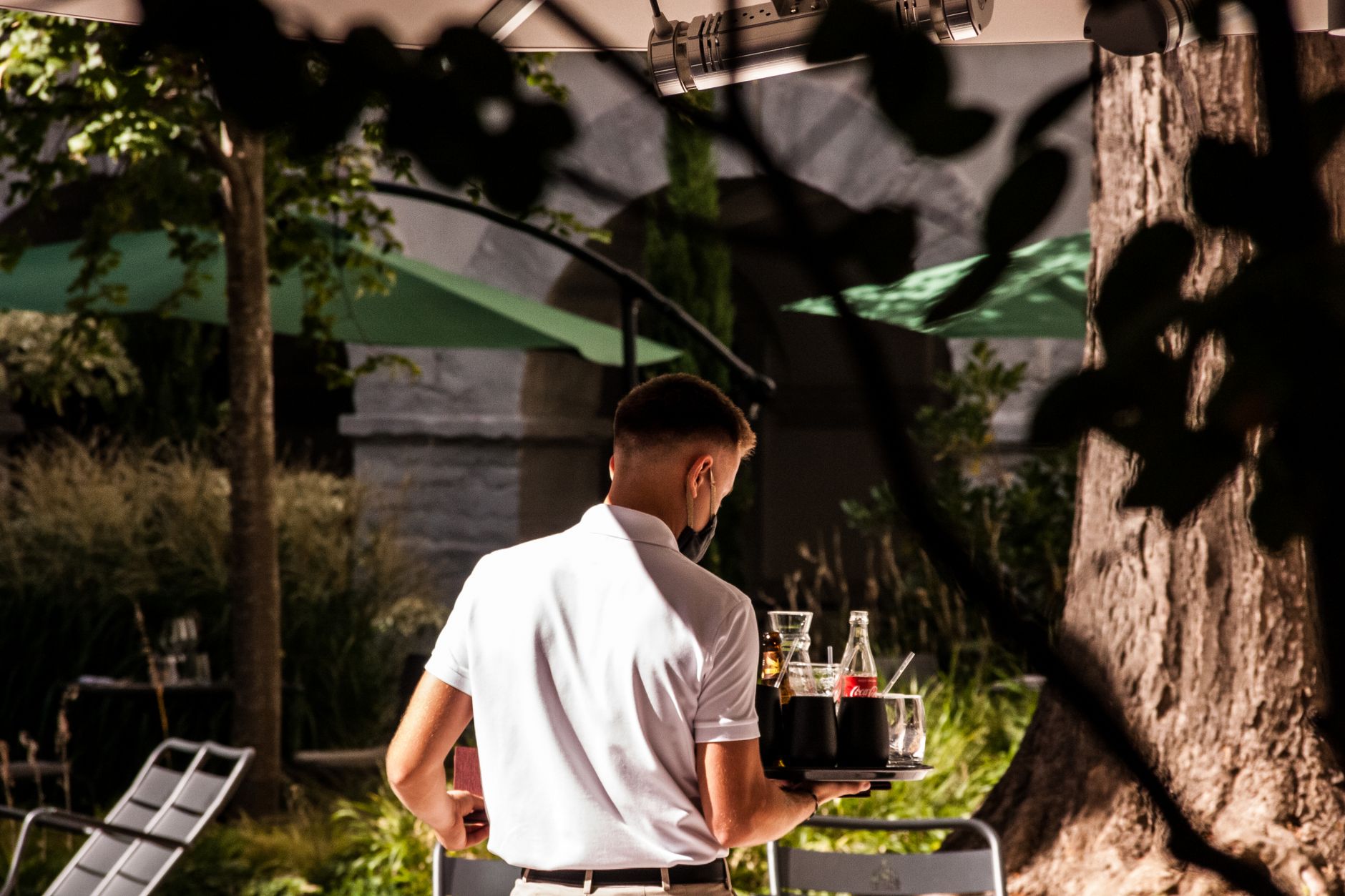
A lounge runner's shift is mostly short, repeated trips. They take tickets from the bar or pass, load a tray, carry it to a table, check whether the guest wants anything else, and return with empties. Between trips they clear tables, restock napkins and straws, and answer questions from guests waiting near the lobby.
Much of the value sits in small judgments. A runner notices a guest who is ready for a second drink before the first is finished, moves a tray that is about to tip, or tells the bartender that a table is waiting. These decisions matter most at the busiest times, and they are the part of the job that is hardest to hand to a machine.
The research for this page did not turn up hours-per-shift data for lounge runners. The labor figures here cover the whole sector or the occupation nationally, so the most reliable number for your site is one you time yourself across a few busy evenings.
Which parts of the job can a robot take, and which can it not?
A robot can take the flat, repeated legs: bar or pass to a fixed table, then back to the station with empties. Those trips take walking time with little decision making, and they are the easiest part of the shift to schedule. Scheduled loops during slow periods can also bring sealed snack trays to a station or a front desk.
It cannot take the parts that need a person. It cannot lift a tray onto a crowded table, pour, open a bottle, handle a change to an order, clean up a spill, or read a guest's mood. Most of the time savings come from moving the trips off the runner so that a person can spend the shift on these tasks.
Drink handling is the practical question. A lidded glass in a holder or a tray travels better than an open cup on a smooth route. Test the exact glassware and garnish on your route before go live, because a garnish that slides or a glass that tips on a threshold is the spill to plan for.
- Robot can take: flat trips with a sealed tray
- Robot can take: fixed station to fixed table runs
- Robot can take: return of empties to the bar on a loop
- Person keeps: pouring and opening bottles
- Person keeps: seating, table changes and order fixes
- Person keeps: spills, complaints and guest recovery
| Task | Today | With a robot |
|---|---|---|
| Carry sealed snack trays from the pass to fixed tables | Part of each runner's walking time during the evening peak | Robot runs these trips on a set loop |
| Return empty glasses from tables to the bar | A runner trip after each service round | Robot returns empties on scheduled loops |
| Pour, open bottles and confirm drink changes | Staff time at the bar and at the table | Stays with staff |
| Clean up spills and reset tables | Staff time after each spill or guest departure | Stays with staff |
The research did not find hours per shift for lounge runners. The sector hours cited on this page come from the BLS average weekly hours series for accommodation and food services. Fill in each row from your own timed trips before deciding.
How much labor is in this work, and how much turnover is there?
The job is large nationally. According to the BLS Occupational Outlook Handbook, there were 2,329,700 waiter and waitress jobs in 2024, with employment projected to fall 1% from 2024 to 2034 and about 456,700 openings a year on average, mostly to replace workers who leave. The government wage data on this page gives the local wage for this job, which is the figure to set against your own staffing cost.
Turnover is high across the sector. According to the seasonally adjusted total separations series for accommodation and food services published by FRED, the rate was 6.1% in January 2026 and 5.4% in February 2026. These are sector figures, not lounge figures, but they show why a steady runner is hard to keep for a full year.
On hours, the BLS average weekly hours series for all accommodation and food services employees was 23.7 in January 2026 and 24.6 preliminary for February 2026. The research did not find overtime, night shift or sick day figures for lounge staff, so pull those from your own timekeeping before you size the gap.
A runner short for a Friday peak often means overtime or a slower room. A robot covering fixed trips does not replace that person, but it can cut how many trips the remaining staff must make per hour, and that per hour count is the number to measure.
How does the team work with a robot?
The workable setup is a robot plus fewer staff, never zero staff. The robot takes the repeated trips, and the person who used to make those trips moves to seating, pouring, greeting and fixing mistakes. A lounge that goes from two runners to one with a robot covering the fixed stations usually keeps the guest experience, while a lounge with no staff on the floor does not.
Our team picks the robot for the site, leases it through financing, deploys and integrates it, trains the staff and services it nationwide. The first step is a site assessment that maps the route, the stations and the peak hours, so the staff hand-off is set before the robot runs a single trip.
Guests are generally open to automation, though not necessarily in a lounge. According to Deloitte's March 2023 survey, as reported by Restaurant Dive, 47% of Americans would order from a restaurant that delivers by drone or autonomous vehicle, up 3 points from 2021, and 70% were willing to use automated ordering in the dining room. Those are general attitudes, so test the lounge's own guests with a pilot.
What can the robot not do?
A robot will not fix a staffing gap at the bar, the host stand or during cleanup. It cannot handle any task that needs hands, judgment or a conversation, and when a route is blocked by a crowd or a dropped item, the trip stops until someone clears it.
Reliability depends on the route. A robot that waits at a crowded threshold or for a door slows the order rather than speeding it up. Plan for cover on days the robot is charging, down for service or off route, because the lounge still needs someone who can run the trip.
Guests can also read a robot arriving without a person as a sign of thinner service. The fix is a staff member who greets the table and collects the order, so the guest sees a person even when a robot carried the tray.
The job carries physical risk that a robot does not remove. According to the BLS injury and illness charts, accommodation and food services had about 234.8 thousand total injury and illness cases in 2024, a rate of 2.6 per 100 full-time workers. Carrying, lifting and slipping hazards stay with the person, so staff still need training on the robot's route and on the hand-off at the bar.
How do you get started with a lease?
Start by walking the route at the hours when the lounge is busiest. Time the trips for a week, count the trips that are empty or near empty, and note where the floor changes. That record is what a site assessment needs, and it tells you whether a robot takes enough trips off the runner to matter.
Then choose a pilot. One leased unit on one route, with staff trained on the hand-off, is a smaller and easier change to reverse than a full lounge rollout. Ask for a demonstration on your own floor rather than a generic one, and ask how quickly a unit is serviced or replaced if it goes down.
A lease quote comes after a free site assessment, not before. Ask what the lease term covers, what service is included and what happens when a unit needs repair. A fixed robot lease payment set through financing is easier to compare against your own labor picture than an open-ended estimate.
Frequently asked questions
Upcoming hotels & hospitality events
- MeetupMPI Virginia Morning Brew Meet-Up, November 2026Nov 10, 2026Hampton, VA
- SummitVA1 Governor's Tourism Summit 2026Nov 18 to 20, 2026Kalahari Resorts & Conventions, Spotsylvania, VA
- ConferenceVirginia Association of Fairs ConventionJan 14 to 17, 2027Williamsburg Lodge, Autograph Collection, Williamsburg, VA
- ConferenceIHLA Convention and Exposition, 2027Feb 8 to 10, 2027Indianapolis, IN
Want a delivery robot at your hotel lobby lounge?
Tell us about your site. We will recommend the robot, quote the lease, and keep it serviced.
Sources
- US Bureau of Labor Statistics, Occupational Employment and Wage Statistics (OEWS May 2024)
- BLS Occupational Outlook Handbook: Waiters and Waitresses
- BLS Average weekly hours by industry (accommodation and food services)
- BLS Charts: Injuries and illnesses by industry
- FRED, St. Louis Fed: Total separations rate, accommodation and food services
- IBISWorld: Hotels and motels, number of businesses
- Restaurant Dive, reporting Deloitte customer acceptance of automation survey