

The short answer
In a cobot vs palletizing worker in New York, NY decision, the robot makes sense when cases are light enough for the arm, patterns repeat, and the line runs steadily enough to keep the arm busy. It does not make sense for heavy loads, frequent pattern changes, or a line that stops often for jams and damaged cases. Most sites that fit run the cobot alongside a smaller crew rather than with no one on the line, so staff move to changeovers, pallet supply and exceptions.
Key takeaways
- A cobot fits a steady, repeating palletizing line with manageable case weights, and it does not fit heavy, fast or highly varied loads.
- Keep a trained person on the cell: the goal is a robot plus fewer staff, never zero staff.
- The government wage data on this page gives the local wage for this job, so test the staffing case against your own overtime and vacancy records.
- Injury data for New York warehouses sits above the national average, but no palletizing-specific figure was found.
- Start with one leased cell and a free site assessment before deciding on a second unit.
Cobot vs palletizing worker in New York, NY: when does a robot make sense?
The short answer is that a cobot earns its place on a palletizing line when the work is repetitive and the loads are manageable. In a New York, NY facility, that usually means a small set of case patterns, cases the arm can lift and grip safely at line speed, and a line that runs most of its scheduled time. Under those conditions the arm repeats the same stacking motion without the fatigue of a full shift at the stack.
It does not make sense when cases are heavy, when pallet patterns change many times a shift, or when the line stops often for jams and damaged cases. In those cases the person handles the judgment work the arm cannot do, and the cobot spends too much of the shift waiting.
The useful question is not whether a cobot can stack. It is whether your line gives the arm enough steady work to justify the setup time, the guarding and the trained operator who runs it. Cobot adoption is growing across industry, but the research pass did not find a palletizing-specific adoption share, so the decision rests on your own line data.
What does a palletizing worker actually do in a shift?
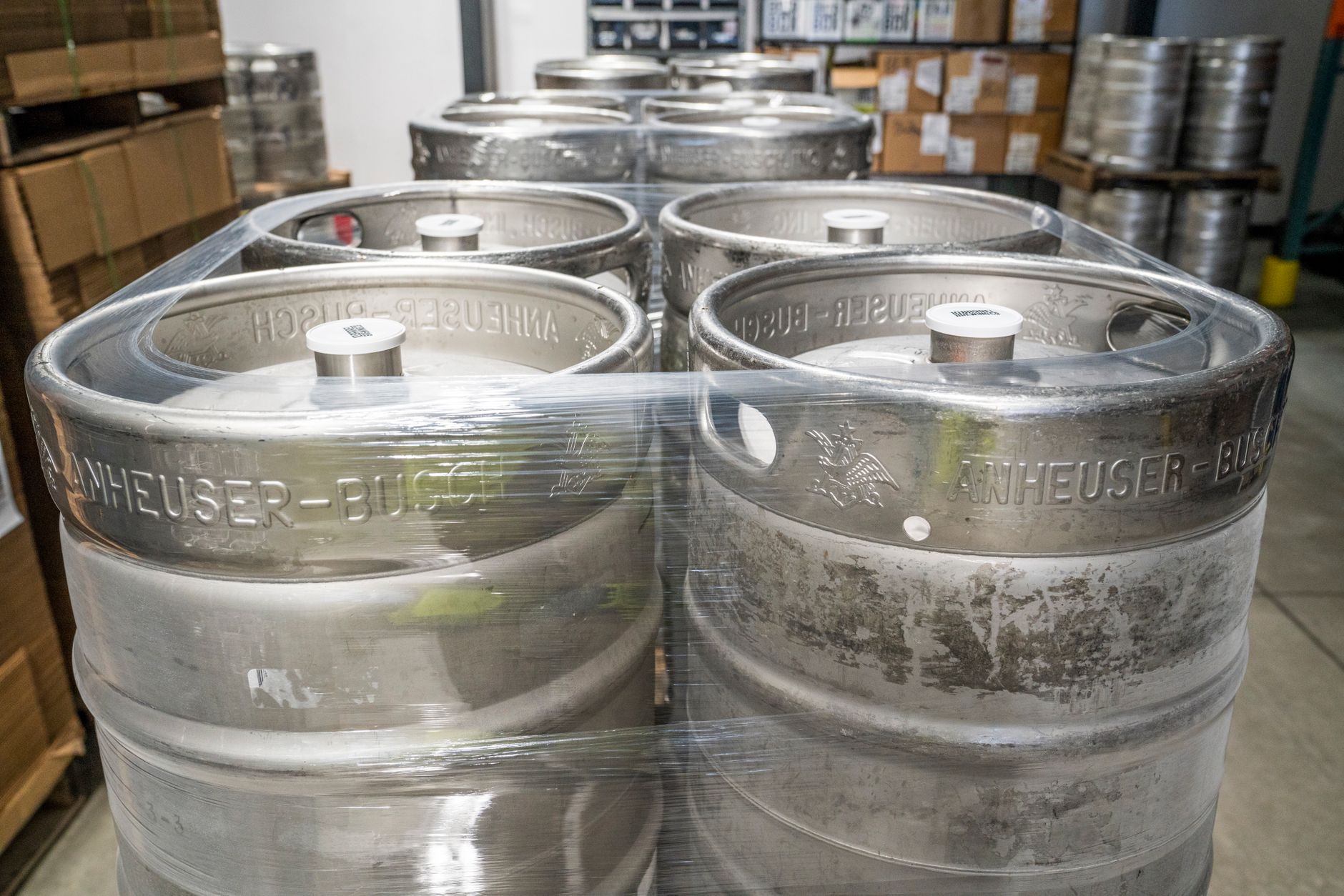
A palletizing worker stands at the end of the line, where cases leave the conveyor and need to become a stable, shippable load. The core job is building layers in the pattern the product needs, placing slip sheets or interlayer pads where the spec calls for them, and keeping the stack square enough to wrap and move without collapse.
Around that core sits the work that keeps the cell running. Staff swap a full pallet for an empty one, reload the empty pallet supply, change the pattern when the product changes, and clear jams where cases fold or slide. They look at each case for crushed corners, leaking packages or wrong labels, and pull damaged cases before they reach the stack.
The finished stack then moves to stretch wrap, a staging lane or a truck loading area, and the worker confirms counts or labels. Some lines also give the worker a second task, such as hand stacking odd cases that do not fit the main pattern. Each task carries its own risk and pace, which is why the decision is about the whole shift and not only the stacking motion.
Median hourly wage, Laborers and Freight, Stock, and Material Movers, Hand
$4,642
Monthly cost of one full-time worker in New York, NY, at the median wage plus payroll costs (an estimate, not a quote).
Which palletizing tasks can a cobot take, and which can it not?
A cobot can usually take the repetitive part of layer building: picking consistent cases from a known infeed position, placing them in a set pattern, and returning for the next case. That is most of the arm's motion and the easiest work to hand over, provided the case size, weight and orientation stay inside what the arm and its gripper handle.
The arm cannot reliably take most of the rest. Clearing a jam, deciding whether a case is damaged, placing an odd case that breaks the pattern, and moving full pallets off a shared lane all need judgment or reach the arm was not built for. Pallet supply and removal usually stay with people, because moving full pallets is a separate task from stacking.
Heavy case palletizing is the boundary to test first. A materials-handling trade article argues that heavy boxes moved by fast arms typically do not fit existing collaborative designs, and that light curtains or photo eyes are common alternatives. That is a fit question for the site assessment, not a reason to rule the job out before anyone has measured the cases.
- Heavy or awkward cases
Cobot
Limited by payload and gripper reach, so heavy boxes may need another design
Palletizing Worker
Lifts and turns heavy or awkward cases and adjusts grip by feel
- Steady repeating pattern
Cobot
Holds the same layer pattern across a long run without drift
Palletizing Worker
Holds it well, but fatigue and pace change through a long shift
- Pattern changes and new products
Cobot
Needs a stored pattern or reprogramming for each change
Palletizing Worker
Adapts to a new layout quickly by eye
- Jams and damaged cases
Cobot
Stops and waits for a person, and does not judge damage
Palletizing Worker
Clears jams and pulls damaged cases before they reach the stack
- Night and weekend coverage
Cobot
Keeps stacking through a shift, but a trained person still has to be on the cell
Palletizing Worker
Needs scheduling, breaks and overtime when the line runs long hours
- Pallet supply and swaps
Cobot
Usually left to staff, with guarding at the swap point
Palletizing Worker
Handles full pallets, reloads empties and watches the swap point
What does the labor picture look like for this job in New York?
Nationally, according to the Bureau of Labor Statistics Occupational Outlook Handbook, the Laborers and freight, stock, and material movers, hand group had 2,988,900 jobs in 2024 and is projected to reach 3,033,100 by 2034, about 1.5% growth. Growth that slow means the staffing question on any one line is about shift coverage and retention, not the size of the national pool.
The state data is closer to the storage side. According to the Federal Reserve Bank of St. Louis, New York State warehousing and storage employment was 59.0 thousand in 2024, up from 54.3 thousand in 2023. That series covers warehousing and storage as a whole, not palletizing, and it is a state figure rather than a New York City one.
We did not find a New York County figure for palletizing or an official separation rate for this occupation. The one turnover range we could check comes from a 2025 warehouse labor survey published by a workforce vendor, which reported that most respondents saw turnover under 10%, while a notable portion cited 20% or higher. We only read part of that report, so treat it as a survey of its own sample and measure your own line.
The local wage for this job is in the government wage data panel on this page. Use it as a cost check against your own overtime and vacancy records, not as a substitute for them.
How do overtime, night shifts, sick days and turnover change the decision?
Overtime is where a palletizing line shows strain first. When a stacker is out and the line keeps running, the remaining staff take on the stack, the pattern checks and the pallet supply, and overtime hours grow. A cobot does not remove that need. It takes the repetitive stacking so that a person is not the only thing holding the line together.
Night shifts raise the stakes. Fewer people are on site, and a shift that depends on one or two stackers is exposed to any single absence. Where a line runs nights, the question is whether one trained person can run the cell with the arm on the stacking, and what that person does when a jam or changeover needs a second pair of hands.
Sick days and vacancies work the same way. A line sized for a full crew has little slack when a stacker calls out, so the cobot is most useful as a buffer that keeps the line moving with a smaller crew, not as a replacement for everyone. Count absence and open shift records before you size the cell.
The turnover figures we found are not a substitute for your own. Vendor surveys vary widely, and the one we could read gave a broad spread. Use your own exit records, overtime logs and vacancy history for the line you are deciding about.
What do injury and incident figures say about this kind of work?
No injury figure for palletizing in New York was found in the research pass. The closest data is for warehouses, and it points in one direction. According to the National Employment Law Project, citing Bureau of Labor Statistics data in a February 2024 report, New York warehouse workers had an injury rate of 8.8 per 100 full-time equivalent workers in 2022, which was 54% above the national warehouse average.
A National Employment Law Project press release reports that the rate rose to 11.5 per 100 full-time equivalent workers in 2023, a 30% increase from 2022. We did not check that release against the full report, so treat it as a figure to confirm before it goes in front of a board.
Warehouse averages do not describe any one palletizing cell. A line with light, consistent cases and a guarded swap point may sit well away from the warehouse average in either direction. The useful step is to pull your own incident log for the line, sorted by task, and see whether stacking, pallet swaps or jam clearing account for most of it.
Where the risk sits matters for the decision. If most incidents come from the stack itself, the cobot can reduce a real share of the exposure. If they come from pallet swaps and jam clearing, the cell design and the staff procedures matter more than the arm.
How do a cobot and a person work as one team?
The cobot works as part of a team with fewer staff, not as a replacement for the whole crew. Someone still owns the cell. That person loads the pallet supply, swaps full pallets, sets patterns for new products, clears jams and pulls damaged cases. The arm takes the stacking and keeps its rhythm between those interruptions.
The shift gets reorganized, not emptied. In a well run cell, the trained operator spends less of the shift at the stack and more time at the points where the line actually stops. Staff who would have spent the whole shift building layers move to the tasks the arm cannot do, and that is where the hours go.
Training is the step most often underestimated. The person who runs the cell needs to know how the arm stops, how to clear a jam without entering the work zone, and what each alarm means before they run a shift alone. We deliver that training on site during deployment, and we service the cell nationwide with remote triage first and on site dispatch when needed, so a stopped unit is assessed before a technician is sent.
What can a palletizing cobot not do?
A cobot does not run itself, does not clear every jam, and does not handle every case. It cannot take over the pallet supply, decide whether a case is damaged, or handle a load beyond its weight or reach. It also will not make up for a line that stops for upstream reasons, because the arm waits on the infeed like everyone else.
Safety rules set real limits on the layout. The ISO 10218 family governs industrial robot safety, and according to an ANSI preview, a second edition of ISO 10218-2 was published in February 2025. OSHA lists ANSI/RIA R15.06-2012 as the US adoption of the 2011 edition of ISO 10218, and TR 606 as the US adoption of ISO/TS 15066, which covers collaborative operation.
Pallet changes are a common exposure point, because the person doing the swap works close to the arm while the cell is still within reach. Plan the guarding and the swap point during the site assessment, not after the arm is installed.
Adoption figures do not settle the question for palletizing. The research pass did not find a palletizing-specific cobot share, so the decision still turns on your case weights, your changeover count and the floor space the cell needs.
What does it cost to lease a palletizing cobot, and how do you get started?
We do not quote a figure from a web page. Each lease is set after a free site assessment, because the terms depend on the cell, the load, the guarding and the service plan. Robots are leased through financing, and the terms are set in writing before any work starts, with maintenance included where the quote says so.
Start with one cell. A pilot on one line tests case weights, changeover pattern and the staffing change before any second unit is considered. A spare unit or a backup robot program can keep a stopped cell from stopping the line for long, and that choice belongs in the quote.
Our part is the robot's fit and its running life. We assess the site and map the floor, choose the robot for the load, deploy and integrate it with the line, train the staff who run it, and provide go live support and service after that. Whether a cobot is right for your line is still your team's decision, and the site assessment is where that gets tested.
Frequently asked questions
Put a robot to work in New York.
We walk your site, learn the job, and recommend the unit that fits. Then we quote the lease, deploy it, and keep it serviced.
Sources
- US Bureau of Labor Statistics, Occupational Employment and Wage Statistics (OEWS May 2024)
- Bureau of Labor Statistics, Occupational Outlook Handbook: Hand laborers and material movers
- Federal Reserve Bank of St. Louis, New York State warehousing and storage employment series
- National Employment Law Project, February 2024 report on New York warehouse injuries
- National Employment Law Project press release on 2023 New York warehouse injuries
- 2025 warehouse labor survey report (workforce vendor)
- OSHA robotics standards page
- ANSI preview of ISO 10218-2:2025
- Materials-handling trade article on palletizing without barriers