
The short answer
An autonomous forklift makes sense in Milwaukee when the same pallet moves repeat on a mapped route for most of a shift, while a forklift operator still fits when loads, routes, or dock work change from day to day. For the autonomous forklift vs forklift operator in milwaukee decision, the usual result is one robot plus a smaller crew rather than a robot in place of every person. Check route repetition and shift coverage first, then confirm the fit with a free site assessment.
See what a autonomous forklift costsRun the numbers in the ROI calculator
Key takeaways
- A robot fits repeated, mapped pallet moves, while an operator still fits changing loads, routes, and dock work.
- The National Safety Council reports 84 work-related forklift deaths in 2024, so injury exposure belongs in the comparison.
- Quits in transportation and warehousing run above the total nonfarm rate, so every operator seat carries repeated retraining.
- The right model is one robot plus fewer staff, never zero staff.
- Lease terms are set in a quote after a free site assessment.
Should a Milwaukee business choose an autonomous forklift vs forklift operator?
For most Milwaukee sites, the autonomous forklift vs forklift operator in milwaukee choice turns on one question: how often the same pallet moves repeat on a mapped route. If a large share of a shift is fixed point to point transport on the same floor, a robot is a strong candidate. If loads, routes, and dock work change daily, a forklift operator remains the right tool for those moves.
A robot makes sense when aisles stay clear enough to map, the floor is kept in repair, the route holds steady for months, and the site struggles to fill or keep forklift seats on second or night shifts. It does not make sense when most of the work is building mixed pallets, unloading irregular trailers, or handling damaged freight, or when the layout changes every few weeks. In those cases an operator is the better fit, and a robot may only help on one narrow lane.
In practice the answer is usually a robot on the repeated route plus fewer staff on the rest of the work. Replacing the whole crew is rarely the right first step, because the exception work then falls on the few people left.
What does a forklift operator actually do in a shift?
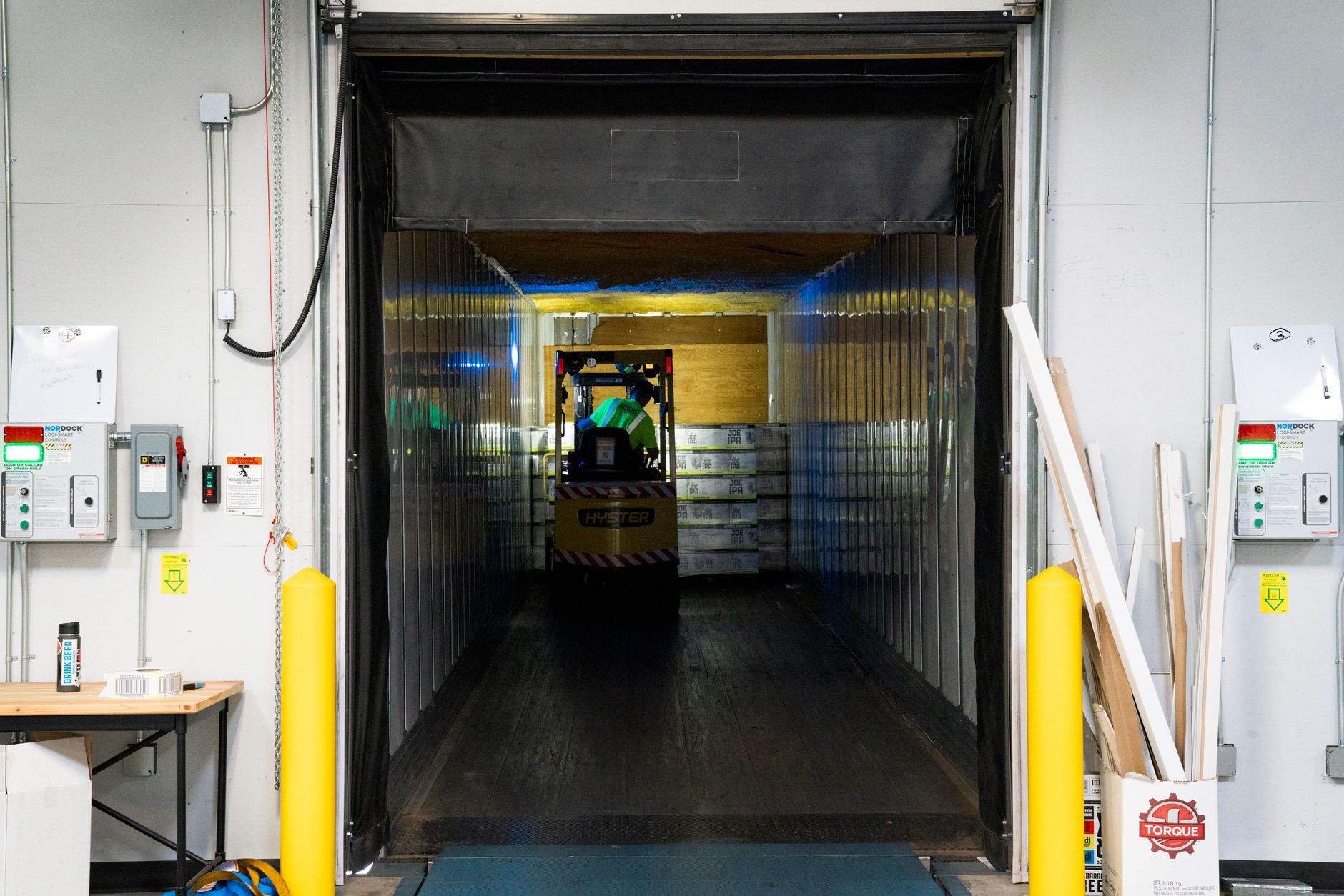
A forklift operator in a Milwaukee warehouse or dock does far more than drive. The shift usually starts with a pre-use inspection of the truck, then moves through receiving, putaway, order picking, staging outbound loads, and replenishing pick locations. Much of the time goes to short trips, lift and set down cycles, and waiting for the next load, with the rest taken by scanning, paperwork, and problems that come up on the floor.
The safety side of this work matters for the comparison. According to the National Safety Council, citing BLS data, forklifts were the source of 84 work-related deaths in 2024. The same summary says most forklift injuries fall on workers aged 25 to 34, and most fatalities fall on workers aged 55 to 64, so the exposure is not confined to one age group.
BLS forklift categories include tow motors, lift trucks, skid steers with forklift attachments, and turret truck equipment. When you read a site's injury log, check which machine types it covers, since one site can run several of these.
Median hourly wage, Laborers and Freight, Stock, and Material Movers, Hand
$4,729
Monthly cost of one full-time worker in Milwaukee, WI, at the median wage plus payroll costs (an estimate, not a quote).
Which parts of the job can an autonomous forklift take, and which can it not?
An autonomous forklift is best at repeated transport on a defined route, such as moving pallets from a receiving staging point to a rack bay, or from the end of a line to storage, the same way on every cycle. The route has to be mapped, the stops fixed, and the load type predictable enough that the truck does not need a person to decide each move.
It is weaker wherever the work needs judgment. Loading or unloading a trailer with mixed freight, restacking shifted or damaged loads, clearing a blocked aisle, and choosing a path around a temporary obstacle still need a person. Many autonomous trucks stop or wait in these situations, which is safe but leaves the work undone.
Put plainly, the robot takes the middle of the route and the operator keeps the edges, where the variation is.
- Repeated route, same stops
Autonomous Forklift
Runs the same mapped cycle every time once commissioned
Forklift Operator
Repeats the cycle well, but speed and attention vary across long shifts
- Night coverage
Autonomous Forklift
Runs the mapped route without a person on each cycle, with a reachable supervisor for exceptions
Forklift Operator
Needs a person on the seat, which means night hiring, shift pay, and sick day cover
- Mixed or damaged loads
Autonomous Forklift
Weak here, and it may stop or wait
Forklift Operator
Wins, since a person can assess and restack the load
- Trailer loading and unloading
Autonomous Forklift
Limited to set patterns
Forklift Operator
Wins on irregular freight and mixed loads
- Layout changes
Autonomous Forklift
Needs a remap before a changed route works
Forklift Operator
Adapts the same day without setup
- Turnover and retraining
Autonomous Forklift
Removes repeated retraining on the mapped route
Forklift Operator
Requires training after every departure
What do the hours and labor picture look like in Milwaukee?
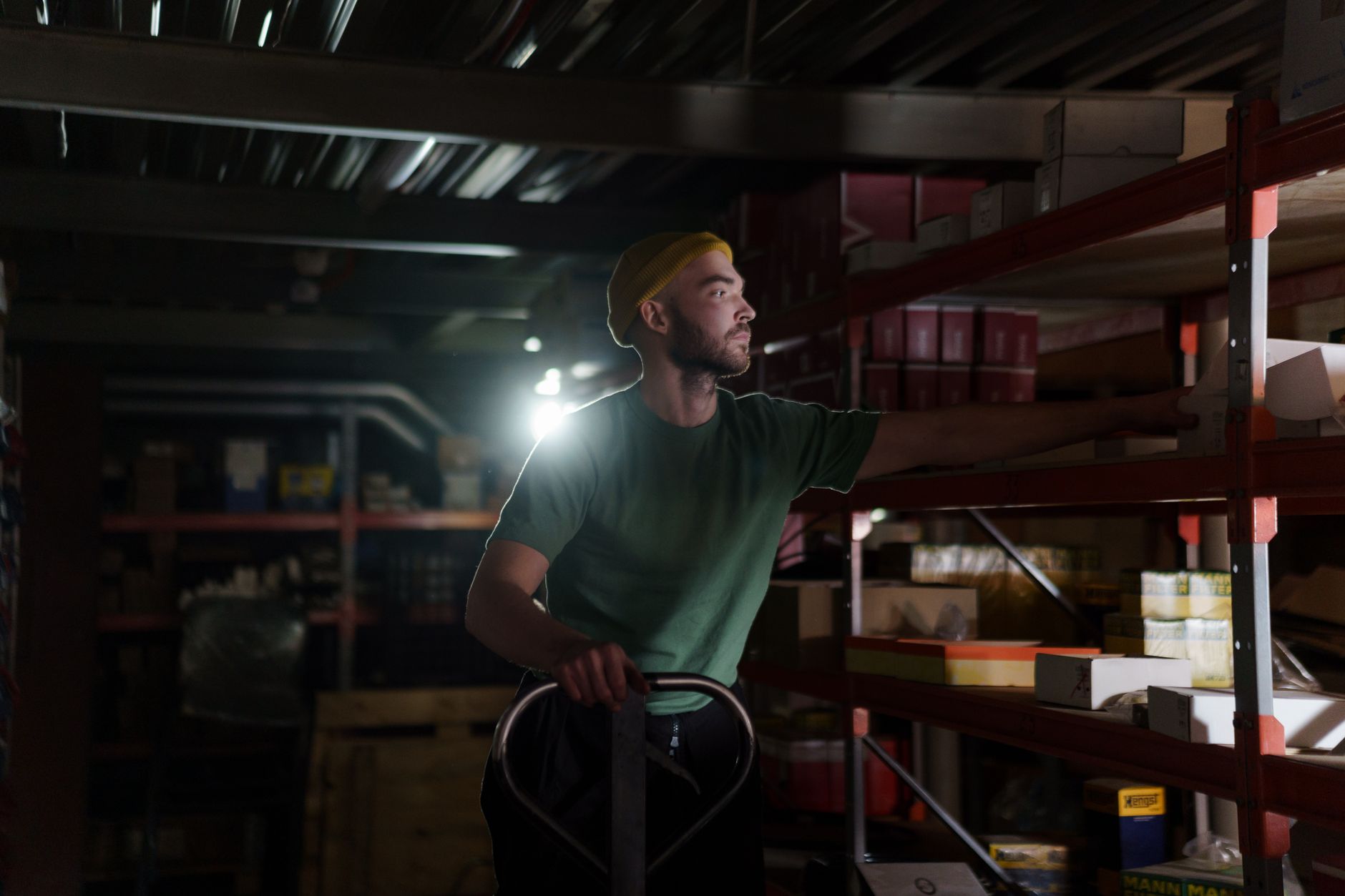
The Milwaukee-Waukesha metro carries a large Trade, Transportation, and Utilities base. According to FRED, that category employed 147.9 thousand people in December 2025. The category is broader than warehousing, so it tells you the regional labor pool, not how many forklift seats exist. An older Bureau of Transportation Statistics archive table from 2006 counts 215,117 transportation and warehousing establishments nationally, but that count combines two sectors and is dated.
The occupation that covers hand material movers is large nationally. The BLS Occupational Outlook Handbook reports about 2,988,900 people employed in Laborers and Freight, Stock, and Material Movers, Hand in 2024. We did not verify a May 2024 Milwaukee count for this occupation, so pull that figure from the OEWS tool before sizing the change.
For the government wage data on this page, treat the local figure for this job as the cost of one operator seat, then multiply it by the shift hours that seat covers across the week. What we could not verify is overtime, sick day, or night shift absence rates for forklift operators in this metro. Take those from your own payroll, because a site with frequent overtime faces a different case than one with steady day shifts.
How much turnover and injury risk should a Milwaukee operator plan for?
Turnover in this part of the labor market runs high. A 2025 BLS JOLTS analysis, as summarized in a staffing industry article, put quits in transportation and warehousing at an average of 2.2 percent a month, against 2.0 percent for total nonfarm. Twelve months at that pace implies about 26.4 percent annual voluntary turnover, but that is the summary's own calculation, not a published annual rate.
Each departure restarts training, certification, and supervision on the truck. A site that loses operators every few months pays for that cycle on top of the seat itself, which is the strongest argument for moving the repeated part of the route to a robot.
Injury exposure belongs in the same frame. The National Safety Council reports 25,110 DART cases for forklifts across 2023 and 2024, meaning days away, restricted, or transferred, and 15,460 cases with days away from work in that span, both as summarized from BLS data. A BLS fact sheet adds that forklift-related pedestrian injuries had a median of 20 days away from work, the highest among the forklift event types it lists. That fact sheet's year was not confirmed in our review, so read the figure as directional.
Is it worth it to lease an autonomous forklift instead of keeping every seat?
Whether it is worth it depends on three numbers: the hours the robot can cover on a repeated route, the local wage for the operator job, and the turnover the site already absorbs. Start with those. Then compare the fixed robot lease payment against the staffing you would otherwise hire, retrain, and cover on overtime.
We lease robots through financing, so a site does not have to commit capital up front. The lease payment is set in a quote after a free site assessment, because the route, floor condition, and service needs decide the scope. We do not publish a generic figure, since two sites with the same truck can need very different work.
We are a commercial robot integrator. We pick the robot for the site, lease it through financing, deploy and integrate it, train the staff, and service it nationwide. That full scope is why the first step is an assessment rather than a catalog quote.
How does a team work with an autonomous forklift?
The team never shrinks to zero. The robot takes the repeated route, while the people who remain handle exceptions, trailer work, dock coordination, and supervision. The practical result is one robot plus a smaller crew on that route, with the remaining operators covering work that changes.
Handoffs need design. Staff must know how to clear a blocked route, when to call for help, and when to take a truck offline. Training belongs in deployment, and it should cover the normal cycle and the stop states that happen during a real shift.
Night shifts are often where the robot earns its place, because the repeated route runs the same way without a person on every cycle. A person still needs to be reachable for exceptions. Service response also matters, since remote triage and on-site dispatch decide how fast a stopped truck returns to work.
What can an autonomous forklift not do?
It cannot replace judgment on a damaged or unusual load. It cannot reliably handle a site where the layout changes every few weeks, the floor is in poor repair, or aisles are often blocked. It also works only inside the area it was mapped to cover, so a new dock or a re-racked aisle means a remap before the route works again.
It cannot fix the labor picture on its own. If no one is on site to supervise the truck or respond to alerts, the robot adds risk instead of reducing it. Overtime, sick days, and night shift absence still need tracking, because the robot changes those numbers only on the route it covers.
Expect the first pilot to show the limits. One robot on one route is the right test, and it tells you more than any projection. We do not promise that a single unit covers every move in a building.
How do you get started with a site assessment in Milwaukee?
Start with a free site assessment. We map the route, check floor condition and aisle width, log the load types and stop points, and count how many repeated moves fall inside the mapped area. That data decides whether the answer is a full robot route, a narrow lane, or no robot at all.
If the assessment supports a robot, deployment runs in phases. We integrate the truck with your existing systems, train staff, and provide go live support. A site can start with one leased unit, then decide on more after the first routes run. Spare unit coverage and a backup robot program limit the effect of a single stopped truck.
Service runs nationwide through on-site dispatch and remote triage. One partner and one number cover the robot, the lease, and the service plan, so the operator team does not have to chase separate vendors for each problem.
Frequently asked questions
Upcoming events in Milwaukee, WI
Put a robot to work in Milwaukee.
We walk your site, learn the job, and recommend the unit that fits. Then we quote the lease, deploy it, and keep it serviced.
Sources
- US Bureau of Labor Statistics, Occupational Employment and Wage Statistics (OEWS May 2024)
- National Safety Council, forklift safety summary (BLS data)
- BLS fact sheet on fatal occupational injuries from forklifts
- BLS Occupational Outlook Handbook, Hand laborers and material movers
- FRED, Milwaukee-Waukesha Trade, Transportation, and Utilities employment
- Census County Business Patterns 2023, secondary summary
- Bureau of Transportation Statistics state transportation statistics archive, 2006 table
- 2025 BLS JOLTS analysis, secondary summary