
The short answer
The cleaning robot vs janitor in Milwaukee choice is rarely either or. A floor scrubber makes sense for large, mostly open floors cleaned on a repeating schedule, while a janitor still handles restrooms, trash, spills and cluttered rooms. The workable model is a robot plus fewer staff, sized by a site assessment rather than a guess.
See what a cleaning robot costsRun the numbers in the ROI calculator
Key takeaways
- A robot takes the repeating floor passes, while people keep restrooms, trash, spills and anything that needs judgment or access.
- Large, open, scheduled floors are the best fit, and small buildings with many rooms usually are not.
- Check the Milwaukee metro row in the BLS release and your own overtime and open-shift records before you sign off.
- Plan for a robot plus fewer staff, never zero staff, since someone must start, check and recover each run.
- The lease payment is given in a quote after a free site assessment, so the number reflects your floor and route.
Cleaning robot vs janitor in Milwaukee: which makes sense?
The useful question is not whether a machine can replace a janitor. It is which floor passes can move to a machine so the team spends its shifts on work that needs a person. For a Milwaukee facility, that comes down to floor area, layout, and how hard the night shift is to staff.
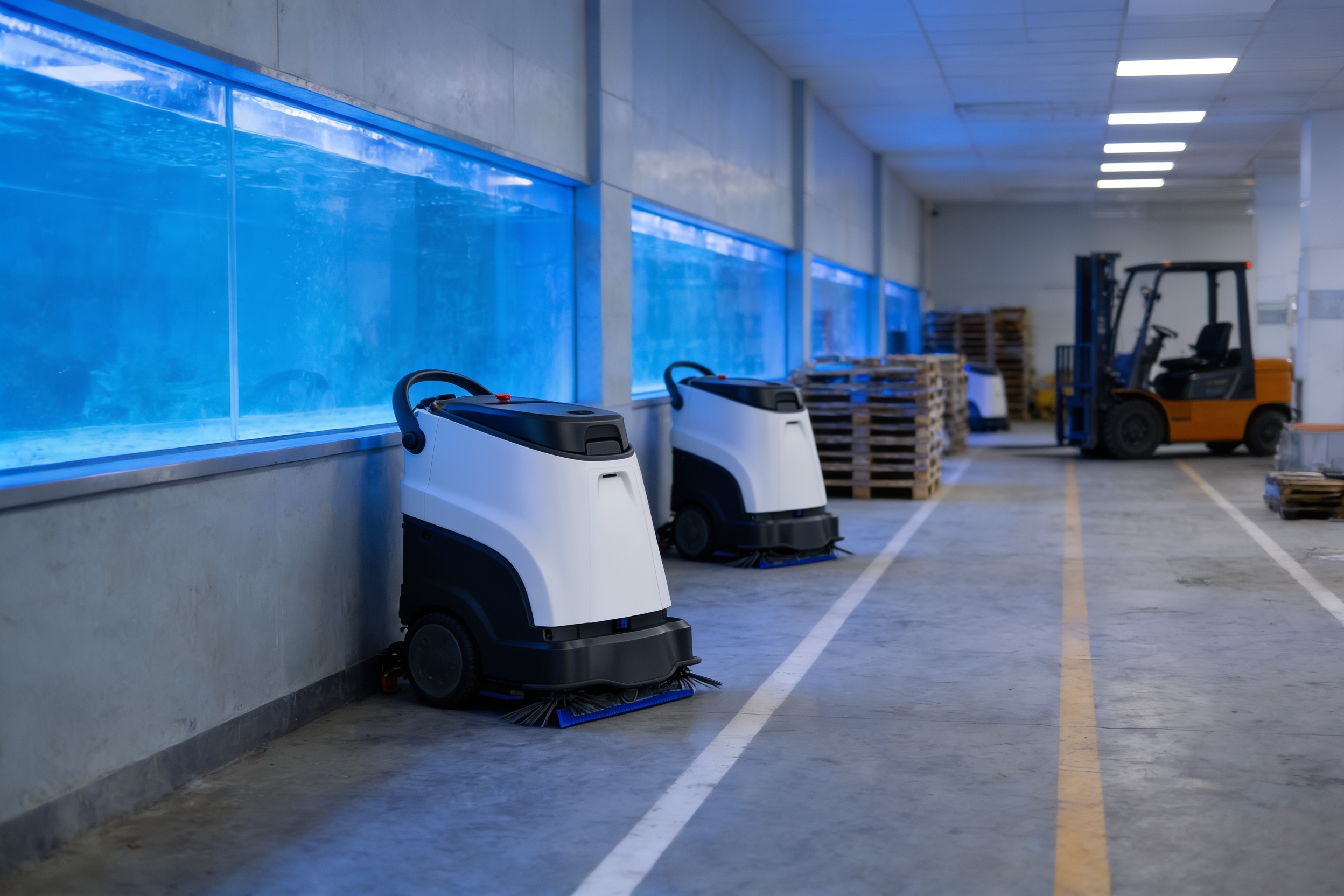
A cleaning robot makes sense when the floor is large, mostly open, and cleaned on a repeating schedule. Warehouse aisles, distribution floors, big-box sales floors, gyms, school corridors and transit concourses are common fits. The machine does the repeatable passes, often after hours, and the team arrives to a floor that is already done.
It does not make sense when the building is mostly small rooms, when floors are crowded with furniture that moves daily, or when most of the work is restrooms, trash, spills and tenant requests. In those buildings a robot adds setup and checking work without taking much off the shift. A site assessment is the fastest way to tell which kind of building you have.
What does a janitor actually do in one shift?
A janitor's shift is rarely just floors. A typical shift mixes restroom cleaning and restocking, trash and recycling runs, spill response, wiping high-touch points, and floor care. Floor care is the piece a robot can take. The rest needs hands, judgment, and someone who can move through doors and rooms.
The occupation is large nationally. According to the U.S. Bureau of Labor Statistics Occupational Outlook Handbook, there were about 2.4 million jobs for janitors and building cleaners in 2024, with projected growth of 2% from 2024 to 2034 and about 351,300 openings a year on average over the decade. The handbook does not say how many of those openings are replacement hires, so read the figure as a sign of steady hiring need, not a count of new jobs.
Ground covered depends on the machine and the building. A cleaning-times table reproduced in a 2009 report, citing the ISSA 540 standard, gives about 5,917 square feet per hour for a 17 inch walk-behind automatic scrubber and about 8,357 square feet per hour for a 24 inch walk-behind. The report says facility factors change the result, so use these rates as a starting point for your own route math.
Median hourly wage, Janitors and Building Cleaners
$4,060
Monthly cost of one full-time worker in Milwaukee, WI, at the median wage plus payroll costs (an estimate, not a quote).
Which parts of the cleaning can a robot take, and which can it not?
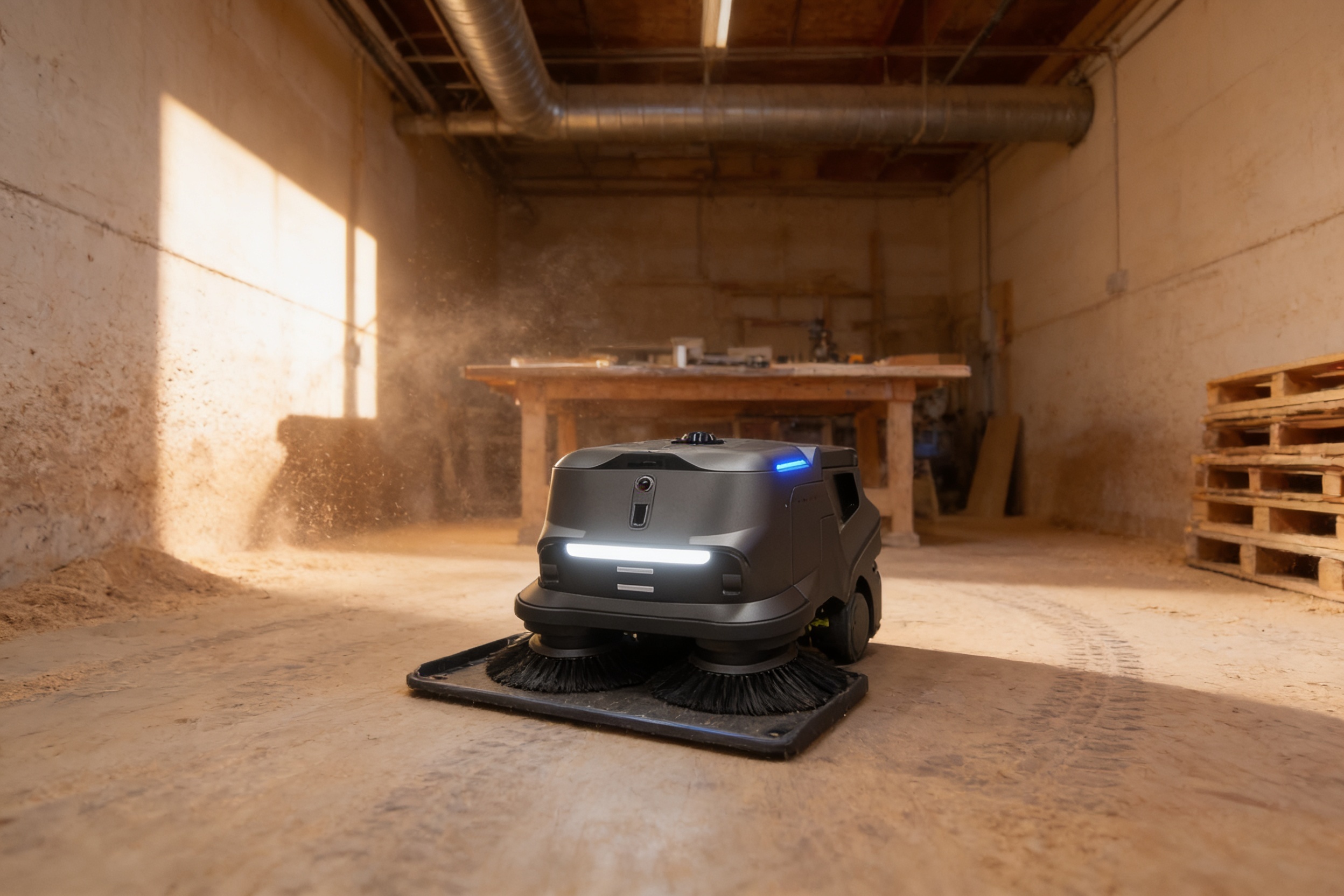
A robot takes the repeating floor passes: sweeping and scrubbing open routes that a machine can run without a person. It covers the same route each night and is not pulled off to answer a call or finish a restroom. On a clean, open floor, that is most of the value.
A janitor keeps the parts that need hands and judgment. That includes restrooms and restocking, trash and recycling, spills and broken glass, wiping high-touch points, moving furniture, and opening rooms. A machine that follows a map cannot decide what is urgent or deal with a locked storeroom.
The split is rarely clean. Some areas will be part open floor and part clutter, and a route may need staff to clear it before the machine starts. Plan the split by zone rather than by job title, and expect the crew's floor time to shrink rather than disappear.
- Repeating floor passes
Cleaning Robot
Runs the same route each night without breaks once set up
Janitor
Adjusts the route when furniture or spills change the floor
- Night coverage
Cleaning Robot
Runs unattended during scheduled hours, with a check at start and end
Janitor
Available for exceptions, spills and calls during the shift
- Restrooms and trash
Cleaning Robot
Does not do this work
Janitor
Does it, including restocking and waste runs
- Clutter and daily changes
Cleaning Robot
Struggles with cords, loose items and daily furniture moves
Janitor
Moves items and makes calls on the spot
- Judgment and access
Cleaning Robot
Follows its map and cannot open a locked door or set priorities
Janitor
Opens doors, sets priorities and handles people
- Setup and upkeep
Cleaning Robot
Needs mapping, charging and a check before each run
Janitor
Needs training, scheduling and sick-day cover
How many hours does floor cleaning take, and how much can a robot take over?
A 2023 hospital case study from a robot vendor describes a US hospital network, and its figures are vendor-reported, not independently verified. According to that case study, two technicians took 16 or more hours to scrub about 50,000 square feet by hand. After scrubber deployment, total manhours per night fell from 16 to 5, and scrubbing hours fell by half.
Use that case as a method, not a benchmark. The useful step is to measure your own floor. Take the open floor area, divide by the rate for the machine class, then add time for setup, charging, and overlap. Compare that result with the hours your crew spends on the same floors now.
Hours on restrooms, trash and spills do not move to the machine, so they set the floor the crew still needs. Subtract those hours before you decide how many people the site can support after the change.
What do turnover, overtime, night shifts and sick days look like for this job?
This is the part of the decision readers most want numbers for, and public data is thinner than expected. In this research pass I did not find an official turnover rate, overtime rate, night-shift share, or sick-day rate for janitors and building cleaners. Turnover figures from vendor and staffing blogs were not verified against a primary source, so this page does not use them.
For Milwaukee specifically, this pass did not confirm a May 2024 janitor headcount for the metro. The BLS Midwest release for the Milwaukee metro covers Milwaukee, Ozaukee, Washington and Waukesha counties, and that release is where to read the janitor row before you sign off. The local wage for this job, from the government wage data in the panel beside this page, is the number to set next to your hours.
At the state level, a secondary wage data site citing May 2025 data puts Wisconsin at roughly 45,640 workers in this occupation. That is a secondary source, so use it for scale rather than for a Milwaukee staffing plan.
Your own payroll is the better source. Pull overtime hours, agency fill rates, open shifts and sick-day use for the cleaning team over the last twelve months. Those four records say more about the hours you can move off the crew than any national average.
How does a team work with a robot in place?
The model that holds up is a robot plus fewer staff, not zero staff. The robot runs its scheduled floor routes, usually after hours. A person still clears the route, checks the results, handles restrooms and trash, and deals with anything the machine skipped.
Staffing changes shape rather than disappearing. Night coverage may move from a crew of two to one person who handles restrooms and exceptions while the machine works, or a daytime crew may get a shorter shift. The exact count depends on the site assessment and the floor layout, not on a generic ratio.
What can a cleaning robot not do?
A floor scrubber does not clean a restroom, empty a bin, mop a spill beside a wet floor sign, dust a shelf, or open a locked door. It also struggles with cluttered floors, loose cables, thresholds and areas where furniture moves every day. Those limits are why the robot takes the floor passes and the crew takes the rest.
Injury data is one reason sites look at automation, but it does not make a robot a safety fix on its own. According to the BLS snapshot for janitors and cleaners, except maids and housekeeping cleaners, in private industry in 2020, there were 21,100 nonfatal cases with days away from work, a rate of 191.6 per 10,000 full-time equivalent workers. The BLS 2015-19 snapshot put the 2019 rate at 157.4 per 10,000, against 86.9 for all occupations that year. Taking the repetitive push and scrub passes off the crew cuts hand work per shift, but restroom, chemical and lifting tasks still need controls. This research did not find a study measuring how much a floor robot changes that rate.
Adoption is growing, but it is not proof of fit. According to the International Federation of Robotics, as reported in trade press, more than 25,000 professional cleaning robots were sold in 2024, up 34%, mostly for floor cleaning, from a sample of 294 service robot suppliers. IFR counts units sold, not units installed or still running, so the figure shows direction, not whether a given site should run one.
What should you check before deciding in Milwaukee?
Before you compare any quote, check the inputs that change the answer. Most of them can be measured in a week without a vendor on site. The list below covers the ones that move the decision most.
Write down the result of each check next to the quote, so the staffing change in the quote can be tested against your own records.
How do you get started in Milwaukee?
Start with a free site assessment. We map the floor, mark the open routes and the tasks that stay with staff, and pick the robot class that fits the site. We are a commercial robot integrator, so we also deploy and integrate the unit, train your staff, and service it nationwide.
The lease is financed, and the payment is given in a quote after the site assessment, so the number reflects your floor, your route and your service needs. Ask the quote to show the staffing change it assumes, not only the machine. A quote that ignores restrooms and exceptions is not a complete answer.
If the building is mixed, start with a pilot on one zone, such as a warehouse aisle set or a concourse. A pilot lets you measure hours and exceptions before you commit to the whole building. Ask in writing for spare unit coverage, on-site dispatch and emergency response terms before you sign.
Frequently asked questions
Upcoming events in Milwaukee, WI
Put a robot to work in Milwaukee.
We walk your site, learn the job, and recommend the unit that fits. Then we quote the lease, deploy it, and keep it serviced.
Sources
- US Bureau of Labor Statistics, Occupational Employment and Wage Statistics (OEWS May 2024)
- BLS Occupational Outlook Handbook, Janitors and Building Cleaners
- BLS Injuries, Illnesses, and Fatalities snapshot, janitors and cleaners 2016-20
- BLS Injuries, Illnesses, and Fatalities snapshot, janitors 2015-19
- BLS Midwest news release, occupational employment and wages, Milwaukee metro
- Trade press coverage of International Federation of Robotics service robot data
- 2009 cleaning-times report reproducing ISSA 540 table
- 2023 vendor-reported US hospital case study on floor scrubbing hours
- Secondary wage data site, janitors and cleaners, Wisconsin