
The short answer
A cleaning robot makes sense in Dallas when a site has large, mostly open hard floors that need the same route cleaned on a schedule, especially overnight or in hours when staff are hard to find. It does not replace a janitor on its own, because restrooms, spills, trash and judgment calls still need people, so the practical model is a robot plus fewer staff, not zero staff. The cleaning robot vs janitor in Dallas decision rests on your floor layout, your open hours and your staffing record, and the local wage for this job appears in the government wage data on this page.
Key takeaways
- A cleaning robot fits large, repeatable hard-floor routes, not whole-building janitorial work.
- Plan on a robot plus fewer staff, with people kept for restrooms, spills and exceptions.
- The BLS counted about 2,447,700 janitor and building cleaner jobs nationally in 2024, with slower than average projected growth.
- BLS injury incidence for janitors rose from 157.4 to 191.6 per 10,000 full-time workers between 2019 and 2020, the latest year found.
- Overtime, night-shift and sick-day rates for this job were not in the research, so pull those from your own records before deciding.
Cleaning robot vs janitor in Dallas: the short answer
For most Dallas facilities the choice is not robot or janitor. It is which part of the floor work moves to a machine and which stays with a person. A cleaning robot handles large, flat, repeatable routes well. A janitor covers the rest of the building, which is usually where hands-on work and judgment are needed.
A robot makes sense when the floor is big, mostly hard surface, cleaned on a predictable route, and the hours you most need covered are hours when staff are hard to schedule. It does not make sense as the sole replacement for a janitor in a building with heavy restroom load, frequent spills, carpet, cluttered floors or a layout that changes often.
Read simply, the robot is a floor tool that works a fixed route, and the janitor is a building role. Once you see it that way, the cleaning robot vs janitor in Dallas question becomes a staffing plan.
When does a cleaning robot make sense in Dallas?
The strongest candidates share four traits. The floor is large and mostly open with few permanent obstacles. The surface is hard, such as sealed concrete, tile or vinyl. The route repeats night after night. And the cleaning window falls in off-peak hours, so the robot can run without getting in the way of customers or staff.
The weakest candidates are the opposite. Small buildings with many rooms, carpet-heavy offices, sites where furniture moves daily, and facilities where most of the workload is restrooms and trash do not gain much from a floor machine. In those buildings a janitor's time goes to tasks the robot does not touch.
The Dallas question is partly about where the work is. Wagedex, citing Occupational Employment and Wage Statistics for May 2025, puts the Dallas-Fort Worth-Arlington metro at about 48,360 janitor and cleaner jobs. That shows the job is common locally, not that your building is a good fit.
- Large open floors such as warehouse aisles, retail sales floors, concourses and gym floors
- Hard surfaces that suit scrubbing, not mostly carpet
- Off-peak hours, such as overnight, when the floor is empty
- A layout that stays put long enough to map and repeat

Median hourly wage, Janitors and Building Cleaners
$3,887
Monthly cost of one full-time worker in Dallas, TX, at the median wage plus payroll costs (an estimate, not a quote).
What does a janitor actually do in a shift?
A janitor's shift is rarely one task. It usually mixes floor work with restroom service, trash and recycling, restocking supplies, spill response, glass and high-touch surfaces, and small reports or repairs. The exact list depends on the building, but the pattern holds: the floor is only one part of the job.
Floor work itself breaks into sweeping, mopping, scrubbing and sometimes buffing. Scrubbing a large hard floor by hand is physically heavy and repetitive, which is why the injury data later in this page matters for this occupation.
Staff also respond to exceptions. A spill on a busy corridor, a broken restroom fixture or a blocked exit does not wait for the next cleaning cycle. That reactive work is where a person's judgment matters most, and it is the part most often lost when a site runs short of staff.
- Overnight coverage
Cleaning Robot
Runs the mapped route with nobody on the route, once the area is cleared
Janitor
Needs a shift, breaks and a schedule that someone must fill
- Restrooms and touchpoints
Cleaning Robot
Cannot clean restrooms or wipe high-touch surfaces
Janitor
Does the full restroom and touchpoint routine
- Route consistency
Cleaning Robot
Repeats the same path with the same coverage on each run
Janitor
Varies with the person, the day and the workload
- Spill response
Cleaning Robot
Cannot judge a spill or decide whether it is hazardous
Janitor
Can assess, contain and report it
- Layout changes
Cleaning Robot
Needs a remap when furniture or layout changes
Janitor
Adapts on the spot
- Shift call-outs
Cleaning Robot
Keeps running if its route is set and the area is cleared
Janitor
Leaves a gap until someone covers the shift
Which parts of the job can a robot take, and which can't it?
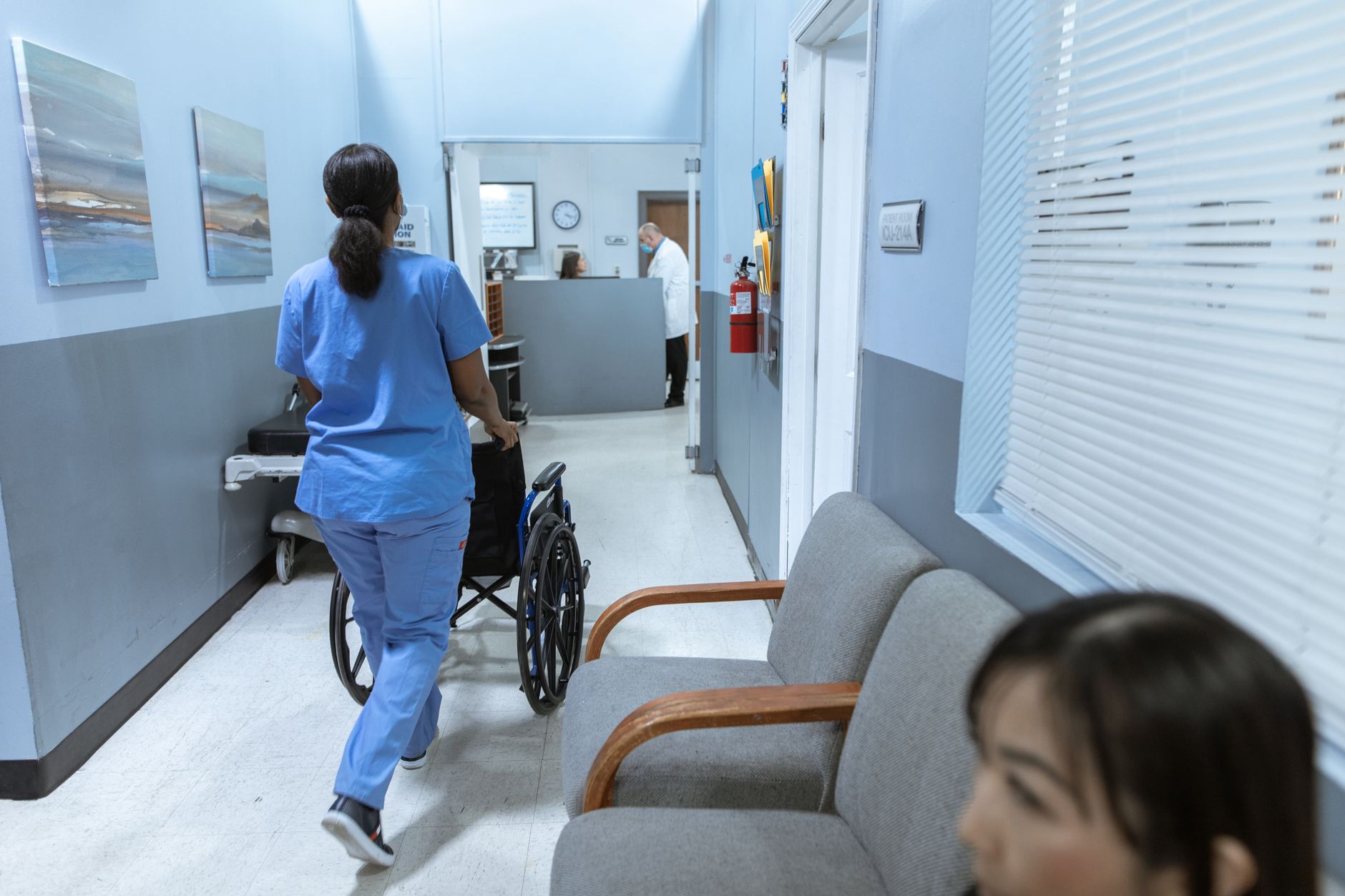
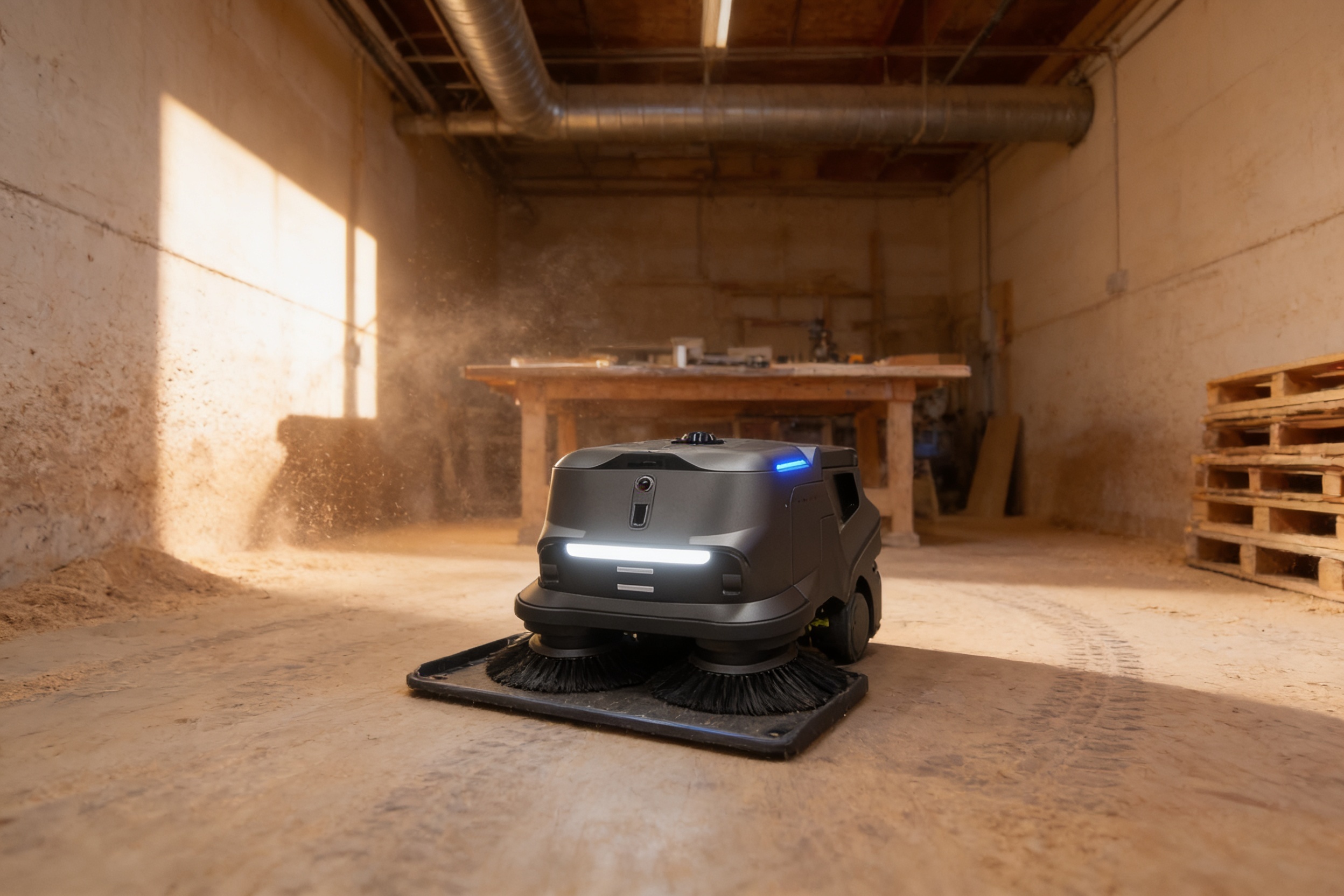
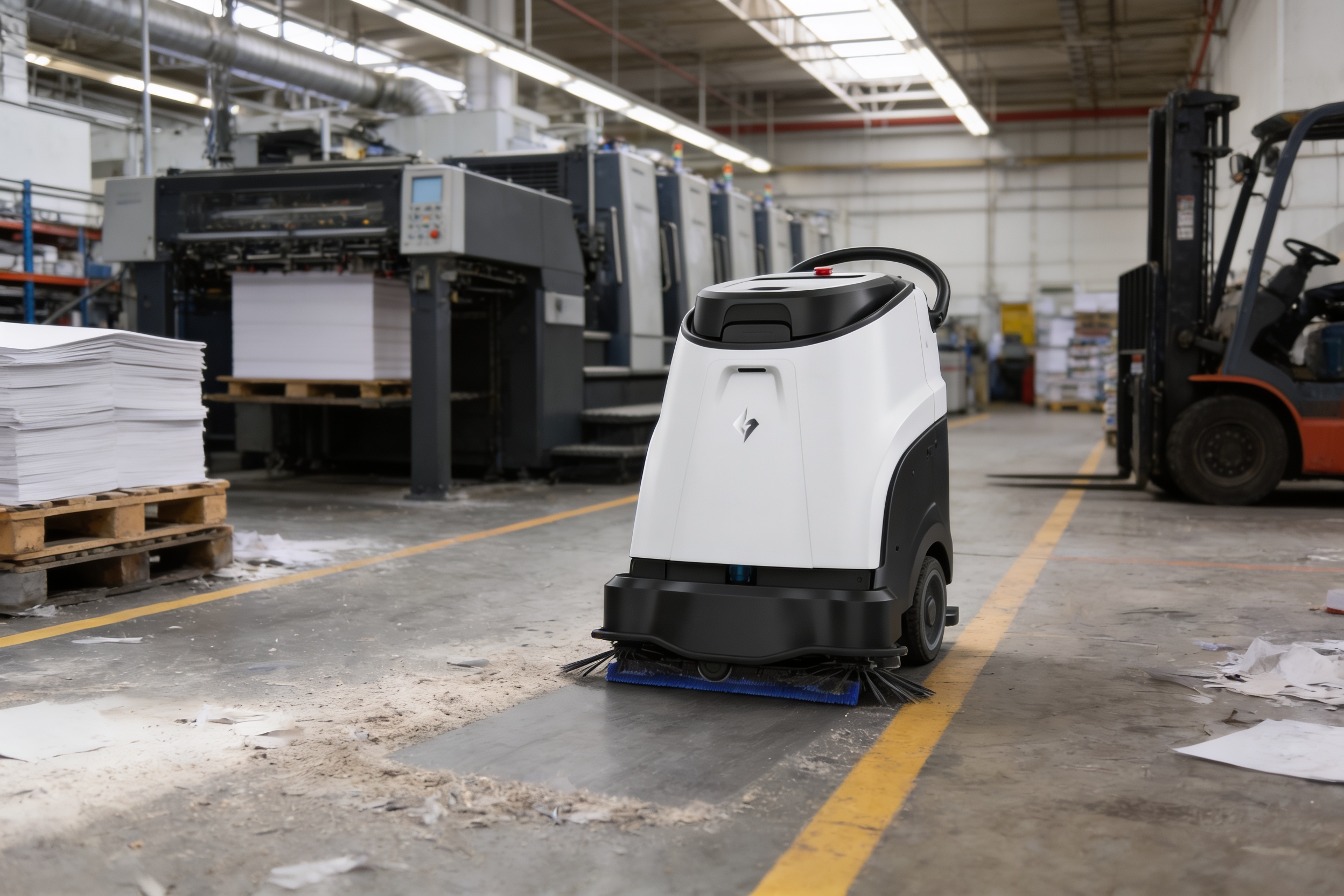
A floor-scrubbing robot can take the repeat route on flat, hard surfaces. It follows a map of the building, runs the same path on a schedule and gives consistent coverage that does not depend on who worked the night before. For a large open floor, that consistency is the main gain, more than raw speed.
Work it cannot take includes restrooms, trash removal, wiping touchpoints, stairs and most carpet. It also cannot judge a spill, decide whether a substance is hazardous or handle an object left in the wrong place. Those tasks need a person with hands and judgment.
Some limits depend on the model and the site. Thresholds, ramps, loose cords, pallets and furniture that moves are the usual obstacle list. The site assessment tests the route before anything is committed, which is why the floor is walked first.
What does the robot's shift look like?
A robot's shift is short and predictable. Staff set it up, confirm the floor is clear, start the mapped route and check the results at the end. Between those points the robot runs on its own, while a person stays on site for exceptions.
The staffing picture changes more than the headcount suggests. Someone clears the floor, someone watches for a stopped unit, and someone works the restroom and spill list. What changes is the plan for who does which task, not whether people are present.
The steps below show the order of a typical run. They are not fixed clock times, because each site sets its own hours.
What do the labor numbers say about turnover, overtime and night shifts?
The national picture is steady rather than shrinking. According to the Occupational Outlook Handbook from the Bureau of Labor Statistics, janitors and building cleaners held about 2,447,700 jobs in 2024, with projected growth of 2% from 2024 to 2034, which the BLS labels slower than average. The same page projects about 351,300 openings a year on average, mostly from replacement needs.
Replacement needs are the labor signal. Most openings come from people leaving the job rather than from new positions. A staffing site, Stealth Agents, states that annual turnover in commercial cleaning and building services typically ranges from 50% to over 100%. That is a secondary claim, and a government turnover series for this occupation was not found, so treat the range as something to check against your own records.
Injury data is the other side of the labor picture. The BLS Survey of Occupational Injuries and Illnesses reports 21,100 nonfatal injury and illness cases with days away from work for janitors and cleaners, except maids and housekeeping cleaners, in 2020, an incidence rate of 191.6 per 10,000 full-time equivalent workers. The 2019 figures were 18,680 cases and a rate of 157.4. Newer years were not found, and the page was last modified in January 2022, so 2020 is the latest year in this research.
Overtime, night-shift and sick-day rates for this job were not in the research, and neither were hours per shift for this specific occupation. Those are the numbers that decide the case at your site, so the checklist below lists what to pull from your own roster.
Labor pressure is widely reported. A CleanLink figure from 2025, quoted in a cleaning vendor's blog, says 61% of janitorial companies name labor shortages as a major obstacle to growth. It is a vendor-cited number, so use it as context rather than proof.
How does a team work with a robot?
The model that holds up is a robot plus fewer staff, never zero staff. The robot takes the repeat floor route, and the people you keep move to restrooms, spills, trash, restocking and exception work. Fewer people on the route does not mean the building runs unattended.
Staff roles change. The janitor who used to push a scrubber for a long stretch becomes the person who sets up the route, checks the unit and clears exceptions. That is a different job and it needs training. The people who run the unit need to know how to stop it, how to clear a path and when to call for service.
We pick the right robot for the site, lease it through financing, deploy and integrate it, train the staff who run it and service it nationwide. The lease payment is quoted after a site assessment, so the terms reflect your floor and your hours. For most sites the first step is one unit in one area, followed by a decision once it has run.
What can a cleaning robot not do?
A cleaning robot cannot replace the whole janitorial function. It does not clean restrooms, empty trash, handle hazardous spills or make the judgment calls that come up during a shift. Treating it as a replacement for all of those is the most common reason a deployment disappoints.
The floor also sets limits. Heavy carpet, cluttered floors, frequent layout changes, thresholds and loose cords all reduce what a unit can do. A site that rearranges its furniture every week will need more attention than a warehouse aisle.
Uptime depends on service. A unit that is down is not cleaning, so the question is how fast it returns to work. We service units nationwide, and where the plan calls for it we can arrange a spare unit so a single failure does not leave the floor uncovered.
How do you get started in Dallas?
Start with a site walk. List the floor areas and surfaces, the hours when the floor sits empty, the restroom and spill load, and the current staffing pattern. Those facts decide whether the robot fits and which area to start with.
Next comes a site assessment, where the route is mapped and tested. The lease quote follows the assessment. Ask that it show the floor coverage, the hours the robot will run and the tasks that stay with staff.
Then go live with support. We deploy and integrate the unit, train the staff who run it and stay with the site through go live. A pilot in one area gives you real run hours and exception data before any wider decision, and the first review should use the same records you pulled for the checklist, so the comparison is honest.
Frequently asked questions
Put a robot to work in Dallas.
We walk your site, learn the job, and recommend the unit that fits. Then we quote the lease, deploy it, and keep it serviced.
Sources
- US Bureau of Labor Statistics, Occupational Employment and Wage Statistics (OEWS May 2024)
- U.S. Bureau of Labor Statistics, Occupational Outlook Handbook: Janitors and Building Cleaners
- U.S. Bureau of Labor Statistics, Survey of Occupational Injuries and Illnesses: Janitors and Cleaners, Except Maids and Housekeeping Cleaners, 2016-20
- Wagedex, Janitors and Cleaners in Dallas-Fort Worth-Arlington, TX (citing OEWS May 2025)
- Stealth Agents, Janitorial and Cleaning Industry Staffing Costs 2026
- Golden Group International, How Commercial Cleaning Is Changing in 2026