

The short answer
For a cleaning robot vs janitor in Cleveland, OH decision, a robot makes sense when a building has large open floors that get the same pass every day, especially if that pass can run after hours. It does not make sense when most of the shift is restrooms, spills, trash, and rooms full of moving furniture or people. For most Cleveland sites, the workable answer is a robot plus fewer staff, not a robot instead of anyone.
Key takeaways
- A robot is strongest on large, repeated floor passes that can run while the building is empty.
- Restrooms, trash, spills, and exceptions stay with people in every realistic setup.
- Turnover, overtime, and sick-day costs for this trade are not published locally, so measure your own payroll first.
- Injury data point to lifting, slips, and repetitive motion as the exposures to review when choosing which passes to automate.
- The decision is a robot plus fewer staff, with the lease quoted only after a site assessment.
Is a cleaning robot better than a janitor in Cleveland, OH?
For most businesses in Cleveland, OH, the choice is not one or the other. A cleaning robot makes sense when a facility has large open floors that get the same pass every day, particularly when that pass can run overnight or between shifts. It makes less sense when most of the work is restrooms, spills, trash, and rooms with furniture that moves daily.
Start with the labor base. According to the U.S. Bureau of Labor Statistics Occupational Outlook Handbook, janitors and building cleaners held 2,447,700 jobs in 2024, and employment is projected to grow 2% from 2024 to 2034, which the Handbook calls slower than average, a change of 47,800 jobs. In practice, slow growth means most openings come from replacing workers who leave, so the pressure is mainly about keeping shifts filled. The same Handbook lists about 350,300 openings a year, but that figure comes from an older edition, so treat it as dated.
The Handbook also says most janitors learn on the job. A robot does not need a skill the site lacks, but someone still has to learn its map, schedule, and exceptions. Local data is thinner than we would like. We could not find a May 2024 employment count for janitors and cleaners in the Cleveland-Elyria metro. According to WageDex, a third-party site citing OEWS May 2025, about 5,780 maids and housekeeping cleaners work in Cleveland, but that is a different occupation code, so it is not a janitor count. For the labor side of the comparison, use the local wage for this job shown in the government wage data on this page.
What does a janitor actually do during a shift in Cleveland?
A janitor shift is rarely just floors. A typical commercial shift covers trash and recycling collection, restroom stocking and cleaning, spill response, dusting and wiping high-touch surfaces, vacuuming carpet, and mopping hard floors. Floor work is often the largest single block in a big open building, but it is broken up by the other tasks, which is why a floor machine alone rarely replaces a shift.
The injury data explain why the job deserves a careful look. According to startbusinessbystate.com, which cites BLS survey data (SOII), janitorial services recorded 2.5 work-related injuries and illnesses per 100 full-time workers in 2024, against 2.3 for private industry. We could not open the BLS table directly, so treat those figures as secondary. Lifting, chemical handling, slips, and repetitive motion are the usual exposures in this work, and they are the place to start when you decide which passes to hand to a machine.
Median hourly wage, Janitors and Building Cleaners
$3,955
Monthly cost of one full-time worker in Cleveland, OH, at the median wage plus payroll costs (an estimate, not a quote).
- Overnight floor passes
Cleaning Robot
Runs a mapped route when the building is empty, once the site is set up
Janitor
Possible, but a night shift needs staffing and supervision
- Restrooms and high-touch surfaces
Cleaning Robot
Not handled
Janitor
Handles fully, including stocking and disinfecting
- Spills and debris
Cleaning Robot
Sweeps what the route reaches; a person makes the judgment calls
Janitor
Reads the spill, picks the right response, and reports damage
- Consistency of the same pass
Cleaning Robot
Repeats the same route on schedule without fatigue
Janitor
Varies with fatigue, staffing, and the other tasks of the day
- Trash and recycling
Cleaning Robot
Does not empty bins
Janitor
Collects and sorts as part of the shift
- Exceptions and changed layouts
Cleaning Robot
Stops at obstacles and needs a person to clear them
Janitor
Adapts when the layout changes or a room is closed
- Sick days and call-outs
Cleaning Robot
No sick days, but a stalled unit still needs a person to check it
Janitor
Absences need covering, and that cover is often overtime
Which cleaning tasks can a robot take, and which can it not?
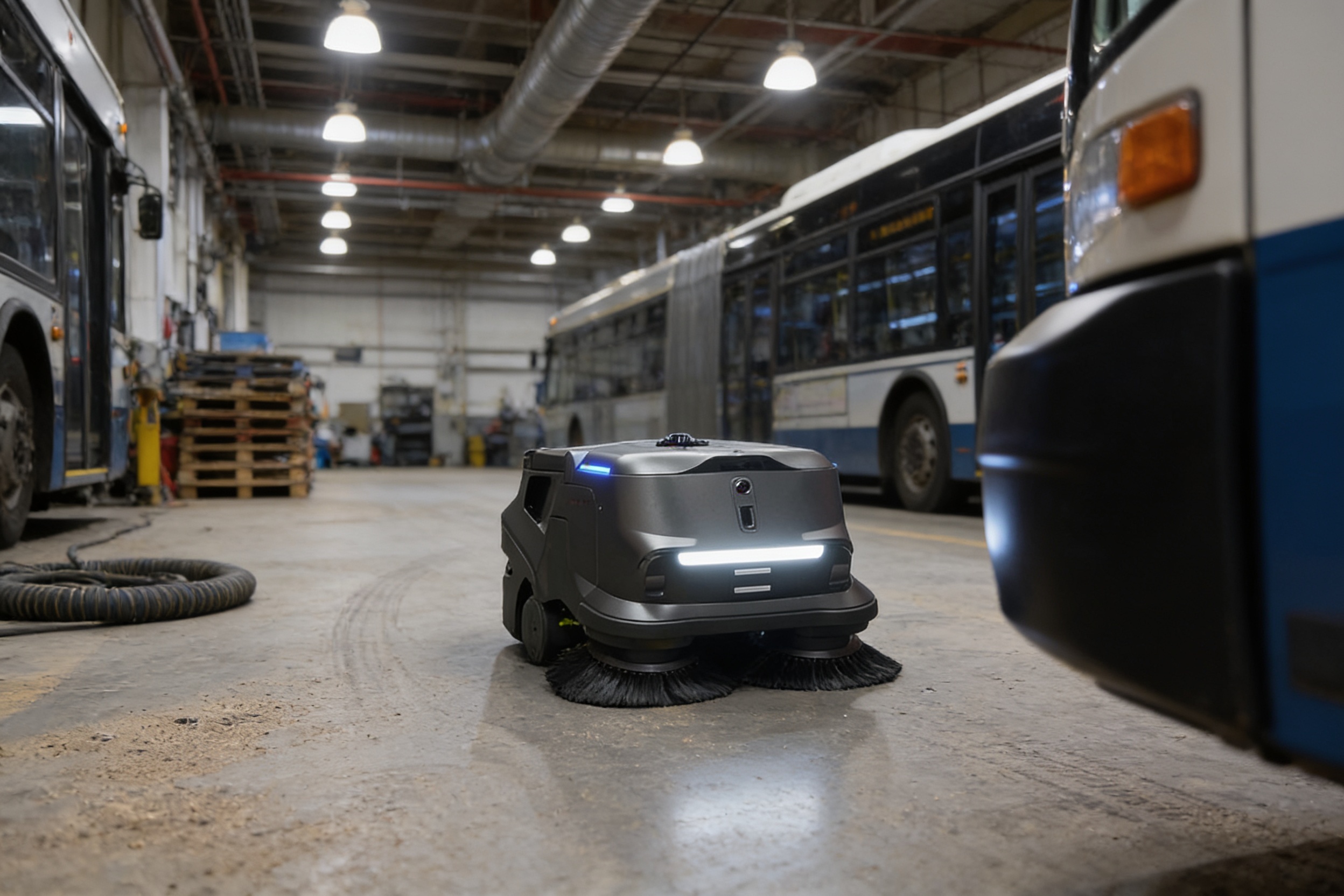
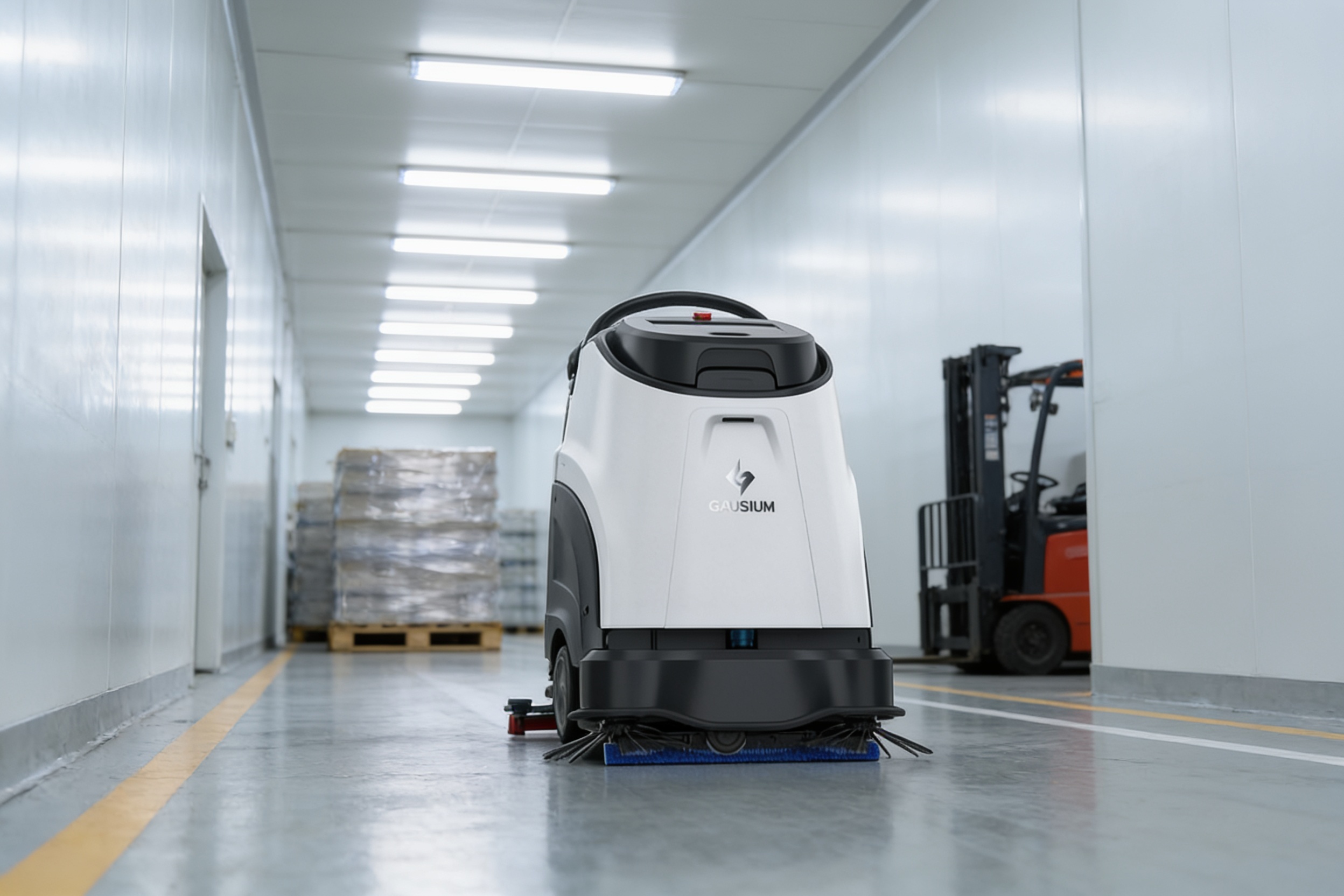
The clearest fit is repetitive open floor with a clear path: lobbies, corridors, warehouse aisles, retail sales floors, and open concourses. An autonomous floor scrubber or sweeper runs a mapped route, returns to its dock for service, and can work when the building is empty. Route time and floor area covered per hour depend on the machine and the layout, so those numbers come from the site assessment, not from a general sheet.
A robot does not handle restrooms, trash emptying, spill cleanup that needs judgment, wiping surfaces, stairs, or tight rooms with furniture that moves daily. It also needs a clear floor. Pallets, cords, and loose items must be cleared before a run, and a person still has to clear the obstacles that stop the route.
What does the labor picture look like: turnover, overtime, night shifts, and sick days?
Turnover is the number most managers want and the one public data handles worst. A career-information site describes turnover in this trade as relatively high, but gives no rate. A janitorial trade publication says turnover stayed relatively steady after 2020, also without a rate. We did not find a BLS turnover rate for this occupation. For a rate you can use, check the BLS JOLTS data by industry, or pull your own separation records for the last two years.
Overtime, night-shift premiums, and sick-day coverage are real costs, but we did not find verified figures for them in this occupation, so this page does not estimate them. Count your own numbers instead: overtime hours that cover floor work, call-outs on night shifts, and shifts that run short. Those counts show how many filled shifts a robot could take over, and that number drives the decision more than any headline figure.
How does a site run with a robot plus fewer staff?
The workable model is always a robot plus staff, never zero staff. The robot takes the repetitive floor passes on a schedule, and people handle restrooms, trash, spills, inspections, and the exceptions the robot cannot read. The crew's job shifts from pushing machines across the same floor to checking the route, clearing obstacles, and covering the work the robot cannot do.
Service Robot Co. works this way. We assess the site, select the robot for that floor, lease the unit through financing, deploy and integrate it, train your staff on setup and exceptions, and service it nationwide, so a stopped unit gets dispatched rather than left idle. The lease payment is quoted after a free site assessment, and maintenance is included, so the cost is set on paper and the crew does not carry repair work.
Is a cleaning robot worth it in Cleveland, OH once you count the lease?

Cost depends on the floor, the route, the hours, and the service plan, so there is no standard figure to print. What can be stated is the structure: a fixed robot lease payment through financing, with maintenance included, and a quote with no hidden fees once the site assessment is done. Compare that payment against the labor the robot takes over: unfilled shifts, overtime, and the cost of a shift that runs short.
A robot pays back when it covers a shift you already pay for and cannot fill. The case is weaker when the building is small, the floors are split into many small rooms, or one efficient crew member already covers the open floor. The local wage for this job, shown in the government wage data on this page, sets the labor side of that comparison, so run the numbers with your own hours.
Adoption is still early but moving. According to ISSA Today, summarizing a Cleaning and Maintenance Management benchmarking survey, 43% of respondents plan to add autonomous cleaning equipment. That figure covers autonomous equipment in general, not scrubbers specifically. A 2019 AACEM and ISSA survey of nearly 23,000 respondents described adoption as an infant stage, with about one-third of non-adopters open to adopting within a year. A 2026 vendor press release says planned adoption of robotic floor equipment roughly doubled from 2025, but it is vendor-reported, so weigh it accordingly.
What can a cleaning robot not do?
Be direct about the limits. A robot does not replace a janitor in a building with heavy restroom work, frequent spills, or constant trash removal. It is limited by its map: a route that changes often, a room that is cluttered every night, or heavy debris on the floor will still need the crew. It also cannot escalate a problem on its own, so a stalled unit or a blocked aisle needs a person on site to clear it.
Expect some schedule loss at the start. A new route needs mapping, testing, and a few adjustments before the unit runs cleanly, and the first weeks show where the layout does not match the plan.

What should you check before you decide?
Before asking for a quote, check the items below. Each one can change the answer more than any headline number. Look at the share of the floor that gets the same pass, the clutter on the route, the after-hours window, and the unfilled shifts in your own payroll. Then confirm how a stalled unit gets fixed, since that answer shapes how much staff time the robot actually saves.
How do you get started with a cleaning robot in Cleveland?
Start with a site walk and a one-week shift log. Record which floor areas get the same pass each night, which shifts run short, and what overtime covers. Those records are what the site assessment needs. Then request the free site assessment. Service Robot Co. maps the floor, selects the robot for that floor, and quotes a fixed lease payment with maintenance included.
Many sites start with one leased unit and add a second only after the route data supports it. Service Robot Co. handles the lease, deployment, staff training, and nationwide service from one team, so the first unit can be checked against your own numbers before any wider plan is set.
Frequently asked questions
Put a robot to work in Cleveland.
We walk your site, learn the job, and recommend the unit that fits. Then we quote the lease, deploy it, and keep it serviced.
Sources
- US Bureau of Labor Statistics, Occupational Employment and Wage Statistics (OEWS May 2024)
- BLS Occupational Outlook Handbook: Janitors and Building Cleaners
- Startbusinessbystate: janitorial injury and illness data citing BLS SOII
- Career outlook page on janitors and cleaners (legacy)
- Janitorial Manager: how the janitorial industry turnover rate has changed
- WageDex: maids and housekeeping cleaners in Cleveland, OH
- ISSA Today, September to October 2025 benchmarking summary
- Vendor press release on robotic floor equipment adoption (2026, vendor-reported)
- AACEM/ISSA autonomous cleaning survey report (2019)