
The short answer
When you weigh an autonomous mobile robot vs material handler in Minneapolis, the deciding factor is repetition. A robot makes sense for the same totes or pallets moving along the same routes between a few fixed stations, especially on long or overnight shifts, while a material handler stays the better fit where the work changes daily, exceptions outnumber routine moves, or the layout shifts often. In either case a robot works alongside staff, so the real question is how many hours it takes over, not whether people are removed.
See what a autonomous mobile robot costsRun the numbers in the ROI calculator
Key takeaways
- A robot fits repeat, fixed-route moves, while a material handler keeps the exceptions, judgment and hands-on work.
- The Minneapolis-St. Paul metro had 36,880 jobs in this occupation in May 2023, so check your own vacancies and overtime rather than assuming a shortage.
- Transportation and material moving carries heavy injury counts nationally, so route design and staff zoning matter as much as the robot itself.
- Plan a robot plus fewer staff, never zero staff, and keep trained people on every exception.
- Start with a free site assessment, since the lease quote comes after it and is set by your routes and floor.
Autonomous mobile robot vs material handler in Minneapolis: when does a robot make sense?
A robot makes sense when most of a material handler's moves repeat. Think of the same tote going from a receiving staging area to a pick zone, or the same pallet run from a dock door to a packing line, every shift. When routes are fixed and loads are predictable, a robot keeps moving through a late shift without the coverage gaps that come from sick days, short-staffed nights and turnover.
It does not make sense when the work is mostly exceptions. If every load is a new size, if trailers arrive unplanned and need unloading, or if the floor changes every few weeks, the setup and remapping time can outweigh the moves a robot takes over. In that case a material handler who can adapt is the better fit.
The test is simple. Count how many moves in one shift follow the same path. If that share is high, a robot is worth a site assessment. If it is low, the better answer may be a material handler with a cart or a conveyor added, not a robot.
What does a material handler actually do in a Minneapolis shift?
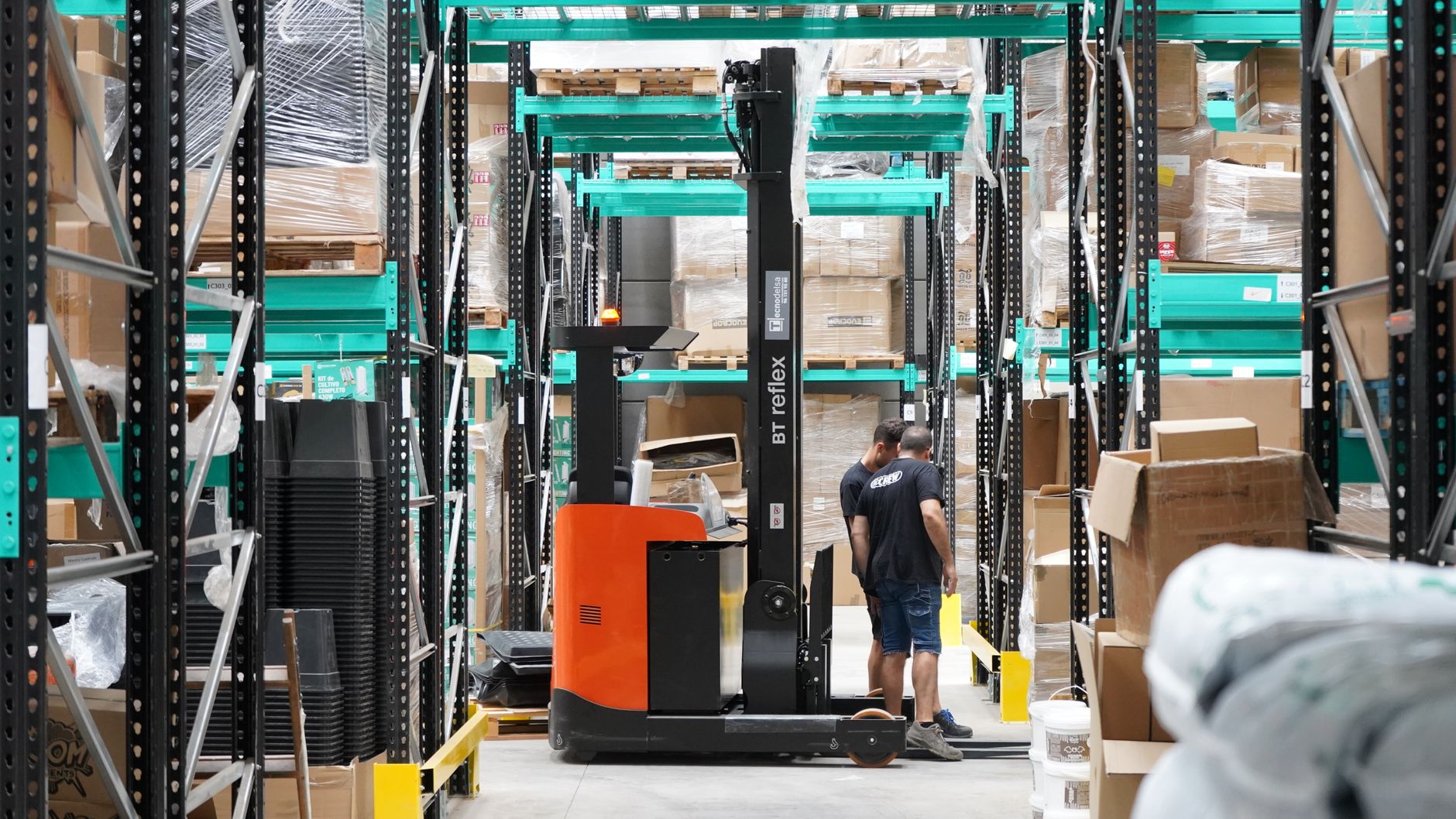
A material handler receives goods, checks them against paperwork, stages pallets and totes, moves them to pick zones, restocks, and loads outbound freight. Much of that is walking and lifting with pallet jacks and hand carts, with some powered equipment, and the job shifts between tasks as the dock schedule changes. The moves are short and frequent, which is why the work is hard to measure and easy to underestimate. The mix also shifts with the number of dock doors and how much of the day goes to inbound versus outbound freight.
The government data on this page covers Laborers and Freight, Stock, and Material Movers, Hand. The BLS May 2023 table counts 36,880 jobs in the Minneapolis-St. Paul metro for that group. The May 2024 BLS metro release for Minneapolis-St. Paul-Bloomington notes that its estimates use updated metro definitions, so the 2023 count is a size indicator, not a precise trend line. The local wage for this job is shown in the panel beside this text.
The job title is broad. A material handler at a food plant, a parcel hub and a hardware distributor does varied work, so the shift picture depends on your floor, not on the job title.
Median hourly wage, Laborers and Freight, Stock, and Material Movers, Hand
$5,209
Monthly cost of one full-time worker in Minneapolis, MN, at the median wage plus payroll costs (an estimate, not a quote).
Which parts of material handling can a robot take, and which can it not?
A robot takes the fixed-route legs well. Moving totes from receiving to staging, carrying pallets from a dock door to a packing line, pulling carts from pick zones to a shipping lane, and repeating the same loop through a night shift are all jobs where the path and the load stay predictable. The value is in those repeat legs, not in the whole job.
It cannot unload a trailer, build a mixed pallet from scratch, decide whether a damaged case goes to returns, or clear a jam, a spill or a blocked aisle the way a person clears it in seconds. It also cannot rank two urgent jobs on its own. Those tasks stay with staff, and the time the robot frees should move to them.
The useful exercise is to map which legs of the day repeat. Match the repeats to a robot and keep the judgment work with people.
What does the hours and labor picture look like here?
Published hour counts, overtime, night-shift and sick-day data for this occupation in Minneapolis were not found in the sources we checked, so those numbers should come from your own records. The closest verified turnover figure is national: according to the BLS JOLTS release from February 2026, the quits rate for 2025 was 2.0 percent across all industries. That is a whole-economy number, so it shows the direction of the labor market, not your own churn.
For the local sector, the FRED Twin Cities transportation and warehousing series shows 81.1 (in thousands of workers) for December 2025. That gives a sense of the wider labor pool, but it is not a count of material handlers. Your overtime hours per shift, open requisitions and sick-day logs by shift will show how much coverage you are actually short.
The table below organizes the measurement by task, so the decision rests on your shift data rather than on a general average.
How does a team work with a robot day to day?
The model we recommend is always a robot plus fewer staff, never zero staff. The robot runs the repeat routes, and people take over what it cannot do: unplanned trailers, damaged goods, route blockages and exceptions that need a decision. The goal is to cover more hours with a focused team, not to remove the team.
A shift usually changes in three ways. Staff set the route queue and check robot status at the start of shift, they answer any stop or exception the robot raises, and they spend more time on receiving, quality checks and outbound loading. Training matters, because the people who handle exceptions need to know the routes and the safe zones. Write the handoff rules down before go-live: who clears a jam, who approves a reroute, and who calls the service line.
Fewer staff still need cover for breaks, sick days and vacations. Plan that cover up front. The robot does not replace the person who calls in sick, it changes which tasks the rest of the team does that shift.
What do the injury numbers mean for this decision?
Transportation and material moving is a high-risk group, so the safety case for a robot is real but needs careful reading. BLS fatal injury data show 1,391 deaths in transportation and material moving occupations in 2024, a rate of 12.5 per 100,000 full-time equivalent workers, down from 13.6 in 2023. That is a broad occupational group, not the material handler job alone, and a rate does not describe your own dock.
The National Safety Council, summarizing BLS data for 2023 and 2024 combined, counts 805,900 days-away-from-work-or-restricted-duty cases in transportation and material moving, about 27 percent of the total, and 468,830 days-away-from-work cases, about 26 percent. These are counts over a two-year window, so they show where the injury load sits across the economy. Use them as a reason to review your own incident log.
A robot can cut manual carrying on the legs it takes over, which is where repetitive lifting adds up across a shift. It does not remove forklift, pedestrian or dock-edge risk, and a poorly zoned route can create new exposure. Treat safety zoning and staff training as part of the project, not an add-on.
What can an autonomous mobile robot not do?
A robot does not handle a messy floor, a layout that changes weekly, or work that needs a human eye. Heavy debris, poor lighting, wet spots and uneven thresholds at dock doors need checks before a route is set. If racking moves every few weeks, the map has to be redone, and that takes staff time.
It does not replace the person who knows the customer, the carrier and the exception. A robot cannot tell that a pallet is leaning, re-sequence an order because a truck arrived early, or decide a damaged case is not worth moving. Expect staff to keep those calls and to take the escalations the robot raises. Ask for a clear list of what triggers an alert and what the team is expected to do within the shift.
Capacity is a limit too. One robot covers one route set. A peak season or a new product line may need more units or more staff, so plan for that peak in the site assessment rather than hoping one unit absorbs it.
- Repeat fixed-route moves
Autonomous Mobile Robot
Follows the same route every time, including the late shift
Material Handler
Repeats the route well, but needs breaks and cover
- Unplanned trailers and exceptions
Autonomous Mobile Robot
Cannot unload or decide, so it stops and asks for help
Material Handler
Adapts, decides and clears the blockage
- Layout changes
Autonomous Mobile Robot
Needs a new map and route set after large changes
Material Handler
Adjusts to a new layout within the same shift
- Damaged or mixed loads
Autonomous Mobile Robot
Does not make the call
Material Handler
Makes the call and escalates correctly
- Night coverage
Autonomous Mobile Robot
Keeps a scheduled route running with no one walking it
Material Handler
Needs staffing, shift cover and rest breaks
- Sick days and turnover
Autonomous Mobile Robot
Has no sick days, but still needs upkeep and cover by staff
Material Handler
Calls in sick or leaves, so training and cover are needed
Is robot adoption in material handling growing?
Adoption is growing, but the strongest figures are global. According to the International Federation of Robotics, the global operational stock of industrial robots reached a record 5 million units, up 9 percent in 2025. That shows the technology is mature enough to deploy. It does not show how many robots run in Minneapolis warehouses.
The practical lesson is that narrow, repeat routes are the sensible starting point, rather than a change to the whole facility at once. Compare any adoption figure with the year and geography it covers, because a global stock figure says little about a single metro. Adoption figures are useful for setting expectations, but they are not a deadline.
Your decision depends on your route count, your labor records and your floor. The site assessment is where those three things get measured, so the answer rests on your building rather than on a trend.
How do you decide, and how do you get started?
Start by counting the repeat moves on one shift and the labor hours they consume, then test the fit against the checklist below. If the repeats are clear and the floor is workable, the next step is a free site assessment. The lease quote comes after that assessment and takes the form of a fixed robot lease payment through financing.
We are a US commercial robot integrator. We pick the right robot for the site, lease it through financing, deploy and integrate it, train the staff who work with it, and service it nationwide. A single unit on one route is a sensible first test, and we can scope a project that way before any wider rollout.
Bring shift logs, the dock layout and overtime records to the assessment. The more of your own data in the room, the faster the decision, and the less it depends on any general figure on this page.
Frequently asked questions
Upcoming events in Minneapolis, MN
Put a robot to work in Minneapolis.
We walk your site, learn the job, and recommend the unit that fits. Then we quote the lease, deploy it, and keep it serviced.
Sources
- US Bureau of Labor Statistics, Occupational Employment and Wage Statistics (OEWS May 2024)
- BLS OEWS May 2023 table for SOC 53-7062 Laborers and Freight, Stock, and Material Movers, Hand
- BLS OEWS May 2024 metro release for Minneapolis-St. Paul-Bloomington
- BLS JOLTS release, February 2026
- BLS Census of Fatal Occupational Injuries, number and rate of fatal work injuries by occupation
- National Safety Council summary of BLS nonfatal injury data
- International Federation of Robotics press release on five million robots
- FRED Twin Cities transportation and warehousing employment series