
The question, in the buyer's words
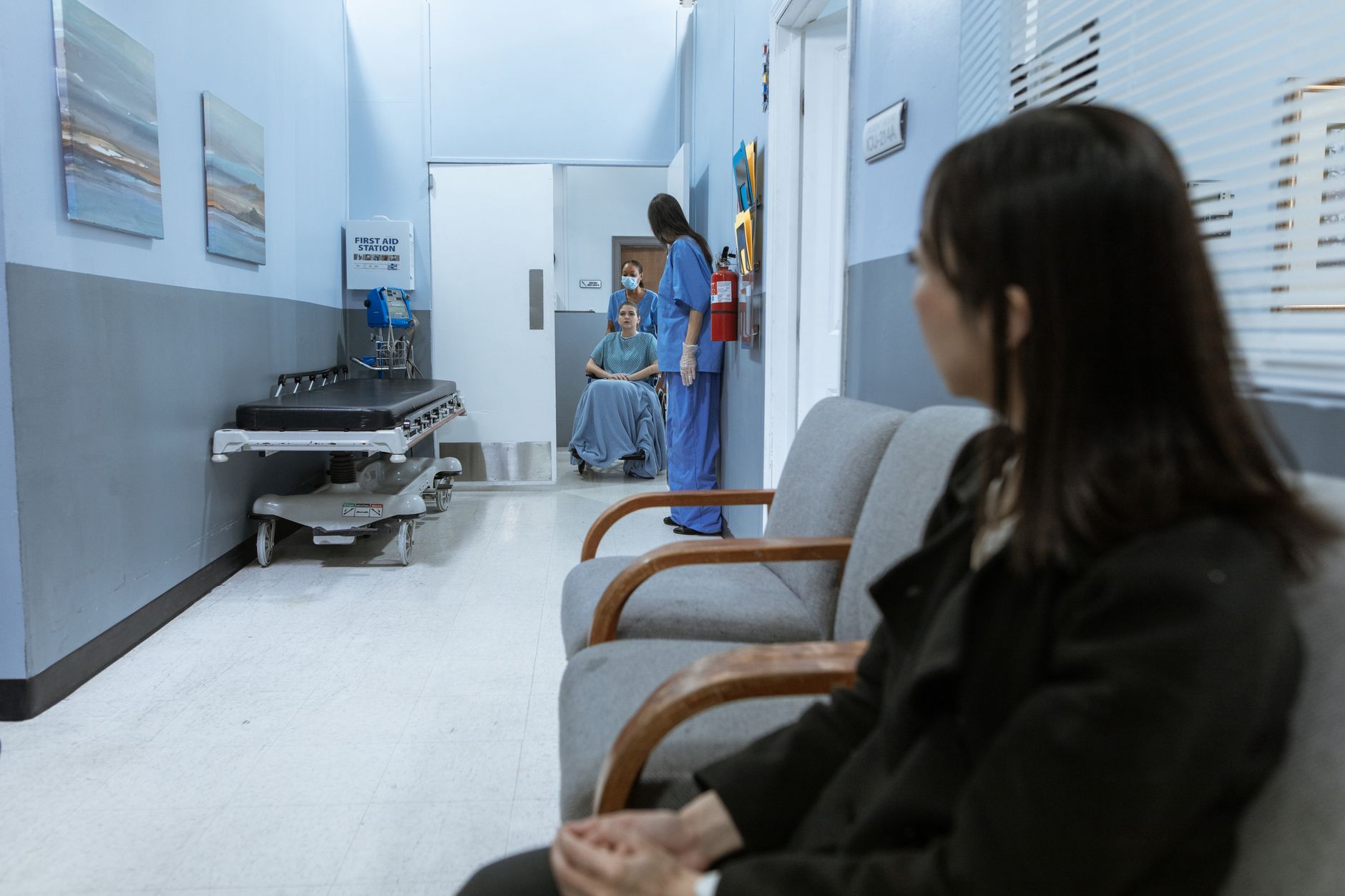
I run custodial for a five-building county health department, and clinic lobbies and exam rooms have to be done before the 7:30 a.m. opening; could a cleaning robot run the lobby and hallway floors overnight without setting off the alarm?
Key takeaways
- A floor cleaning robot fits open lobbies and hallways, not exam rooms or restrooms.
- The alarm panel is the deciding question, and the research found no scrubber that suppresses alarms out of the box.
- Hospital figures show real floor minutes saved, but they are not clinic data.
- Time one week of your own floor runs before asking for a quote.
- Pilot one building first, then add the rest after clean morning logs.
Can a floor cleaning robot handle county health clinic overnight floor cleaning?
For county health clinic overnight floor cleaning, a floor scrubbing robot fits the big open areas: the public lobby, the main hallways, and the waiting area once chairs and sign stands are moved out of the route. It runs a mapped route on its own with no operator, so it can finish the same path in the same order every night. In a clinic, that consistency matters, because the floor has to look the same at 7:30 a.m. no matter who closed the building.
The part of your question that does not fit is the exam rooms. Exam rooms have cords, rolling stools, cabinets, and surfaces that need hand cleaning and disinfection to the protocol your infection control staff sets. A floor scrubber cleans floors. It does not wipe exam tables, handle waste, or confirm that a room is ready for a patient. Keep those tasks with people, and let the robot take the long floor runs so your crew spends its hours in the rooms.
The alarm question has to be settled before anything else. The research I reviewed did not find a commercial floor scrubber that suppresses an alarm out of the box. Integration is generally done through a schedule or status signal to the alarm panel, or through zones the panel ignores while the robot is inside them, and the method has to be confirmed with the scrubber vendor and your alarm contractor for each building.
How many county health departments and custodial workers are involved?
Local health departments run many of the county clinic services, and they are the sites where this question comes up. The most recent national count I could verify is the NACCHO National Profile, which counted 2,533 local health departments in its 2016 study population, with a 76% response rate. That is an older round, so use it to size the problem, and check your state health department for the current list of facilities in your county.
The labor pool behind custodial work is large and fairly flat. The BLS Occupational Outlook Handbook reports 2,447,700 jobs for janitors and building cleaners in 2024, and projects 2% growth from 2024 to 2034, which it calls slower than average for all occupations. Your county is competing for the same people as every other building operator, and that pool is not expanding quickly enough to close an overnight gap on its own.
The handbook also says most janitors learn on the job, with no formal credential required. Staff are easy to start but costly to lose in training time, and a supervisor feels every resignation on the overnight roster. The research did not turn up a turnover rate for this occupation, so do not assume one. Pull your own county separation numbers from HR before you make the case internally.
How many hours does overnight floor work take, and how much can a robot cover?
Hours depend on the building, but two hospital cases show the scale of change. A Singapore hospital reported in a 2021 innovation record that autonomous scrubbers cut floor mopping time by 57%, from 35 minutes to 15. Those are hospital-reported figures, not an independent study, and they describe a mopping run rather than a full night shift.
A 2021 conference abstract from a Hong Kong hospital reported that public-area mopping had used 189 staff-hours a month before the robot. Once that work moved to the robot, staff were redeployed, and toilet cleaning rose from 6 to 8 cleanings a day after hours. For a clinic, the real gain is often the hours the robot frees for work that needs a person.
Use the table as a method, not a forecast. Before you ask for a quote, time one week of your own floor runs: the lobby pass, the hallway loop, and the walk back for supplies. Those minutes, not the hospital figures, decide whether one unit covers a building or whether a second unit or a manual crew is needed.
Will the robot set off the alarm when it runs at night?
This is the question that decides whether the idea works. A patent filing on modifying security responses to robot detections describes a robot validating itself to the alarm, for example with a challenge, a timed signal, or a motion pattern, so the system can tell the robot from an intruder. An older patent on fusing fixed and mobile security sensors describes suppressing fixed-sensor alarms while the mobile unit is inside their coverage zone.
A Singapore agency document describes an autonomous hard floor scrubber with security surveillance features that was deployed in off-peak hours. That shows cleaning and security can share one machine. It does not show that the scrubber you would lease will work with your panel. Patents describe methods, and a product has to be tested in the building it will run in.
What I could not find was a commercial floor scrubber that suppresses alarms out of the box. The practical path is to ask your alarm contractor which of three things the panel supports: a scheduled bypass window, a status signal from the robot that the panel reads, or zone suppression for the areas the robot crosses. Each option needs a written test on the real panel before the first live night.
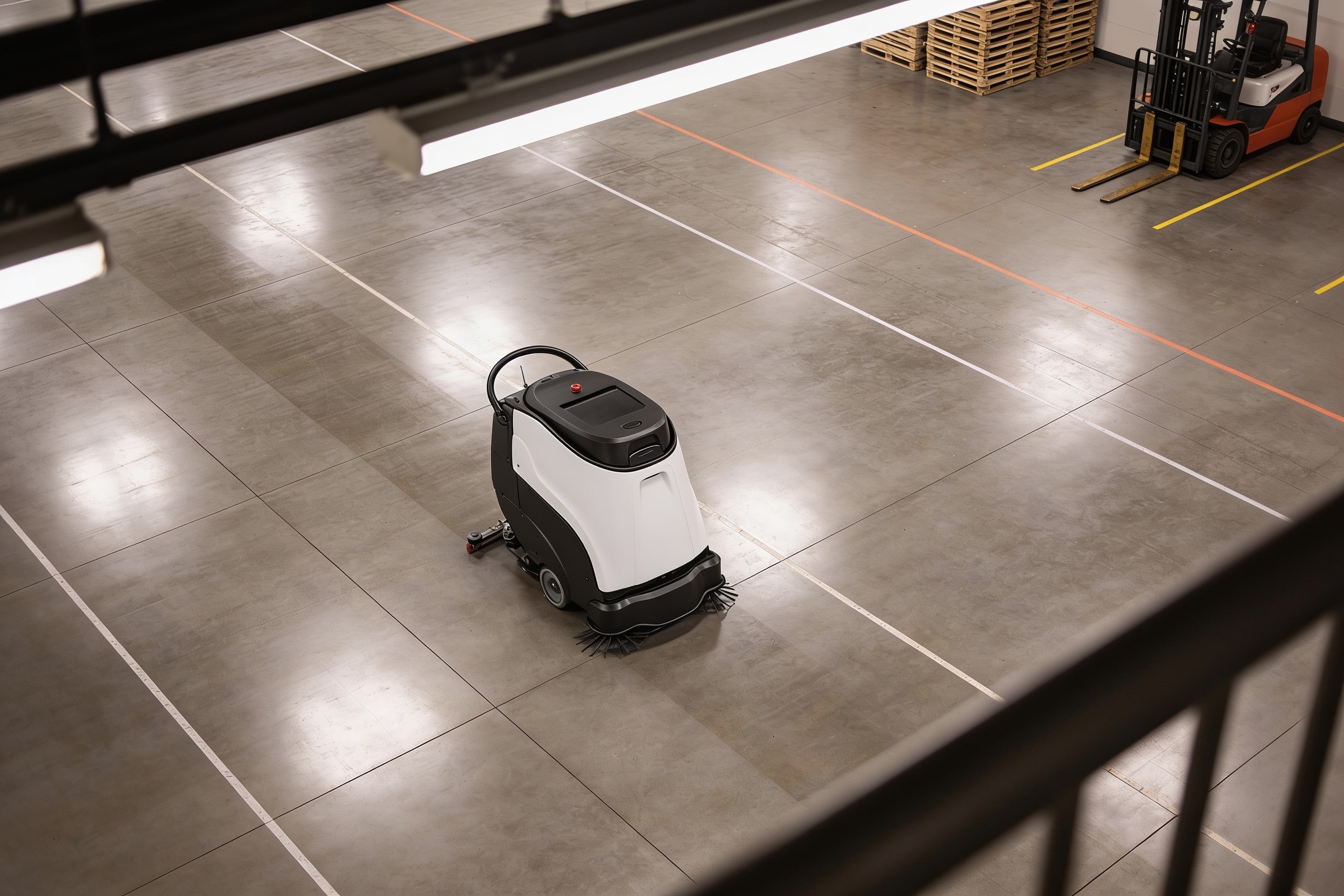
What does a night shift look like with the robot running?
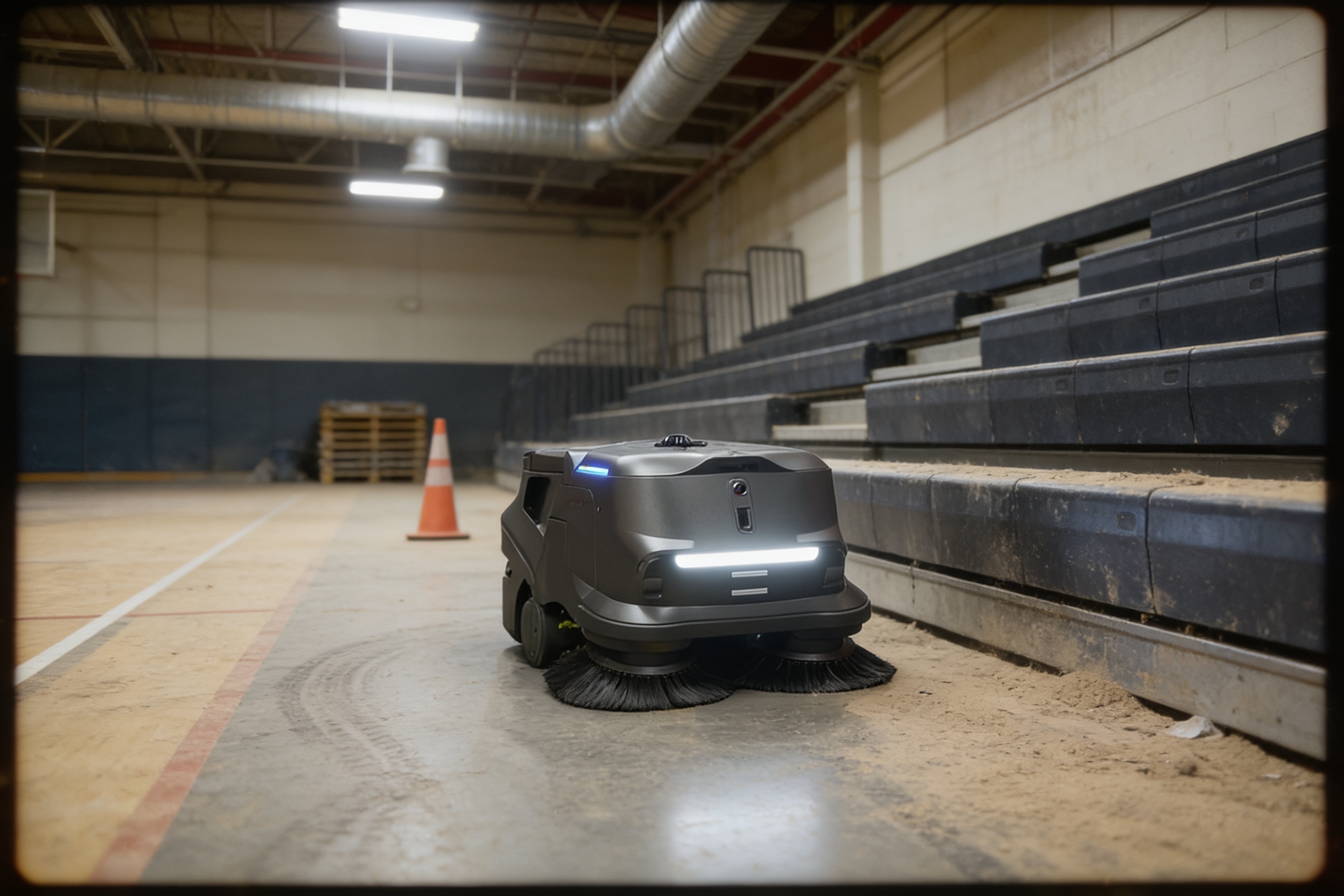
A workable night starts with a clear floor. The closing lead should pick up chairs, cords, sign stands, and bags from the lobby and hallway route before the robot starts, because an obstructed route stops the machine and can trip the panel. Start the robot at a fixed time, not whenever someone gets to it, so the bypass window and the route stay predictable.
The route is mapped on site during the assessment. The lobby and hallways are the primary zones, and the map has to show doors and cross corridors that could send the robot into a room it should not enter. Tell the robot which doors stay closed, and have staff walk the same path before the first full run.
In the morning, the crew cleans the exam rooms and restrooms as usual, then reads the robot's run log before opening. Your supervisor checks the log itself, not a summary of it. Keep a broom and mop in every building for the night a route is blocked or a sensor gets dirty, because a clinic should not open with a half-cleaned lobby.
Which parts of a clinic suit the robot, and which need people?
Clinic floors split into zones with different answers. Lobbies and main hallways are open hard floor and usually suit a mapped route. Waiting rooms work only where a clear lane runs between the chairs, and the layout decides that. Exam rooms, restrooms, and clinical work areas stay with trained staff for disinfection and the detail work a floor scrubber does not do.
Plan the zones before you ask for a quote. A reasonable first pilot covers the public lobby and one main corridor in one building, with the alarm integration tested there first. Add the other four buildings only after a month of clean run logs and a documented morning check, so the decision rests on your results.
Does a robot reduce injury risk for custodial crews?
Custodial work carries real injury risk, and that is part of the case for automating the long floor runs. According to the BLS injury and illness snapshot for janitors and cleaners, excluding maids and housekeeping cleaners, the rate was 157.4 days-away-from-work cases per 10,000 full-time workers in 2019, rising to 191.6 in 2020. The same snapshot cites overexertion and slips, trips, and falls as common causes. The figures are as summarized from the BLS page, so check them there before you cite them.
A robot takes over repetitive pushing and scrubbing, which cuts the number of manual passes a person makes with heavy equipment. It does not make floors safe by itself. Keep wet floor signs, lighting, and the robot's route clear of crew traffic, and walk the crew through the stop control and what to do if the unit halts in a doorway.
Maintenance has a safety side too. OSHA requested information in 2019 on whether its 1989 lockout and tagout standard should be modernized for robotic technology. A 2023 law-firm article says the standard remains in force, and that an employer may seek a variance where de-energizing is infeasible and the system is as safe or safer. I found no OSHA guidance written for floor-cleaning robots, so have your safety officer review the service procedure with the vendor before the first deployment.
How do you lease a cleaning robot for five buildings?
We are a commercial robot integrator for US businesses. We are OEM-neutral, so we choose the unit for the site, and we lease it through financing, deploy and integrate it, train the staff, and service it under our service plan with regional service engineers in each state we service. One partner covers the whole lifecycle for all five buildings, instead of a separate contract and service history for each.
The sequence starts with a free site assessment. We map each building's lobby and hallway routes, check floor surfaces and door layout, and review the alarm panel with your alarm contractor. The lease payment is quoted after that assessment, so it reflects the actual floors, the route count per building, and the number of units needed.
A county does not have to make one large decision. A pilot in one building, with one leased unit and a clear backup plan, lets you prove the alarm integration and the morning log before the other buildings are committed. Check your county's procurement rules for equipment leases before you start, since approval paths vary by jurisdiction.
What should I check before asking for a quote?
Four questions decide the answer. Start with the alarm panel, since a building without a workable integration method keeps a manual crew for its lobby and hallways. Then check the floors and routes, the staff hours you are trying to free, and how a unit that goes down before 7:30 a.m. gets serviced or replaced. If any one of those answers is no, that building becomes a later phase, not a failed idea.
- Alarm panel method confirmed in writing for each building.
- Lobby and hallway routes clear of chairs, cords, and bags every night.
- Your own floor minutes measured for one week before the quote.
- Service response and backup plan for a unit that is down before opening.
Frequently asked questions
Upcoming public sector events
- Trade showAPC/PennDOT/PA Turnpike Fall SeminarNov 18 to 20, 2026Hershey Lodge, Hershey, PA
- Trade showMinnesota Buildings & Facilities Management Trade ShowNov 19, 2026Minneapolis Convention Center, Minneapolis, MN
- ConferenceCASBO CBO Symposium (Executive)Nov 19 to 20, 2026The Langham, Pasadena, CA
- ConferenceVirginia Association of Fairs ConventionJan 14 to 17, 2027Williamsburg Lodge, Autograph Collection, Williamsburg, VA
Want a cleaning robot at your county health clinics?
Tell us about your site. We will recommend the robot, quote the lease, and keep it serviced.
Sources
- BLS Occupational Outlook Handbook: Janitors and Building Cleaners
- BLS injury and illness snapshot: Janitors and Cleaners (except Maids and Housekeeping Cleaners), 2016-20
- NACCHO 2016 National Profile of Local Health Departments
- Singapore hospital record on implementing autonomous robotics for daily manual tasks (2021)
- Hong Kong hospital conference abstract on a cleansing robot to facilitate hospital operations (2021)
- Singapore agency document on an autonomous hard floor scrubber with security surveillance capabilities (2020)
- USPTO patent 11062581, on modifying security responses to robot detections
- Law firm article on OSHA lockout/tagout and robotic systems (2023)