
The question, in the buyer's words
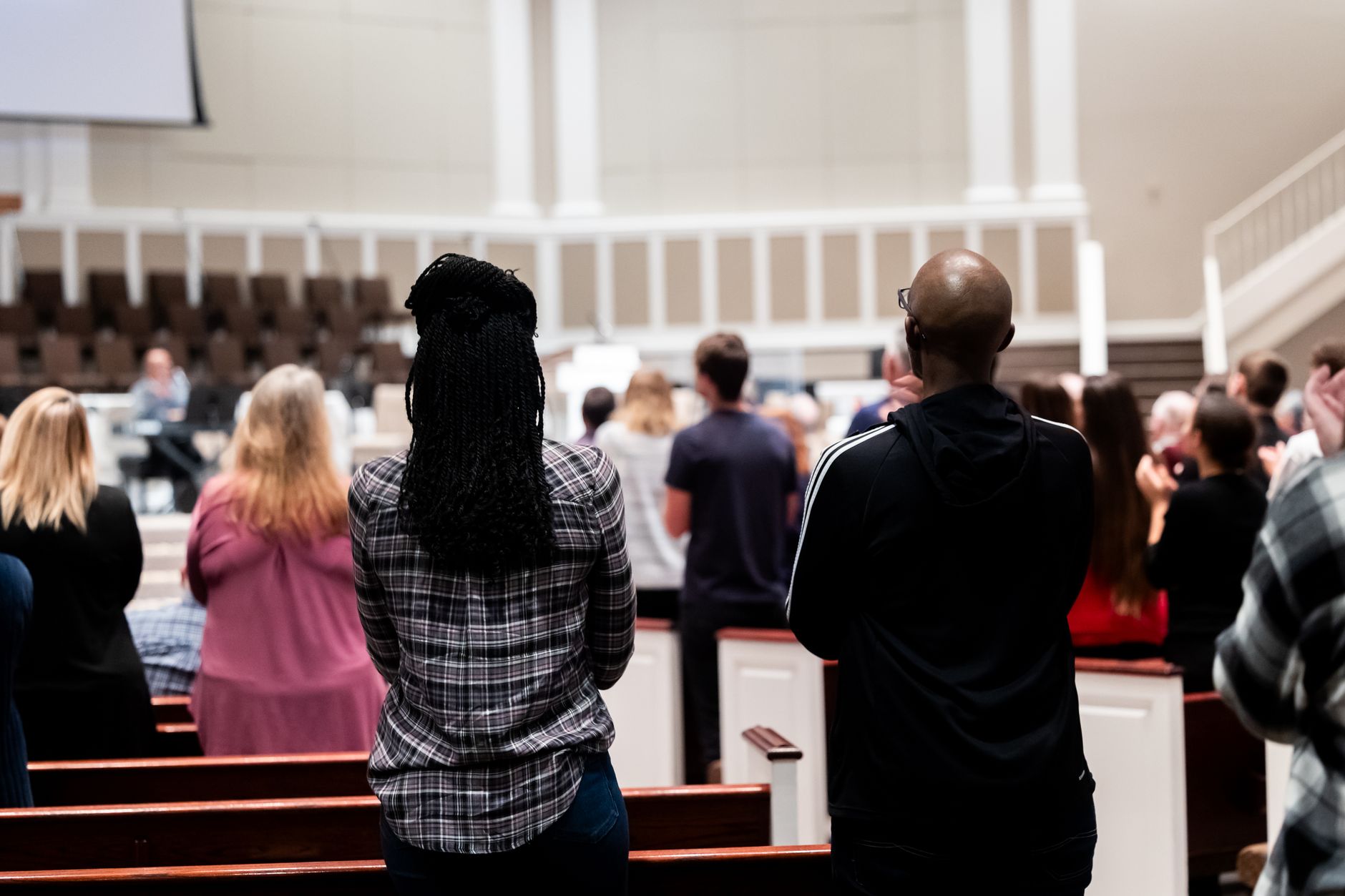
I run facilities for our 1,200-member church, and after Sunday services the fellowship hall and sanctuary aisles are sticky with coffee while our two volunteers can't finish before Monday; could a cleaning robot take those floors overnight?
Key takeaways
- A floor robot can cover the large hard floor areas overnight, not every sticky spot.
- Clear chairs, tables and cords before the run, or the robot stops or repeats its route.
- Treat dried coffee residue first, then let the machine handle the wide passes.
- Carpeted sanctuary aisles usually need a separate machine or volunteers.
- A lease is quoted after a free site assessment, so measure your floors first.
Can a robot clean sticky coffee floors after Sunday services?
Yes for most of the floor, partly for the rest. A church fellowship hall overnight cleaning robot works best on the wide hard surfaces that take most of a Sunday's foot traffic, such as sealed tile, vinyl or concrete, and it can make its passes after your crew has gone home. Dried coffee residue is the hard part, because a robot does not lift a stuck on film by itself, so a volunteer still needs to treat the worst spots before the run.
The job you describe has two parts that behave differently. The first is volume: wide fellowship hall floors and sanctuary aisles that need a full pass every week. The second is detail: spills near tables, chair legs, corners, thresholds and any carpet. A machine handles the first well and needs a person for the second, which is why the honest answer is partly and not a full replacement for your volunteers.
We pick the machine for your floors, lease it through financing, deploy and integrate it, train your staff and service it. The payment comes in a quote after a free site assessment, so this page does not give a figure. What it does give is a test you can run on your own floors before anyone quotes anything.
What can a floor robot clean in a fellowship hall overnight?
Floor cleaning is the main job of professional service robots. According to the International Federation of Robotics, global shipments of professional service robots rose 24% to almost 250,000 units in 2025, professional cleaning ranked third among the categories, and floor cleaning is its main application. Hard floor work like yours is a mainstream use, not an experiment.
Coverage rates need careful reading. One manufacturer's specification sheet lists a maximum of 57,000 square feet per hour (vendor-reported), and a commercial floor cleaning guide puts coverage at up to 11,840 square feet per hour (guide-reported). A maximum assumes an open floor with no stops, so plan the run around a realistic figure from your site assessment, not the top line on a spec sheet.
- Wide hard floor passes in the fellowship hall after tables and chairs are moved back
- Sealed hard floor sanctuary aisles, if the aisles are not carpeted
- Foyers and corridors that take wet foot traffic from the doors and kitchen approach
- Any unobstructed route the crew clears before the building closes
How big is a church floor job, and what does a 1,200-member church add?
Membership is not the same as weekly attendance, and the floor load follows attendance and floor area. According to the Hartford Institute 2026 congregation survey, as reported by NPR, median weekly attendance at U.S. congregations is 70, up from 45 in 2021 and 65 before the pandemic. The survey covered 7,453 congregations and was fielded from September to December 2025.
By tradition, the same survey reports a median of 200 for Catholic and Orthodox congregations, 75 for evangelical Protestant, 50 for Mainline Protestant and 22 for other faiths. A 1,200-member church with full Sunday services sits well above the typical median, so your footfall and residue load are likely heavier than the average congregation generates. Ask for the weekly count from several recent Sundays, not the membership roll.
Use older studies with care. An earlier Hartford report put the 2020 median at 65 and listed Catholic and Orthodox at 400, and Good Faith Media noted the two studies may not be directly comparable. Do not treat that gap as a trend without checking the method.
The sector is large. According to the Association of Statisticians of American Religious Bodies, based on the 2020 U.S. Religion Census, about 356,739 congregations were counted, so many fellowship halls share the same Sunday floor problem.
What about sanctuary aisles, carpet and sticky spots?
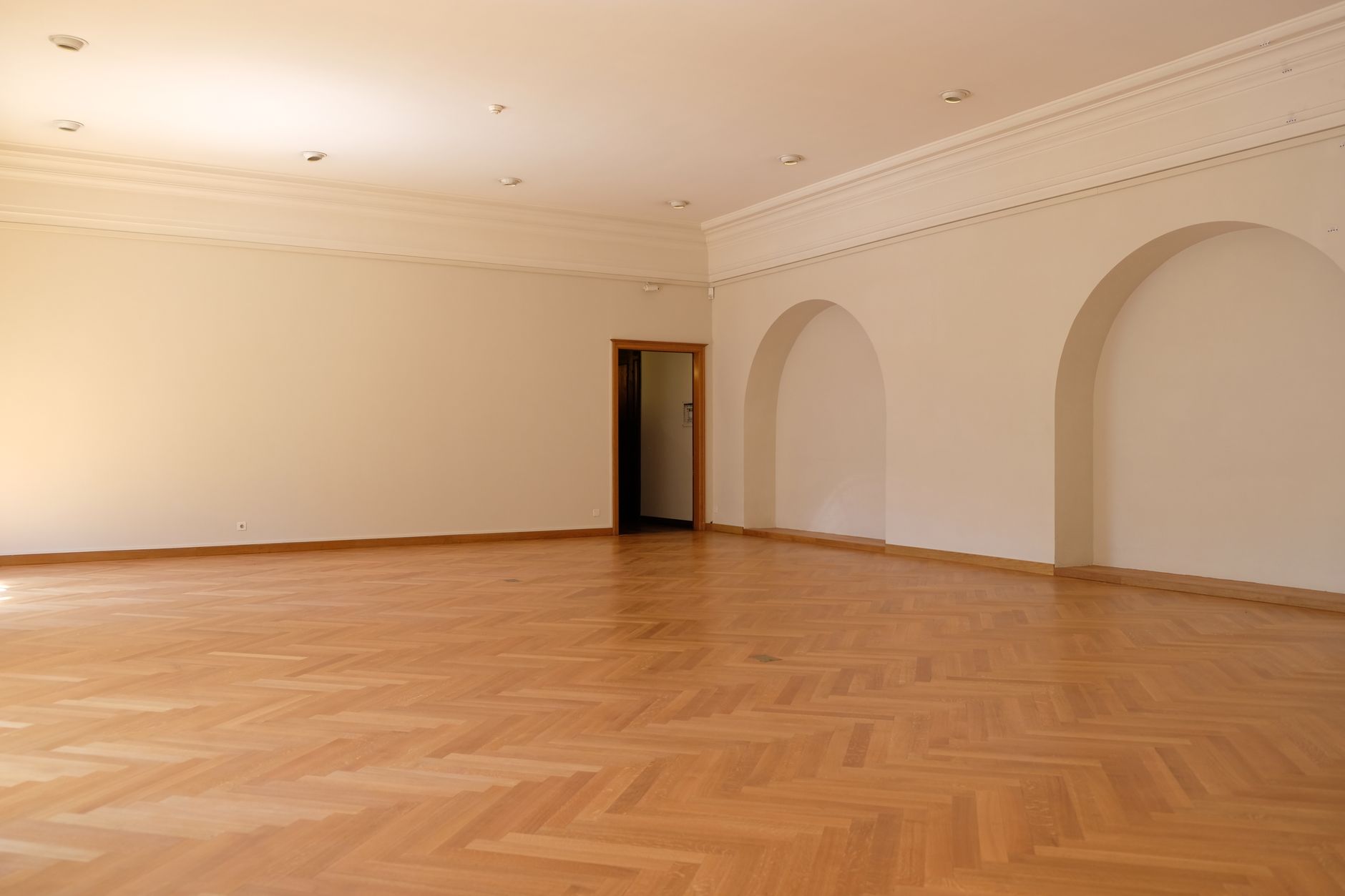
Surface decides the machine. A scrubbing robot does well on sealed hard floors, but carpet, especially worn or deep pile carpet with sugar residue, usually needs a vacuum unit or a volunteer. If your sanctuary aisles are carpeted, the robot can still take the hard foyer and fellowship floors while another machine or your crew handles the carpet.
Sticky coffee needs a process, not only a machine. Dried syrup, cream and sugar films lift less easily than fresh spills, so a volunteer should treat those spots with a cleaner approved for your floor finish before the robot runs. Get the floor finish specification from your flooring contractor before anything runs on the floor.
Obstacles are the other trap. Folding tables, stacked chairs, coat racks and cords left in the path stop a robot or force a restart. Set a reset step where someone clears the route before the building closes on Sunday, and make the rule visible to whoever locks up.
Be honest about the labor side. Our research did not find a verified figure for how many staff hours a church Sunday floor job takes, so measure your own crew time before comparing options. Two volunteers timed over one Sunday will tell you more than any generic average.
What does a Sunday night robot run look like?
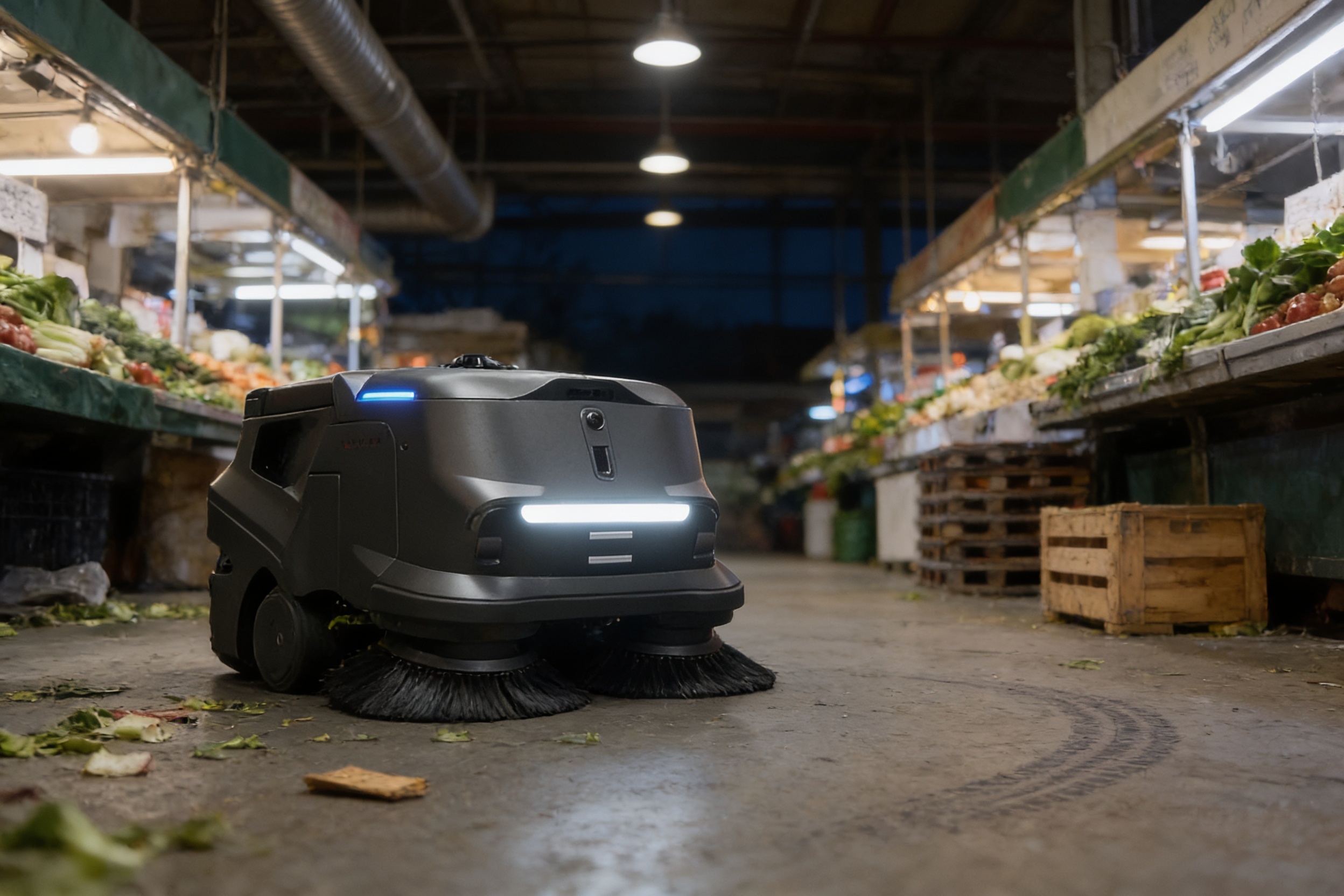
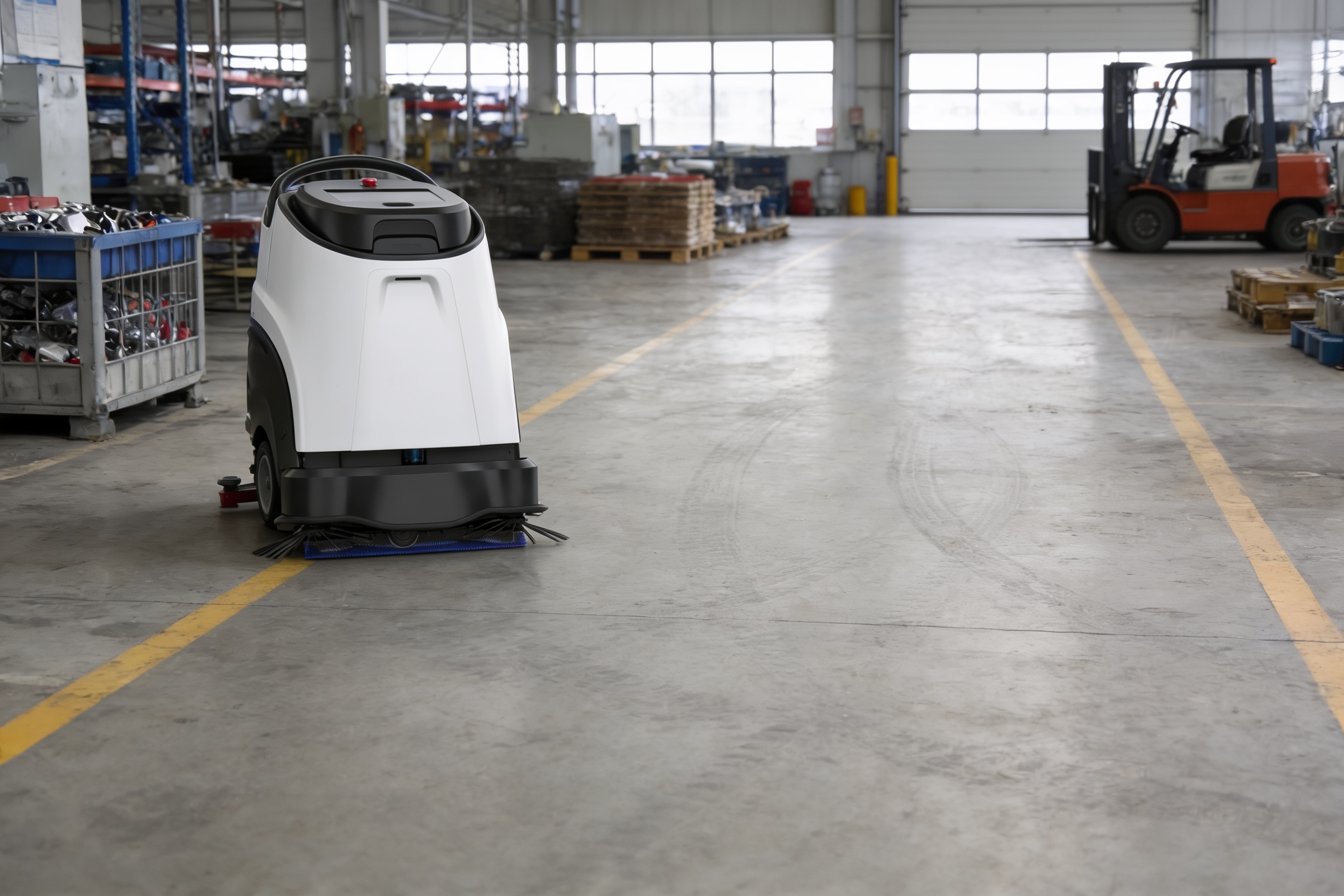
A workable Sunday follows the sequence of the event. After the last service, a volunteer logs spill areas and clears the route. The robot runs once the building empties, and staff check the floors before Monday's first use.
The timing depends on the floor area and the stops you hit, which the site assessment measures. What stays the same is the handoff: a route blocked by one chair leg in the night means someone must find and clear it in the morning, so the robot changes who does the work, not whether someone checks it.

Where do volunteers still matter, and what about injury risk?

Cleaning work carries real injury exposure. According to the Bureau of Labor Statistics, janitors and cleaners except maids and housekeeping cleaners had 191.6 nonfatal cases with days away from work per 10,000 full-time equivalent workers in 2020, the highest rate in the 2016 to 2020 series. The series ran 178.6 in 2016, 176.6 in 2017, 137.1 in 2018 and 157.4 in 2019.
Those figures describe the occupation broadly, not your church. They do support moving the repetitive wide floor push and mop work off volunteers. Sticky floors also raise slip risk for the people who clean them, so spot treatment and wet floor marking still matter.
The workforce is large. According to the archived Bureau of Labor Statistics Occupational Outlook Handbook, about 2,310,400 janitors and building cleaners were employed in 2010. The same archived outlook projects building and grounds cleaning overall to grow 5 percent from 2021 to 2031, about as fast as the average for all occupations. The robot frees the crew for the detail work, but it does not replace the people who care for the building.
What drives the cost, and how does leasing work?
We do not give a figure on this page. Cost moves with floor area, surface type, obstacles and how often the building needs a run, and the number comes in a quote after a free site assessment. The diagram below shows what moves that number up or down.
Leasing spreads the cost over a fixed lease payment rather than a large upfront outlay, which is why many organizations choose it for facilities work. Service is part of the arrangement: maintenance is covered under our service plan, with remote triage first and on-site dispatch when hands are needed. Deployment includes integration, training for your staff and go live support.
What should I check before a site assessment?
The assessment is where the answer becomes specific, so bring the facts that decide it. Start with a floor map, the surface of each area and where the carpet sits, then note the weekly attendance from recent Sundays.
Then the routine. Decide when services end, how the room gets reset, and who owns the Sunday handoff. A robot that runs at the wrong time, or into a set up crew, wastes its window.
Last, decide what success looks like. Is the target a clean Monday morning, fewer volunteer hours, or both? Set that test before the robot arrives, so the result can be judged honestly.
Frequently asked questions
Want a cleaning robot at your church fellowship halls?
Tell us about your site. We will recommend the robot, quote the lease, and keep it serviced.
Sources
- NPR report on Hartford Institute 2026 congregation survey
- Good Faith Media on the 2021 Hartford congregation study
- BLS janitors and cleaners injury data, 2020 chart
- BLS janitors and cleaners injury snapshot, 2016 to 2020
- Archived BLS Occupational Outlook Handbook, janitors and building cleaners
- International Federation of Robotics professional service robot release
- Archived BLS building and grounds cleaning outlook