
The question, in the buyer's words
I run a county license branch in Indiana where lines wrap the lobby by 8 a.m. and the tile is worn gray by noon; could a cleaning robot run the lobby floor before opening and during the lunch rush without blocking the counters?
Key takeaways
- A cleaning robot fits the pre-opening pass and a planned midday lull, not the lunch rush at the counters.
- A scrubber lifts grit and film from worn tile but does not restore a worn finish.
- Indiana requires at least one license branch in every county, so every county has a branch to plan around.
- Set lanes, a route and a named stop rule before the first run, not after the first complaint.
- Robots are leased through financing, and the payment comes in a quote after a free site assessment.
Can an Indiana county license branch lobby use cleaning robots at all?
Indiana county license branch lobby cleaning robots are first a scheduling question and only second a machine question. Indiana law requires at least one license branch in each county, according to a 2020 version of the state code printed on Justia. A 2019 state GIS dataset lists 135 branch offices. That dataset is seven years old, and no current official total was found, so treat the figure as a snapshot rather than a count for today.
What decides the answer is the shape of your day: a crowd that forms before opening, a steady stream through the morning, a lunch peak, and a quieter stretch between. A cleaning robot needs open floor and predictable routes. Counters, queue rails, benches and a tight entry can leave far less open floor than the floor plan suggests, so measure the open path during the busiest half hour, not the empty one.
I did not verify Indiana climate data, local labor figures or county-specific rules for this page, so the advice below rests on operating logic and the national sources cited here.
Why does a county lobby floor wear down so fast?
Foot traffic is the main cause. People walk in with grit on their soles, and the wear concentrates on the paths to the counters and along the queue line, where people stop, turn and shift their weight. Grit works like sandpaper on a tile finish, and the gray look usually comes from that worn surface plus film from daily traffic.
Cleaning labor is the other side of the problem. According to the Bureau of Labor Statistics, there were 2,447,700 janitor and building cleaner jobs in 2024, and the occupation is projected to grow 2 percent from 2024 to 2034, slower than the average for all occupations. Most people in the job learn it on the job, so a branch that loses one custodian may find the replacement slow to train.
The work also carries injury risk. According to Safety and Health magazine, reporting BLS data, the total recordable case incidence rate for all private industry in 2024 was 2.3 per 100 full-time equivalent workers, and the illness rate fell to 13.9 per 10,000 from 19.0 in 2023. A BLS snapshot of 2015 to 2019 data reports an incidence rate of 157.4 per 10,000 full-time equivalent janitors and cleaners, against 86.9 for all occupations. Check the published pages before you quote these figures to a board.
What can a cleaning robot do before opening and during quiet windows?
The strongest use is the pre-opening pass. After the cleaning crew leaves and before the first customer, a scrubber can cover the open floor on a fixed route it learned during mapping. It can run the same path each morning without a staff member pushing it, and the route can stay clear of counter bases and entry mats.
A second window is a planned lull, such as a short gap after the morning stream thins. That window only works if the branch knows its length and has a person ready to pause the run. A robot can keep a route on a timetable, but it cannot tell when a line is about to form, so a lead has to set the rules.
Keep detail work with staff. Restrooms, spills near counters, wet patches from umbrellas and the edges under fixtures still need a person, because the robot covers the open floor, not the detail work a busy lobby needs. Ask the assessor to confirm that the mapped route stops short of mats and counter bases, so the scrubber never pushes grit into the queue.
- Pre-opening floor pass
Cleaning Robot
Runs the same mapped route each morning once set up, with no staff time spent pushing it.
Staff
Can adapt to odd spills and wet patches found on the walk-in.
- Morning lull run
Cleaning Robot
Can run on a timetable but needs a person to pause it when a line forms.
Staff
Can read the room and time the pass to the gap.
- Lunch rush at the counters
Cleaning Robot
Should not run through a standing queue and will slow or stop near people.
Staff
Can step around people, wait, and clean a spill close to a counter.
- Counter and fixture edges
Cleaning Robot
Covers mapped paths; edges and under-counter areas usually need hand work.
Staff
Reaches tight corners, areas under fixtures and the space behind the counter line.
- Worn tile finish
Cleaning Robot
Removes soil and film but does not restore a worn finish.
Staff
Can strip, polish or recoat on a schedule when the branch is closed.
- Staff time at the counters
Cleaning Robot
Frees the counter crew from the floor pass so they stay on the line.
Staff
Pulls counter staff away whenever the floor needs a pass.
Can it run during the lunch rush without blocking the counters?
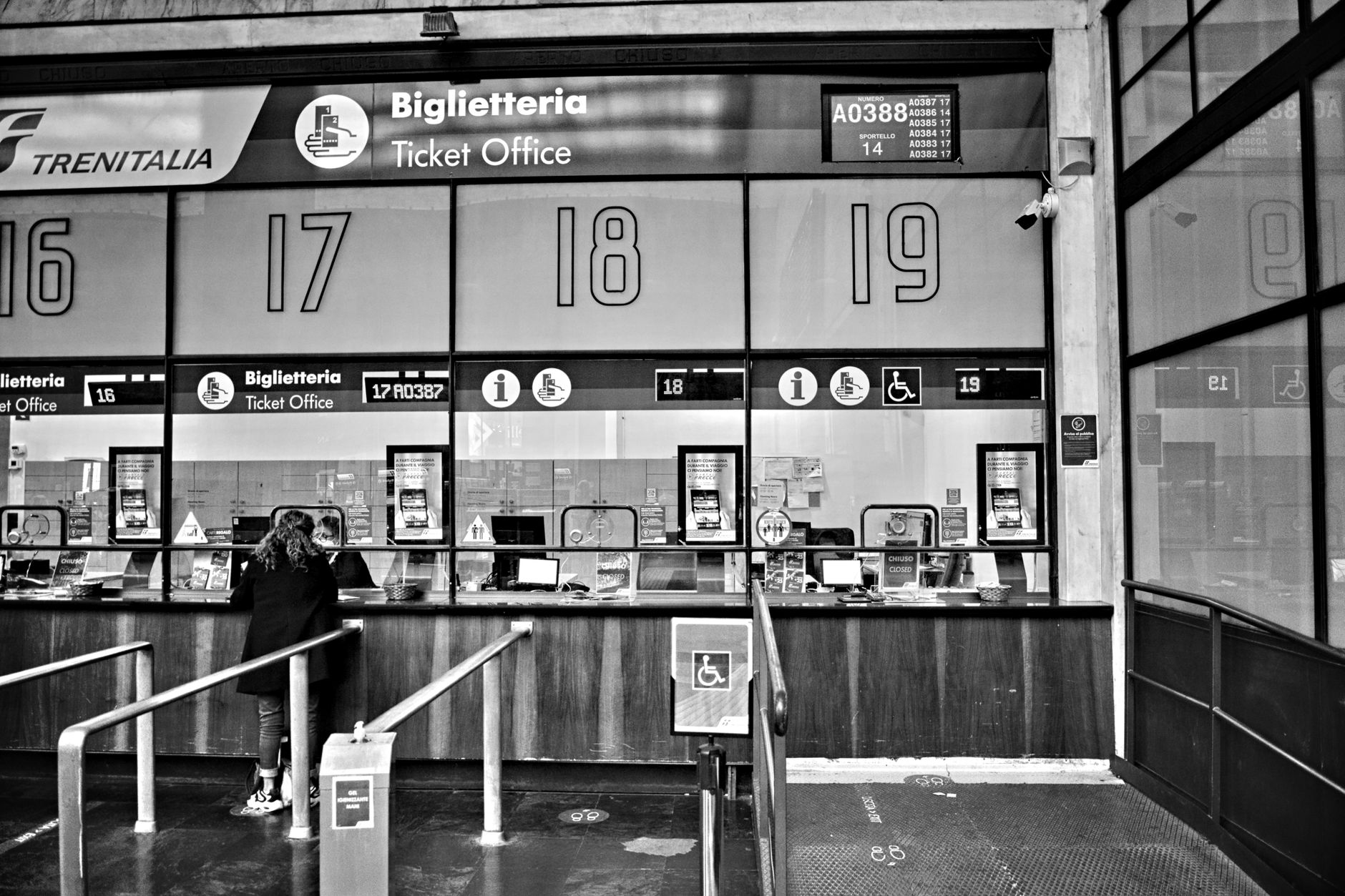
Not through a crowd. A robot needs a clear path and room to turn, and a standing queue takes both away. It will slow or stop near people, which means a robot can end up stuck in the line it was meant to help. A stopped robot blocks a lane just like a mop bucket does, and it is harder to move quickly.
You can make a lunch-hour run workable if the plan is set before the first run. Mark lanes with floor stripes or stanchions. Route the robot behind the queue, not through it. Schedule the run for a lull the lead can see, and give a named staff member the stop rule for when the line grows. Keep the charging dock out of the public path so the robot is never parked where people stand.
Lunch is when the floor most needs help, so plan a pass right after the rush, while the tile still carries the morning grit. If the rush never drops off long enough to leave a clear route, the robot is not the right fit for that hour, and a person should keep the job.
Will a scrubber fix the worn, gray look of tile?
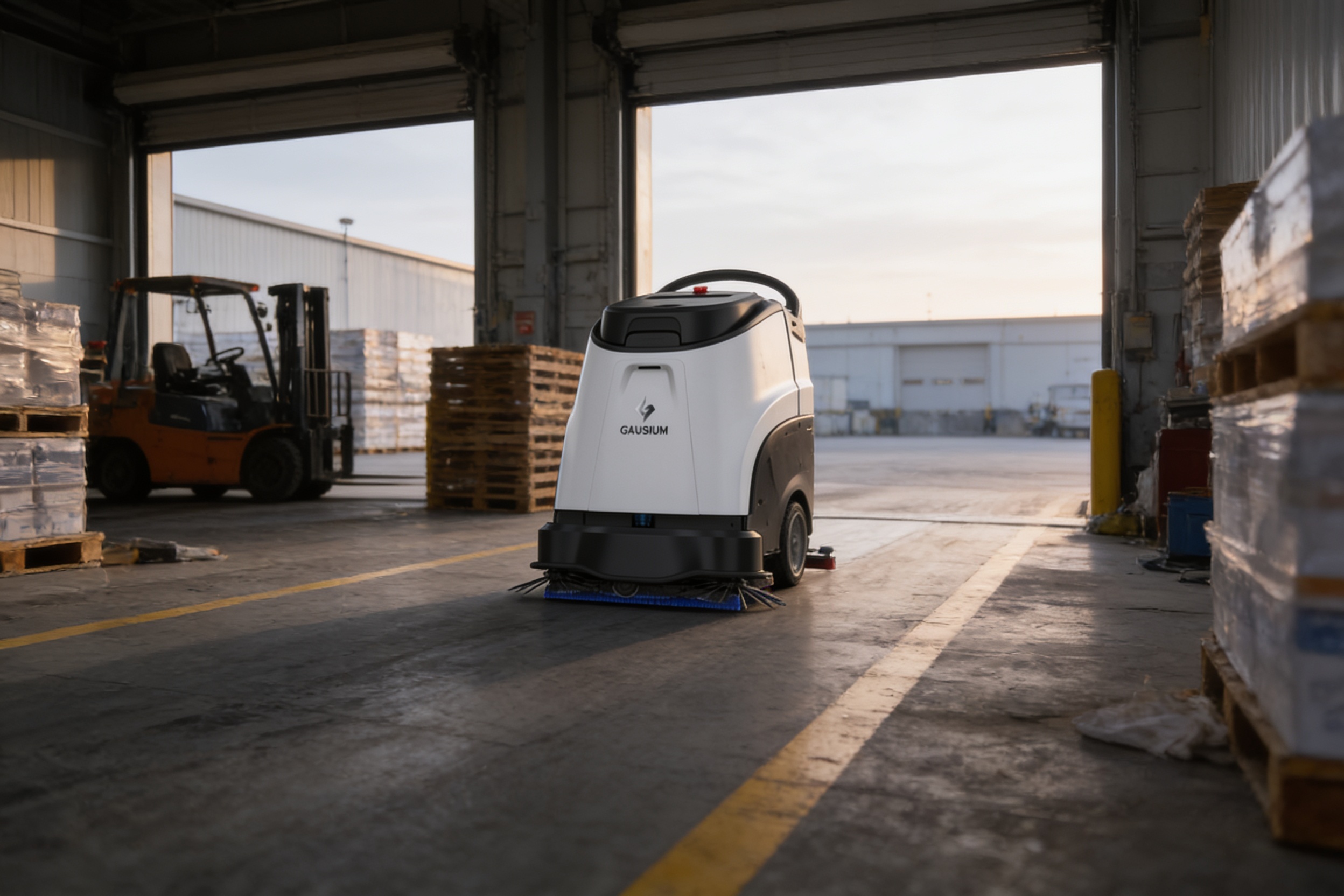
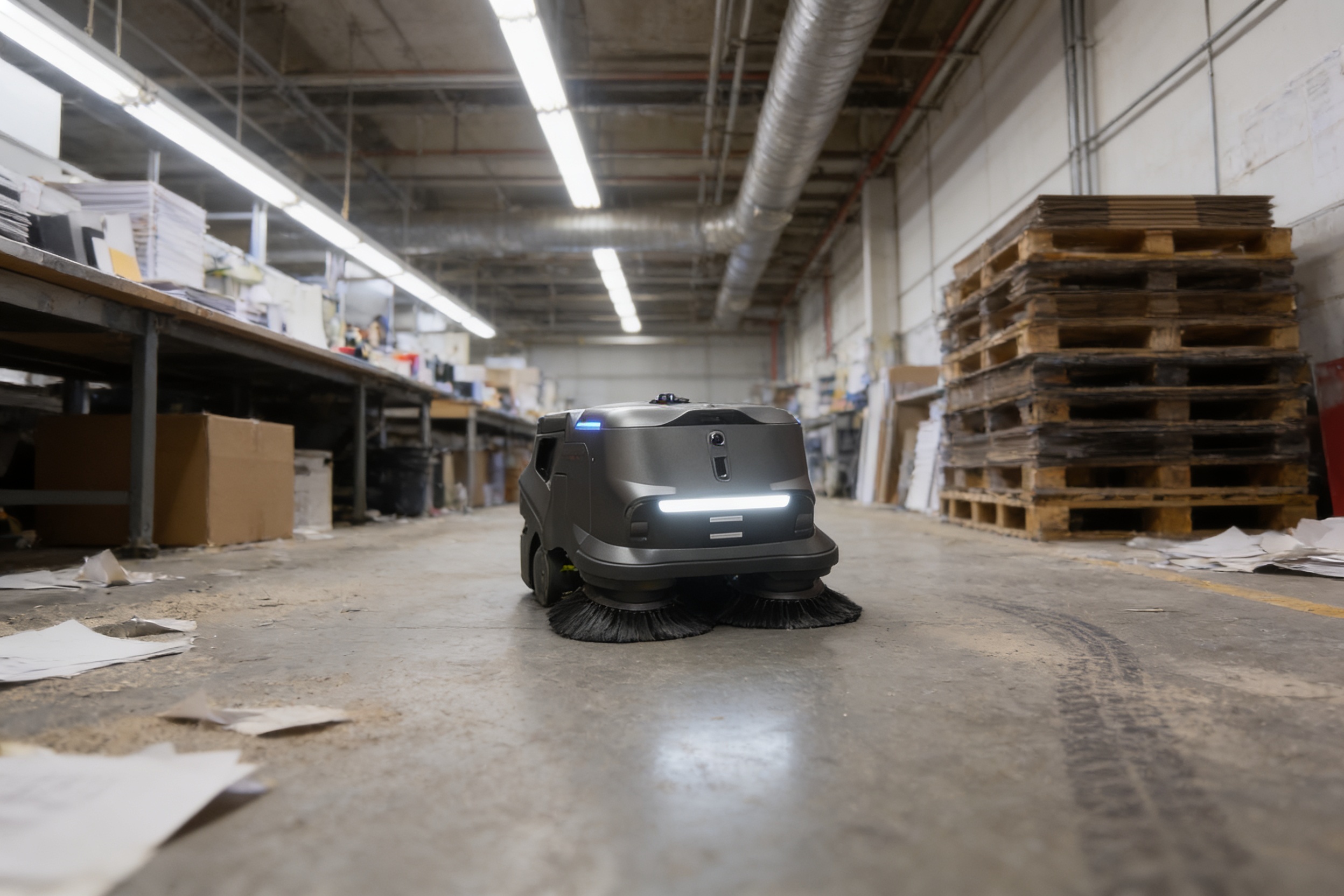
The gray look usually comes from grit, film and a worn surface. A scrubber lifts soil and film, which often makes tile read cleaner the same day. It does not put back a worn wear layer or a polish. Expect a cleaner floor, not a restored one.
Before you decide, have the tile type and finish condition checked during the site assessment. Some surfaces tolerate a scrubber and some need a specific pad, cleaning agent or process. Ask the assessor to note sealed, polished or stone areas separately, since one pad may not suit every surface in the lobby.
If the finish is gone, stripping, polishing or recoating is a separate job that a crew does when the branch is closed. A regular robot pass can stretch the time between those jobs, but it does not replace them. Plan both in the same budget conversation.
What changes in an Indiana winter?
Winter brings salt and slush through the door. According to an INDOT bulletin, road salt melts snow and ice only when moisture is present and temperatures are high enough. The material the state road agency deals with outside is the material your entrance tracks in.
That changes the entry plan. Wet, salty soles load the entrance mat and the first stretch of tile faster than summer traffic does. The robot route should include the entry path, and the lead should check whether the robot pads and wet-floor handling suit salty slush before a winter run.
I did not verify Indiana climate data for this page. Ask branch staff to log winter weeks, including snow days and entrance mat changes, and use that log when you request a quote rather than a general state average.
How does staffing change the decision?
Floor passes often fall to counter staff when the lobby needs help, and that pulls people off the line. Whether that happens in your branch depends on your own staffing, not on national figures. The useful question is how much time counter staff spend on floor work now, which your branch can measure from its own schedule.
A robot takes over the repeated floor pass. It does not take over judgment. Someone still has to spot a spill, decide whether a floor is safe, call for help and handle the restroom. The labor data points the same way: with custodial jobs projected to grow slowly, a vacancy may take time to fill, so a robot that holds the pre-opening pass can keep a thin crew from dropping the floor.
Training matters too. A robot needs a route set, a stop rule and a named owner, which are small tasks compared with training a new custodian on a public floor. We train your staff as part of deployment, so the people who sign off on the route are the people who run it.

What does the adoption data say about autonomous cleaning equipment?
A 2019 survey by AACEM and ISSA, as listed on the ISSA site, found that 69 percent of facility and property managers had not used autonomous cleaning equipment. About one third of those who had not adopted said they were somewhat likely to adopt within a year. The survey is more than six years old, and it covers the wider market, not county government lobbies.
A recent vendor press release reports that planned adoption of robotic floor equipment roughly doubled compared with 2025. No underlying data was found for that claim, so this page does not rely on it.
What the older survey does suggest is that many buildings are still early in this choice. That argues for a pilot with one unit and one lobby window, measured against the branch's own floor and staff log, rather than a whole-site rollout based on market talk.
How does a lease for a license branch work with us?
We are a full-service commercial robot integrator for US businesses. We are OEM-neutral, so we choose the robot that fits the site across manufacturers, then lease it through financing, deploy and integrate it, train staff, and service it under our service plan, backed by regional service engineers in every state we service. One vendor covers the whole lifecycle, which means one contact for the lobby rather than six.
A fixed robot lease payment is quoted after a free site assessment. The assessment maps the lobby, notes the tile and entrance conditions, marks the queue and counter edges, and records the quiet windows the branch can offer. The quote then reflects the robot and service plan that fit that floor, not a generic package.
Start small if you are unsure. One leased unit, one route and one lull window test the question on your own floor before any larger commitment, and the branch's own log is the best evidence for the next decision.
Frequently asked questions
Upcoming public sector events
- Trade showAPC/PennDOT/PA Turnpike Fall SeminarNov 18 to 20, 2026Hershey Lodge, Hershey, PA
- Trade showMinnesota Buildings & Facilities Management Trade ShowNov 19, 2026Minneapolis Convention Center, Minneapolis, MN
- ConferenceCASBO CBO Symposium (Executive)Nov 19 to 20, 2026The Langham, Pasadena, CA
- ConferenceVirginia Association of Fairs ConventionJan 14 to 17, 2027Williamsburg Lodge, Autograph Collection, Williamsburg, VA
Want a cleaning robot at your government service lobbies?
Tell us about your site. We will recommend the robot, quote the lease, and keep it serviced.
Sources
- BLS Occupational Outlook Handbook: Janitors and Building Cleaners
- BLS injury and illness snapshot: janitors and cleaners, 2015 to 2019
- Safety and Health magazine, reporting BLS injury and illness data
- Indiana BMV License Branches 2019 GIS dataset
- Indiana Code, Title 9, Article 14, Chapter 2 (2020 version, via Justia)
- AACEM and ISSA autonomous cleaning equipment survey, 2019
- INDOT bulletin on road salt