
The question, in the buyer's words
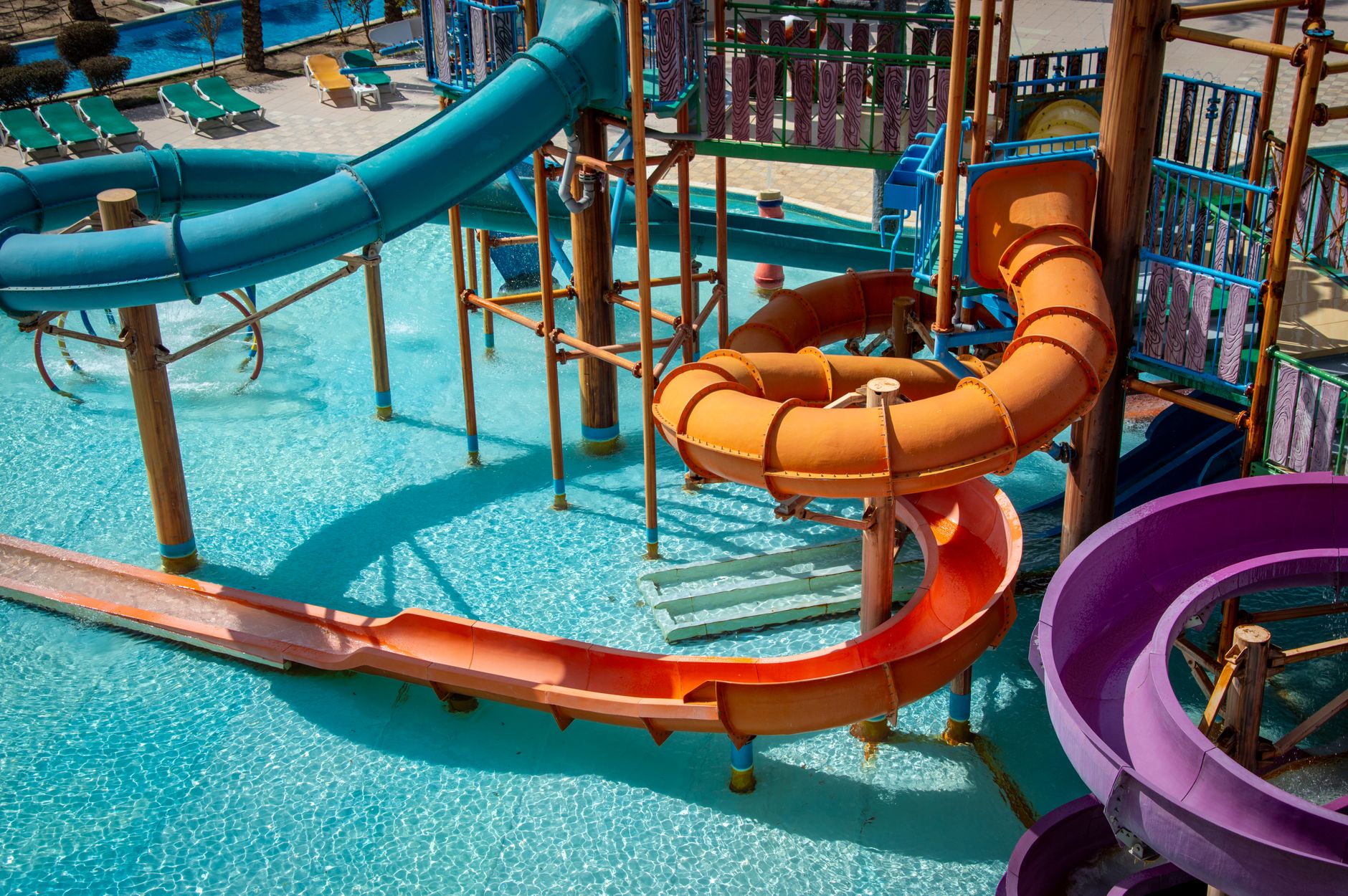
I run a water park with five slides where sunscreen and pool water make the deck boards slick by closing; could a cleaning robot finish the decks and slide landings after the last guest leaves so we open clean at 10 a.m.?
Key takeaways
- A cleaning robot suits open deck and walkway zones better than curved or textured slide landings.
- Measure your own flat, mappable square footage before comparing any coverage rate.
- Same-level falls make up a large share of the fall injuries in the U.S. data cited here.
- Janitorial labor is a large but slow-growing pool, so a robot is a capacity tool, not a headcount promise.
- Ask for a site assessment that maps the deck and landings before any lease is quoted.
Can cleaning robots handle water park deck and slide landing cleaning after close?
Yes for part of the job, and it is the part that repeats most. A cleaning robot can scrub the flat pool deck, the walkways between slides and the wide aprons at the foot of each slide after the last guest leaves. It is not a full replacement for a crew on the curved slide landings, the splash areas or any surface that needs a stronger chemical pass. The useful question is how much of your water park deck is flat, open and mappable, because that sets how much of the morning work a machine can finish.
Your situation has two linked problems. Sunscreen and pool water leave a film that makes boards slick, and a small after-close crew means the deck is not always dry and clean by 10 a.m. A cleaning robot addresses the second problem directly. It can help with the first only if the cleaning product and scrub pattern are set for your residue, and those settings need testing on your own deck boards, not a general promise from a brochure.
Start with a plain inventory before any vendor conversation. List each after-close task, mark whether it is flat, repeatable and safe to run without a person nearby, and set the slide landings and wet edges apart. The marked flat zones are the candidates for a robot, and the steep, curved and wet-edge areas stay on the crew list until a site test proves otherwise.
How many water parks in the US would a deck cleaning robot apply to?
The count depends on the source. According to an industry consultant's count, the United States and Canada had 1,266 waterparks as of February 2026, with 22 opened in 2025 and 4 closed. IBISWorld counts 210 US water park businesses in 2025, up 9.4% from 2024, but that counts businesses rather than parks, and the same site gives 294 businesses for 2024 on another page. The series is not consistent enough to rely on alone, so use the consultant's park count for scale and your own operation for decisions.
What matters for you is that the deck and landing problem is common across the category rather than unusual. A park with five slides sits in a large group of facilities with wet walking surfaces, so a cleaning workflow built around flat zones, a mapped route and a short crew checklist can be reused by similar operators. Your competitors face the same morning reset, which means a well-run opening is a practical advantage, not a special project.
Why do water park decks and slide landings get slick, and how often do people fall?
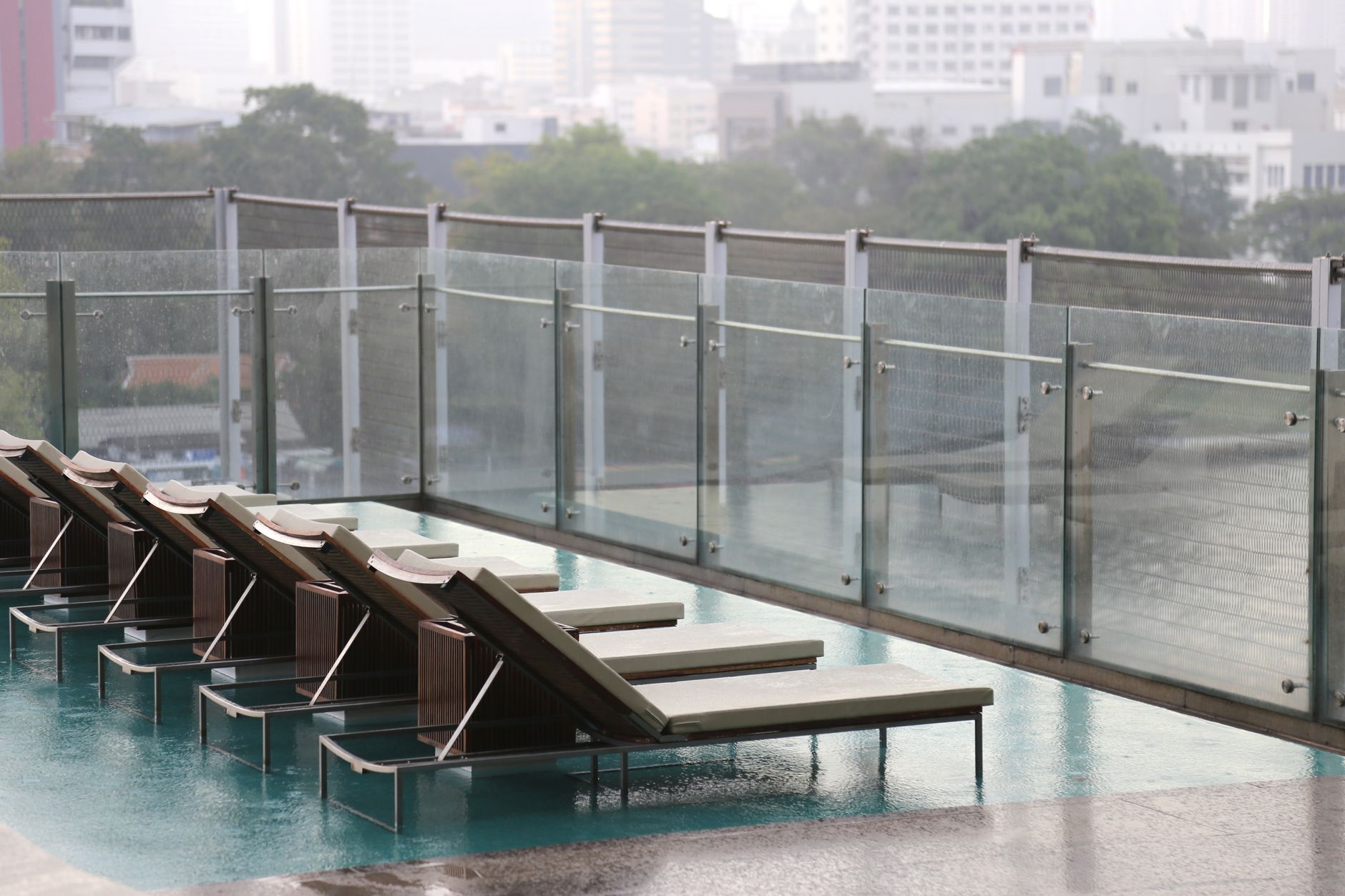
Pool water, splashed water and sunscreen oil combine into a thin film, and that film is why a flat wet surface can feel fine until someone steps on it. The national picture for same-level falls is broad. According to a safety publication summarizing U.S. Bureau of Labor Statistics data, slips, trips and falls were the third leading cause of non-fatal workplace injuries in 2022, with 266,180 days-away cases, or 27% of all non-fatal injuries. A safety training summary citing the same agency says 65% of fall-related injuries come from falls on same-level walking surfaces, and gives a median of 14 days away from work per slip, trip and fall case in 2023.
Water park specific data is thinner. A Spanish public pool study covering 2000 to 2015 found that slip-induced falls at the same level were 79.2% of incidents, and walkable areas around the basin were the most common setting. That study is from Spain, so treat it as directional for a US deck. Several vendor pages give location splits for water park injuries, with pool decks, splash pads and slide exits each taking a large share, but those splits conflict between vendors, so this page does not rely on them.
The OSHA walking-working surfaces standard, 29 CFR 1910.22, covers hazards including wet conditions and clutter. It is a useful baseline for a deck plan, because a robot route that leaves standing water or loose equipment in the walkway fails the same test a crew would. Your own incident log is the best local evidence, and it should decide where the robot runs first.
Which deck areas can a floor robot cover on a night shift?
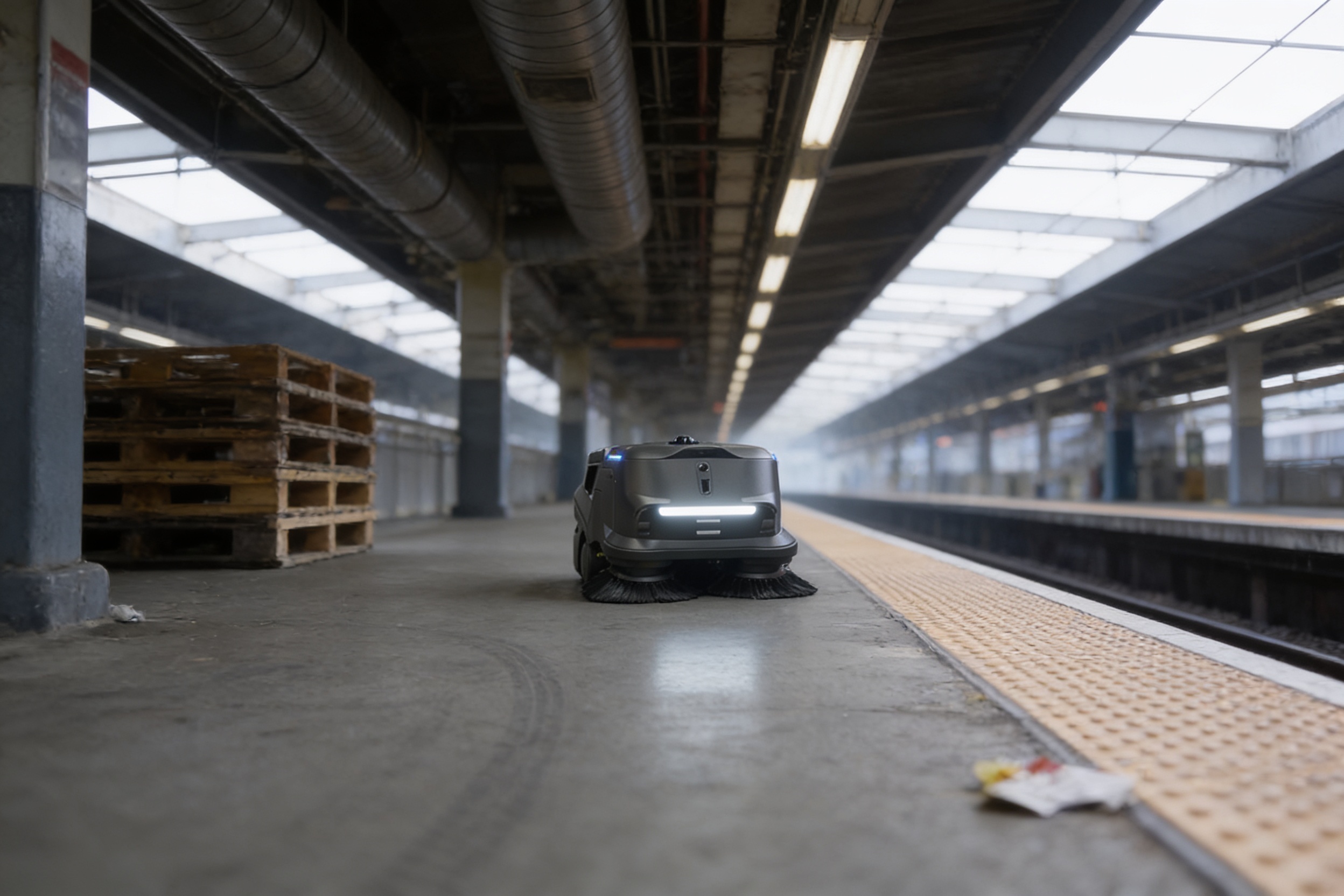
Coverage rate is the number a planner wants and the number least supported by independent testing. Industry reference tables and manufacturer specification pages publish scrubber rates, but those figures rest on assumed facility conditions or maximum output, and the research for this page found no independent field test of autonomous scrubber coverage. Treat any published rate as a ceiling to test against, not a schedule to plan around.
Deck area is the planning unit. Measure the usable square footage of the flat deck and walkways, subtract the zones the robot cannot enter, and then time one full pass with a crew member. A park with a large open deck and few landings will look very different from a park with many narrow walks between slides, and the robot's share of the work will follow that layout.
Keep the timing honest. A timed pass on your own walkways tells you more than a rate on a spec sheet, because it includes the stops, the route resets and the drains. Time two or three runs on different nights before you commit to a schedule, since a busy deck and a quiet deck can differ a lot.
Robot or crew on the deck: where each one wins
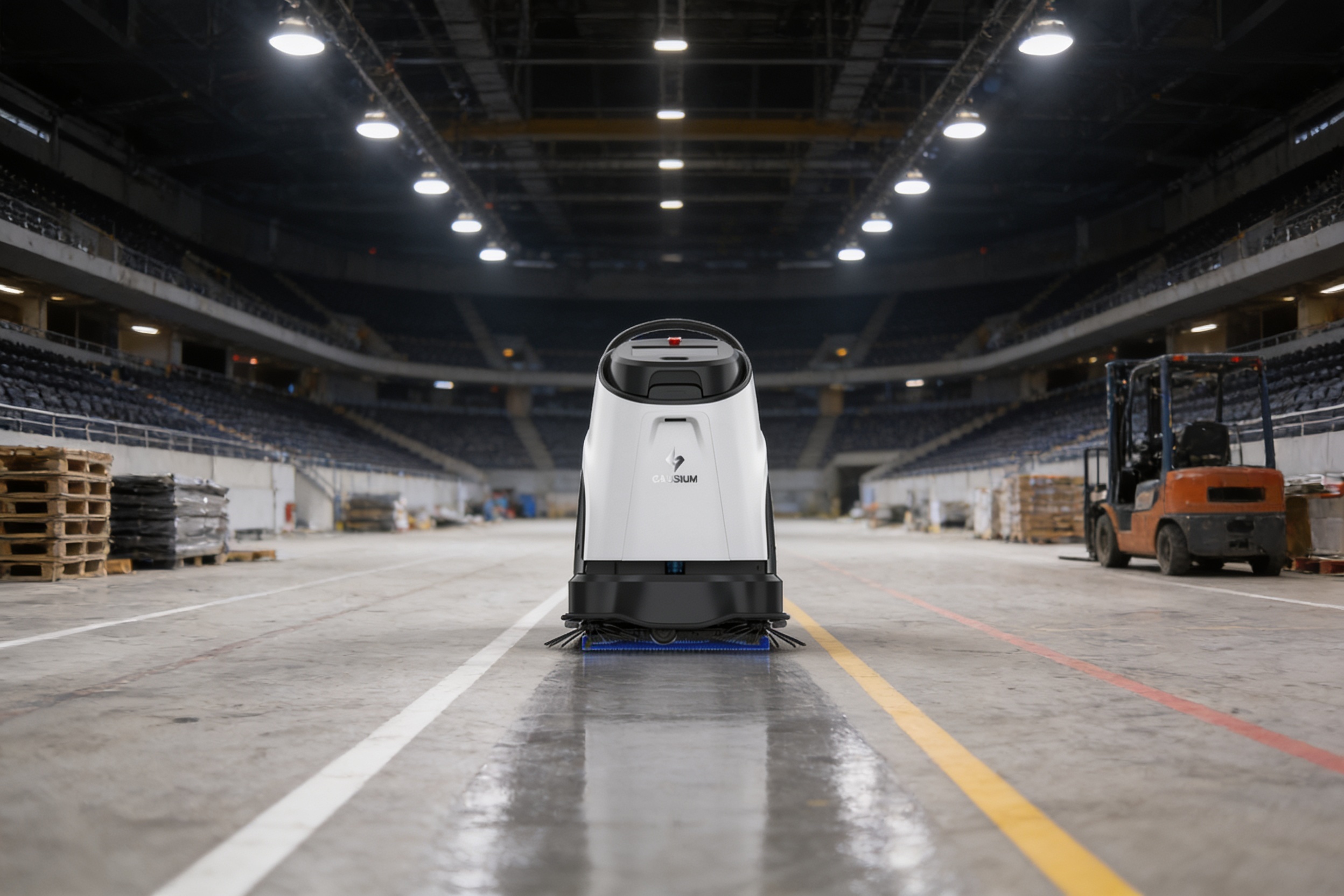
A robot wins on repeatability. It runs the same route with the same settings every night, and it does not depend on whether a shift lead found a replacement. A crew member wins on judgment. A person can see a missed patch, read a changed surface after a spill, and handle the curved slide landings where a fixed route may need extra setup.
The fair comparison is not robot versus crew but which tasks go to which. Assign the flat, mapped zones to the robot where a site test supports it, and keep people on the work that needs a judgment call. That split is easier to defend to a manager or insurer than a claim that the machine does everything.
Sunscreen film is the case where the split needs the most care. A robot can make a regular pass over film that is light and even, but heavy or streaky film tends to need a person who can spot-treat it and check the boards by hand before guests return.
- Night coverage
Cleaning Robot
Runs after close without an operator once the route is mapped and tested
Staff
Needs a shift lead, with breaks and call-outs to plan around
- Sunscreen film
Cleaning Robot
Scrubs with water and an approved cleaning product; heavy film may need a second pass
Staff
Can spot-treat film, judge the result by eye and adjust the chemistry
- Slide landings and curved exits
Cleaning Robot
Weak fit on steep, curved or textured surfaces until a site test proves otherwise
Staff
Handles curves, edges and transitions by hand
- Pool edges and drop-offs
Cleaning Robot
Needs barriers or mapped no-go zones, so it depends on setup and sensors
Staff
Watches edges, guests and equipment as the work happens
- Consistency over a season
Cleaning Robot
Same route and settings every night
Staff
Varies with fatigue, turnover and training
- Reliance on filling the shift
Cleaning Robot
Does not depend on finding an after-close crew member that night
Staff
Depends on hiring and keeping crew in a slow-growing labor pool
What does the after-close shift look like with a robot?

A typical night has three parts: the close and guest clearing, the dry-down and mapping check, and the cleaning pass. The robot takes the cleaning pass on the flat zones, while the crew handles the slide landings, the chemical treatment and the morning reset. The hours saved depend on your own timings. The research for this page contains no verified hour figures for water park decks, so the table below lists the work in your terms and leaves the hours for you to measure.
Plan the robot run to finish before the first staff walk-through, and leave a buffer for a blocked route or a stop. The crew's job then becomes a short checklist: confirm the route was completed, check the landings by hand, and look for film in the spots the robot cannot judge.
Sequence matters as much as speed. If the robot finishes the flat zones at night, the crew can spend the early hours on the landings and the chemical pass, which are the places where a person adds the most value. That order also means a late crew arrival does not leave the whole deck unfinished.
How much staffing pressure is there in janitorial work?
The labor pool for this kind of work is large and growing slowly. According to the U.S. Bureau of Labor Statistics, about 2.45 million jobs for janitors and building cleaners existed in 2024, with projected growth of 2% from 2024 to 2034, which the agency labels slower than average. Turnover data specific to this occupation was not found in the research for this page, and a staffing blog's turnover claims are unsourced, so this page does not use them.
A large pool with slow growth means finding a reliable after-close crew is still competitive, though not impossible. A robot is more useful as a way to cover the flat zones on nights you are short than as a headcount reduction plan. Build that expectation into the plan so the robot is not blamed when a landing gets missed on a short-staffed night.
Staffing is also a timing question. An after-close shift that is hard to fill tends to leave the deck to whoever is left at closing, so a robot that runs on a set schedule removes one variable from the morning reset.
What would a lease for a water park deck robot look like?
Service Robot Co. is a full-service commercial robot integrator for US businesses. We are vendor neutral: we pick the right robot for your site across manufacturers, lease it through financing, deploy and integrate it, train your staff, and service every unit under our service plan, with regional service engineers in every state we service. The lease is quoted after a free site assessment, where we map the deck, measure the flat zones and test the route to the slide landings.
The lease covers the robot and the work around it, not just a machine on the deck. A common starting point is one leased unit on the flat deck, run through a short pilot, with more units added only if the test shows the coverage you need. Staff training, route setup and go-live support come with the deployment. Ask in the quote whether maintenance and spare coverage are included, and what happens during an outage on a holiday weekend.
When is a cleaning robot the wrong choice for a water park?
Several conditions point toward keeping people on the job. Steep slide exits, sharp transitions into pools and surfaces with heavy texture or broken tile are poor fits for a floor robot. Decks with many obstacles, such as loungers, planters and pool equipment that moves each night, need either a clear route or a crew member to reset it. If your residue is mostly thick sunscreen film, the chemistry and a manual pass may matter more than the machine.
A robot is also the wrong choice if you cannot support it. It needs charging space, a stable network connection, and someone who can dispatch service after a fault. Without those, a leased unit sits idle while your crew does the work anyway. Run the site assessment first and let the measured findings set the scope.
Finally, consider guests. A robot moving on a deck during a late-evening private event needs a clear rule about when it runs and how it yields to people. Set those rules in the site assessment rather than discovering them during a busy weekend.
Frequently asked questions
Want a cleaning robot at your water park decks and slide landings?
Tell us about your site. We will recommend the robot, quote the lease, and keep it serviced.
Sources
- Industry consultant waterpark count, February 2026
- IBISWorld water park business counts
- Safety publication on slips, trips and falls
- Safety training summary on slip, trip and fall statistics
- Safety training summary citing BLS days-away data
- Spanish public pool slip and fall study, 2000 to 2015
- Bureau of Labor Statistics, Janitors and Building Cleaners