
The question, in the buyer's words
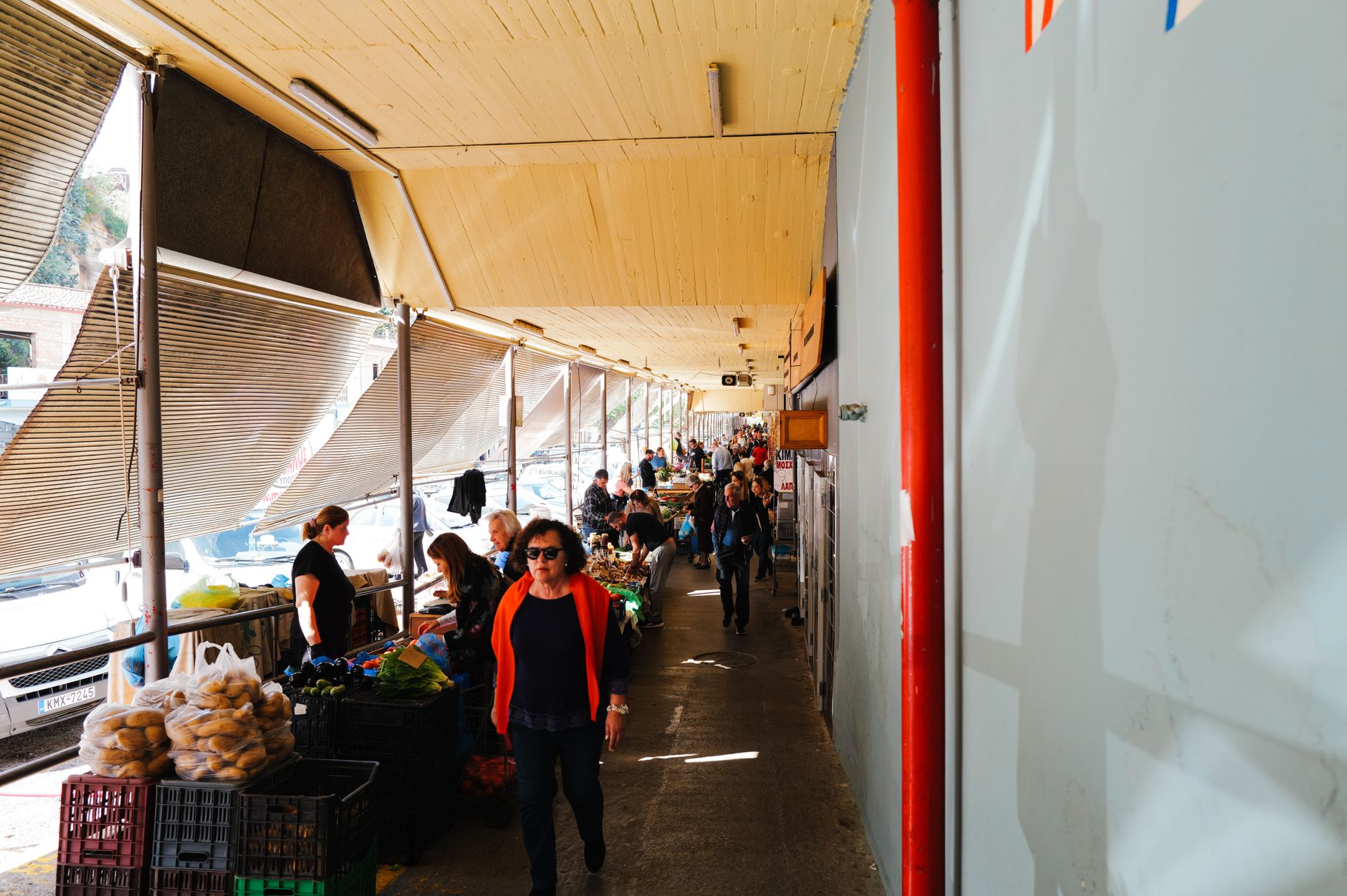
Our 200-vendor public market hall in Pittsburgh, Pennsylvania gets produce juice and brine on the concrete every weekend, and crews scrub it Sunday night before Monday prep; could a cleaning robot run the hall after close without bumping into vendor carts?
Key takeaways
- A night cleaning robot works the open floor after close, but only where carts and debris are cleared first.
- Brine, juice and loose produce still need hand removal, and prep sanitation stays with your staff.
- Pittsburgh winters track in slush and bring cold, wet days, so the Sunday schedule has to leave time to dry.
- The Sunday scrub only frees the morning when the route is mapped, carts sit in fixed bays and one person owns the handoff.
- Pennsylvania food rules expect clean, sanitary food areas, so the robot supports the routine rather than replacing it.
Can a night cleaning robot work a Pittsburgh public market hall after close?
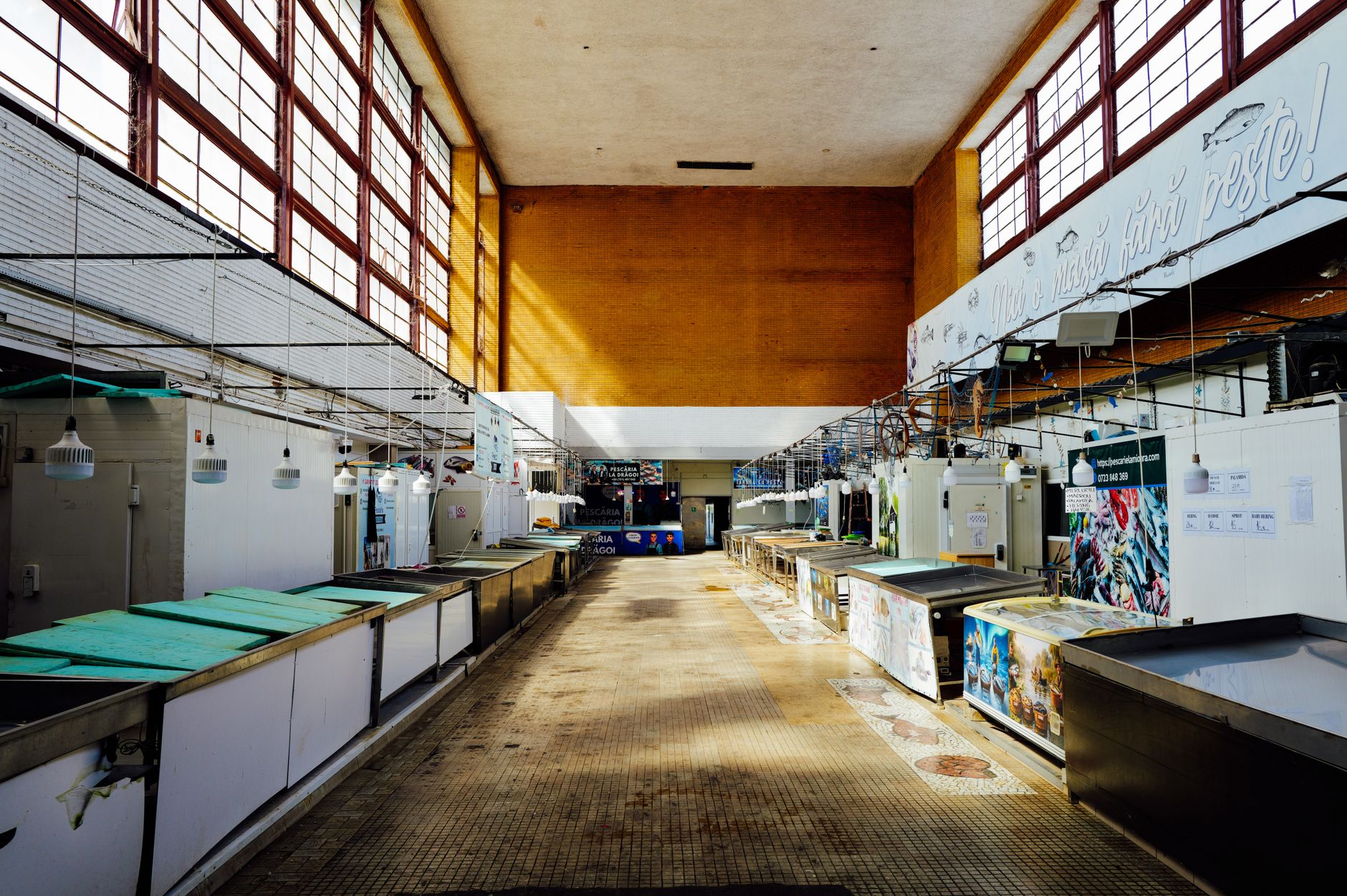
Yes for the open floor, and not as the hall stands on Sunday night. A Pittsburgh public market hall with about 200 vendors gets produce juice and brine on its concrete every weekend, and the crew spends the night scrubbing it before Monday prep can start. A night cleaning robot is a floor scrubber that drives a mapped route on its own, so it can take the open aisles while your staff work elsewhere. The catch is that a market hall is not an empty warehouse, and the vendor carts, crates and stock left in the aisles decide whether the run finishes cleanly.
The honest split is this. The robot is well suited to repeated passes over the same concrete on a schedule, which is the part of the Sunday routine that takes the most hours. It is weak at judgment work: telling brine from water, seeing that a produce bin sits on a drain, or deciding whether a spill has to come up by hand first. Keep those jobs with the crew and let the robot take the repeated scrub.
The second question is the wet floor. The scrub only helps Monday if the concrete is dry when vendors arrive, and a scrubber leaves the floor damp. The start time therefore has to allow for drying in a building that Pittsburgh's climate keeps cold and wet for much of the year, which the winter section below covers.
How big is the floor, and what does 200 vendors mean for the route?
The research for this page did not turn up a verified floor area or vendor count for comparable halls, so treat any benchmark here as a starting point, not a standard. The closest local reference is the original city public market, which opened in 2010 in roughly 10,000 square feet with more than 40 vendors, according to CBS Pittsburgh. A hall with about 200 vendors is a much larger operation, so the route has to come from your own drawings rather than from that comparison.
Measure three things before any vendor conversation: the clear width of each main aisle once stalls are set up, the number of cart bays, and the floor area where produce runoff and brine collect. A layout with 200 stalls has many stall edges, so the robot's route depends on how many lanes stay open on Sunday night, not on the total square footage.
A site assessment is where we walk the hall with you, map the lanes, and mark the spots that need fixed no-go zones or a cleared bay. That step tells you whether a robot can run the whole hall or only the main loop, and whether the first pass should cover one wing.
What does Pittsburgh winter do to the Sunday wet floor?

Pittsburgh is cold and wet for much of the year, and that changes what a Sunday scrub has to handle. According to City-Data's Pittsburgh geography and climate page, the January mean temperature is about 28 °F. Climate-Zone reports annual precipitation of about 36.9 inches, snowfall of about 43.5 inches, and about 121 days a year with a minimum below freezing. These are aggregator figures, not National Weather Service normals, which did not load in this research pass, so check the official normals before planning around them.
For a market hall, the winter effect is tracked-in slush and road salt at the entry and loading doors, plus meltwater that reaches the concrete over the weekend. A scrubber can clear that film but cannot dry the floor, and a damp floor left before Monday prep is a slip risk for vendors carrying crates. Plan a drying window after the scrub, and put a person at the entry to remove the heaviest tracked-in material before the robot starts.
Cold weather also shapes the setup. Confirm the operating temperature range in the lease quote, and keep exterior dock approaches out of the route unless they are enclosed and dry. Entry mats and a fixed time for the door crew will help more than any change to the robot itself.
How many people clean floors for a living, and why does staffing churn?
The U.S. Bureau of Labor Statistics counts janitors and building cleaners as a large workforce, with about 2.45 million people employed in 2024, according to its Occupational Outlook Handbook. The same source projects employment growth of 2 percent from 2024 to 2034, which is slower than the average for all occupations, with about 47,800 new jobs over the decade.
The bigger staffing fact is replacement. BLS projects about 351,300 openings a year, and most of them come from workers who leave the occupation rather than from new positions. For a market hall, that means the Sunday scrub has to be written down well enough that a newly hired crew member can run it on the first weekend, not just the veteran who has done it for years.
We did not verify turnover for market halls, for Pittsburgh specifically, or for the hours a Sunday scrub takes, so the labor case here rests on the national figures above. A robot does not remove the need for people. It does give a repeated task a fixed schedule that does not depend on who happens to be on shift that night.
Will a cleaning robot bump into vendor carts after close?
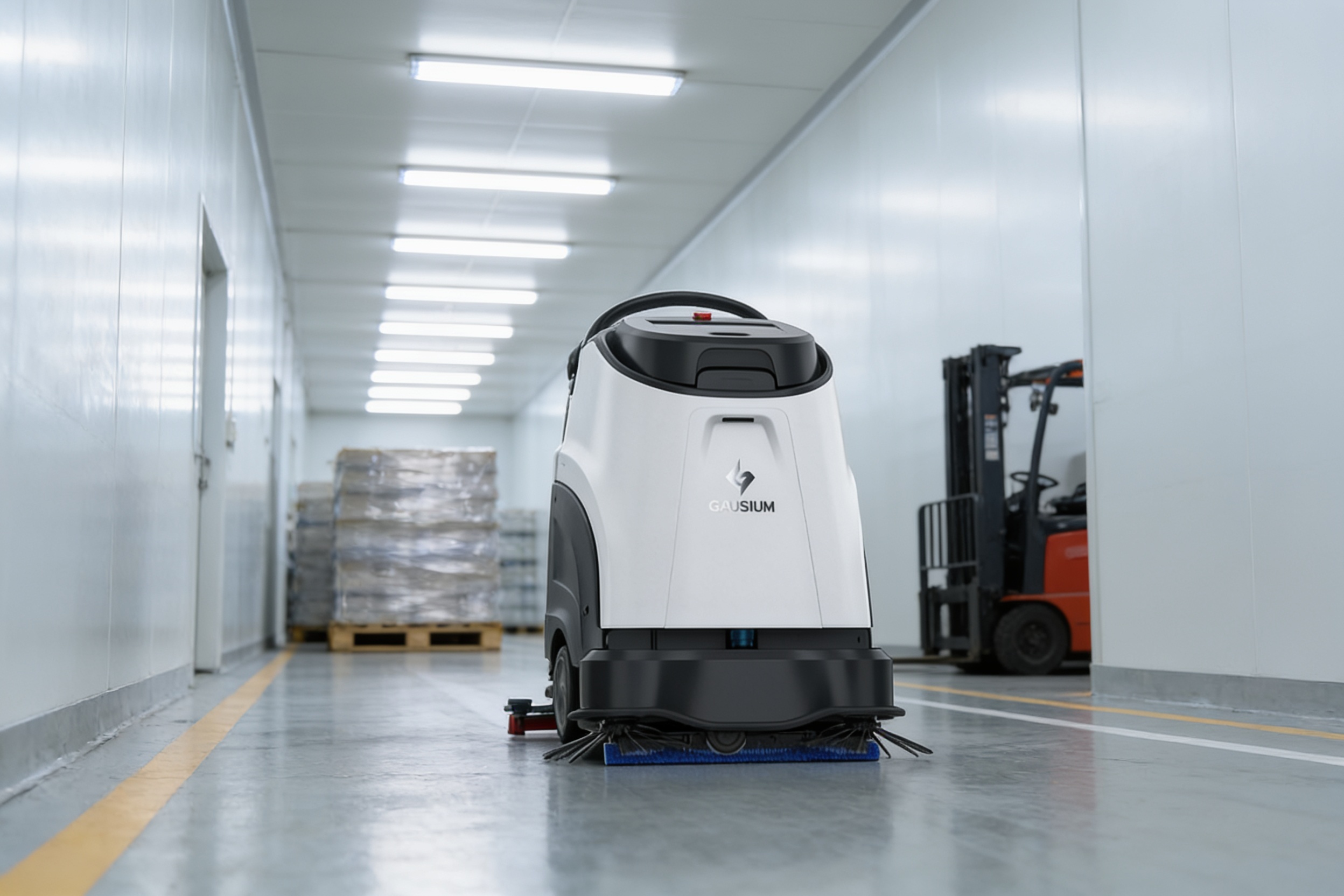
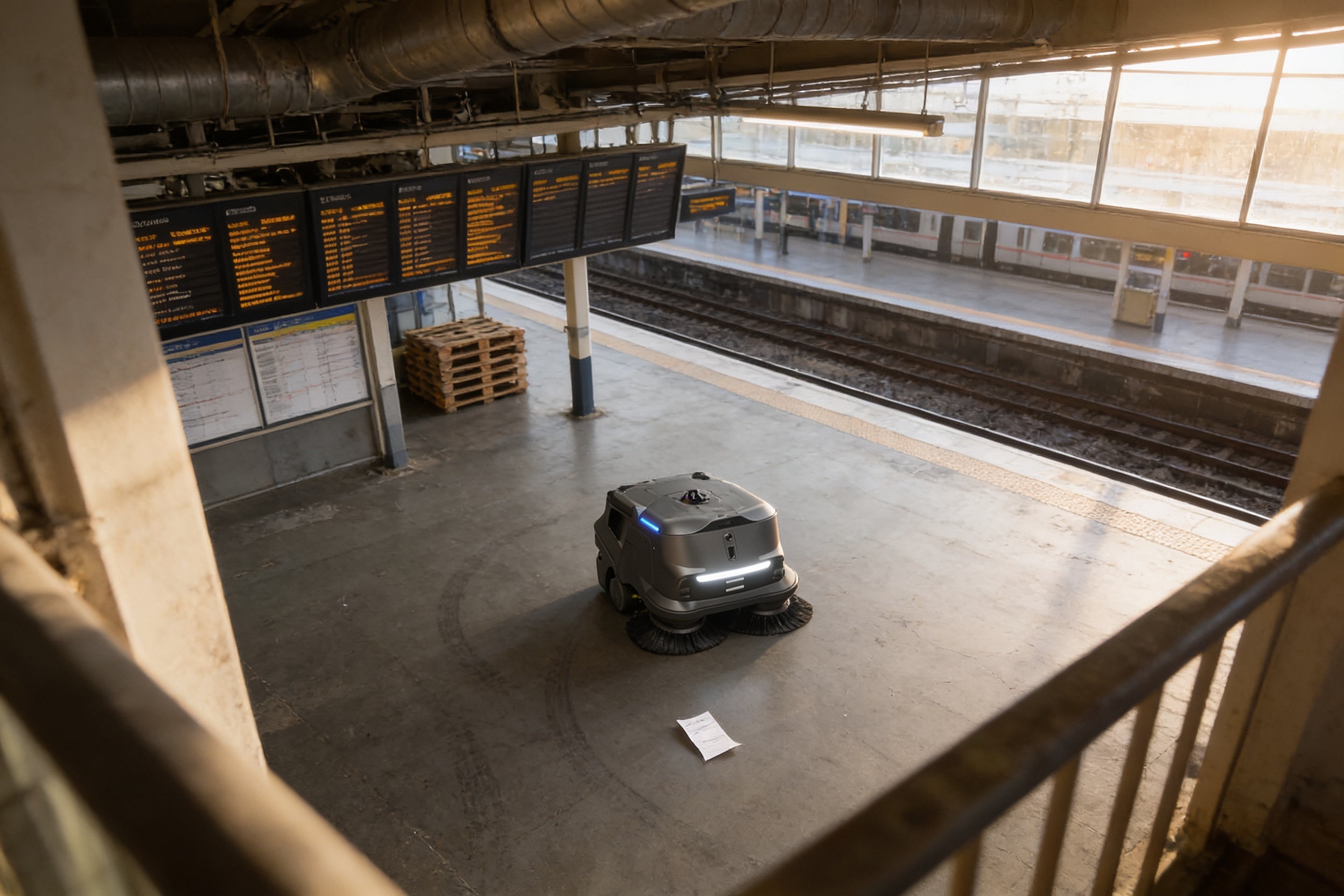
The robot does not push through carts. It runs a mapped route, senses obstacles, and slows, stops or detours around what it detects. In a hall where carts sit in the aisles on Sunday night, that means either a stalled run or gaps in coverage, and neither helps Monday. The fix is operational: carts in fixed bays, cleared lanes, and a list of no-go spots for anything that cannot be cleared.
A Sunday sequence that works in principle, to be tested in your site assessment, looks like this:
Route testing matters more than any single feature. Run the first weekend as a pilot on one wing, log every stop and its cause, and widen the map only once the stop log is short enough for your operations director to accept. We would share that log as part of the lease quote process.
- Vendors park carts and empty crates in marked bays before the crew leaves.
- Crew removes loose produce, brine pools and juice runoff by hand, starting at the drains.
- Robot runs the mapped main loop and open lanes, with stalls marked as no-go zones.
- Crew checks the route at the end, clears any stop the robot logged, and records the cause.
- Floor is left to dry before the first vendor arrives on Monday.
What still needs a person before Monday prep?
A robot scrub is not a sanitation program. Brine and juice residue on prep surfaces, drains, cutting areas and the spots where produce is trimmed still need hand cleaning and sanitizing by people. The robot cannot judge what is sitting in a crate or a bin, and it should never be trusted to decide whether a surface is food ready.
The division of labor is simple to state. Staff handle debris, spill identification, cart reset and food contact surfaces. The robot handles the repeated scrub of open concrete. If staff skip their part, the robot will scrub around a mess that should have been removed, which can spread residue wider than before.
The split also depends on what your vendors sell. A hall with heavy produce and brine needs more hand work than one mostly selling dry goods, and a hall with a central seating area has tables and chairs to route around. Map those zones before deciding how much of the night the robot can own.
Do Pennsylvania food safety rules change the Sunday routine?
They do, in one direction. Under 3 Pa. C.S. Section 5710, retail food facilities, kitchens, dining rooms and food preparation places must be kept clean and sanitary and protected from dust, dirt, insects and vermin, according to the statute as published by FindLaw. Vendors selling food are likely to fall within that framework, so the Sunday routine has to show clean and sanitary food areas, not only a clean floor.
The implementing regulations sit in 7 Pa. Code Chapter 46. We did not find a floor specific cleaning or sanitizing frequency in this research pass, so do not assume the robot schedule meets a requirement until someone reads Chapter 46 directly and asks the state Department of Agriculture how your hall is classified.
Put the rules into the lease decision. A robot makes the scrub repeatable and logged, which helps when someone asks what happened on Sunday night, but the log only helps if the crew also completes the food area tasks the rules expect.
How common is robot floor cleaning among cleaning contractors?
Adoption is rising, but the numbers measure intent more than use today. A 2026 Nassco report, carried by Webull, says about 32 percent of building service contractors plan to adopt robotic floor equipment within 12 months, roughly double the 2025 figure. The report is vendor reported, so read it as a direction of travel, not as a count of halls running robots now.
An older AACEM and ISSA survey, from around 2019, found that about one-third of non-adopters said they were somewhat likely to adopt within a year. The full report is for members, so we are reporting only that headline share. We did not find a verified 2025 share of facilities running autonomous scrubbers.
For your hall, the trend matters less than the local test. Ask your cleaning contractor whether they already run robotic floor equipment, what they logged on other sites, and whether your own staff can run the robot after training.
How do you get a robot for a market hall, and what happens first?
We are a full-service commercial robot integrator for US businesses. We are OEM-neutral, so we choose the robot for your floor from across manufacturers, then lease it through financing, deploy and integrate it, train your staff, and service every unit under our service plan, backed by regional service engineers in the states we cover. One partner handles the whole lifecycle, rather than several vendors.
The quote follows a free site assessment. We map the hall, mark cart bays and no-go zones, measure the wet floor areas and test the route on one wing, so the lease quote reflects the floor you actually have. The fixed lease payment is stated in that quote after the assessment.
Start small if the route is uncertain. A pilot on one wing lets your operations director see the stop log and the drying time before the full hall is committed, and it gives your crew practice resetting the robot before the Sunday schedule depends on it.
Frequently asked questions
Upcoming events in Pittsburgh, PA
Put a robot to work in Pittsburgh.
We walk your site, learn the job, and recommend the unit that fits. Then we quote the lease, deploy it, and keep it serviced.
Sources
- City-Data, Pittsburgh geography and climate
- Climate-Zone, Pittsburgh climate
- U.S. Bureau of Labor Statistics, Occupational Outlook Handbook, janitors and building cleaners
- FindLaw, 3 Pa. C.S. Section 5710
- Webull, Nassco report on robotic floor equipment
- AACEM and ISSA, autonomous cleaning survey report
- CBS Pittsburgh, original public market opening