
The question, in the buyer's words
I run nine thrift stores across several counties, and donation drop bays and sales aisles get dusty and sticky after close while one closer is alone; could a cleaning robot run those floors after we lock up?
Key takeaways
- A floor cleaning robot fits the repeat pass on hard floors, not the sticky spots.
- Each store needs its own unit, so nine stores means nine sites to plan.
- Loose donations, hangers and cords on the route can stall a robot, so staff must clear it first.
- Cleaning carries a notable injury rate in federal data, which makes the repeat pass a fair place to start.
- A site assessment and a quote come before any decision on a lease.
How does a thrift store chain after close floor cleaning job run today?
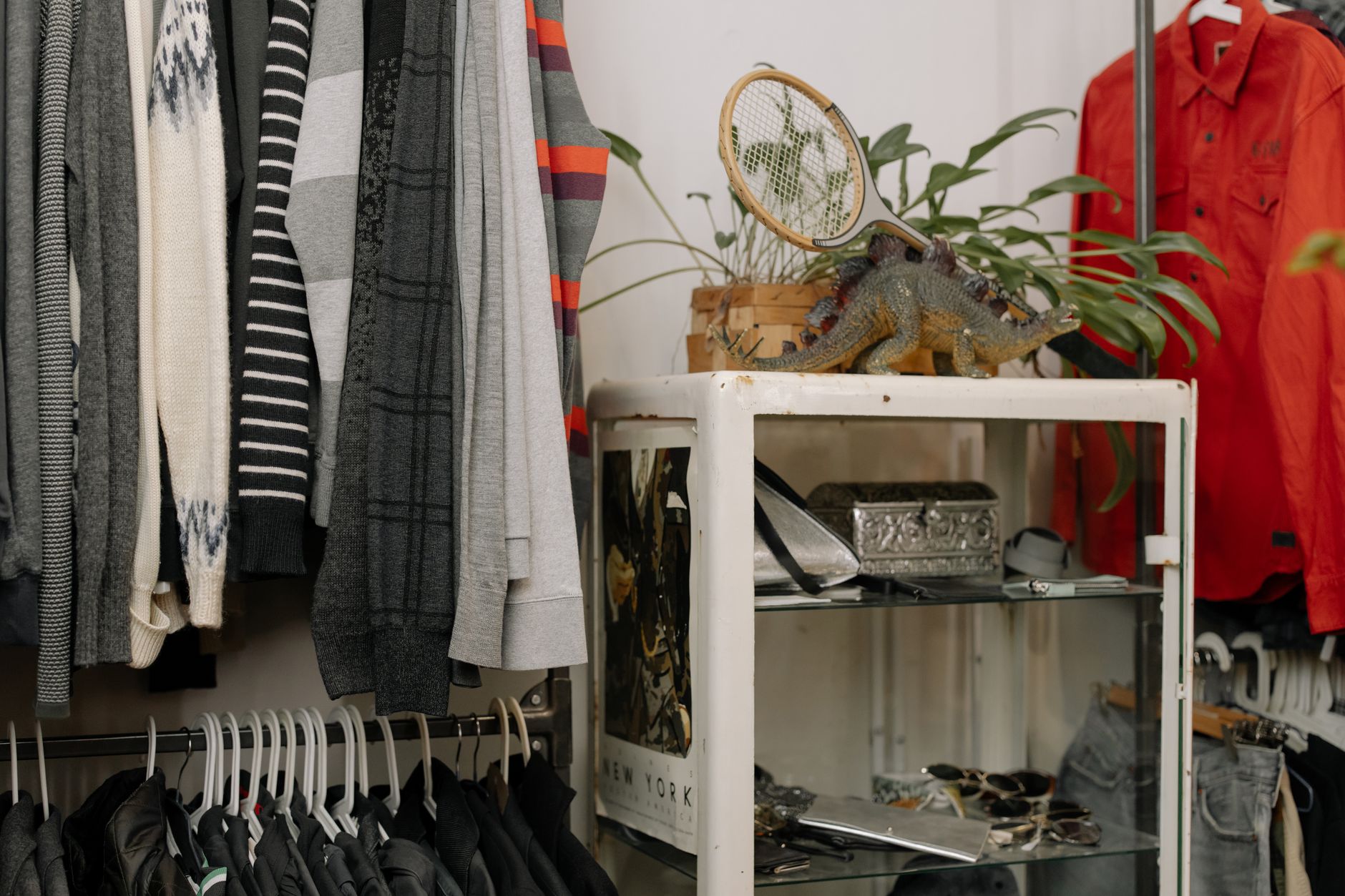
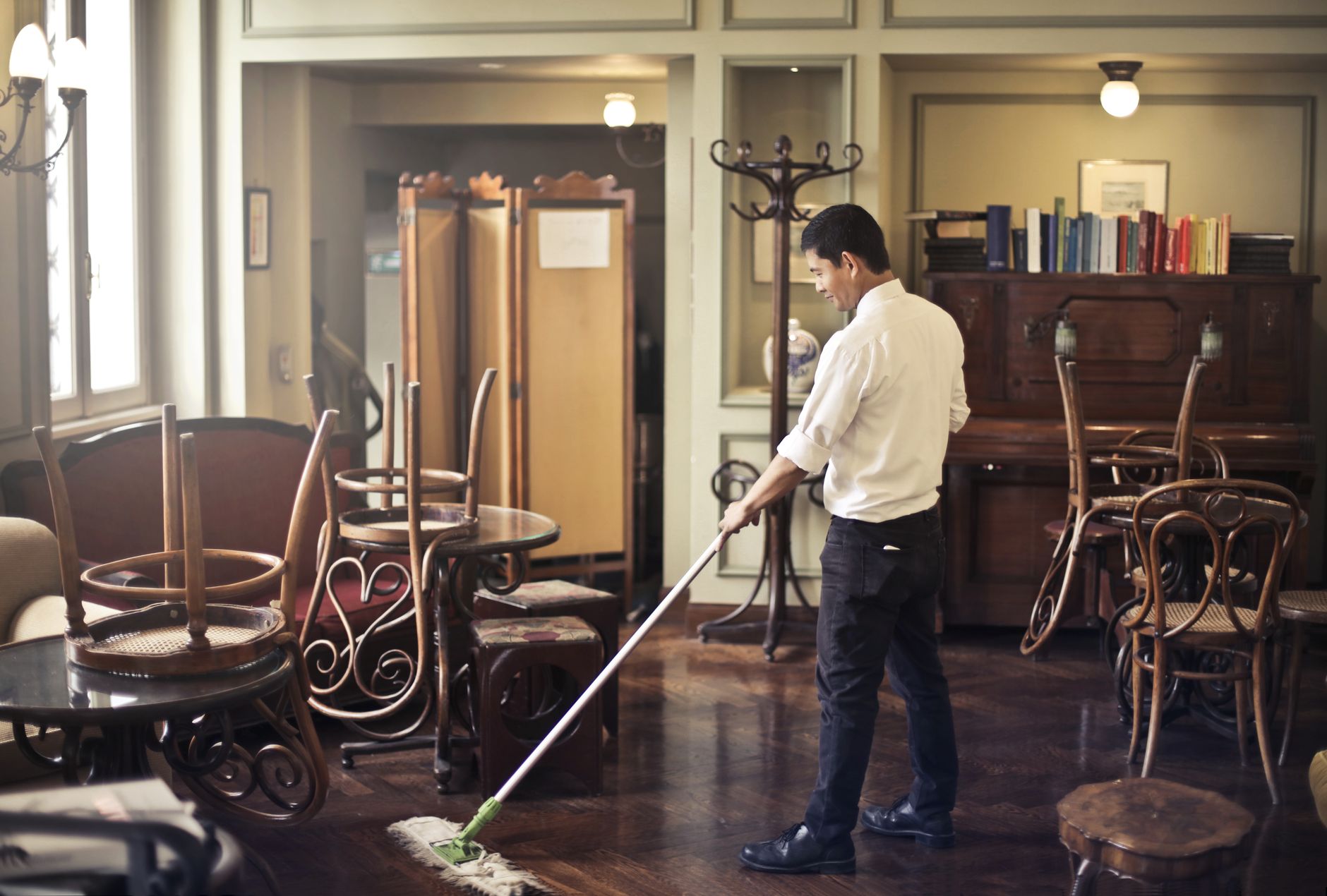
A thrift store chain after close floor cleaning job usually comes down to one closer walking through floors that have been used all day. Sales aisles collect fine dust from fabric, shoes and carts, the donation drop bay picks up grit and packing material, and the back room takes whatever came in on the last delivery. The closer has to sweep, mop, check the drop bay, lock up and record what was done, and that list gets long on a busy weekday.
Because you run nine stores across several counties, the closer's night is a route, not a single building. Time in the car counts against the floor work, and a store that gets skipped opens the next morning dirty. Nothing here replaces the closer's judgment about what each store needs on a given night.
Dust is the main complaint at most thrift stores, because fabric, shoes and carts shed fibers all day. The drop bay is worse on wet days, when grit gets tracked in from the lot and smears under the cart wheels. A floor pass that only moves dust around is not a clean floor, so the real question is what the closing routine actually removes.
How many thrift stores are there, and how big is the industry?
IBISWorld's thrift stores industry page lists 5,271 thrift store businesses in the United States, with a 0.7% compound annual growth rate from 2020 to 2025. Another IBISWorld page shows 29,457 businesses for 2024, but the definitions behind the two counts differ, so do not set one against the other. The same IBISWorld source describes a highly fragmented industry where no company holds more than 5% share.
No federal registry of resale shops turned up in this search, so the store count is an industry estimate, not a government census. For you, the practical point is that the floor work is repeated at each store, so each site needs its own plan.
Store size matters less than layout. A long main aisle with few racks is an easy route, while a store full of furniture, tight corners and stacked donation bins is a harder map and needs more clearing. Two stores of the same size can produce very different robot plans, which is why counting stores tells you less than walking each floor.
What do the labor and injury figures say about after-hours cleaning?
The Bureau of Labor Statistics Occupational Outlook Handbook reports 2,447,700 people employed as janitors and building cleaners in 2024. It projects 2% growth from 2024 to 2034, which it calls slower than average, with about 351,300 openings a year on average. Staffing a single after-close shift is therefore a recurring task for any operator, not a one-time hire.
Injury data point the same direction. The BLS snapshot for 2015 to 2019 counted 18,680 private-industry cases among janitors and cleaners, except maids and housekeeping cleaners, that required days away from work in 2019, an incidence rate of 157.4 per 10,000 full-time equivalent workers. The snapshot for 2016 to 2020 put the 2020 rate at 191.6 per 10,000. The two snapshots use different year ranges and bases, so read the trend with care, but the level is notable for work built on repeated pushing, bending and lifting.
Can a robot run the sales aisles and drop bays?
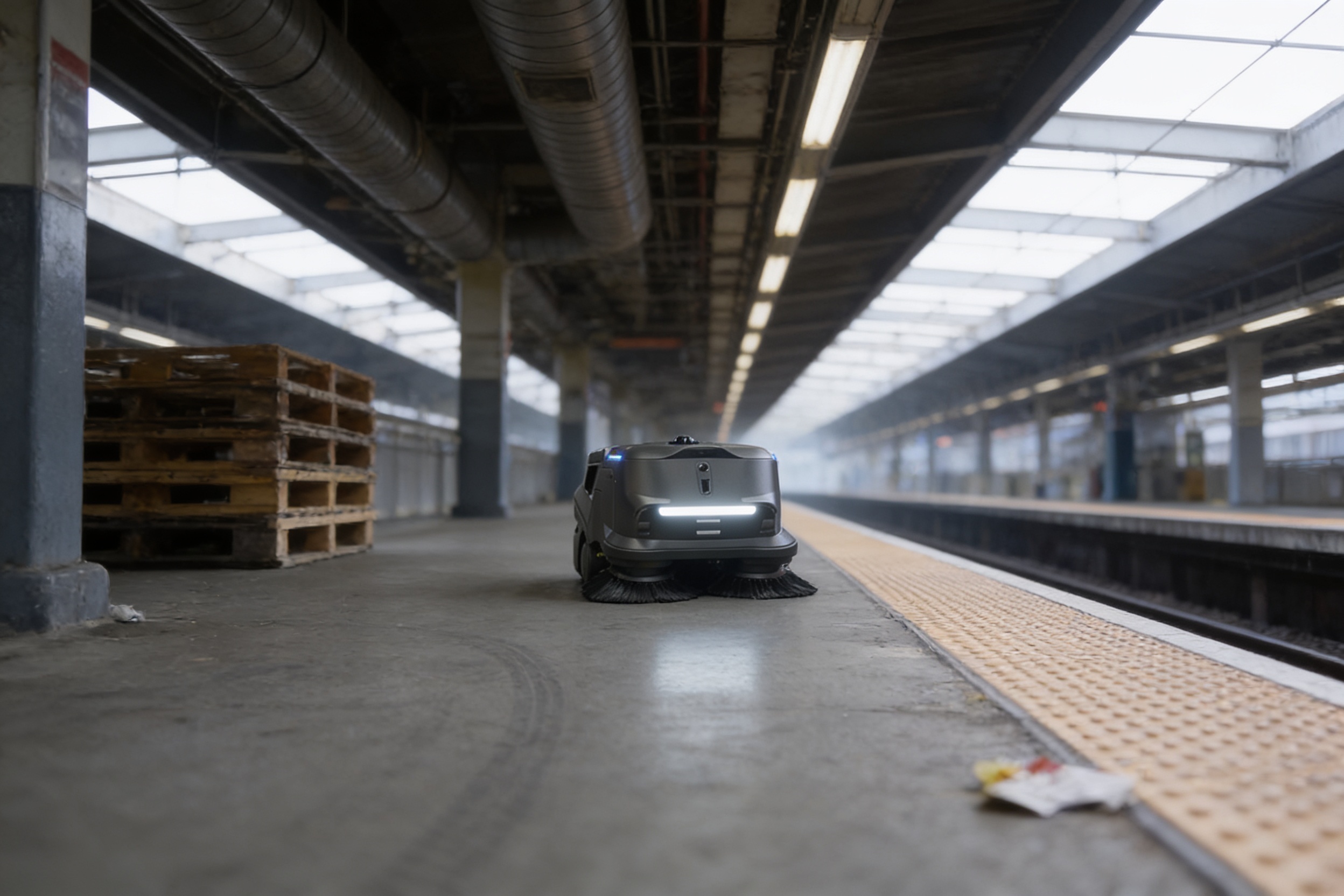
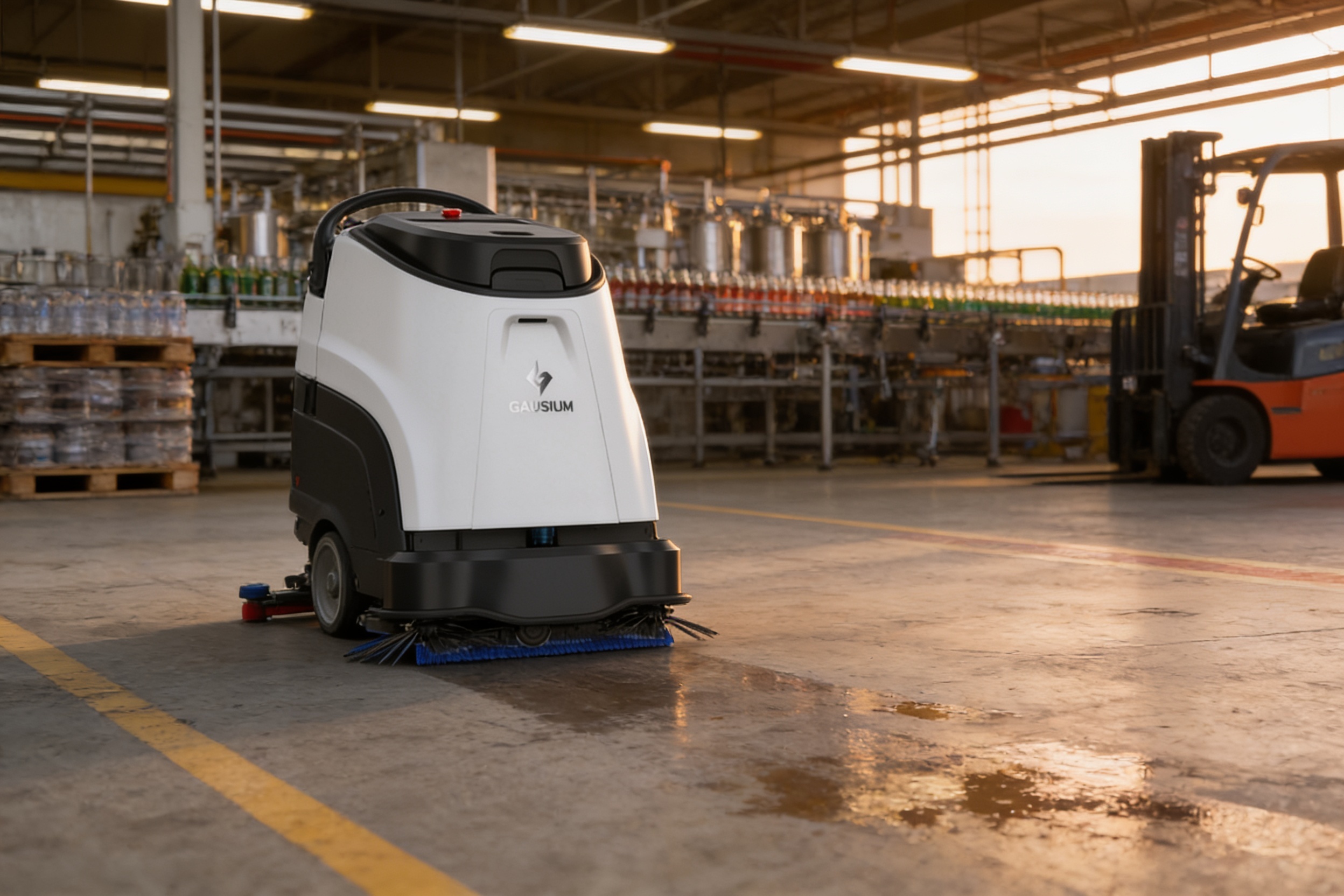
For flat, hard, mostly dry floors, yes. A floor cleaning robot sweeps or scrubs open floor on a route it has mapped, so sales aisles with clear sightlines and drop bays with smooth concrete are the best candidates. Back room floors often make the strongest case because the same pass repeats every night.
Vendor case studies show what these machines report in longer deployments, but they are sales material, so read them as the vendor's view. One grocery retailer reported 33,649 hours reallocated in 2024, up 11% from the prior year, calculated with the vendor's own value calculator. A cleaning contractor reported about 20 hours a week of typical autonomous cleaning, with some weeks over 30. Trade press citing a robot software platform's network data reports more than 8,000 hours of daily work on average across the network, which is also vendor-reported. None of these is a thrift store, so pilot your own stores before relying on any of them.
Think of each zone as a separate yes or no. A main sales aisle can be a yes while the fitting room corridor is a no, and the drop bay can flip depending on its threshold. Writing that down per store, before any quote, gives you a clear list of what the robot covers and what stays with the closer, and it stops the decision from becoming one vague answer for all nine stores.
Where does the robot fall short in a thrift store?
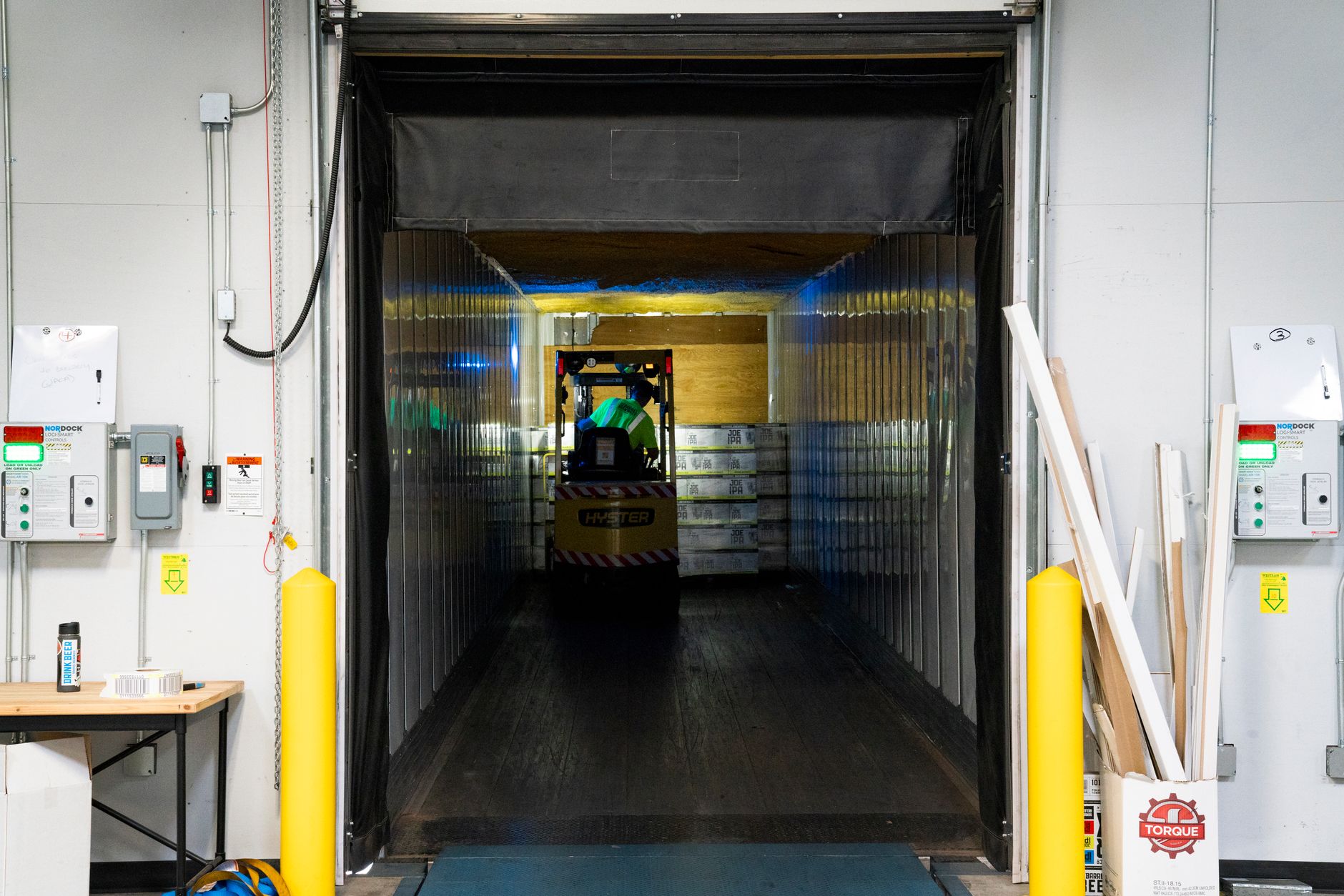
Thrift floors are not warehouse floors. Loose donations, hangers, plastic bags, cords and tags lie on the path, and a robot can stall or snag on them, so staff must clear the route before every run. Sticky residue from spilled drinks, tape, gum and adhesive labels usually needs a person with the right cleaner, because a sweeper or scrubber can smear residue rather than lift it.
Thresholds and loading dock lips are the other sticking point. A drop bay may have a step, a dock edge or a rubber mat, and a robot cannot cross a step beyond its rated height. Check every threshold on the site assessment before assuming a bay is in scope, and treat fitting room corridors and gaps under racks as tight spaces that need a person to confirm clearance.
Lighting and signage matter for route planning too. A store that is dark at close may need a fixed light left on during the mapping pass, and furniture moved into the aisles will change the route. Any change to the floor plan should be reported before the next run, not discovered when the robot stops.
- Sticky spots, food and drink spills, and gum or tape residue
- Sorting and moving bulk donations out of the way
- Cleaning around racks, fitting rooms and counters
- Restroom, entry mat and window work
- Lockup, alarm checks and exception handling
How does a robot change the closer's night?
The main change is that the closer stops being the only one who can run the repeat floor pass. A robot follows its schedule after the last customer leaves, and the closer does the work that needs judgment: spot cleaning, checking the drop bay, clearing the route and locking up. That split only works if the closer still clears the path first, so the staffing question does not disappear.
With nine stores, you would plan a unit per site, and the closer would start and check each run at each store on arrival. Ask whether a run can be started remotely, whether you get alerts when a unit stalls, and who responds in the morning. A robot that stops midway and sits in an aisle is a problem for the next opening, and the plan should name who fixes it.
Think about the handoff too. If the closer starts the robot before clearing the route, the robot will stall and the morning crew will find a mess. A short closing checklist that puts route clearing first, then the robot start, then the lockup check, keeps the sequence right without adding a second person to the night.
- Night coverage
Cleaning Robot
Runs its mapped route on schedule after the last customer leaves, without breaks.
Staff
Covers one building at a time and needs breaks, time off and cover for turnover.
- Sticky spots and spills
Cleaning Robot
Poor fit, since sweeping or scrubbing can smear residue.
Staff
Better fit, since a person can judge the spot and choose the right cleaner.
- Clearing loose donations from the route
Cleaning Robot
Cannot clear items it cannot identify, so staff must do it first.
Staff
Moves loose items quickly and notices what does not belong on the floor.
- Thresholds and dock edges
Cleaning Robot
Limited to steps within its rated height, so the site assessment decides.
Staff
Steps over or around the obstacle and adjusts on the spot.
- Route consistency
Cleaning Robot
Runs the same route each night and can report what it covered.
Staff
Quality varies with the person and how tired they are at the end of a long day.
- Coverage across nine stores
Cleaning Robot
One unit per store, with no travel between counties.
Staff
One closer can move between stores, though driving between them takes time away from the floors.
How do we lease a robot for these stores?
We lease commercial robots through financing, so the decision is about a fixed lease payment and service. We pick the right robots across manufacturers, lease them, deploy and integrate them, train staff, and service every unit. The payment comes in a quote after a free site assessment, and that quote depends on your floor plans, the number of stores and the service terms, not on a published figure.
For a chain with nine sites, a phased start often makes more sense than a full rollout. Pick one store as a pilot, measure how much clearing and checking the route actually needs, then decide whether the other stores should follow. Our service plan covers maintenance and on-site dispatch from regional service engineers in every state we service, so a stalled unit gets a person sent out.
Before the site assessment, gather the store floor plans, the closing checklist and a short note on known trouble spots, such as the drop bay threshold or sticky aisle ends. That gives the assessment a clear starting point and helps the quote reflect the work that actually needs doing.
What should we check before deciding?
Before you request a quote, check the things that change the answer. Floor condition, route clearance, thresholds, alerts and the closing routine each decide whether a robot is in scope at a given store. Run the check for all nine stores, since one bad drop bay changes the plan for that store only.
Also check the people side. Confirm who clears the route on nights the closer is out, who responds to an alert, and who signs off the morning check. A robot plan with no named owner for those three tasks will fail on the first bad night, whatever the floor looks like.
What does a first month with one robot in one store look like?
Start with the store whose floors are most typical of your chain, not the cleanest or the dirtiest. Week one is about mapping the route, clearing the path the way the closing routine will do it every night, and recording what the robot misses. Staff should walk the route in the morning and note every spot the robot skipped or stalled on.
By the end of the first month, the useful numbers are your own: how often the route ran clean, how many nights needed a person to clear something, and how much closing time changed. Compare those against the vendor figures earlier on this page with care, since those came from other sites. If the pilot store shows a clear gain on the repeat pass, the next step is a quote for the other stores built from what you measured.
Frequently asked questions
Want a cleaning robot at your thrift stores and donation drop bays?
Tell us about your site. We will recommend the robot, quote the lease, and keep it serviced.
Sources
- IBISWorld thrift stores industry statistics
- IBISWorld thrift stores business count page (2024 figure)
- BLS Occupational Outlook Handbook, janitors and building cleaners
- BLS Injuries, Illnesses and Fatalities snapshot, janitors and cleaners, 2015 to 2019
- BLS Injuries, Illnesses and Fatalities snapshot, janitors and cleaners, 2016 to 2020
- Vendor case study, grocery retail floor scrubber (vendor-reported)
- Vendor case study, cleaning contractor autonomous cleaning (vendor-reported)
- ESM Magazine, autonomous robot usage in retail (vendor network data)