
The question, in the buyer's words
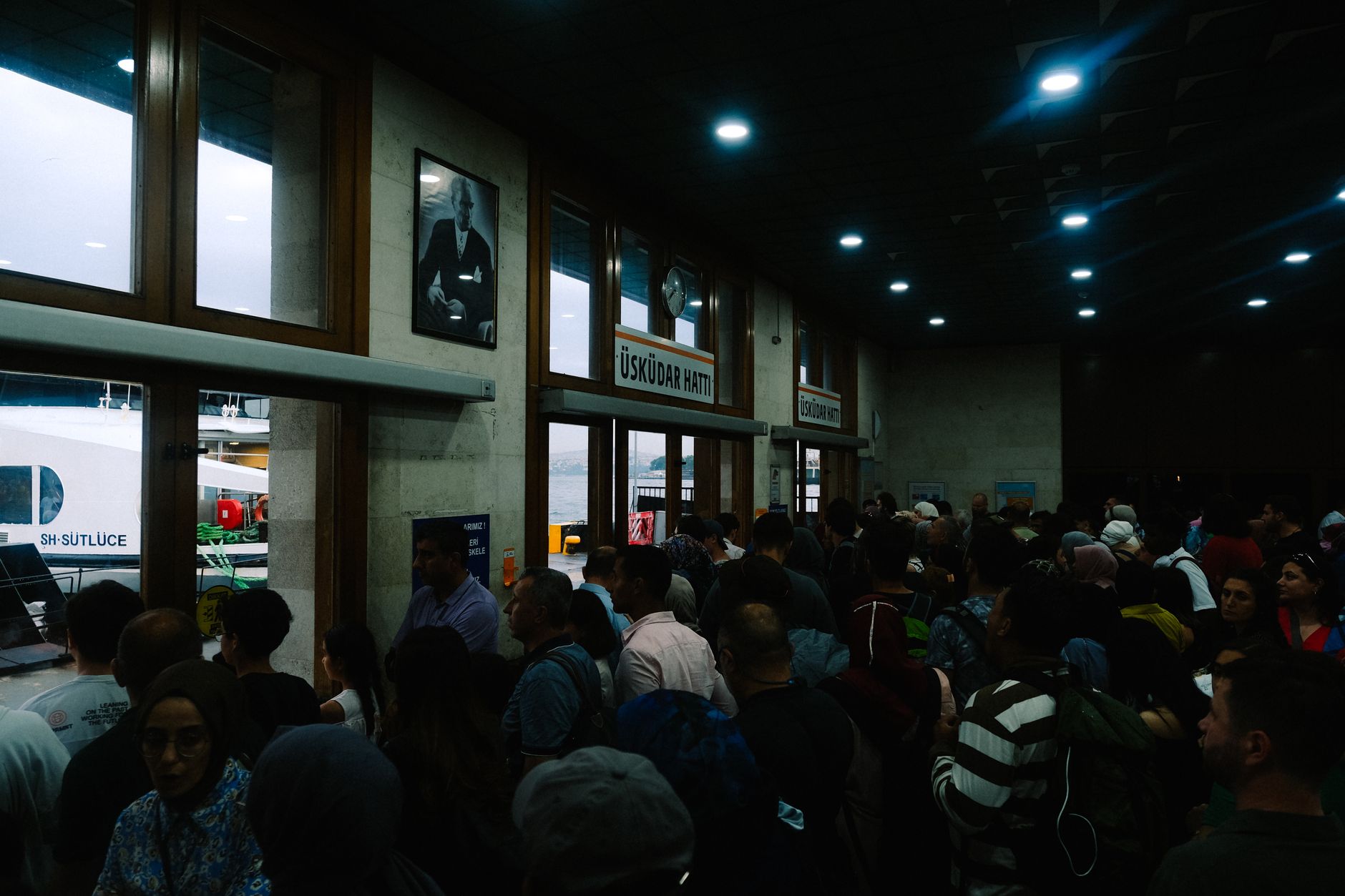
I run custodial for a ferry terminal in Port Townsend, Washington where salt and wet boots leave the waiting room floors slick by the last sailing; could a cleaning robot handle those floors overnight without getting in the way of the first crossing crowd?
Key takeaways
- A waiting room robot fits an open floor with a clear overnight window, not a room that never empties.
- Entries, thresholds and restrooms stay with the crew, so the robot covers only part of the night.
- The sailing schedule sets the window, and it shifts with the season and walk-on counts.
- Test a unit on your wet floor during a site assessment before you commit to a lease.
Can a cleaning robot work Port Townsend ferry terminal waiting room floors?
A Port Townsend ferry terminal waiting room cleaning robot makes sense for one job: the open hard floor that turns slick after the last sailing and has to be dry before the first crossing crowd arrives. It can cover that open floor on a fixed schedule while your crew works the entries, restrooms and anything a machine should not drive through.
Whether it fits your building comes down to three things. You need a window of several quiet hours with no passengers in the room, a floor the machine can cross without ramps or loose mats, and a crew that clears the entries before the robot starts. If any of those is missing, the robot spends its night working around the problem instead of reducing it.
The stakes are real. According to the National Safety Council's 2026 fact sheet on preventing slips, trips and falls, these were the second leading cause of workplace death in 2024 and the third leading cause of workplace injury. A wet floor is a small job on the schedule and a large risk on the injury log.
How serious is the slip risk on a wet waiting room floor?
The Bureau of Labor Statistics' Economics Daily reports that falls, slips and trips caused 844 deaths nationally in 2024, down from 885 in 2023. Those are national totals across all industries, so they show the scale of the category rather than how often a terminal floor causes a fall.
The NSC fact sheet also lists lower extremities at 33 percent and sprains, strains and tears at 27 percent as the top injury location and type. The definitions behind those shares are not stated, so read them as the shape of the injuries, not a count for your building.
No BLS or NSC count specific to wet floors or passenger terminals was found. Keep your own log for the waiting room, noting each slip or near miss by time, weather and sailing. That log will show whether the risk sits at the last sailing or the first arrival, and it is the evidence you will need to judge whether a robot changed anything.
How small is a terminal custodial crew, and is help easy to hire?

According to the Bureau of Labor Statistics Occupational Outlook Handbook, janitors and building cleaners held about 2.4 million jobs in 2024. Employment is projected to grow 2 percent from 2024 to 2034, slower than the average for all occupations. The handbook describes custodians as typically maintaining institutional facilities such as schools and hospitals, which is close to what a ferry terminal needs.
Slow growth means the pool of people who can cover a late shift does not expand quickly. A terminal with two or three people on the night floor can lose one person to illness or a resignation and have the whole closing routine fall on the rest. The real pressure is not the number of hours in the job but the absence of a spare person for the waiting room.
Those figures are national. No current county employment count for Jefferson County was found in this review, so use your own staffing records for the local picture before you plan around a labor supply.
How do Port Townsend's rain and ferry traffic change the night?
According to usclimatedata's station figures for Port Townsend, annual precipitation averages about 19.04 inches, with the wettest months in November and December. The wet season arrives as a steady load of boot prints and tracked water rather than one heavy spill, so the work is repetitive and spread across the whole floor.
Ferry traffic has grown. WSDOT's 2023 release says riders on the Port Townsend and Coupeville route rose 4 percent, vehicles rose 2 percent and walk-ons rose 11 percent. A WSDOT release for 2025 reports the route's total riders up 4.7 percent and vehicles up 5 percent, and a second boat was added on Fridays through Mondays in July 2025 for summer demand.
Walk-on growth matters most for your floors. Walk-on passengers arrive wet, with bags and bikes, and they gather in the waiting room in a tight group before boarding. More walk-ons mean more foot traffic around the last sailing and the first crossing, which narrows the robot's window. Confirm the current walk-on pattern with the operator rather than assuming the 2023 trend still holds.
The local economy also leans on the water. A 2018 economic impact study reported by the Peninsula Daily News found that maritime work accounts for 19 percent of total county employment, with 2,243 maritime-related jobs, 1,154 of them tied directly to the working waterfront. The study used 2016 census data, so treat it as a dated picture of who depends on the waterfront.
When can the robot run without getting in the way of the first crossing?
The window is set by the schedule, not by the robot. Map the last boarding call, the time the last passengers clear the waiting room, the arrival of the early crowd, and the time the first crossing begins to load. The robot needs the open hours between clearing and arrival, with a margin for the crew to check the room before passengers come in.
Schedules shift with the season, and summer added service is already documented in the WSDOT release. Build the plan for each season rather than a single fixed time. A plan that fits the winter timetable may leave no room in the summer, when the boarding pattern changes.
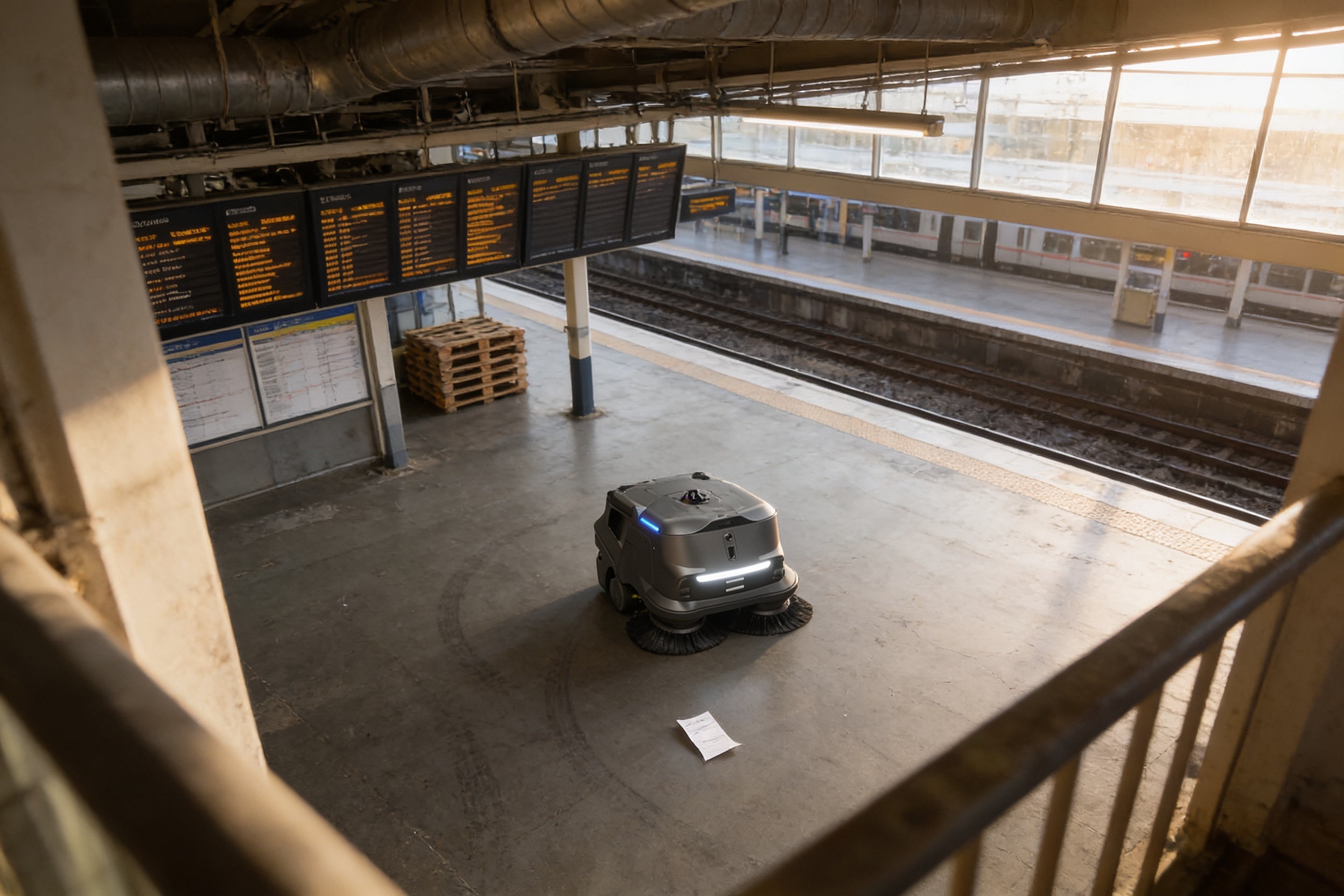
A workable sequence keeps the robot out of the way. It finishes its open-floor pass before the early crowd, parks at a charging spot away from the doorway, and leaves the entries to the crew. The sample night below uses example times; your own sailing table sets the real ones.
Which floor areas can a robot handle, and which still need a person?
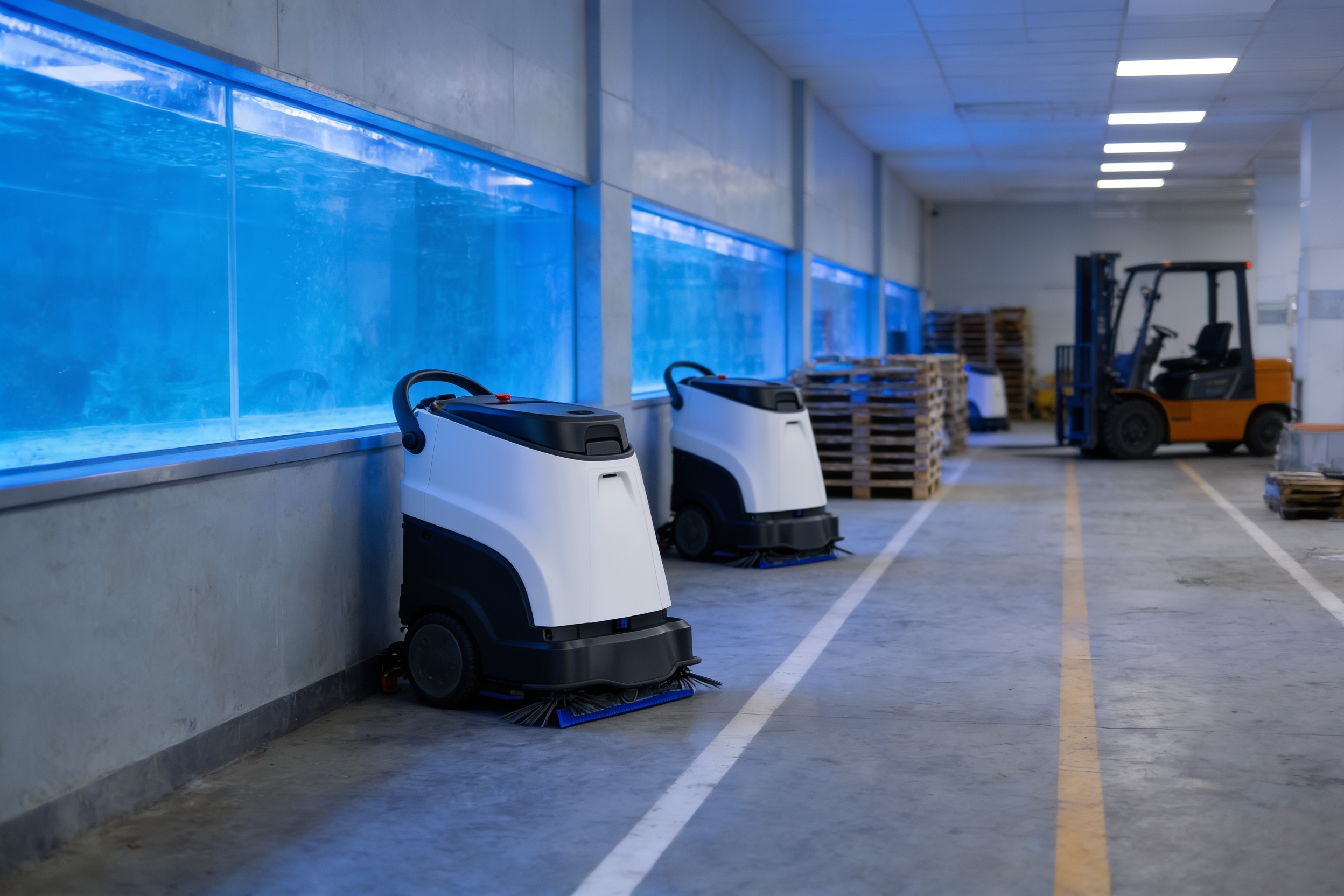
Coverage is the first question. A scrubber maker's own published specification lists about 28,000 square feet per hour for one model. That is a vendor-reported figure, not an independent test, so use it as a starting point, then measure your waiting room and time a real pass.
Floor type matters more than most buyers expect. Sealed concrete and tile suit most scrubbers. Carpet, uneven thresholds, raised mats and high curbs do not. Salt residue and water can affect traction and squeegee performance, so ask for a test on your actual floor in wet conditions, not a dry demonstration floor.
Some areas stay with people. Entry vestibules hold most of the salt and water that boots carry in. Ticket counters, restroom thresholds and spots already marked with wet-floor signs need a person's judgment. The robot takes the long passes through the middle of the room, and the crew takes the edges, the entries and the corners the machine cannot reach cleanly.
How do you keep the robot out of the crowd's way?
Crowd safety comes from written rules, not from the machine. Set a hard stop time before the first boarding call, and keep the robot at a charging spot away from the path to the doors. If a crowd forms early because a sailing is delayed, the robot should already be parked and the room already checked.
Use physical cues. Wet-floor signs, a cone at the robot's start point and a clear route to the charging spot tell passengers where the machine works. Keep the route off the main walking line from the doors to the boarding gate, because people will walk into a moving machine if the room looks open to them.
Check the work after every pass. A robot can leave a wet band along a bench leg or in a corner. The crew's final walk catches missed strips before the first crossing. Log every stop or fault so the next shift knows where the floor needs attention.
How does leasing a cleaning robot work with Service Robot Co.?
Service Robot Co. is a commercial robot integrator for US businesses. We choose the robot for your site across manufacturers, lease it through financing, deploy and integrate it, train your staff, and service it under RoboCare, our service plan, through regional service engineers in every state we service. The lease is quoted after a free site assessment, so you see the terms before anything is committed.
For a terminal waiting room, the site assessment should measure the open floor, map the sailing and walk-on schedule with you, test the robot on your floor when it is wet, and identify the entries and thresholds the crew keeps. The written quote should state the lease terms, the deployment plan and what the service plan covers.
Start small. A phased pilot on the main waiting room floor, with one leased unit and a clear overnight window, is easier to judge than a whole-building rollout. If the pilot shows the floor dry at the first boarding call, expand. If it does not, the assessment has kept you from a lease that cannot do the job.
Frequently asked questions
Want a cleaning robot at your ferry terminal waiting rooms?
Tell us about your site. We will recommend the robot, quote the lease, and keep it serviced.
Sources
- BLS Occupational Outlook Handbook: Janitors and Building Cleaners
- NSC 2026 Fact Sheet: Preventing Slips, Trips and Falls
- BLS Economics Daily: Fatal Work Injuries Declined in 2024
- WSDOT: State Ferries Welcome 1.3 Million More Riders in 2023
- WSDOT: State Ferry Ridership Rises Nearly 1 Million in 2025
- usclimatedata: Port Townsend, Washington climate
- Peninsula Daily News: Study Looks at Economic Impact of Maritime Trades in Jefferson County
- Scrubber maker published autonomous floor cleaning specification (vendor-reported)