
The question, in the buyer's words
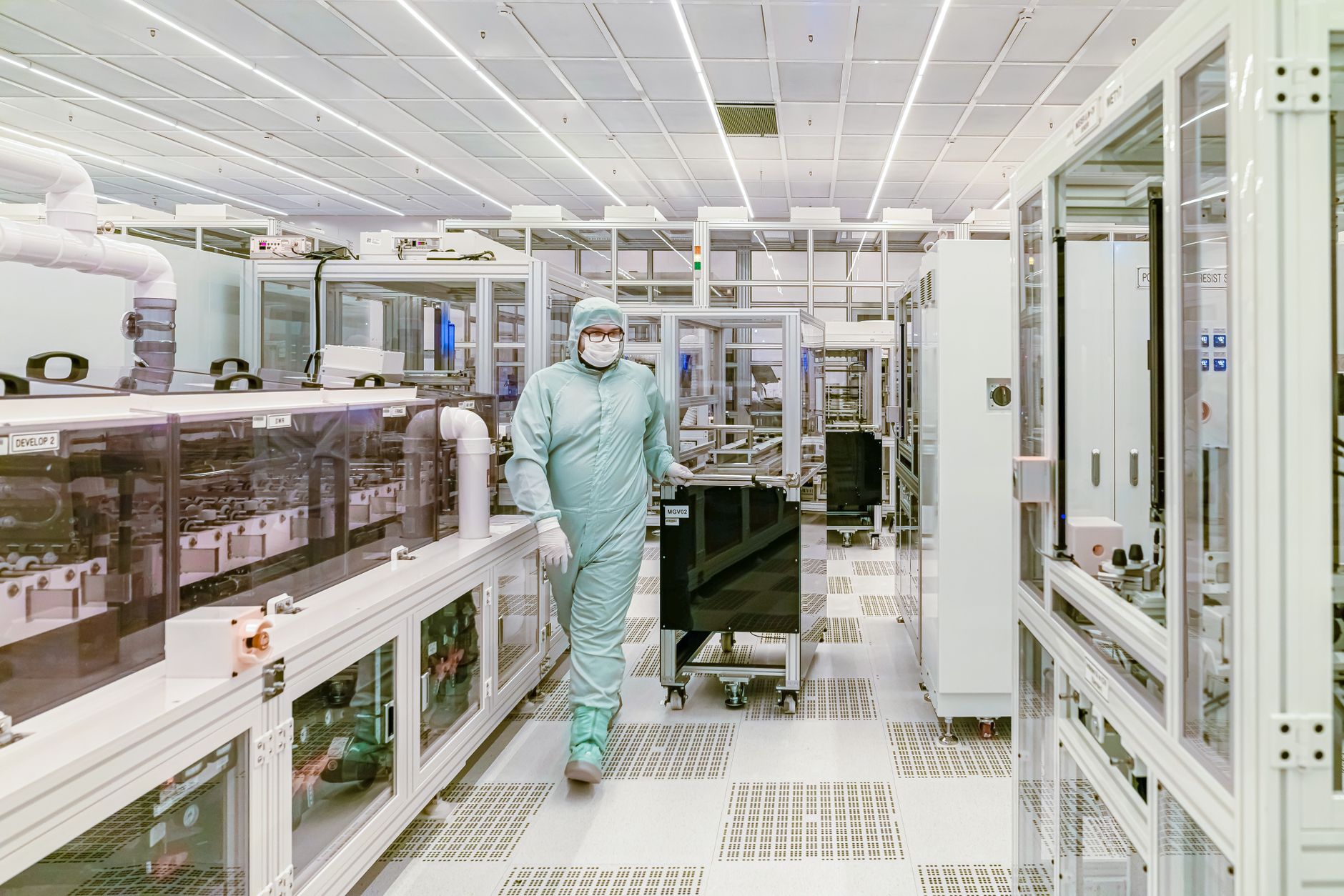
I manage custodial for a semiconductor cleanroom bay in San Jose, California, and the gray epoxy floors need cleaning between shifts without shedding particles into the air; could a cleaning robot do that safely?
Key takeaways
- A robot is not yet proven for particle control on a cleanroom epoxy floor, so your own bay has to be the test.
- Cleaner chemistry, pad handling and water ratio drive particle counts as much as the machine does.
- Epoxy cure runs in stages set by the product sheet, and cool or humid rooms stretch every stage.
- A safe pilot starts with one zone, a fixed baseline and stop rules agreed before the first pass.
Can a cleaning robot clean an epoxy floor in a San Jose cleanroom bay?
The short answer is that a cleaning robot may fit part of this job, but the particle requirement decides it, and the evidence found so far does not show that a floor scrubber meets it. The gray epoxy floor has to be cleaned between shifts without sending particles into the air, which means the method, the chemistry and the machine must hold your bay's particle count, not just leave the floor looking clean.
Our search for this exact case came up thin. We found no published particle-generation test results for robot floor scrubbers in cleanrooms, and no robot scrubber rated to a specific ISO class. That gap is the central finding. Treat any claim about a robot in a cleanroom as unproven until particle counts from your own bay confirm it.
Where a robot can help is the repetitive, scheduled pass across open floor. That frees trained staff for the edges, equipment bases and gowned work that particle control depends on most. A robot does not replace the people who know your bay's classification, gowning rules and change control.
How do San Jose's climate and season affect epoxy floor cleaning?
San Jose has a wet season and a dry one, and both reach the floor in different ways. According to a long-term weather profile for San Jose, the rainy season runs about October to mid-May. February has the most wet days, averaging 7.9 days with at least 0.04 inches, and July has essentially no rain. Outdoor wet weather reaches an indoor bay mostly through doors, carts and footwear, so tracked-in moisture and grit are the seasonal risk to plan for.
Published annual rainfall totals for San Jose differ widely between sources, and the humidity figures we found were not checked against federal records. Confirm local conditions with the National Weather Service San Francisco Bay Area office before you use any climate number in a facility plan. Your own building log of temperature and humidity will be more useful than a regional average.
Humidity also matters for the floor itself. Cooler or more humid conditions lengthen epoxy cure, which changes when a bay can return to service after cleaning. Plan the shift gap around the cure window your product sheet gives for your building's actual temperature, not for the test conditions printed on the label.

Why do cleanroom floors shed particles during cleaning?
Particles come from the cleaning process as much as from the floor. A physicist posting to an MIT lab network list in August 2025 reported that particle counts during cleaning depended on the cleaner-to-water ratio and the orbiter speed, and he used a small orbiter with cleanroom pads. Those are the variables a robot changes, so they belong in your test plan from the start.
Chemistry is the second source. A cleanroom floor cleaner should be low in non-volatile residue and ionic contamination, because a film that builds up can shed particles later, even after the floor looks dry. A German scrubber maker also says its machines have stainless steel housings and controlled drain valves to prevent electrostatic charging, and it reports use in chip and semiconductor cleanrooms. Both are vendor claims, not independent test results, but they tell you what to ask for.
Ask any vendor for the cleaner's residue data, the pad and water handling procedure, and particle counts taken in a cleanroom with the same machine. If those are not available, the robot has not been shown to work in your bay, whatever the brochure says.
How long before an epoxy floor can take traffic again after cleaning?

Cure is not one number. A fast-cure epoxy product data sheet, which is vendor-reported, lists recoat at about 2 to 6 hours, light foot traffic at about 8 hours, full traffic after 24 hours and full chemical resistance at 5 days. Those are the manufacturer's times under the conditions it tested, so they are a starting point, not a promise for your bay.
A general epoxy cure guide that is not a manufacturer gives another spread. It lists light foot traffic at about 24 hours, full foot traffic at about 72 hours and vehicle traffic at 5 to 7 days. The gap between the two sources is why you should use the exact product sheet for the coating in your bay and check it with your coating supplier.
For a cleanroom, the clock that matters is not only when the floor is walkable. It is when the coating has cured enough to reach the residue level your bay requires. Confirm both before you set any shift window that depends on them.
How much cleaning labor is there, and what does the local market look like?
According to the U.S. Bureau of Labor Statistics, janitors and building cleaners held about 2.4 million jobs in 2024. Employment is projected to grow 2 percent from 2024 to 2034, which is slower than average, and about 351,300 openings a year are projected, reflecting replacement of workers who leave. For a cleanroom manager, finding custodial staff trained for gowned, low-particle work is a steady and competitive task.
The local context includes a large Bay Area semiconductor base. A Bay Area labor market report, using 2024 data and published in January 2025, lists semiconductor and related device manufacturing at 1,952 jobs in 2023, projected at 2,030 in 2028. That figure covers the wider Bay Area and manufacturing jobs only, so it does not describe San Jose alone, and it is not a custodial headcount for any single bay.
We did not find cleanroom-specific figures for shift hours per task, the floor area of a semiconductor bay, or injury and incident rates for janitorial work. Measure those in your own bay before sizing a pilot, because the value of a robot depends on how many gowned hours the floor really takes each night.
How common is autonomous floor cleaning in facilities right now?
The ISSA and CMM In-House and Facility Management Benchmarking Survey, published in 2025, reports that 43 percent of respondents plan to add autonomous cleaning equipment. The sample size and method were not visible in the source, so read that as a directional signal rather than a precise rate. An earlier 2019 AACEM and ISSA survey described autonomous cleaning adoption as early stage.
A 2026 press release from a janitorial equipment provider, which is a vendor claim, says planned adoption of robotic floor equipment roughly doubled from 2025. Vendor figures like that show marketing momentum, not how cleanroom facilities perform after installation, so weigh them accordingly.
Scale matters too. A German scrubber maker, reporting vendor figures for its own equipment, says its machines suit areas of roughly 800 to 1,000 square meters. Measure your bay's floor area against that before assuming one unit covers the work, since a cleanroom bay may be smaller than that or split into zones by equipment pads and walls.
How do you run a safe pilot of a floor cleaning robot in a cleanroom bay?
Start with a baseline. Log particle counts during a normal shift gap with your present method, then run the robot with the same cleaner, dilution, pad and speed settings and log again. The MIT list note suggests cleaner-to-water ratio and orbiter speed drive particle counts, so hold those fixed and change one variable at a time.
Choose a small zone first, not the full bay. Pilot one lane of the gray epoxy floor between two equipment pads, with gowned staff on hand. Record the time to dry, the time to foot traffic and any residue or streaking, then compare those times with the cure window for the coating.
Set stop rules before the first pass. If counts rise above your bay limit after a robot pass, the pass stops, the zone returns to manual cleaning, and the vendor reviews the cleaner and pad system before anything else runs. A pilot that cannot stop on bad data is not a test.
What does leasing and service look like for a pilot robot?
We are an integrator, not tied to one manufacturer. We choose the robot that fits your floor, lease it through financing, deploy and integrate it, train your staff and service it under our service plan. Robots are only leased through financing, so a pilot does not require a large upfront capital outlay.
The payment comes in a quote after a free site assessment. For a cleanroom, that assessment should include the bay floor map, the cleaner and pad rules your procedure requires, the zones that stay manual and the particle test plan from the pilot section. We can quote the lease once those inputs are known, and not before.
Service is included under our service plan, and we have regional service engineers in every state we service. For a cleanroom, ask how spare pads and cleaner supply are handled, how a unit is pulled from the bay without disrupting it, and whether a backup unit can cover the pilot. Start with one leased unit and expand only after your counts hold.
What should a cleanroom manager check before deciding on a robot?
A few facts decide whether this moves from pilot to yes or no. Check the items below before you sign off, since each one can change the answer.
If most of these pass, a single-zone pilot is a reasonable next step. If the bay's particle limit is unknown or the cleaner data is missing, the honest answer is to wait until those are measured, because a robot cannot be judged against a number nobody has set.
Frequently asked questions
Upcoming manufacturing events
- Trade showBrats & RobotsNov 10, 2026Alliant Energy Center Exhibition Hall, Madison, WI
- Trade showMATE Farm & Ranch ShowFeb 11 to 13, 2027MetraPark, Billings, MT
- ExpoPFMA Expo 2027Feb 17 to 18, 2027Washington County Fair Park, West Bend, WI
- ExpoLouisville Facilities Maintenance ExpoApr 15, 2027Mellwood Art Center, Louisville, KY
Put a robot to work in San Jose.
We walk your site, learn the job, and recommend the unit that fits. Then we quote the lease, deploy it, and keep it serviced.
Sources
- U.S. Bureau of Labor Statistics, Occupational Outlook Handbook: Janitors and Building Cleaners
- ISSA and CMM In-House and Facility Management Benchmarking Survey, 2025
- German cleanroom scrubber vendor page (vendor-reported)
- Fast-cure epoxy flooring product data sheet (vendor-reported)
- General epoxy flooring cure time guide (not a manufacturer)
- Long-term average weather profile for San Jose, California
- Bay Area labor market report, semiconductor engineering, 2024 data
- MIT lab network mailing list post, August 2025