
The question, in the buyer's words
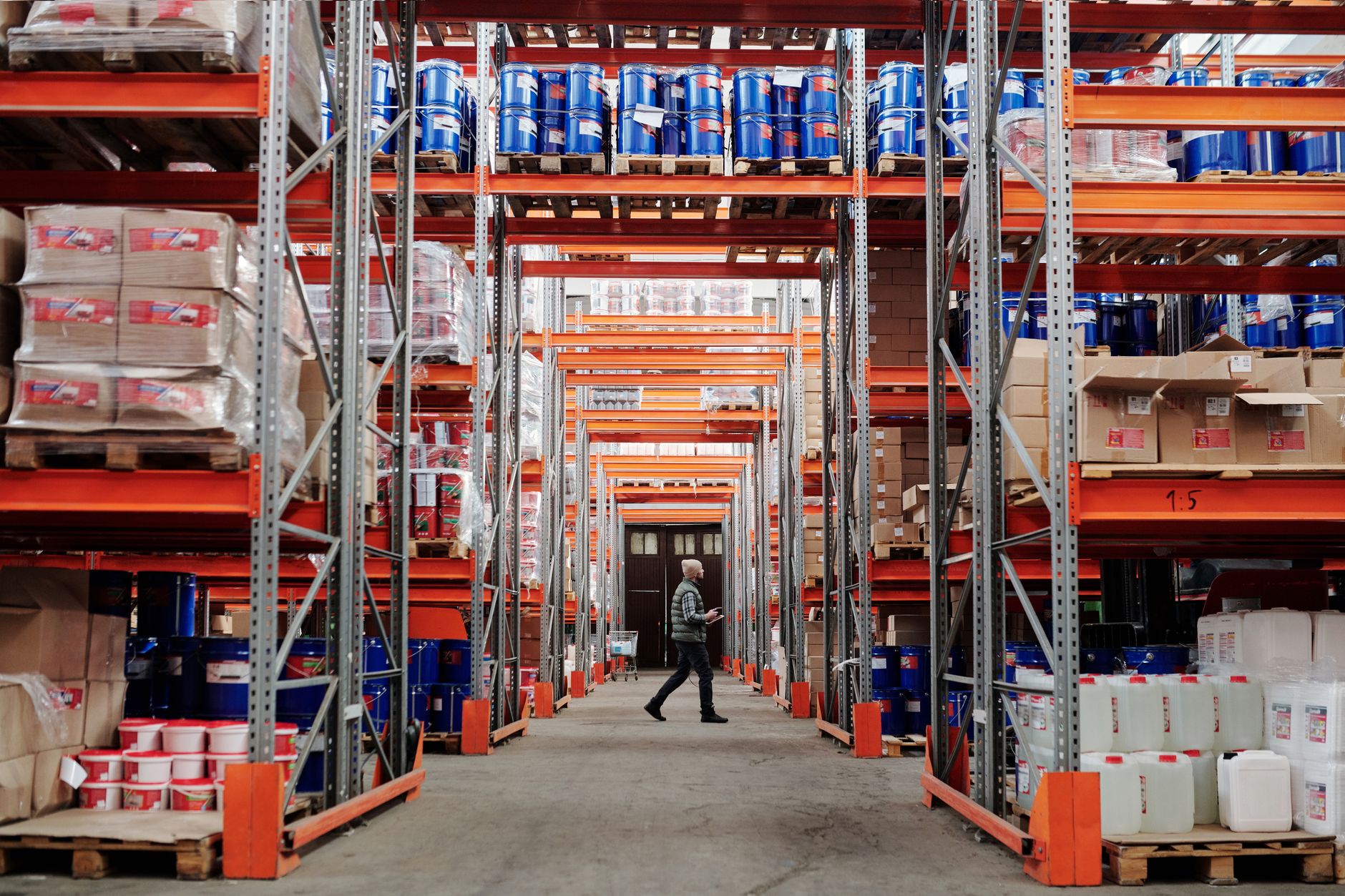
Our farm supply store chain has 16 stores, and feed dust, salt-block grime and bag shreds build up on the sales floors every night while one closer is alone at each location; could a cleaning robot run those aisles after we lock up?
Key takeaways
- A cleaning robot fits the hard, mostly clear floor of a farm store aisle, not a floor buried in bags.
- The closer still clears bag shreds, pallets and spills before the route starts.
- Feed dust and grit are the easiest debris, while salt block residue needs a test on your own floor finish.
- Falls are a documented retail risk, so a dry, clear floor at opening matters.
- Start with a free site assessment at one store before deciding on the other fifteen.
Can a cleaning robot run farm supply store aisles at night?
Farm supply store floors take a daily beating. Feed dust settles into aisle joints, salt block grime smears where livestock and customers walk, and torn bag shreds collect along the base of the racks. A closer working alone can sweep some of it, but a full scrub of every aisle may not fit into the closing hour.
The short answer for the floor is yes. A floor scrubbing or sweeping robot can run its route after lock up with no operator on site, provided the floor is in the condition it expects. It does not clean shelves, dust high surfaces or judge a stain it has never seen, and it does not take the closer out of the process.
The closer still has work to do. Clearing the floor before the run, setting the route and checking the result in the morning are the parts a robot cannot do for itself, and they decide whether the aisles are ready for opening customers.
How many farm supply stores would a robot program reach?
A commercial market estimate counts 19,485 farm supply store businesses in the United States for 2025, up 2.4% from 2024, with a 3.9% compound annual growth rate for 2020 to 2025 according to that estimate. It is not an official government count. We found no official Census count for this category in our review, so treat any national total as a sizing tool, not a list of targets.
For a chain with 16 stores, the number that matters is the floor at each location. Each store has its own aisle layout, floor finish, loading path and closing routine. A layout that suits one store with a single loading door may need another plan in a store with long feed rooms and mixed flooring, so each location gets its own assessment.
Use the national figure to understand the market, then make the floor decision one store at a time.
What does one closer's night cover, and how long does the floor take?
A solo closer at each store runs sweeping, bagging, cash, locking and a walk of the floor, often under time pressure. We did not find a published study of closing duties for farm supply stores, so measure your own. Time the clear-down over three nights at one store and separate the floor work from everything else.
The scrubbing arithmetic is more concrete. A vendor-reported listing gives a manual mopping baseline of 2,000 to 2,700 square feet per hour. Take an illustrative 10,000 square foot aisle area, which you should replace with your own measured number. Mopping that area by hand takes about 3.7 to 5 hours, which is far longer than a closing hour allows.
The table below sets the same area against a robot run. The figures are arithmetic from published rates, not a field test, and recharging, obstacles and route setup change the real result.
Which debris can a robot clear, and which needs a person first?
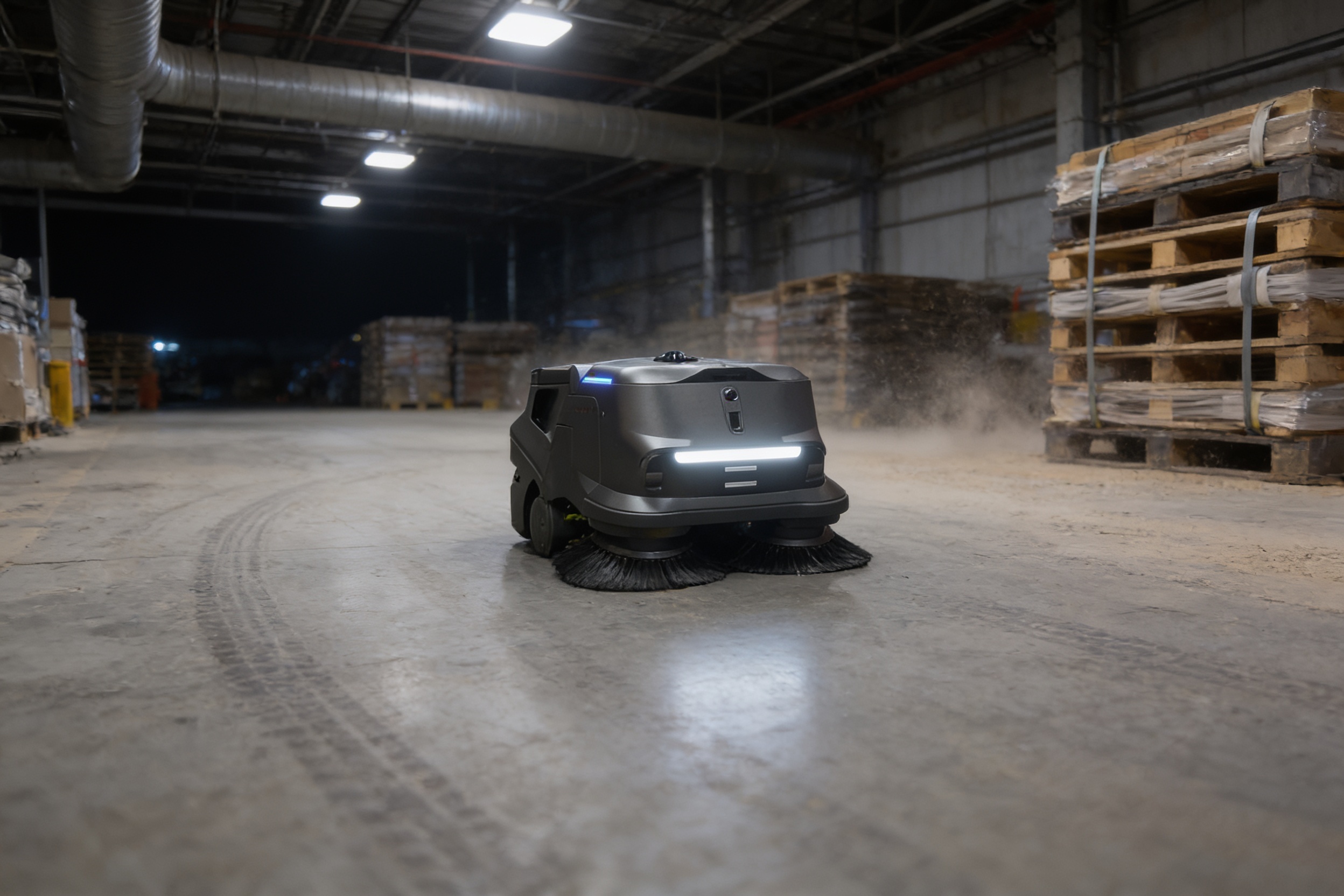
Feed dust and fine grit are the easiest debris for a floor robot, because the normal route picks them up on hard floors. Loose seed and small particles are also manageable. The trouble starts with anything that wraps, lies flat in the path or sticks to the surface.
Bag shreds are the main problem. Thin plastic strips and twine can catch on brushes and stop a unit mid aisle. Pallets, loose bags, displays and carts left in the route will block it. The closer should clear these before the run starts, and the route should be drawn around anything that stays fixed.
Salt block grime is another matter. It is a sticky mineral residue that can smear and dry on the finish. We have no verified test result for any specific machine on salt block, so test the residue on your actual floor during the site assessment, using the cleaning chemistry your store already uses. If a test patch will not come clean, that aisle is not ready for an unattended run.
Does a clean night floor cut slip and fall risk for morning crews?
Falls are a real cost in retail. According to Bureau of Labor Statistics data reported by a loss prevention trade publication, falls, slips and trips cases involving days away from work reached 34,190 in 2018, up 11% from 2017. A Bureau of Labor Statistics report on 2018 also found that retail was the only private industry sector where the total recordable case rate rose, to 3.5 per 100 full-time workers.
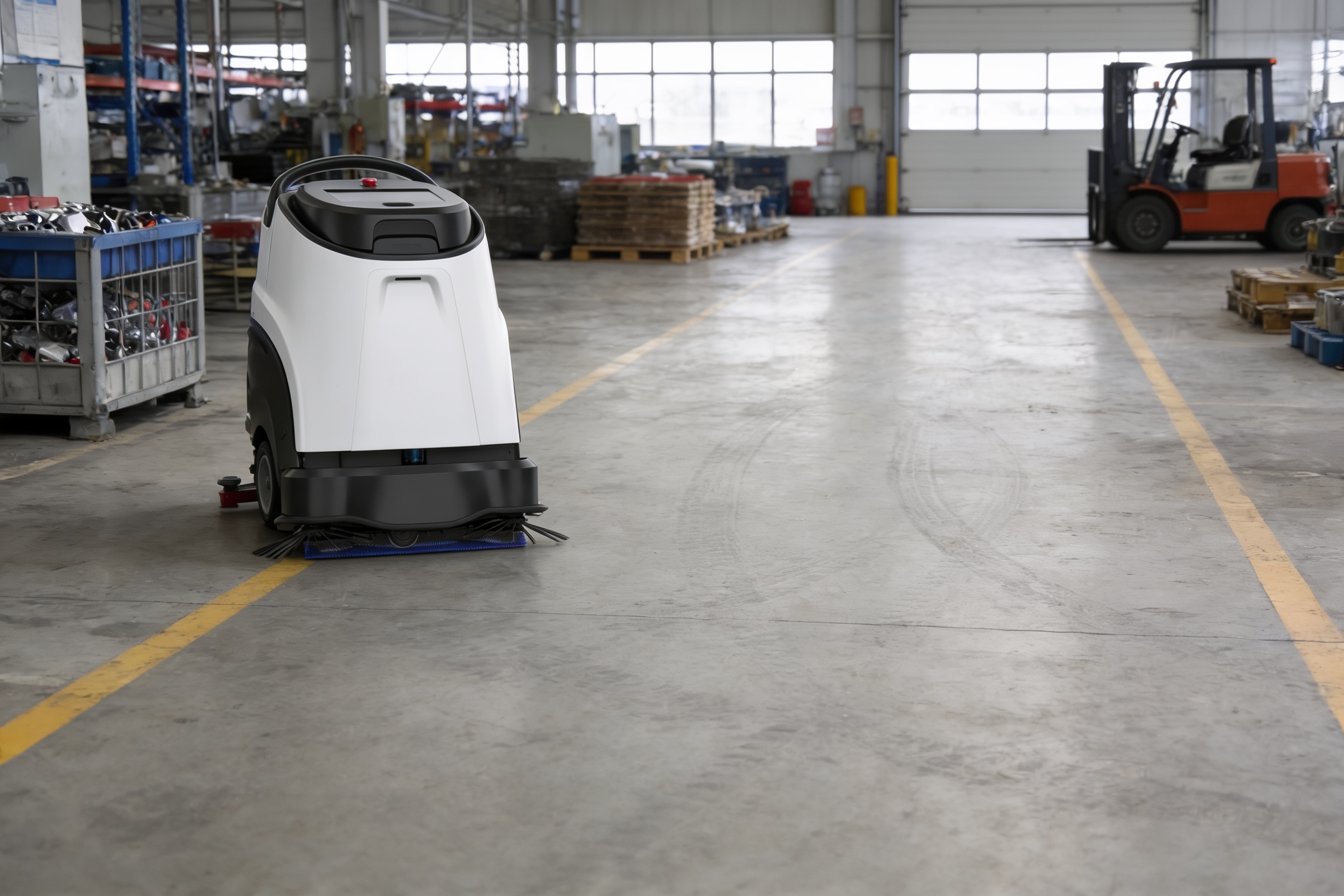
Those are 2018 figures, the most recent published numbers we verified in this review, so read them as a direction rather than a live rate. They still point at the same floor. A surface that is wet, littered or dusty at opening is a surface where people slip, and a robot that removes loose debris and leaves a dry floor helps. It cannot remove a spill it has not been told about, so spot checks in the morning still matter.
Ask in writing how the unit behaves around people and open doors during its run. Its route should stop for obstacles, and loading zones and doorways should be set in the route plan during the assessment.
How common are cleaning robots in facility work right now?
Adoption is growing from a low base. The Facility Cleaning Decisions 2025 survey reported that 21% of facility cleaning managers used robotic floor and carpet equipment in 2025, up from 7% of departments about three years earlier, as reported in trade coverage of that survey. An older baseline is the 2019 AACEM and ISSA survey, which found that 69% of facility and property managers said they had not used autonomous cleaning equipment.
The labor picture runs the same direction. According to the Bureau of Labor Statistics Occupational Outlook Handbook, janitors and building cleaners held 2,447,700 jobs in 2024, and employment is projected to grow 2% from 2024 to 2034, slower than average. A chain cannot count on hiring more cleaners to cover the closing shift, so the question becomes who runs the floor once the closer leaves.
The comparison below is candid about where a person still wins.
- Night coverage
Cleaning Robot
Runs the same route every night with no operator on site
Staff
Covers the floor only as far as the closing hour allows
- Loose bag shreds and twine
Cleaning Robot
Can snag on brushes and stop mid aisle
Staff
Picks up strands, bags and wrapped debris by hand
- Shelves, racks and high surfaces
Cleaning Robot
Does not clean them
Staff
Dusts and wipes them with a duster or cloth
- Unexpected stains and spills
Cleaning Robot
Cannot judge a spill it has not been taught to route around
Staff
Sees the spill, decides how to treat it and reports it
- Salt block residue
Cleaning Robot
Depends on the test result for your finish and chemistry
Staff
Can scrub a stubborn patch with the right approach and judgment
- Consistency
Cleaning Robot
Same route and pass count each night
Staff
Varies with fatigue, time pressure and absence
How much floor can one robot cover in a night?
Coverage figures vary by vendor and test condition. A manufacturer's listing for compact robotic floor scrubbers gives up to 15,000 square feet per hour, and up to 28,000 square feet per hour in medium to large facilities. A vendor case study for a retail property of about 880,000 square feet planned for roughly 15,000 to 18,000 square feet per hour. A vendor-reported listing gives up to 3,900 square meters per hour under unobstructed, flat test conditions. These are vendor figures, not independent time studies.
Real coverage runs below the listing rate. Recharging and refill stops take the unit out of its route. Obstacles force detours, and crowded fixtures or narrow aisles slow the pass. Vendor guidance we reviewed says facility size, floor type, traffic patterns and shift schedules all affect which scrubber fits, and that recharge stops reduce effective coverage.
The practical test is a run in your own store. Set the route on the actual floor, log the time, note every stop, and compare the clean area with the aisle area you measured. The number that matters is clean aisle area per night, not the rate on a brochure.
How does a robot lease work for a store chain?
We are a full-service commercial robot integrator for US businesses, and we are OEM-neutral. We choose the robot that fits the floor, lease it through financing, deploy and integrate it, train the staff, and service every unit under our service plan. Regional service engineers cover every state we service, so one partner handles the whole lifecycle instead of several vendors.
The cost comes in a quote after a free site assessment. We measure the aisles, check the floor finish, test salt block residue, time a sample route and review the closing routine before we quote. The lease is a fixed robot lease payment through financing, which spreads the cost over the lease term.
Read the quote closely. Confirm the lease terms, what the service plan covers, what deployment and training include for every store on your list, and whether a spare unit is available if one goes down.
Should a chain start with one store or all sixteen?
Start with one store. Pick the location with the most reliable floor, the simplest layout and a closer who will run the routine properly. Run the robot there for a set period, then review the clean-aisle record, the stops and the morning feedback before extending it to the other fifteen stores.
A phased rollout keeps risk low and makes the numbers honest. You learn what the closer must clear, where the route needs redrawing and how bag shreds behave on that finish. Each later store then gets its own assessment rather than a copy of the first route.
Set up backup coverage before the first night. If one unit goes down at a store, the aisles go back to hand cleaning, so a spare unit plan matters as much as how the first machine performs.
Frequently asked questions
Want a cleaning robot at your farm supply store sales floors?
Tell us about your site. We will recommend the robot, quote the lease, and keep it serviced.
Sources
- US farm supply store market estimate, 2025
- US Bureau of Labor Statistics, Occupational Outlook Handbook, janitors and building cleaners
- Bureau of Labor Statistics retail injury data, reported by a loss prevention trade publication
- US Bureau of Labor Statistics, The Economics Daily, 2019 retail injury rates
- Manufacturer product listing, robotic floor scrubbers
- Vendor case study, robotic scrubber in a large retail property
- AACEM and ISSA 2019 autonomous cleaning survey
- Vendor-reported listing, manual mopping and robot coverage rates