
The question, in the buyer's words
I run a 1,100-seat bingo hall on Chicago's southwest side and my floor crew is two people between sessions, with dropped daubers and spilled drinks slowing players; could a cleaning robot run the aisles between sessions without tripping anyone?
Key takeaways
- A cleaning robot can take the routine aisle sweep and scrub between sessions, but not spills, dropped daubers or player questions.
- Falls, slips and trips made up more than half of national injury cases with days away from work in 2024, so wet spills need a trained person.
- Chicago's normal December to February precipitation is 6.07 inches, so winter entrances need their own plan.
- Measure your own crew minutes on a normal session change before deciding, then bring those numbers to the free site assessment.
Can aisle robots work a Chicago bingo hall between sessions?
Aisle robots can suit a Chicago bingo hall between sessions if three conditions hold. The route has to stay clear of loose chairs, carts and cords at session change. The floor has to be one a scrubber can handle, and someone on your crew has to stay free for spills. Those conditions decide the answer for a 1,100-seat hall with two floor staff, more than any feature list does.
The robot is the wrong tool if your aisles double as storage between sessions, if players routinely leave bags or chairs in walkways, or if your floor is mostly carpet that needs a different machine. In those halls, the first job is layout and discipline, and the robot follows. The sections below cover the between-session work, labor and injury data, Illinois bingo rules, Chicago weather, and how to decide.
What does between-session cleaning involve in a bingo hall this size?
Between back-to-back sessions, a hall of 1,100 seats has a short window to clear dropped daubers, spilled drinks, paper and trash before players return. With two floor staff, each spill that needs a mop or a wet pickup takes a person off the rest of the floor. The work splits into two kinds: routine sweeping and scrubbing of open aisles, which is repetitive and predictable, and spill response, which needs judgment.
The routine part is what a robot can take. Your audit should time it: walk the route on a normal session change, note how many minutes the sweep and scrub take, and count how often a spill pulls a person off the route. Those numbers show how much floor work a robot could carry, and they are better evidence than any national average.
What do labor and injury data say about a two-person floor crew?
According to the Bureau of Labor Statistics, the Chicago-Naperville-Elgin metro area had 72,950 janitors and cleaners employed in May 2023, the latest metro figure we could confirm. That is a deep local labor pool, but it says nothing about how long your own night staff stay. Pull your turnover records for floor roles rather than relying on a general estimate.
Injury data points the same way. The Bureau of Labor Statistics reports 888,100 cases with days away from work across all industries in 2024, and 479,480 of them involved falls, slips or trips, more than half. For janitors, its snapshot based on 2015 to 2019 data shows a days-away rate of 157.4 per 10,000 full-time workers, against 86.9 for all occupations, and falls on the same level led with 4,930 cases.
Use this to decide where people must stay. A robot takes repetitive load off a tired crew, but it does not fix a slip on a wet aisle, so the spill protocol matters as much as the machine.
How do Illinois bingo rules affect the floor schedule?
Illinois bingo is governed by the Bingo License and Tax Act, codified at 230 ILCS 25. The text we reviewed is an older bill version, so confirm the latest wording with counsel or the licensing authority before you plan around any single figure from it. The passages we found include the following points.
Two points matter for a cleaning robot. The premises must come from a licensed or exempt provider, so check the paperwork before any equipment or layout change. Pull-tab and jar games may run on bingo premises under a separate act, which can mean more traffic, loose paper and tickets on the floor on those days.
Bingo has long been a large part of charitable gaming. A University of Georgia paper citing a 2002 national report estimated bingo at about 45% of charitable gaming spending. That is older data, but it points to a steady, scheduled business where the floor is busy on a predictable calendar.
- Older text reviewed: a limit of 25 games per day.
- Older text reviewed: bingo days limited to one per week, with exceptions.
- Older text reviewed: the license states the day, hours and location of play.
- Pull-tab and jar games may run on bingo premises under a separate act.
How does Chicago winter weather change aisle work?
Chicago's winter is wet and salty, and that changes the aisle route more than the calendar does. The National Weather Service gives a normal of 6.07 inches of precipitation for December through February in Chicago, so expect wet footwear and slush through the doors on many winter sessions. Wet entryways are a hard case for most floor machines, so the entrance needs mats and a person posted during the pre-session rush.
Treat the 6.07 inches as a normal, not a forecast. Your own winter logs are the better guide to how often the entrance needs attention. Salt and grit also wear brushes and sensors faster, so ask how cleaning and sensor checks fit into any service plan, and plan the winter route as its own schedule.
What can a cleaning robot do in the aisles, and what can it not?
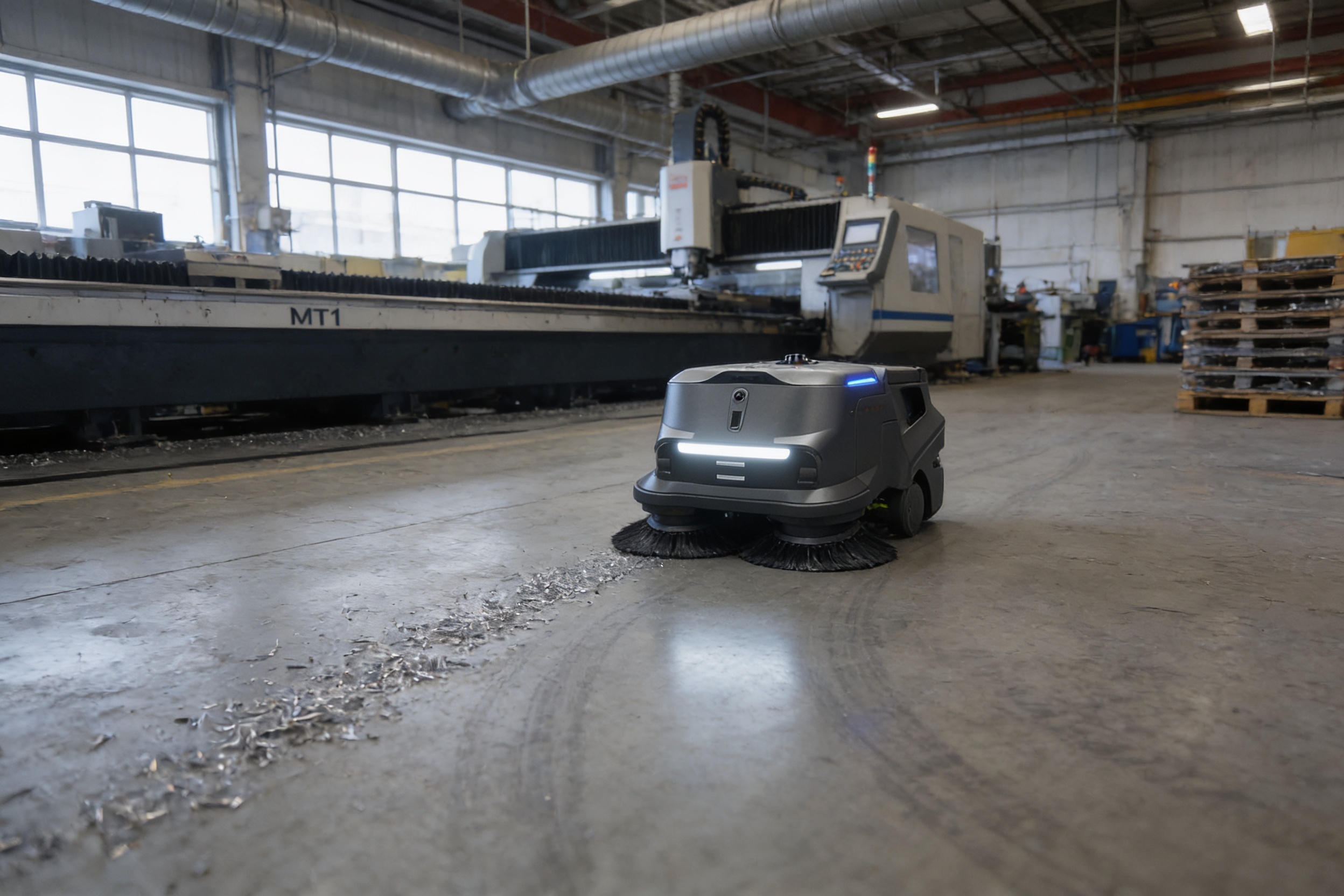
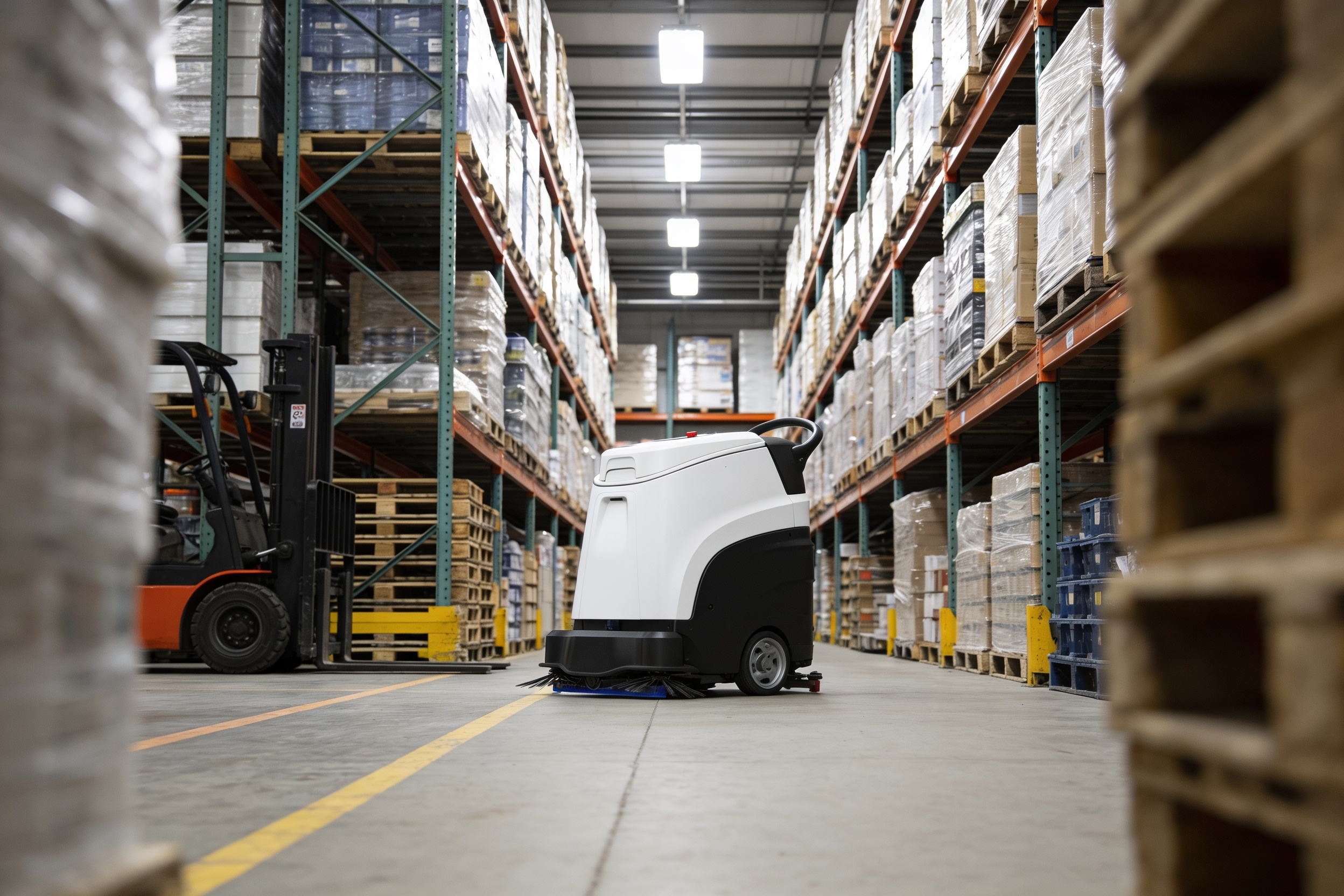
A cleaning robot follows a mapped route, avoids obstacles it can detect, and returns to its charger when the battery runs low. It can sweep or scrub the open aisle lines between sessions, which is the repetitive load your two staff carry now. Mapping is the key early step: the route has to be walked in the same condition players leave the hall, with chairs and carts in their usual places.
What it cannot do is judge. It will not reliably find a dropped dauber hidden under a chair, it will not respond to a spill it did not detect, and it will not ask a player to move a bag. Plan the split so the robot runs the routine sweep and your staff own spill response, dropped items and player contact.
- Routine aisle sweep and scrub
Cleaning Robot
Runs the mapped route on schedule, same lines every session
Staff
Adapts to the room, but tires and may skip lines on busy nights
- Liquid spills
Cleaning Robot
Does not respond to spills it cannot detect, and the route should stop
Staff
Judges the spill, cleans it, and can move players out of the way
- Dropped daubers and small items
Cleaning Robot
Unreliable under chairs and carts
Staff
Sees and picks up small items by hand
- Player contact and questions
Cleaning Robot
None, since it cannot talk to players
Staff
Answers questions, moves bags and keeps the aisle clear
- Winter wet entries
Cleaning Robot
Struggles with slush and wet floors at the door
Staff
Places mats, mops and checks the door during the rush
- Consistency between sessions
Cleaning Robot
Same route and timing every session
Staff
Varies with the crew's pace and breaks
- Coverage when a unit is down
Cleaning Robot
Depends on service response terms and any spare unit coverage
Staff
Covered by the other staff member, if that person is free
How does a robot compare with two staff, and where do people win?
The comparison is not robot against staff. It is what your two people do with the time the robot gives back. A robot runs the same route each session without tiring, but it cannot judge a spill, talk to a player, or move a chair in its way. People win on judgment and care, and the robot wins on steady, repeated coverage between sessions.
Adoption is still a minority practice, which is worth knowing when you talk to peers. The 2019 ISSA and AACEM autonomous cleaning survey contacted about 23,000 facility and property managers, got 250 completed responses, and found 69% of respondents had not used autonomous cleaning equipment. A 2025 Facility Cleaning Decisions survey reported 21% of facility cleaning managers using robotic floor or carpet equipment, up from 7% about three years earlier. We could not confirm a link for that 2025 survey, so treat it as reported, not checked.
Cost moves with the layout, the session schedule and how much crew time the robot actually replaces. Measure that time in your audit before any quote, because the lease payment depends on the site and service needs. The payment comes in a quote after a free site assessment.
How do you get a cleaning robot lease in place?
We lease commercial robots through financing. We pick the right robot across manufacturers, deploy and integrate it, train your staff, and service the unit under our service plan, backed by regional service engineers in every state we service. One vendor covers the whole lifecycle, so the hall has one contact instead of separate relationships with a robot maker, an installer and a repair shop.
The process starts with a free site assessment. We map the hall, measure the aisle route and time the between-session work with your crew. The quote follows that assessment and sets a fixed robot lease payment with service included. If you want to test the route first, start with one leased unit and ask how on-site dispatch and remote triage work for a Chicago location.
What should you check before you decide?
Before you sign off, confirm that the answer holds for your hall. Walk the route on a normal session change, count the loose items, time the routine work, and note the spills. Bring those notes to the site assessment and ask for the quote in writing with service response terms spelled out.
Check the Illinois rules with counsel, since the text we reviewed was an older version. Check your insurance and ask whether liability coverage is included in the lease. Finally, ask how the robot logs its routes, so you can show your board that the between-session cleaning happened as planned.
Frequently asked questions
Put a robot to work in Chicago.
We walk your site, learn the job, and recommend the unit that fits. Then we quote the lease, deploy it, and keep it serviced.
Sources
- Bureau of Labor Statistics, Occupational Employment and Wage Statistics, janitors and cleaners, Chicago metro, May 2023
- Bureau of Labor Statistics, Injuries, Illnesses and Fatalities, latest numbers
- Bureau of Labor Statistics, Injuries, Illnesses and Fatalities snapshot, janitors 2015 to 2019
- ISSA and AACEM autonomous cleaning survey, 2019
- University of Georgia, Paar, Nesbit and Clerkin, bingo and charitable gaming paper
- Illinois Bingo License and Tax Act, 230 ILCS 25
- National Weather Service Chicago, winter precipitation normal