
Key takeaways
- Drone surveys replace hand measuring of open piles, the work that pulls crews off paying work.
- The best-documented gain is time on pile measurement, and those figures are vendor-reported rather than independent.
- Drones cover open yards well but cannot see inside covered sheds or wrapped packs.
- A robot plus a smaller team keeps the flight plan, the count and the yard moving together.
- Start with a free site assessment before any lease quote is discussed.
How can drones help a lumber yard?
Drones for lumber yards are mainly a measuring tool. A drone flies a set route over the open yard, photographs the piles and the layout, and turns those images into a map and a volume figure for each stack. Work that otherwise takes a crew several days of walking and tape measuring is largely moved into flight time and a processing run.
The fit is clear. Stockpile counts done by hand pull crews off paying work, and the measuring itself is repetitive work over uneven ground. An aerial survey gives every pile the same pass, leaves a dated image record, and lets staff check a disputed count against photographs.
We are a US commercial robot integrator. We pick the right robot for the site, lease it through financing, deploy and integrate it, train the staff and service it nationwide. The same site first approach applies when a yard asks if aerial measuring fits, and the lease is quoted after a free site assessment.
What does stock counting look like at a lumber yard today?
Most lumber yards still count the way they always have. Crews walk the rows with a tape and a clipboard, estimate the height of tall stacks by eye, and type the numbers into the inventory sheet. Packs and sheet goods are heavy, so the measuring happens beside forklift lanes and around trucks being loaded.
The bigger cost is who does the counting. A count pulls a yard hand or material handler away from loading, receiving and will-call pulls. When the count runs long, outbound orders wait and inbound trucks sit in the drop lane.
Counts also drift when the yard is busy. Piles get moved between passes, and a manual count is only as consistent as the crew's pace and eye that day.
Material handling is a large part of the US workforce. According to the Bureau of Labor Statistics, hand laborers and material movers held about 6.95 million jobs in the 2024 data, with 4% projected employment growth for 2024 to 2034. That covers the broad occupation, not lumber yards, but it shows how central this kind of work is across the country. The same agency projects 1% growth for material moving machine operators over that period.
What are the main benefits for a lumber yard?
The first benefit is crew time. Measuring moves to the air, and the people who would have walked the rows go back to loading, receiving and delivery. The second is consistency, because every pile gets the same flight pattern and the same processing, which makes week to week comparisons more trustworthy.
- Crew hours return to loading, receiving and delivery.
- Each pile gets the same pass, so counts compare cleanly across weeks.
- A dated image record lets staff check a disputed count against photographs.
- Stacks are measured from the air, so no one has to climb or stand on unstable piles, a point several vendors make without giving a figure.
How does the drone work there day to day?
A survey starts with a flight plan built over the yard map. Ground control markers go down at fixed points so the images tie to real coordinates. The drone flies the planned route at a set height, and the images are processed into a map and a volume estimate for each pile.
Before launch, the operator checks wind, rain, and the airspace rules that apply where the yard sits. Flights are timed for quiet windows, when trucks and people are clear of the flight path, and the crew knows when the drone will be in the air.
The output goes into the same count sheet the yard already keeps. The change is in how the number is produced, not in how the books are kept.
Timing is part of the plan. Early morning often gives calmer air, and a yard that loads at dawn can fly before the first truck arrives. The crew should schedule the survey around the receiving window so the drop lane is clear while the drone is up.
Which parts of the yard does it cover?
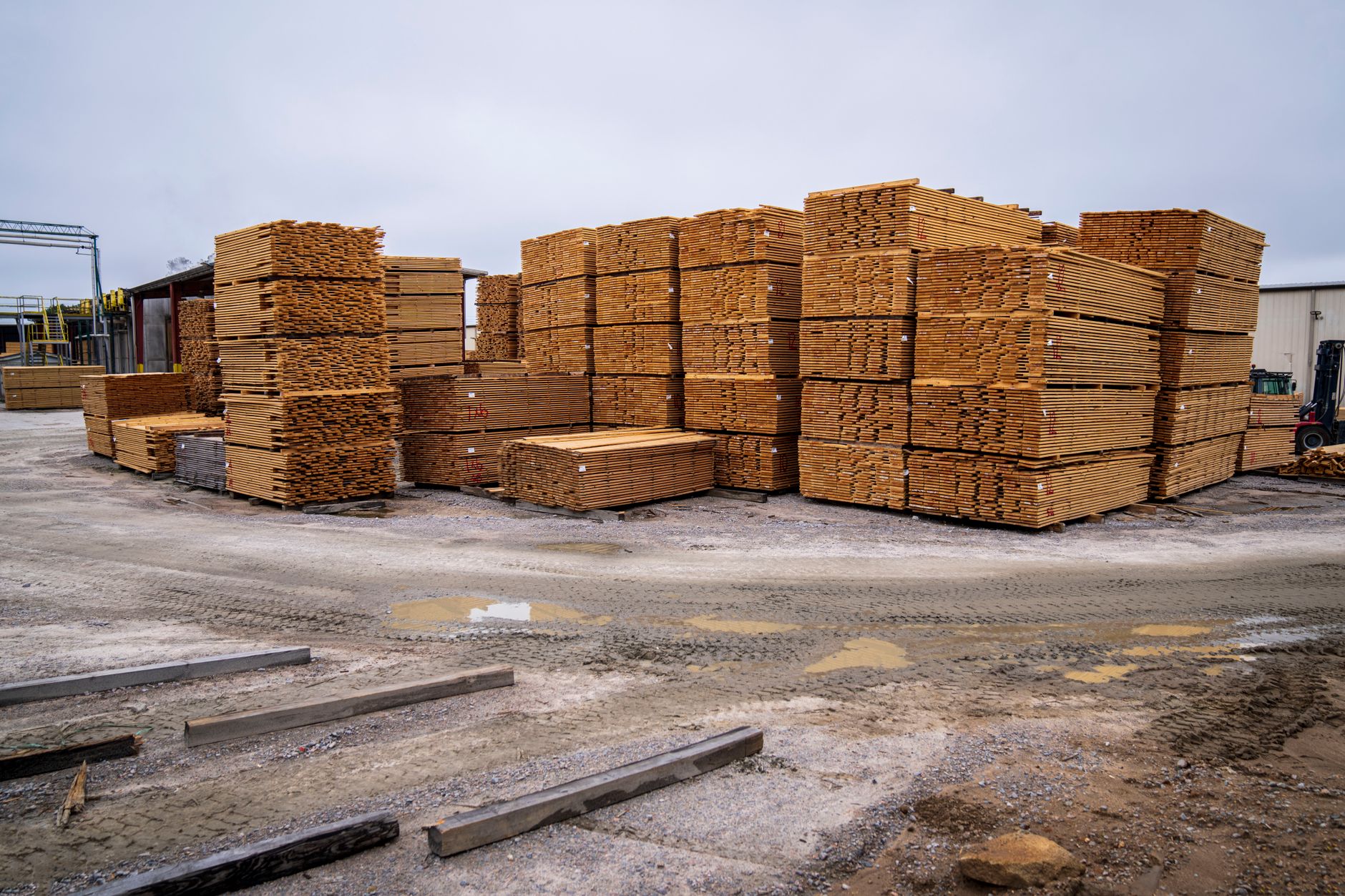
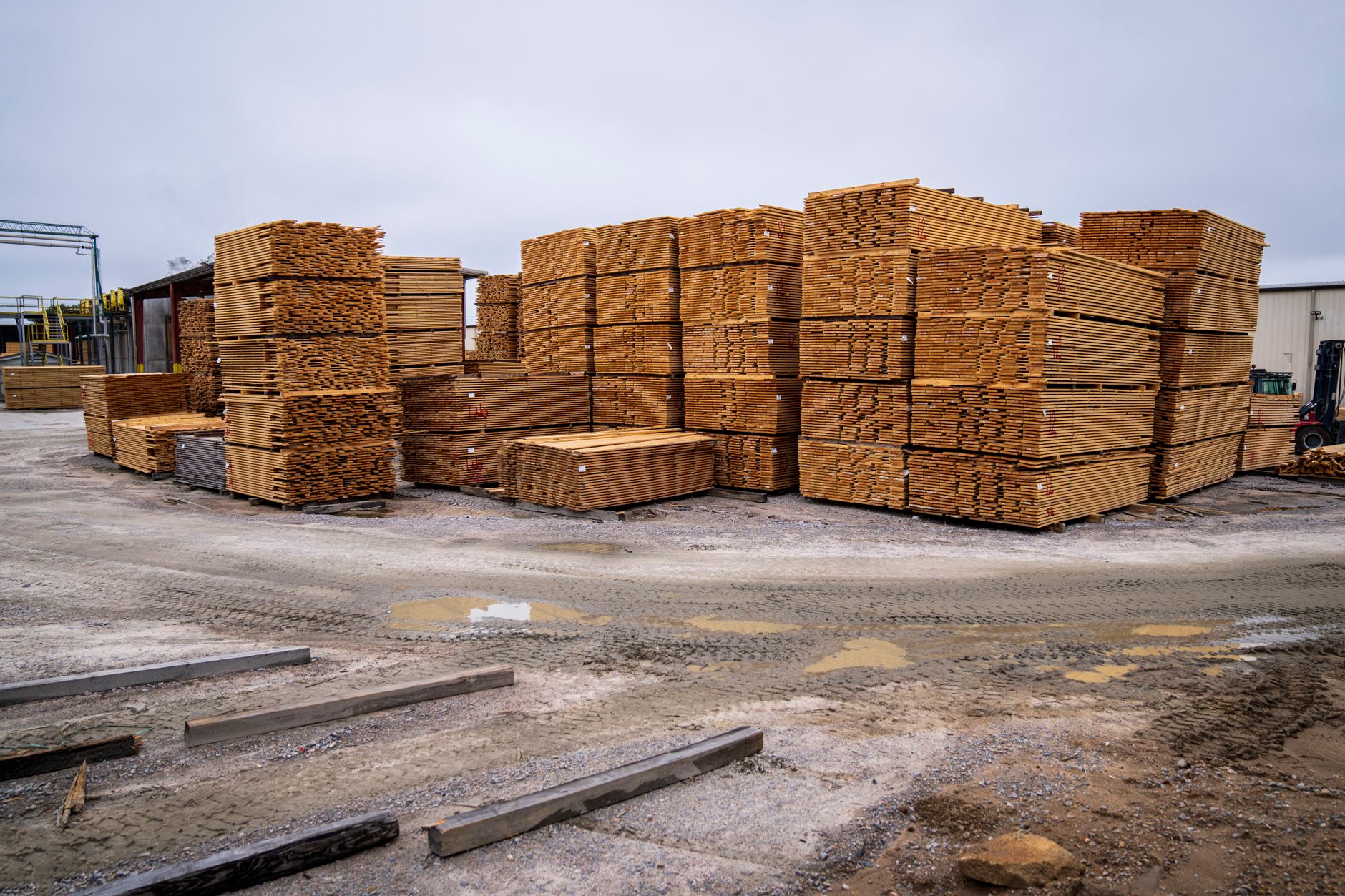
Open stockpile areas are where drones for lumber yards earn their keep. Dimensional packs, sheet goods stacks, the drop yard and the delivery lot all lie in open air, and long rows are covered in a few parallel passes.
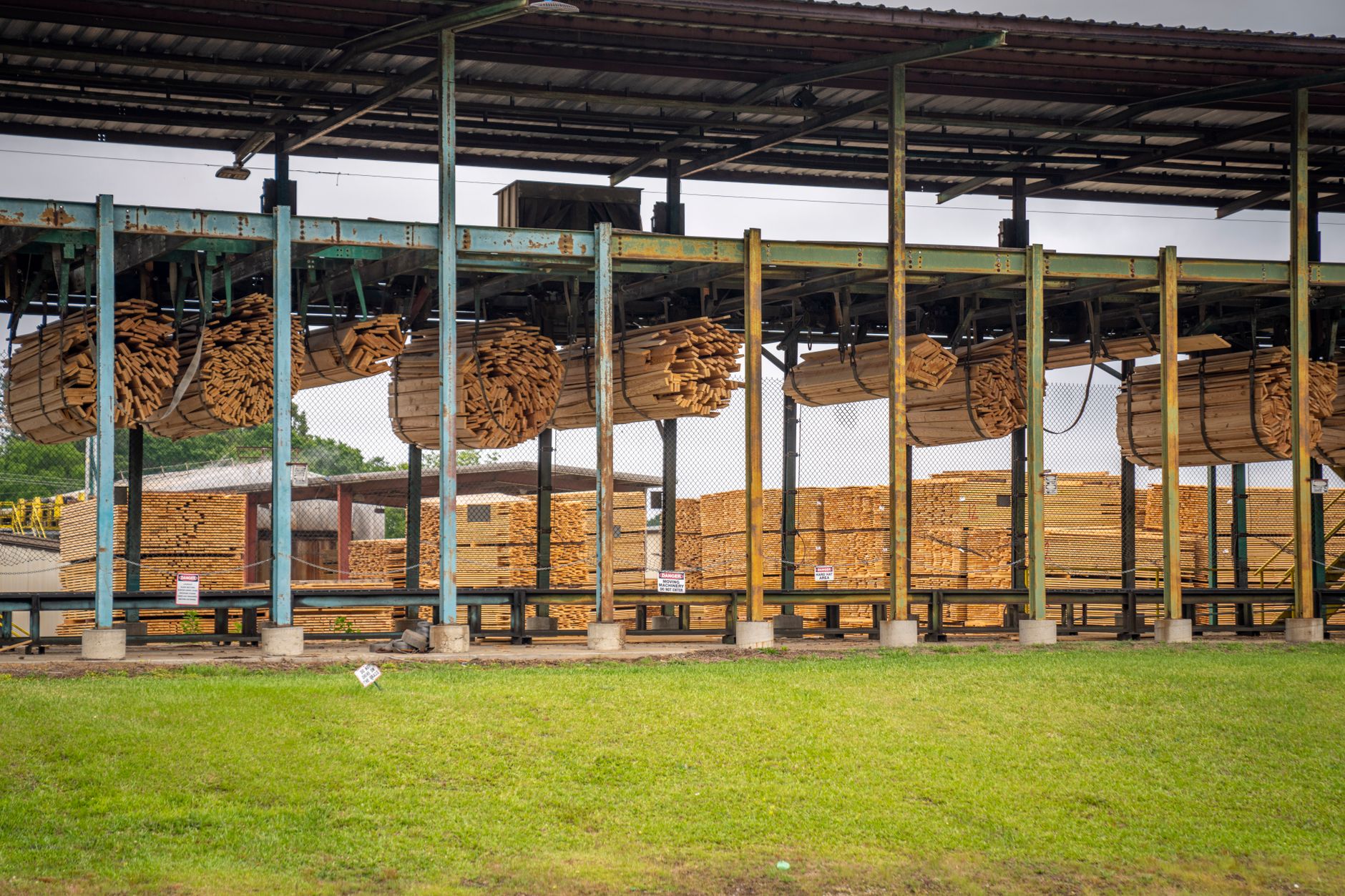
Covered sheds and tight rack storage are a weaker fit. Aerial imaging sees tops and edges well, but it cannot see inside wrapped packs or between tightly stacked rows under a roof. Those areas still need a hand check or a ground based count.
The areas below are the ones a yard usually maps first.
How does it work alongside the existing staff?
A drone does not replace the yard crew. It takes over the flying and the image work. The crew still sets the flight window, clears the path, moves material out of the way, checks the output against the invoice, and handles the covered or cluttered stock. The job is a robot plus a smaller team, never a robot alone.
One person on staff should own the flight plan and the ground markers, and that person needs to know where the piles sit and how the yard runs on a busy day. Training covers the flight checks, the markers, and how to read the output. We include staff training in deployment and go live support, then service the unit nationwide.
Over time, the staff who fly the mission often become the people who know the yard best, because they learn where piles shift and where counts disagree. That knowledge stays in the yard.
What drives the savings in hours and labor?
Savings come from hours, and the size of the gain depends mostly on how long the hand count takes now. According to a vendor blog, conservative pilots often show 30 to 40% fewer hours in targeted zones. That is a vendor claim, not a measured study, so use it as a planning range, not a promise.
The bigger wins are often less visible. Fewer counts run late, fewer inbound trucks wait in the drop lane, and fewer orders hold while a crew is out walking rows. Those gains show up in the schedule, not on the count sheet.
Hours saved on counting also depend on how often you count. A yard that counts weekly gets more return than one that counts once a quarter, so the pilot should test the schedule you actually run, weekly or quarterly.
What can a drone not do?
The drone cannot see through covered sheds, wrapped packs or dense rack storage. A count of individual boards inside a bundle is not reliable from the air, and those spaces need a hand check.
Weather limits the flights. Wind, rain and fog stop or degrade flights, so the number of usable flight days depends on your region and season, and a yard in a wet area will schedule around it.
Volume numbers depend on ground control. Without good markers, the output drifts, which is why the accuracy claim is conditional on high-precision ground control. Flights over an active yard also need a plan for people and trucks on the ground.
Results also need a human check against the books. A survey shows what is on the ground, not what was invoiced, so a mismatch is a question for the team, not a verdict on the software.
How do we get started?
Start with a walk of the yard and a list of the stacks that take the longest to count. Bring that list and your existing count routine to a site assessment. We map the yard, check the airspace and flight limits, and show where a drone fits and where a hand count stays.
Robots are leased through financing, and the lease is quoted after a free site assessment. Many operators start with one leased unit and a defined set of piles, run the pilot through several count cycles, and then decide the scope based on their own hours.
Our work covers deployment, integration, staff training, go live support and service nationwide. That gives a clear picture of what a yard should expect before any lease is signed.
The market is large. According to a US Census economic census table for building material and garden equipment dealers, 93,117 establishments had payroll, and the building material and supplies dealers subgroup shows 71,916. The archived page's year label is uncertain, and the table does not isolate lumber yards. A market research estimate puts lumber and building material stores at 34,448 for 2026, a modeled figure rather than Census data.
Frequently asked questions
Want a drone at your lumber yard?
Tell us about your site. We will recommend the robot, quote the lease, and keep it serviced.
Sources
- Bureau of Labor Statistics, hand laborers and material movers
- Bureau of Labor Statistics, material moving machine operators
- US Census economic census table for building material and garden equipment dealers (archived)
- Market research estimate for lumber and building material stores
- Vendor case study on stockpile measurement at a wood products mill
- Vendor claim on stockpile survey accuracy
- Vendor blog on warehouse drone inventory and hours
- Vendor page on stockpile materials and drone asset management