
Key takeaways
- Repeat tote and pallet moves between receiving, storage and shipping are the clearest fit for autonomous mobile robots.
- Published figures for pharmaceutical sites are thin, so count your own trips, distances and waiting time first.
- The robot takes the trips while your staff keep picking, inspection and exception handling.
- Hours saved come from fewer empty legs, less waiting and steadier flow, and they should be measured on your own floor.
- Start with a free site assessment, then a lease quoted through financing.
How can autonomous mobile robots for pharmaceutical warehouses help?
Autonomous mobile robots for pharmaceutical warehouses help most with one kind of work: moving totes and pallets between receiving, storage and shipping. The robot takes the repeat trip from one controlled zone to the next, so pickers and forklift drivers spend more of the shift on tasks that need a person, such as checking lots, handling exceptions and building orders.
The benefit is measured in hours, not promised as a percentage. Published figures for pharmaceutical sites are thin, so the first step is counting your own trips, travel distances and waiting time for a typical shift. Where those counts show long empty legs and staff waiting for a tote or pallet, the robot has room to help.
We are a US commercial robot integrator. We pick the robot that fits your site, lease it through financing, deploy and integrate it, train your staff and service it nationwide. The start is a free site assessment, and the lease payment comes in the quote after it.
What does moving totes and pallets take from your shift today?
Warehousing is a large employer. According to the U.S. Bureau of Labor Statistics, about 1,841,700 people were employed in warehousing and storage in May 2026, seasonally adjusted, and about 1,837,400 in August 2026 in a preliminary estimate. The same BLS page lists 23,539 private-industry establishments for the third quarter of 2025. Your labor pool is shared across a sector that size, so every hour lost to wandering or waiting is an hour you cannot put on picking, inspection or dock work.
Hand moves make up a large part of that work. According to the BLS occupational outlook page, about 2,988,900 jobs fall in the hand laborers detailed occupation within the material moving group, based on May 2024 data. Those jobs are built around lifting and carrying, the same repeat moves a pallet or tote robot is meant to take off the floor.
Equipment time is the other half of the picture. A fleet software vendor's article on material handling efficiency puts manufacturing forklift utilization at about 30 to 55 percent, which means a large share of each shift is not spent on productive moves. That is a general manufacturing range, not one from a pharmaceutical site, so answer it from your own forklift logs.
What are the main benefits for a pharmaceutical warehouse?
The first benefit is fewer empty trips. A fleet software vendor's article on forklift travel says empty travel, also called deadhead, can run 35 to 50 percent of total travel time. A robot that runs set routes between receiving, storage and shipping can cut the empty return legs a person would otherwise make by hand, though your own trip logs decide how much.
The second benefit is steadier flow. According to a warehouse equipment guide, travel time above 30 to 40 percent of cycle time is a trigger for considering rider pallet jacks. Autonomous moves address the same repeat-travel problem, so that trigger is a useful test for the lanes in your building.
The third benefit is less waiting. A tote that arrives on time is the simplest gain on a site where pickers depend on steady replenishment. Pharmaceutical storage often runs under documented procedures, and a route that follows the same path every time is easier to describe and review than a verbal dispatch.
Evidence from outside pharmaceuticals is encouraging but not decisive. A logistics operator's case study reports a 50 percent productivity increase and a 75 percent reduction in overtime after deploying autonomous mobile robots. Those figures are reported by the case study itself and come from a non-pharmaceutical operation, so they show what is possible, not what your site will do.
How does an autonomous mobile robot work day to day?
Each robot follows a planned path through the building and carries a tote or pallet from one point to another. Your warehouse system or a dispatch screen assigns the move, so a task that used to be a radio call or a handwritten sheet becomes a queued job. The robot accepts the job, travels its route and reports when the move is done.
Routes stay inside the zones you define. The robot slows and stops for people, and it waits at doors, lifts and staging points until they are clear. Routes and stop points are set during site mapping, so the robot follows the paths your staff already use.
Most of the daily work is supervision. Staff watch the queue, clear blocked lanes, handle a damaged pallet when one turns up and call for service when a unit needs attention. The robot does not decide what ships. It moves what the system tells it to move.
Each move leaves a record with its start time, end time and the zone served. Those records are the source of the hour counts you will use to judge the robot, so set up the logs before go live rather than after.
Which areas of a pharmaceutical warehouse does the robot cover?
The most useful work is the transfer between zones rather than the picking itself. Robots fit best where material moves on a predictable path with a clear start and end point, and where people already walk the same lane many times in a shift.
The zones below are the usual starting points. Your site assessment confirms which ones are worth starting with and which need the floor, doorways or lanes changed first.
Two things decide whether a lane is a good first zone: how often the same path repeats, and how much of the floor a person must cross to finish it. Lanes that run in a straight line between two fixed points are easier to map and easier to watch than lanes that change with every order.
How do robots work next to your existing staff?
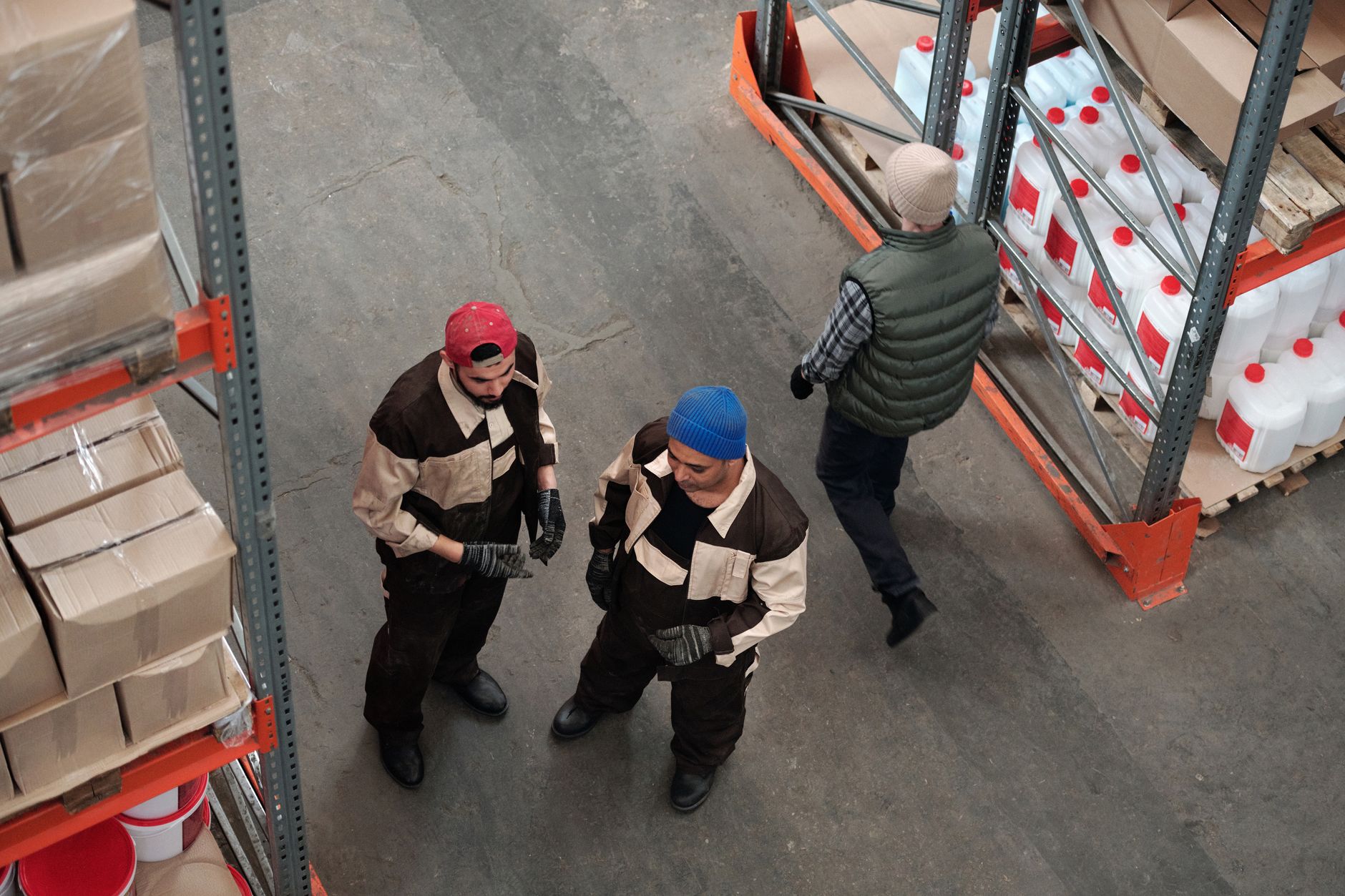
A robot does not replace the team. It takes repeat moves so people can spend more of their time on picking, inspection, returns and exceptions. A typical plan keeps the core staff on the floor and changes the mix of their hours, with robots covering the legs that used to fill a forklift driver's or picker's day.
Plan the shift around coverage. Each robot needs someone who can watch the queue, clear a blocked lane and call for help. Train at least one person per shift on the screens and stop procedures before go live, and cross-train so no single person is the only one who knows the route map.
A manual fallback matters too. When one unit is down, the moves that matter most still need a path, so keep a written plan for them. Nationwide service keeps the robot working, but the building still needs people who can keep product moving on the bad days.
What drives the hours and labor savings?
The savings come from a few measurable things: how many moves a shift makes, how far each move travels, how long each move waits, and how much of the shift goes to travel rather than work. Log those four for a normal week before anything else. That log, not a general benchmark, should set the target.
Use published ranges only as a sanity check. Empty travel at 35 to 50 percent of total travel time, a rider pallet jack trigger at 30 to 40 percent of cycle time and forklift utilization at about 30 to 55 percent all point to the same place: travel that does not move product. If your log shows a similar share, a robot has room to reduce it.
Track hours on repeat moves before and after go live, and keep the same measure each time so the comparison is fair. Results will vary by building, shift pattern and layout, and the figures from your own site are the ones that matter.
What can an autonomous mobile robot not do?
It cannot fix a layout that does not suit it. Narrow aisles, uneven floors, blocked doors and frequent layout changes make routes harder to plan and reduce its usefulness. A site assessment checks these conditions before anything is leased.
It does not handle every task. Robots carry totes and pallets along set paths. They do not do complex picking, read lot labels by eye or make the call when a pallet looks wrong. Those jobs stay with your people.
It does not remove the need for documentation. Any change to how material moves should be recorded in your own procedures and reviewed against your quality system. The robot does not do that work for you.
How do you get started with a robot lease?
Start with a free site assessment. We walk the building, map the routes and identify the lanes where repeat moves take the most hours. The findings show how many robots fit, which zones to start with and what the integration will involve.
Then comes the lease. Robots are leased through financing, and the lease payment comes in the quote after the site assessment. The quote covers the robot, deployment and integration, staff training and nationwide service, so you can set it beside your own hour log.
A common first step is a pilot with one leased unit in one zone. That lets your team learn the queue and the stop procedures and gives you real hour numbers before you widen the fleet. Autonomous mobile robots for pharmaceutical warehouses earn a bigger role only after your own data supports it.
Frequently asked questions
Want a warehouse robot at your pharmaceutical warehouse?
Tell us about your site. We will recommend the robot, quote the lease, and keep it serviced.
Sources
- U.S. Bureau of Labor Statistics, warehousing and storage
- U.S. Bureau of Labor Statistics, hand laborers and material movers
- Fleet software vendor article on material handling efficiency
- Fleet software vendor article on reducing forklift empty travel
- Warehouse equipment guide on rider pallet jacks
- Logistics operator case study on mobile robotics