

Key takeaways
- Hand hauling between staging and install areas is the job a mapped robot route handles best.
- Staffing is hard to fill, so keeping technicians on skilled work matters.
- Vendor-reported figures on routine tasks point to hours saved, but measure your own hauling time.
- A robot plus your existing team is the working model, never a robot alone.
- Start with one leased unit on one route, with the quote following a free site assessment.
Can autonomous mobile robots for data centers cut hand hauling?
Yes, for one well defined job. Autonomous mobile robots for data centers are most useful on the trip between staging and installation. A robot carries a cart of racks, servers, switches or spare parts along a route it has mapped, so a technician no longer pushes that load down a corridor, through a door and into an install hall.
The benefit comes from the hauling, not the skilled work. The robot does not rack, cable, test or commission equipment. It moves the heavy and awkward loads between rooms, which keeps the people who know the systems on the tasks that need their training.
We are a US commercial robot integrator. We pick the robot for the site, lease it through financing, deploy and integrate it, train your staff and service it nationwide. The first step is a free site assessment, where we map the routes and measure the loads before anyone discusses a quote.
What does hauling look like at a data center today?
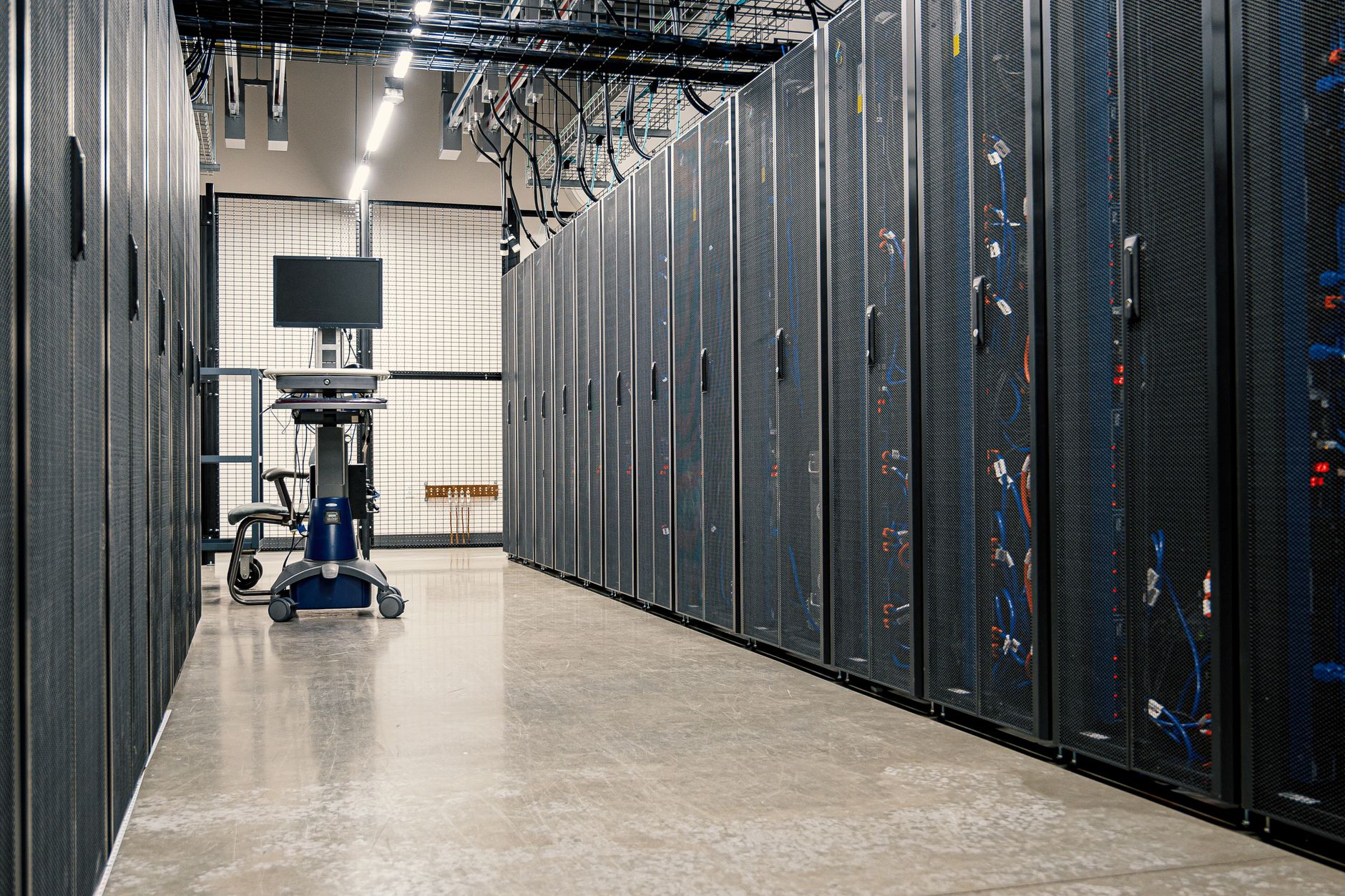
Equipment moves by hand at several points in every build and refresh cycle. It arrives at a dock, goes into a staging room, waits for a window in the install hall, then travels the same corridors again. Each trip is done with a hand truck, a dolly or a pallet jack, usually by the same people the install itself needs.
That mismatch is the problem. The hauling is physically demanding and repetitive, and it competes with the rack, cable and test work that sets the schedule. When a crew is short, moving equipment is often what slips, and installs slip with it.
Staffing makes this harder. A 2026 global survey of more than 800 data center operators, as summarized by a workforce article, found that more than half of respondents have difficulty finding qualified candidates for open positions. An earlier survey, also summarized secondhand, found that nearly two-thirds of operators report difficulty retaining staff, finding qualified candidates, or both. When skilled people are hard to hire, they should be on skilled work, not on carts.
The sector is large. According to an estimate based on November 2025 figures, the US has 5,427 data centers. A tracker that counts only facilities with reported data lists 614 operating and 926 planned, so the exact number depends on the definition used.
What are the main benefits for the operator?
The most direct benefit is fewer manual carries during tight install windows. A robot takes a loaded cart on the same route each trip, so the install crew receives equipment when it is needed, not when someone is free to push a cart.
Route consistency matters as much as speed. A mapped path is the same every time, which makes the process easier to plan, check and train. A new hire learns one route rather than a set of habits that vary by person and shift.
The size of the benefit depends on how much of your week is hauling. A site that moves equipment every day gets more from a robot than one that moves a few carts a few times a month. The site assessment is where we measure that, so the decision rests on your floor rather than a general claim.
- Fewer hand carries during tight install windows
- The same route every trip, easy to schedule and review
- Less lifting and pushing for technicians in long corridors
- Skilled hours returned to racking, cabling, testing and commissioning
- Staging and install work that holds its schedule when a shift runs short
How does the robot work there day to day?
During the site assessment we map the routes between the loading dock, staging rooms, freight elevator, install hall and parts storage. Doors, elevator stops, charging points and no-go areas go onto the map. The map is what lets the robot travel the same path without someone guiding it.
A typical shift starts with a load request. A technician at a staging room places a cart on the robot, confirms the destination and sends it. The robot drives its mapped route, stops for people in the corridor, waits at doors when they are closed, and delivers the cart to a marked bay in the install hall.
When the job is finished, the robot returns to staging or its charger. Charging is planned between trips so the unit is ready for the next window. Staff handle the daily checks on carts and sensors, and our technicians handle anything beyond the team's routine.
Which areas of the building does the robot cover?
The robot works in the transport paths of the building, not inside the racks themselves. Most of the value sits in the zones below, where equipment waits, moves and gets checked before it goes live.
Coverage is set during the site assessment. We confirm which zones the route reaches, which doors need an access arrangement, and which areas stay staff only. A path that cannot be mapped cleanly, such as a passage that is often blocked or a floor that is not level enough for the unit, is flagged before anything is installed.
How does the robot work alongside existing staff?
The robot does not replace the install team. It takes over the cart trips, while the people who know the systems keep installing, testing and commissioning. A site with the robot still needs its technicians, its leads and the staff who manage the schedule.
The usual result is one robot working alongside a smaller hauling crew, with the same installation staff on the skilled work. Staff learn to load the cart, read the robot's status, handle a stop and log a problem. Training happens on site during go live support, so the first week does not depend on one person.
Plan for a robot plus a team, never a robot alone. Someone still signs off on what moves, when and where, and that person is what keeps the route working after the first month.
What drives the savings, and what do the numbers show?
Savings come from the hours of hand hauling the robot takes over, multiplied by how often the trip happens and how much skilled time is freed. Those hours are the figure to measure. We would rather measure them on your floor than offer a generic number.
Published figures are mostly vendor-reported and about other tasks. A technology news report on one vendor's data center inspection robots says the vendor expects them to free staff from one to two hours per day on routine tasks. That is inspection, not transport, so read it as a sense of scale rather than a forecast for hauling.
Transport examples are large in scale but thin on hours. A hyperscaler customer story describes a deployment of more than 90 tug robots moving parts and heavy equipment, and says rack moving and repetitive tasks shifted to robots. The story gives no hours saved, so it shows the scale of use but not the savings.
Load size is another measure. A transport robot from a separate vendor is described as carrying loads of up to 400 kilograms, moving heavy servers and assets at a data center in Korea, according to that vendor's blog. Load ratings like that decide which equipment can be moved in one trip.
Labor savings are best read as hours per week, per install window and per technician. The quote is built around those hours, not around a general promise.
What can the robot not do?
It cannot install, rack, cable, power or test equipment, and it does not make the install schedule faster on its own. It moves loads between points on a map. The skilled work stays with your team, and a robot cannot close a gap in the install crew's skills.
It is also limited by payload and route. Each unit has a rated capacity, and a route must be clear and mapped. Loads over the rating, doorways it cannot pass, or areas the site assessment rules out stay with hand handling.
Staffing shortages are real, and a robot can reduce the hauling load on the people you have. It does not replace a hiring plan.
How do you get started?
Start with one leased unit on one route, usually the staging to install trip where the hauling is heaviest. The robot is leased through financing, so the team does not have to fund the equipment up front. The payment comes in the quote, and the quote follows a free site assessment.
The assessment covers route mapping, load sizes, door and elevator access, charging locations and the hours of hand hauling you want to replace. We recommend a robot that fits the floor, then deploy and integrate it, train the team and provide go live support.
After go live we service the unit nationwide, with on-site dispatch when a hardware issue needs a technician and remote triage for software and route problems. Once the first route runs well, adding a second route is a planning conversation, not a new project.
Frequently asked questions
Want a warehouse robot at your data center?
Tell us about your site. We will recommend the robot, quote the lease, and keep it serviced.