
The short answer
Drone ROI for university campuses comes mainly from inspection hours that no longer need a lift, scaffold or ladder crew, so the return grows with the number of roofs, facades and mechanical yards a campus checks on a regular cycle. The savings range on this page is priced on the government wage data for the nearest kind of walk-through work, less a fixed lease payment that we quote after a free site assessment. Treat the range as a planning estimate until a pilot on your own buildings confirms the hours.
Key takeaways
- Campus returns come from inspection hours that no longer need a lift, scaffold or ladder crew.
- The savings range depends on roof count, inspection cadence and how much of the work a drone realistically takes.
- Falls from height are the strongest safety case, and roofs are where that risk concentrates.
- A pilot on a few buildings tests the hours before you commit to a full campus rollout.
- The exact range and lease payment come from a free site assessment, not from this page.
Run the numbers for your site
Pick your city or state for a real regional number - we use the real BLS wage there. (On the live site this auto-detects from your location.)
What do you want to automate?
The unit runs the repetitive patrol and watch; guards handle the judgment calls.
Drone ROI for university campuses: what the return looks like
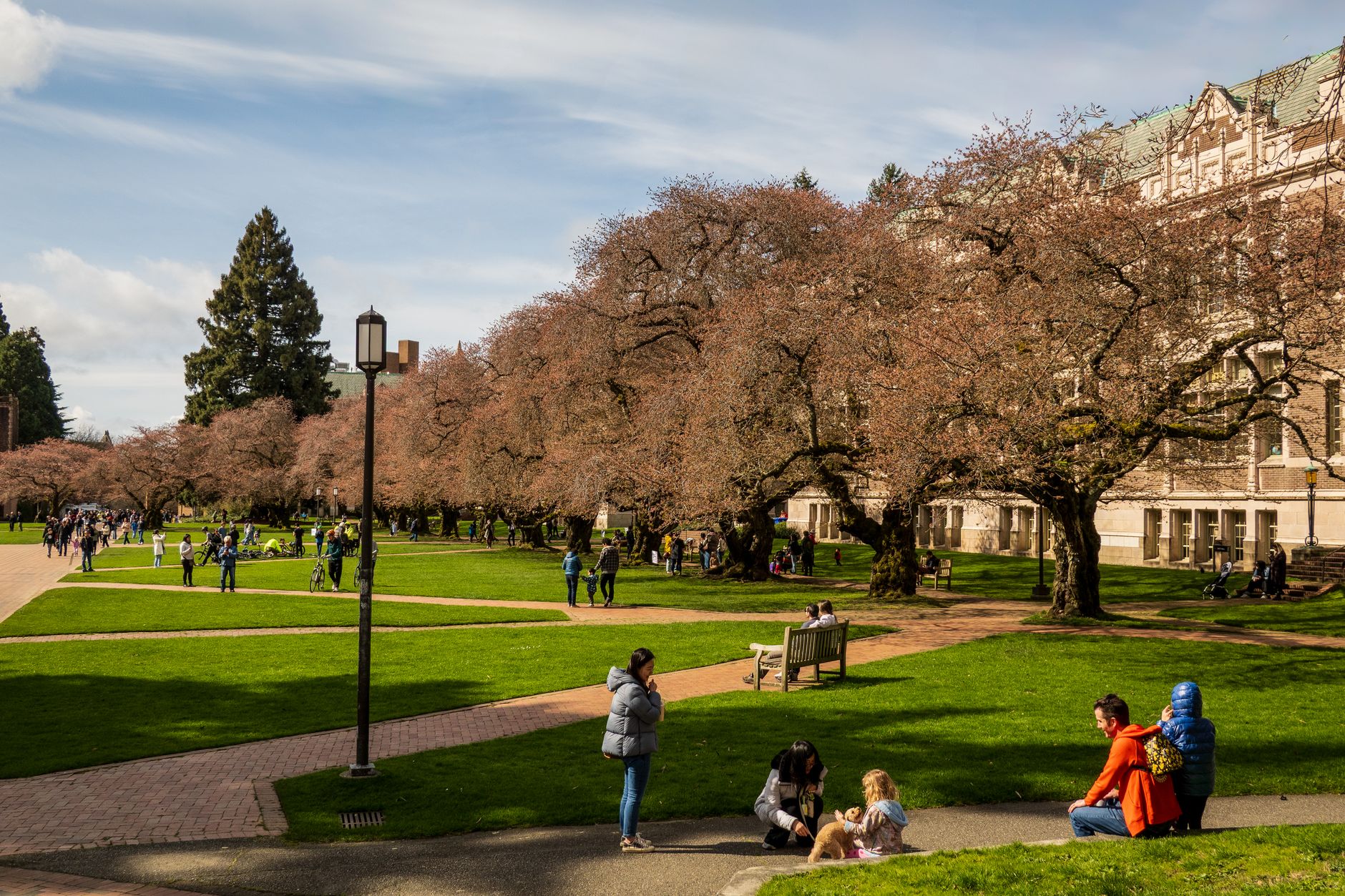
The US has a large base of campuses to apply this to. According to NCES Digest Table 105.50, as reproduced on an NCES FastFacts page, 3,931 Title IV degree-granting institutions reported for the 2020-21 academic year, down from 4,599 in 2010-11. Of those, 1,294 were two-year institutions and 2,637 were four-year. The count is of institutions, not individual campuses, and one university may run several sites, so the number of roofs and yards at each site drives the return more than the institution count does.
The return is site-specific. A campus with many low roofs, several older masonry facades and a central mechanical yard has more inspection hours to take over than a single compact building. Inspections on campuses are typically done by facilities staff or contractors who reach roofs and facades with lifts, scaffolding or ladders. A drone changes how the survey is done, not whether it is done, so the savings come from access hours avoided and from faster survey cycles.
Why do campus roofs carry the most fall risk?
Roofs are where work at height concentrates. The Roofing Contractor summary of the BLS Census of Fatal Occupational Injuries report says roofing had 134 workplace deaths in 2023, up from 124 in 2022, and most were from falls, slips or trips. A paper hosted by the National Science Foundation states that a fall from height remains the most common cause of serious work-related injuries and deaths in construction, and it names roofs, scaffolds and ladders as work-at-height settings.
The fall pattern has not improved. According to a CPWR analysis of BLS data reported by NRCA, from 2011 to 2022 fatal falls to a lower level in construction rose 52.7%, and the rate rose 13.3%. The same CPWR report, as summarized by NRCA, found that 83.4% of fatal construction falls occurred from heights above 10 feet. Roofs usually sit well above that line, so every survey done from an edge or a lift carries that exposure.
An older CDC summary, not dated in the search result, states that roofers have 10 times the rate of fatal falls of all other construction occupations combined. That figure is dated, so treat it as context rather than a current rate.
Median hourly wage, Security Guards
$4,317
Monthly cost of one full-time worker, at the median wage plus payroll costs (an estimate, not a quote).
Where does the return come from on a campus?
The return comes from four places. The first is access work avoided: a drone flies the roof and the upper facade without a lift, scaffold or ladder being set up. The second is crew time: fewer people go up, so fewer people are exposed and fewer hours go to mobilizing. The third is survey speed, since one flight covers a roof or yard in a single pass where a crew works in sections. The fourth is records, because each flight produces imagery that can be compared from one cycle to the next.
Mechanical yards are often the easiest win. Condensers, exhaust stacks and pipe runs are visible from the air, and the same flight can check them along with the roofs. Facades are different. Our research did not find published figures on facade or scaffold drone inspection, so the facade hours on your quote should come from your own pilot, not from a general claim.
Where the labor sits matters for the math. On this page the calculator prices the hours at the wage of Security Guards, the nearest published job with walk-through and watch hours. Campus inspection is not security work. If your surveys are billed by a contractor, use that contractor's hourly rate in your own comparison.
How does the savings math work?
The structure is simple. Take the hours of inspection work the drone takes over, multiply by the wage basis, apply the share of that work a drone realistically takes, then subtract the fixed lease payment. Access costs avoided count only where they really stop. The range comes from low and high values for each input, which is why the page shows a range rather than a single figure.
The hour count is what your site assessment fixes. The calculator uses the government wage data on this page for Security Guards. The May 2023 BLS table, the most recent official table we could confirm, counted 1,202,940 people employed in that job. The wage sets the value of each hour. It does not claim that a campus pays guards to inspect roofs. The share input matters just as much, because a drone rarely takes the whole survey. Flights may replace the roof and yard passes, while close-up checks of a cracked joint still need a person on a lift.
The lease side is a fixed lease payment, quoted after a free site assessment. We do not state the payment here because it depends on the unit, the term, the number of sites and the service plan. Compare that payment against the hours it replaces over a full inspection cycle, since roofs are checked on a schedule and a single visit tells you little.

What changes the number up or down?
Four things move the range most. Roof and yard count comes first, since the return scales with the surface checked each cycle. Inspection frequency is second, because a yearly survey and a more frequent one produce very different hours. Access difficulty is third: buildings that need a lift every time gain more than buildings with easy ground access. The fourth is the share of work the drone realistically takes, which falls when close-up defect work dominates.
Weather, airspace and site rules pull the number down. Flight days lost to wind, rain or cold reduce the hours taken over, and local airspace rules and campus policy can limit where and when a drone flies. Facade work that needs hands-on contact, such as sealant testing, keeps some hours on the crew list.
Drone or lift crew: how do they compare?
Neither wins everywhere. A drone covers large roofs and yards faster, and it keeps people off edges and lifts. A crew with a lift is better when a defect needs a hand on it, when a record needs a physical sample, or when weather rules out flying. The honest comparison is by task, not by job title.
The table below compares the two point by point, including where the person does better.
- Roof coverage per visit
Drone
Full roof passes in one flight plan
Staff
Section by section, with setup for each area
- Fall exposure
Drone
Operator stays on the ground
Staff
Crew works at edges and on lifts, so exposure is real
- Close-up defect checks
Drone
Imagery flags areas for review, with limited contact
Staff
Hands-on testing and physical sampling
- Weather limits
Drone
Grounded in high wind, rain or cold
Staff
Works in more conditions, within safety limits
- Records
Drone
Time-stamped imagery kept in one place
Staff
Notes and photos that vary by inspector
- Judgment on the day
Drone
Needs flight plans and airspace clearance first
Staff
Can change the plan on site when something looks wrong
What are the risks to the return, and how do you avoid them?

The main risk is over-counting hours. If the assessment assumes a drone takes the whole survey, the range will overstate the return. Split each task into flight work and hands-on work, and price only the flight share. A second risk is weak imagery. Blurry or poorly planned flights force repeat visits, and repeat visits erase the hours saved. Require a flight plan with set image overlap before the first campus flight.
Operator and airspace risk is the third. A flight without trained staff, or one in restricted airspace, stops the program. We train staff during deployment and plan flights around site rules before the first flight. The fourth risk is downtime. A unit out for repair means a survey slips, so our service plan covers repair and on-site dispatch nationwide, and spare unit coverage is worth raising during the assessment.
Avoid the last risk by writing acceptance criteria before the pilot: which roofs, which cadence, and which hours count. Then review the pilot against those criteria and not against the headline range.
What is a realistic timeline from assessment to payback?
The path runs in stages. First comes the free site assessment, which maps the roofs and yards, records access and fixes the hour inputs. Next come flight planning and any airspace clearance, then a pilot on a few buildings with staff training. Go live follows once the pilot meets its criteria, and the first full inspection cycle is the first real test of the return.
Payback depends on the lease term, the pilot results and how often the campus runs its cycle. It cannot be set before the pilot, because the hours that count are the ones measured on your buildings. Plan a review at the end of the first full cycle and another at the end of the lease term, and compare measured hours against the range you accepted at the start.
How do you get a precise figure from a free site assessment?
A precise figure needs a site walk, not a guess. Send the list of roofs, facades and yards, the inspection cadence you run now, and the access method each one uses. We map the site, identify which tasks a drone takes over, and set the hours and the share taken over for each task. The calculator then produces the savings range from those inputs, and we quote the fixed lease payment after the assessment.
We are a US commercial robot integrator. We pick the right robot for the site, lease it through financing, deploy and integrate it, train the staff who run it, and service it nationwide. For a campus, one partner handles the assessment, the lease and the service, so the return on this page is one you can check against your own measured hours.
Frequently asked questions
Upcoming schools & higher education events
- ConferenceNew England College Health Association (NECHA) 2026 Annual MeetingNov 11 to 13, 2026Newport Marriott Hotel & Spa, Newport, RI
- ConferenceCASBO CBO Symposium (Executive)Nov 19 to 20, 2026The Langham, Pasadena, CA
- Conference48th Annual Conference on School FacilitiesFeb 23 to 25, 2027SAFE Credit Union Convention Center, Sacramento, CA
- ConferenceVirginia Association of Museums (VAM) 2027 Annual ConferenceMar 13 to 16, 2027Virginia Guesthouse Hotel and Conference Center, Charlottesville, VA
Want a drone at your university campus?
Tell us about your site. We will recommend the robot, quote the lease, and keep it serviced.
Sources
- US Bureau of Labor Statistics, Occupational Employment and Wage Statistics (OEWS May 2024)
- NCES FastFacts, Digest Table 105.50, degree-granting institutions
- BLS Occupational Employment and Wage Statistics, May 2023, SOC 33-9032 Security Guards
- Roofing Contractor summary of BLS Census of Fatal Occupational Injuries report
- NRCA summary of CPWR analysis of BLS data on construction falls
- CDC summary on roofing fatal falls (older, not dated in search result)
- National Science Foundation hosted paper on construction falls from height