

The short answer
Drone ROI for cement plants comes mainly from fewer scaffold builds and rope-access hours during planned kiln and silo outages, because a drone can survey stacks, silo walls and kiln shells at height without a crew on the structure. The size of the return depends on how much of each shutdown inspection is visual rather than contact testing, and on how many hours of work the drone takes over. Vendor-reported projects put a 30 meter chimney survey at about six hours of drone inspection time, and a lease quote follows a free site assessment.
Key takeaways
- The main return is fewer lift, scaffold and rope-access hours during planned outages.
- Visual and exterior surveys move to drones, while contact testing and core sampling still need trained people.
- Drone ROI for cement plants is driven by outage length, stack count and the share of work that is visual.
- The calculator prices the hours a drone takes over at the Security Guards wage in the government data on this page.
- A precise figure comes from a free site assessment, and the lease is quoted after it.
Run the numbers for your site
Pick your city or state for a real regional number - we use the real BLS wage there. (On the live site this auto-detects from your location.)
What do you want to automate?
The unit runs the repetitive patrol and watch; guards handle the judgment calls.
What return can cement plants expect from drones?
Cement plants spend most of their inspection effort during planned outages. A kiln shutdown takes production off line, and the inspection of the kiln shell, silo walls, preheater cyclones and exhaust stacks is paid for in crew hours and in the days the plant stays down. The return from drone ROI for cement plants comes from cutting how many of those hours need a person on a lift, a scaffold or a rope.
The return is a time return first and a headcount return second. Drones can survey the outside of a stack or silo at height, which removes the scaffold or lift build that otherwise sits on the critical path. Contact work such as thickness measurement and core sampling still needs trained people, so the saving sits in the visual and exterior survey hours, not in the whole inspection.
Expect a range rather than a single number. The calculator on this page counts the hours a drone takes over, prices them on the government wage data for Security Guards, and nets off the lease cost. The rest of this page explains each input so you can check it against your own outage plan.
Where does drone ROI for cement plants come from?
The industry is small in establishment count but large at each site. A 1997 Economic Census count for cement manufacturing, NAICS 327310, reported 277 establishments and 16,925 paid employees, according to the US Census Bureau. That is the latest Census count we located for this industry, so treat it as dated and check the latest figures before using them in a board paper.
Staffing per site is harder to pin down. We did not find a verified typical headcount for cement plant inspection work. The one documented example is a four-person rope-access team that took core samples while drones surveyed the external shell of two 155 meter smokestacks, as reported by a South African industrial news outlet. This page uses four as the typical headcount for the people doing this work, and it flags that the figure comes from a single case.
Outage length is where the return sits. A kiln shutdown at one reported Gujarat plant was planned for 24 days starting July 21, 2026, according to a SAHI news report. The same plant's earlier estimate was 35 to 40 days depending on equipment condition, according to CemNet. Every day of outage is a day when lift and scaffold time sits on the critical path, so shorter inspection windows matter more than the hourly rate on any single task.
Median hourly wage, Security Guards
$4,317
Monthly cost of one full-time worker, at the median wage plus payroll costs (an estimate, not a quote).
How is the savings range calculated?
The calculator works in three steps. First it counts the hours of inspection work the drone takes over in each outage, such as the exterior survey of a stack or silo that would otherwise need a lift or scaffold crew. Second, it applies the share of that work a drone realistically takes, which is less than all of it, because contact testing stays with people. Third, it values those hours at the Security Guards wage in the government data panel on this page and subtracts the lease cost, which is replaced by your quote once it arrives.
Pricing the hours on the security guard wage is a simplification, and it is shown so you can see it. Rope-access and inspection crew time is another trade, and this page does not price it. What the figure shows is the hours of work the drone takes off the plan, valued at the wage in the government data panel, so you can set that against the lease quote.
A worked example helps. If a stack survey takes a crew a full shift on ropes, and a drone finishes the visual survey in about six hours of inspection time, the hours the drone takes over are the gap between the crew hours in the plan and the drone hours. Multiply that gap by the number of stacks and outages in a year, then apply the visual share. Nothing in the calculator assumes the drone replaces the whole crew.
How long are cement plant shutdowns and how much inspection time is in them?
Shutdown length is set by the plant and its equipment. The Gujarat plant described above was planned for 24 days, after an earlier estimate of 35 to 40 days that depended on equipment condition, according to CemNet. Inspection is one part of that window, so the question for any plant is how much of the inspection scope sits on the critical path.
Vendor-reported projects give the hours of inspection work involved. In a June 2023 project on a 30 meter chimney, a vendor reported about six hours of drone visual inspection time, and said a rope-access crew would need a team of three, with drones flying 25 to 30 minutes per battery. A separate vendor case reported a full 360 degree visual and thermal survey of a 30.5 meter chimney in one day, across six segments.
These figures come from vendors that sell inspection systems, so treat them as claims to test, not as results. The hour figures are still useful for planning, because they show the scale of time a drone can take off the outage plan and show that rope-access crew time remains a cost to measure at your own plant.
What changes the number up or down?
Scope moves the number most. A plant with many silos, preheater cyclones and stacks in one outage has more exterior survey hours to move to a drone than a plant with one stack. Stack height matters too, since the taller the structure, the more a lift or scaffold build costs in time. The battery limit of 25 to 30 minutes per battery sets how many flights a survey needs in a day.
Outage length cuts both ways. A longer shutdown gives crews more time on structures, but it also makes inspection hours a smaller share of the calendar. A short outage with a large inspection scope is where a drone helps most, because the critical path is set by the lift and scaffold build rather than by the inspection itself.
Work mix sets the ceiling. Contact testing, core sampling and judgment on refractory condition stay with trained people. A plant that wants mostly visual and thermal survey gets more of the return than one that needs contact work in every outage. Wind, rain and dust also reduce flight days, which lowers the share of work a drone can take in a given month.
What does a person still do on a cement plant inspection?
A drone does not do the whole inspection. Survey records, thermal images and shell condition come from the drone, but people interpret the data, decide what needs contact testing and sign off on repairs. The South African smokestack example makes the split clear: drones surveyed the external shell of two 155 meter smokestacks while a four-person rope-access team took core samples.
The comparison below sets out where each option wins. The goal is not to replace the crew but to move the exterior survey hours off the structure, so the crew spends its shift on the work only people can do.
- Exterior survey of a stack or silo wall
Drone
Flies the full height without a lift or scaffold build. A vendor reported about six hours for a 30 meter chimney.
Staff
Needs a lift, scaffold or rope access and a crew on the structure for the full survey.
- Contact thickness and core sampling
Drone
Cannot take contact samples, so this is not a drone task.
Staff
Takes core samples and thickness readings directly on the structure.
- Judgment on refractory and wear
Drone
Records images and thermal data for a person to read.
Staff
Reads the condition in context and decides what needs repair.
- Working in wind, rain or dust
Drone
Limited flight days, with 25 to 30 minutes per battery reported by one vendor.
Staff
Works through more conditions under safety controls, though height exposure remains.
- Setup for each outage
Drone
Mapping and flight planning before the outage starts.
Staff
Needs rigging, permits and a crew briefing each time.
Why does working at height carry so much risk?
Falls are the main reason height work matters to the return. According to Claims Journal, citing OSHA, the agency investigated 826 worker deaths in fiscal year 2024, down 11 percent from 928, and fatal falls investigated fell from 234 to 189. Fewer people on structures during an outage lowers exposure, though it does not remove it.
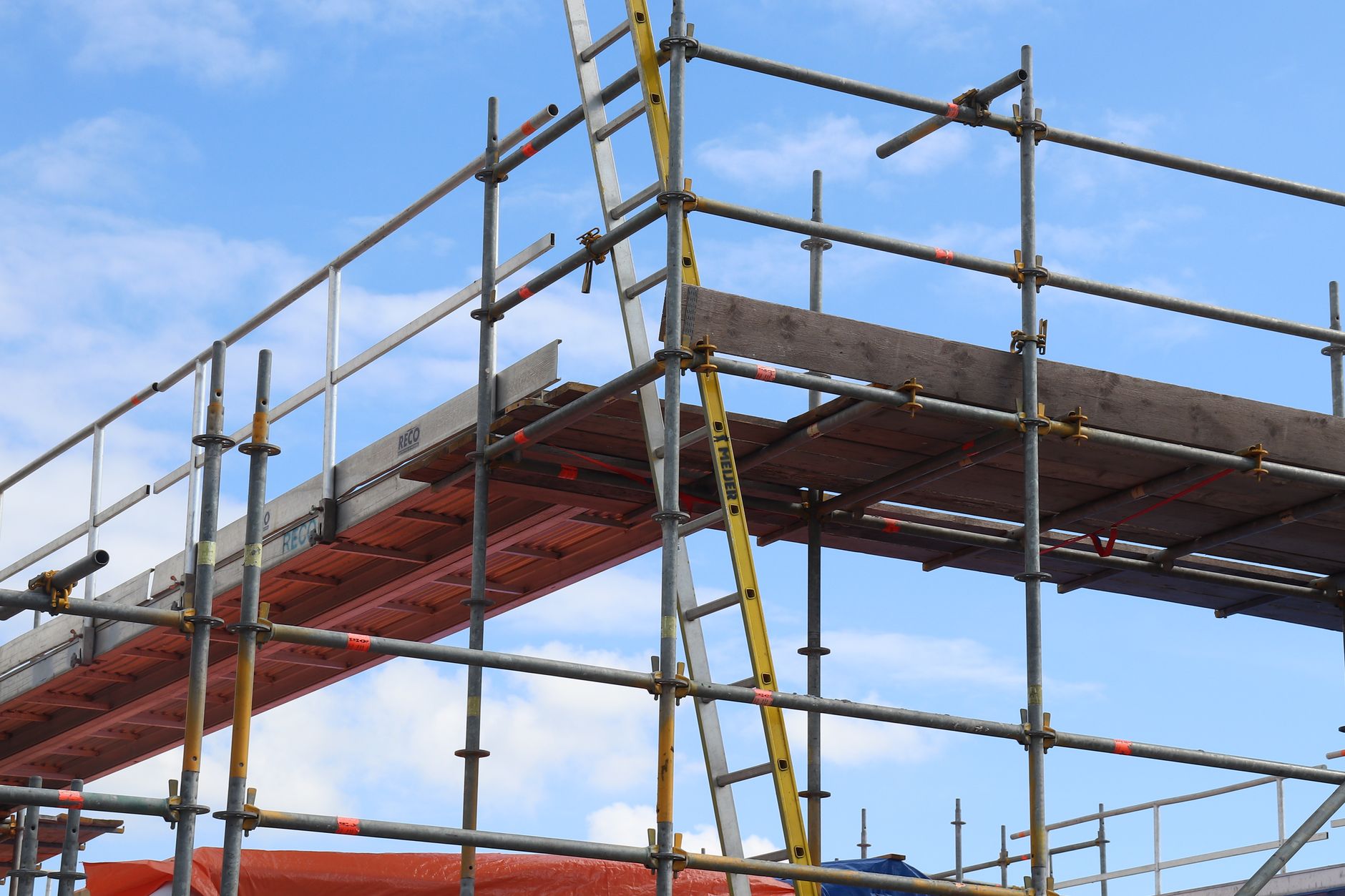
State data points the same way. A Massachusetts state document reports that 36.1 percent (373) of 2024 construction deaths were falls to a lower level, and that 62 fatal falls involved scaffolding in 2023. Those figures come from one state rather than the whole country, but they show how much of the risk sits in scaffold and lift work.
For cement plants this matters because much of the work happens at height on stacks, silos and kilns, often during outages when crews, contractors and schedules are all under pressure. A drone takes the exterior survey off the structure, which is the part that most often needs a lift or scaffold. It does not change fall protection duties for the work that remains.
What are the risks to the return and how do you avoid them?
The biggest risk is assuming the drone does all the inspection work. If the plan treats the drone as a full replacement for rope access, the return will miss and crews will still be on structures. Build the plan around the visual share, and keep contact work in the scope with its own crew hours.
Second, vendor-reported time savings are not plant results. Vendor guides make large claims about shutdown cuts, and those claims were not independently verified for this page, so do not use them as inputs. Measure the first outage against the plan, then set the lease terms to match what you actually saw.
Third, service and downtime matter. We handle pilot training, data handoff and service nationwide, and we can add a spare unit where the outage schedule cannot absorb a grounded drone. Any lease quote should state the service coverage and what happens if a unit is out of service on the morning of an outage.
What is a realistic timeline from assessment to payback, and how do I get a precise figure?
A realistic path starts with a free site assessment. We map the stacks, silos and kiln sections in scope, list the planned outages, and separate visual survey hours from contact work. The assessment sets the share of work a drone takes and produces a lease quote through the financing program that fits the plant.
After the quote, the usual sequence is a pilot survey in one outage, measured against the plan, followed by a wider rollout across outages. Payback depends on how many outages a year the plant runs and how many hours each one moves off the critical path, so the timeline follows the calendar of planned shutdowns rather than a fixed number of months.
We lease the drone through financing, deploy and integrate it into the outage plan, train the staff and service it nationwide. For a precise figure, the assessment needs the outage calendar, the asset list and the current inspection hours, which replace the pre-filled defaults on the calculator.
Frequently asked questions
Upcoming manufacturing events
- Trade showBrats & RobotsNov 10, 2026Alliant Energy Center Exhibition Hall, Madison, WI
- Trade showMATE Farm & Ranch ShowFeb 11 to 13, 2027MetraPark, Billings, MT
- ExpoPFMA Expo 2027Feb 17 to 18, 2027Washington County Fair Park, West Bend, WI
- ExpoLouisville Facilities Maintenance ExpoApr 15, 2027Mellwood Art Center, Louisville, KY
Want a drone at your cement plant?
Tell us about your site. We will recommend the robot, quote the lease, and keep it serviced.
Sources
- US Bureau of Labor Statistics, Occupational Employment and Wage Statistics (OEWS May 2024)
- US Census Bureau, 1997 Economic Census, NAICS 327310 cement manufacturing (archived)
- Claims Journal, citing OSHA
- Massachusetts state document on protecting workers from falls while using scaffolding
- SAHI news report on Saurashtra Cement kiln shutdown
- CemNet news on kiln maintenance shutdown
- Invert Robotics chimney inspection project (vendor-reported)
- KZN Industrial News on smokestack drone inspection
- Garuda Aerospace industrial chimney inspection case study (vendor-reported)