
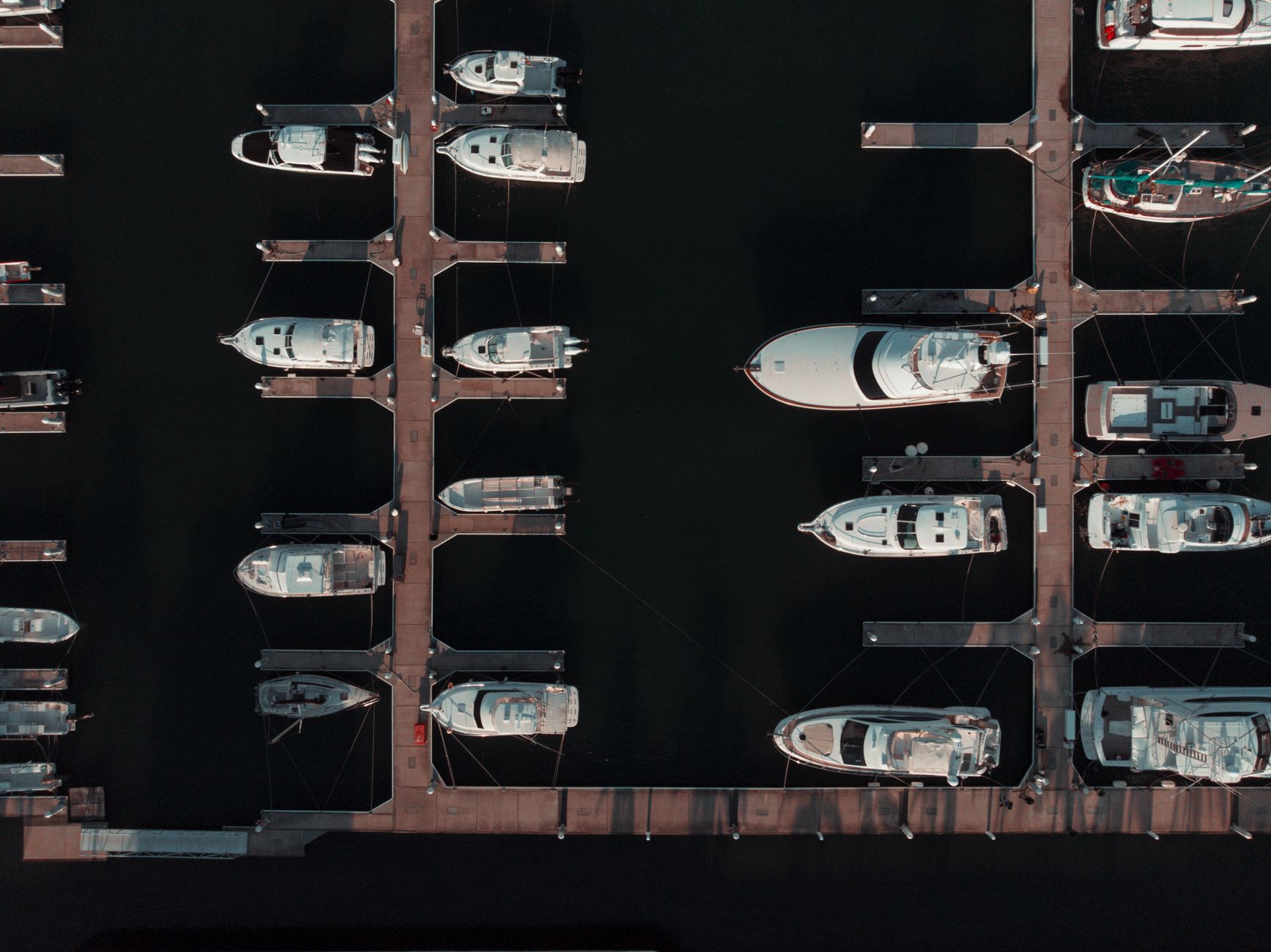
The short answer
Drone ROI for marinas usually comes from fewer hours spent on boat runs, walking surveys and diver dispatches for docks, pilings and seawalls, plus a dated visual record for repair decisions. The savings range on this page values the freed hours at the government wage for security guards, adjusted for the share of the work a drone can realistically take over. Above-waterline surveys are where the hours shift most, and any below-waterline work still needs an underwater method or a diver.
Key takeaways
- Most of the return comes from survey hours and diver dispatches avoided, not from cutting staff.
- Aerial images cover decks, seawall faces and above-waterline pile work well, but not what sits below the waterline.
- The savings range values the freed hours at the government wage for security guards shown on this page.
- A drone screens for divers rather than replacing them, so plan for both on any structure that needs it.
- Start with one survey area, set a dated baseline, then ask for the lease quote after a free site assessment.
Run the numbers for your site
Pick your city or state for a real regional number - we use the real BLS wage there. (On the live site this auto-detects from your location.)
What do you want to automate?
The unit runs the repetitive patrol and watch; guards handle the judgment calls.
What is drone ROI for marinas?
Drone ROI for marinas is the return from flying a drone over docks, pilings and seawalls in place of some boat runs, walking surveys and diver dispatches. For the person who signs off, the return shows up as hours that no longer go to slow surveys, fewer trips into the water for a first look, and a dated set of images showing what a structure looked like on a given day. It is a return on hours and risk, not on the drone itself.
The return is narrower than a sales pitch usually suggests. A drone reads surfaces, decks and above-waterline sections well, but a picture alone does not establish whether a pile is sound. Our team sets the expected range for your own structures and survey hours, so the decision rests on your site rather than a generic claim.
How many marinas are in the US, and does it change the ROI?
IBISWorld counts 2,770 marina businesses in the US in 2026, down 7.2% from 2025. That count is of businesses, not individual facilities, so it cannot tell you how many docks or seawalls exist. Treat it as market context rather than a site count.
The national total does not set your return. Your return depends on the length of dock and seawall you survey, how often you survey it, and who does the work now. A marina with long dock runs and frequent surveys can see a larger range than a bigger operator that surveys rarely, so the calculator starts from your site.
Median hourly wage, Security Guards
$4,317
Monthly cost of one full-time worker, at the median wage plus payroll costs (an estimate, not a quote).
Where does the return come from at a marina?
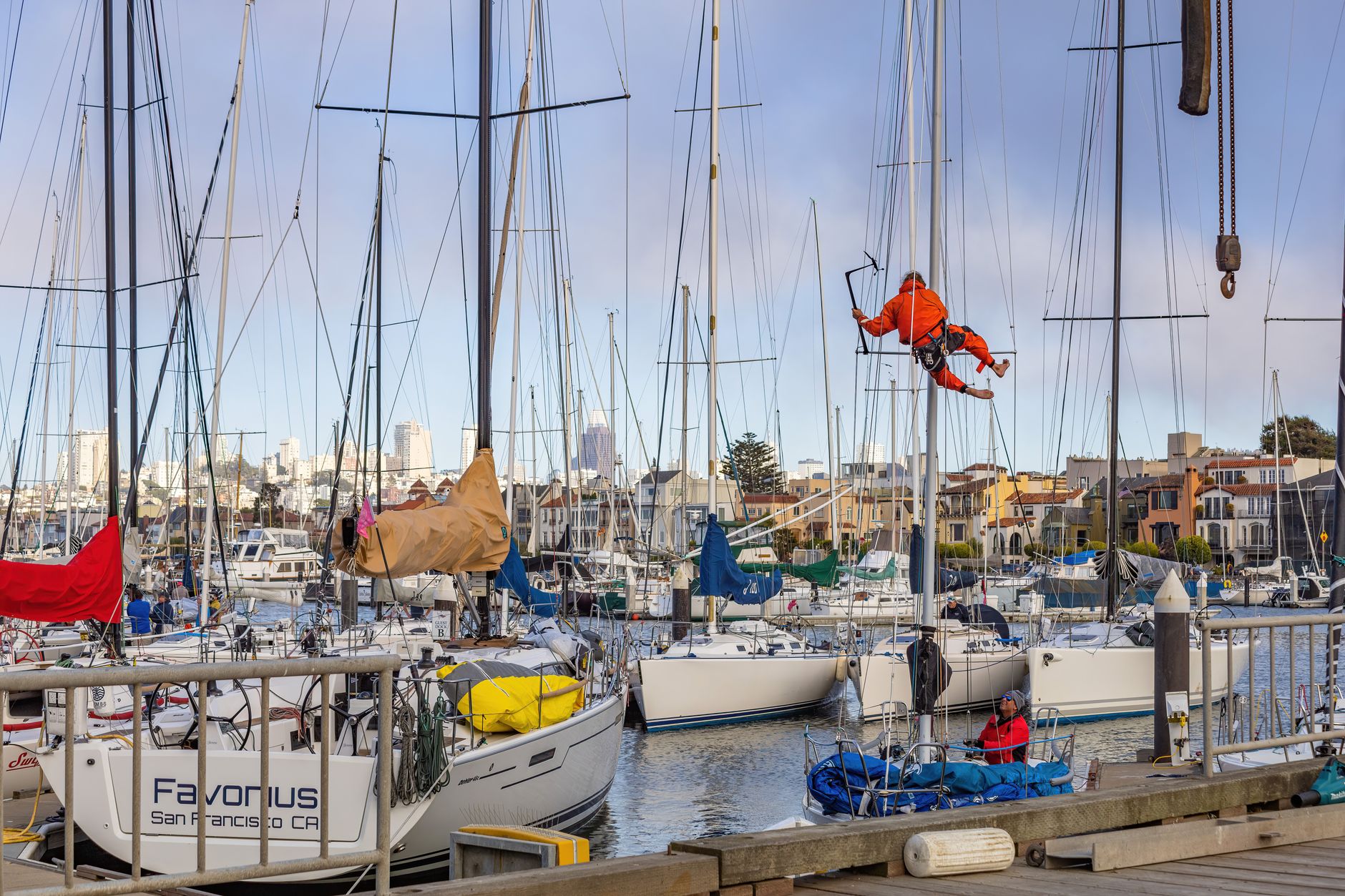
The return has four sources. The first is survey hours: a drone can fly a dock run, a seawall face or a deck underside in one pass, where a walk or boat run ties up a crew for longer. The second is diver dispatches avoided. A diver is needed when an image cannot answer the question, so a drone screen can remove the first look for many structures. The third is a visual record, a dated set of images that lets you compare this season with last without relying on memory.
The fourth is access. A UK ports industry article describes a jetty deck underside, a surface that is awkward and slow to reach by rope, being inspected by drone with no one leaving the deck. That access benefit is real, but it helps most where a structure is hard to reach safely, not on every dock.
How long do dock and piling inspections take with a drone?
We did not find published hour figures for marinas specifically, so treat this section as a guide to comparable structure work. A UK ports industry article reports that a jetty deck underside inspection that might take three days with a rope access team can be completed in a few hours by drone. The article's date was not confirmed, and it describes one jetty, not a marina.
Vendor claims about drone time savings on vessel hulls and tanks are larger still, but those are sales figures for other structures, so they do not set your range. Your own drone hours on your own docks are what the site assessment measures, and that is the number to trust.
How does the savings math work?
The calculator works in four steps. It counts the survey and dispatch hours your crew or contractors spend in each period, takes the share of those hours a drone can realistically cover, values the freed hours at the local wage for the job, and subtracts the lease cost for the same period. The result is a savings range rather than a promise, because each step carries its own uncertainty.
The labor side uses the government wage data for security guards shown on this page. Dock survey is not security work, but the hours a drone takes over, walking the line and watching the structure, are the closest standard job for valuing time, so the calculator uses that wage. Dock hands and maintenance staff are not valued by the calculator. The drone takes the security guard type of work off their plate, while the hands-on repair and boat work stays with the crew.
The share step does most of the work. A drone may handle an above-waterline survey well while a diver still covers the below-waterline work, so the realistic share is lower than the share of all survey hours. Count only the hours the drone can really cover.
- Survey and dispatch hours per period, from your logs or crew estimates
- Share of those hours a drone can realistically take over, often less than all of them
- Freed hours valued at the wage for the job shown on this page
- Lease cost for the same period, quoted after the site assessment
What changes the number up or down?
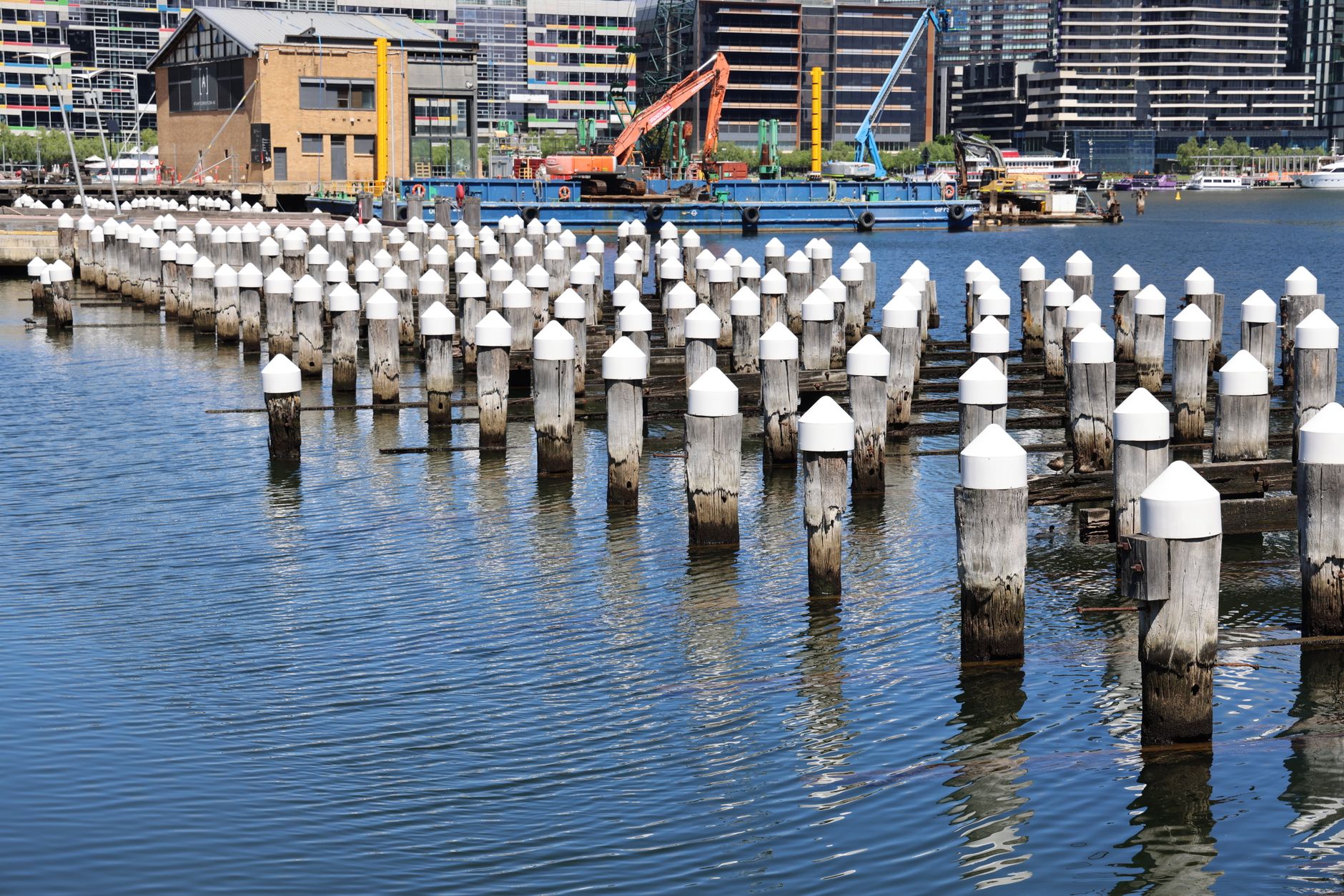
The biggest swing factor is how much of the structure sits above the waterline. Decks, seawall faces and pile tops are where drone images carry the most information. The more of the asset that is underwater, the smaller the share a drone can take over, and the lower the range.
Survey frequency is the second lever. A marina that surveys each dock run once a year has a smaller pool of hours than one that surveys after every storm, and each extra run is more time to offset against the lease cost.
Who does the work now matters too. Crew time already on site and contractor visits free up in separate ways, and the calculator treats each as its own input.
What are the risks to the return, and how do you avoid them?
The first risk is expecting the drone to replace the diver. Commercial diving is dangerous work. The CDC's NIOSH, citing BLS data for 2011 to 2017, reports 460 nonfatal occupational injuries and illnesses among commercial divers with days away from work, plus 39 fatal occupational injuries across that span. Those figures cover commercial diving in general, not marinas, but they explain why screening dives with images is worth the effort. The workflow to adopt is drone first, diver only when needed.
Diver availability is a second risk. According to O*NET national trends, commercial diver jobs were about 4,200 in 2024 and are projected to reach about 4,500 by 2034. That is a small pool to draw on when a marina needs a diver at short notice, so a drone screen that reduces dispatches also reduces that exposure.
The third risk is over-reading an image. A drone can show growth on a post or a visible crack, but a Dutch infrastructure agency notes that it cannot judge the condition of the post from the image alone. Set a rule that any structural question is settled by a qualified inspection, not by the picture by itself.
The fourth risk is an incomplete baseline. Without a dated first survey, the second survey proves little. Start with one survey area and set the baseline before counting savings. Staffing is a fifth concern. A California marina publicly cut hours and scaled back boat operations because of an employee shortage, according to local news, and a site short on people has less time to fly and file runs, which lowers the realistic share.
Who does this work at a marina today?
IBISWorld reports that the average US marina business employs about 10.6 people, and that the average business employs fewer workers than it did five years earlier. That figure covers the whole business, and only part of that team walks or boats the structures. Even so, a survey run that pulls a crew member off boats, docks or maintenance has a real cost, even if the run itself is short.
The drone does not replace the crew. It takes the survey and watch hours that would otherwise be spent walking or boating the line, and the calculator values those hours at the security guard wage on this page. The people who run the marina keep the hands-on repair and boat work that still needs them, and their time is not valued in the range.

What is the timeline from assessment to payback?
The sequence starts with a free site assessment. We map the docks, seawalls and pilings, record the survey hours and diver dispatches you run today, and decide what a drone will and will not cover. The lease quote follows the assessment, so the lease payment is tied to the scope you choose, not to a guess.
Next comes a pilot on one survey area. Fly the first runs, build the dated baseline, and compare the hours logged against the range on this page. The pilot shows whether the realistic share sits nearer the top or the bottom of the range before the rest of the marina is committed.
Payback arrives when cumulative freed hours, valued at the wage shown on this page, exceed the lease payments for the same period. Until the pilot has run through a full survey cycle, the range stays wide, so the honest expectation is that payback is measured after that cycle, not before it.
How do you get a precise figure from a free site assessment?
Bring your dock and seawall layout, a survey log for the past year, and any diver and contractor invoices. Include the hours your crew spends on each survey run, not only the number of runs. Those inputs turn the broad range into a site-specific one.
During the assessment we walk the structures, mark which parts are above the waterline, flag where a diver would still be needed, and time a sample of runs. The output is a narrower range and a lease quote for the scope you pick, with financing options, deployment, training and nationwide service set out in that quote. Ask for the quote in writing and compare it with the hours you logged.
Frequently asked questions
Want a drone at your marina?
Tell us about your site. We will recommend the robot, quote the lease, and keep it serviced.