

The short answer
Cobot ROI for printing plants comes mainly from taking repetitive stacking of finished stock onto pallets off the shift, so the people on the line can move to work that needs judgment. The savings range is set by how many of those hours a cobot can realistically cover, by the government wage data on this page for the laborers and freight, stock, and material movers, hand type of work, and by the fixed lease payment. A free site assessment turns that range into a precise figure for your line.
Key takeaways
- The return is labor hours taken off end of line stacking, not a headcount cut.
- Savings are a range, set by the share of stacking hours a cobot realistically covers.
- Turnover at repetitive stations adds training time to every departure, which raises the value of steady coverage.
- Payback should be tested on one line during a pilot before anyone accepts an estimate.
- The lease payment is quoted after a free site assessment, once the scope is known.
Run the numbers for your site
Pick your city or state for a real regional number - we use the real BLS wage there. (On the live site this auto-detects from your location.)
What do you want to automate?
The cobot stacks the repetitive end-of-line pallets; your team handles changeover and QA.
What does cobot ROI for printing plants measure?
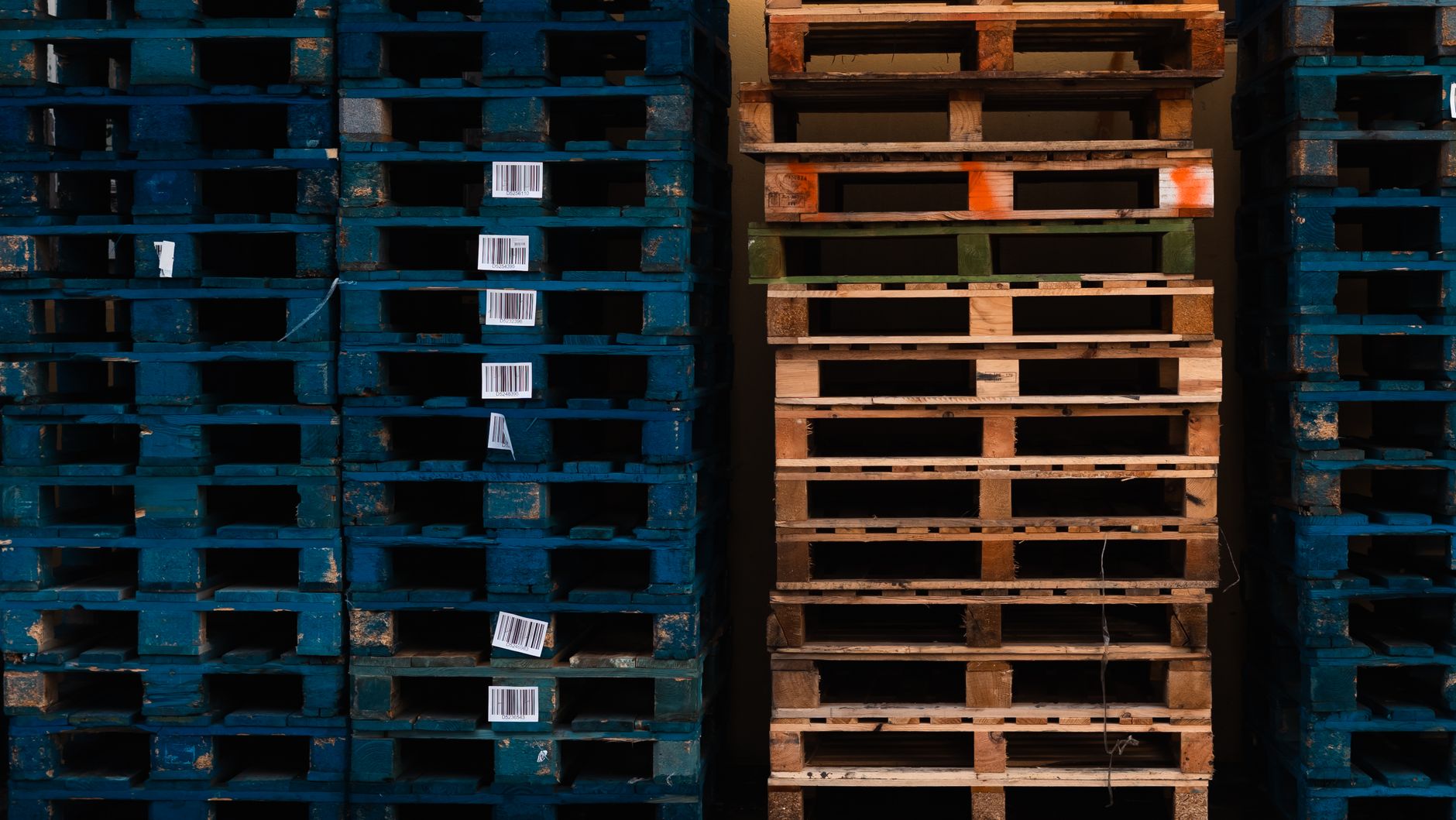
Cobot ROI for printing plants is the return from a collaborative robot arm that stacks finished printed stock onto pallets at the end of the line. The return is counted in labor hours: the time people would otherwise spend lifting, turning and stacking at a fixed station, priced with the government wage data on this page for the laborers and freight, stock, and material movers, hand type of work. The arm does not replace a press operator or a bindery lead. It takes over one narrow, repeated task so the people on the line can spend their time on checks, fault recovery and changeovers.
Adoption is rising across US manufacturing. According to the International Federation of Robotics (IFR), as reported by The Robot Report, US industrial robot installations rose 11% to 38,000 units in 2025, a preliminary figure, and installations in the food industry rose 30% to about 3,000 units. Those figures describe the market, not any one plant, so they show the technology is mainstream without showing that a given station will pay back.
The return is real but bounded. It depends on how many pallets the line produces each shift, how many people cover the station today, and how many of those hours a cobot can take over in normal running. A single payback figure for every printing plant skips those inputs, so this page treats the result as a range that a site assessment narrows.
How many printing plants could this apply to in the US?
According to the Census Bureau figures summarized by WhatTheyThink, printing and related support activities (NAICS 323) had 22,301 establishments in 2023, down 23% since 2010. Commercial screen printing (NAICS 323113) had 5,854 establishments in 2023, and commercial printing (NAICS 323111) had 15,430 establishments as 2022 began. The count has been falling, so the return for any one plant should be measured on its own line rather than taken from an industry average.
Employment shows the same shape. The Bureau of Labor Statistics reported 340.4 thousand total employees in printing and related support activities for March 2026, a preliminary, seasonally adjusted figure, and 236.0 thousand of them were production and nonsupervisory employees. The BLS Quarterly Census of Employment and Wages counted 27,590 private industry establishments in Q3 2025.
Dividing the 242.3 thousand production and nonsupervisory employees reported for July 2025 by those 27,590 establishments gives roughly 9 production workers per establishment on average. That is a rough industry average across all production work, not a count of stacking staff at any one plant.
Median hourly wage, Laborers and Freight, Stock, and Material Movers, Hand
$4,380
Monthly cost of one full-time worker, at the median wage plus payroll costs (an estimate, not a quote).
Where does the labor saving come from at the end of the line?
The saving sits in the repetitive hours at the stacking station, and staffing is where it shows up first. The PIPI survey, a 2025 study run by 15 regional printing associations, found that the 113 firms that reported averaged 12.8% employee turnover in the February and March 2025 survey. Those firms chose to respond, so the figure is a signal rather than a national average. It still points to a familiar problem: each departure from a repetitive station restarts the training clock for whoever replaces that person.
The October 2021 PIPI report adds context. Leaders said they could not fill 36% of open positions for over a year, about 10.5% of employees had left for other jobs and 3.5% had been fired or laid off, and 18% of employees were over 60. Stacking and lifting carries a physical load that matters more as a workforce ages, so the station's ergonomics affect retention as well as cost.
Safety is the second lever. According to PRINTING United Alliance, using BLS data for 2024, printing (NAICS 323) recorded a total recordable case rate of 1.6 per 100 full-time workers, down from 1.7 in 2023. Of those cases, 1.0 involved days away, restriction or transfer, and 0.6 involved days away from work alone. The rate for all US private industry was 2.7 per 100 full-time equivalent workers in 2024, down 3.1%. Printing sits below that national rate, so the case for a cell should rest on hours and staffing, with lifting reduction as a supporting benefit.
How does the ROI math work?
The core calculation is hours offset, priced at the local wage, compared with the lease cost. Start with the hours of laborers and freight, stock, and material movers, hand type of work at the station. Then count only the share of those hours that a cobot can cover in normal running, not in ideal running. Multiply that share by the hourly value from the government wage data on this page, and set the result against the fixed lease payment and any cost that is not in the lease quote.
Partial coverage is the usual case, and it matters. If the cell takes over only part of a station's stacking hours, the saving is that part, not the whole station. The people left at the station keep the load and unload work, the inspection and the fault recovery. Plants that count the full station as saved overstate the return, and a range that starts from realistic coverage is more useful than one that starts from the best day.
The lease side is simpler to state. The lease cost is quoted after the site assessment as a fixed lease payment, set by the scope of the cell, the term and the financing program. A fixed payment does not rise and fall with production the way overtime does, so the comparison is between a steady cost and a labor value that moves with shift patterns.
What changes the number up or down?
Three factors move the return most: how many repetitive stacking hours the station really carries, how often the cell can run unattended, and how much turnover the plant absorbs. Higher turnover raises the value of a cell that keeps running when people leave, because each departure from a repetitive station costs training time. Stable staffing shortens the case, since the labor being replaced is already steady and predictable.
Product mix matters as much as volume. A line that runs a few stock sizes and steady pallet patterns gets more hours from a cobot than one that changes carton formats and pallet builds every few jobs. Each changeover is setup labor that the robot does not remove, so the number of changeovers in a week sets a ceiling on coverage. Upstream equipment also matters. If a press or bindery already conveys and stacks part of the output, the gap the cobot fills is smaller.
What are the risks to the return and how do you avoid them?
The biggest risk is counting hours that do not go away. A cell can take the repeat cycle while the station still needs people for loading, inspection and jam clearing. Count only the hours the cell takes over in normal running, and confirm that the staff who remain have a defined job, so the saving does not disappear into idle time or extra checking.
The second risk is downtime. A cell that stops for a fault can stop the line behind it unless a fallback exists. Test fault recovery during the pilot, keep a manual stacking route for the stations that must keep running, and agree the response plan before go live. We service leased robots nationwide, so response expectations are written into the plan from the start, not worked out after the first stop.
The third risk is an inflated safety case. Printing already reports a case rate below the all private industry rate, so a cell should not be sold on a large injury reduction. The 1.6 printing rate from the 2024 data is a reason to reduce repetitive lifting, but the cell's real return still comes from hours, retention and line stability.
How does a palletizing cell compare with staff on the line?
A cobot and a person are good at different parts of this station, and an honest comparison names both. The cobot repeats the same pattern at a steady pace, does not slow down late in a shift, and runs the stacking cycle without breaks. A person adapts when a pallet is off square, spots damage on a carton and decides what to do when the line changes.
The robot is weaker on variation. Pattern changes need setup and tested programs, and the cell needs a clear supply path for pallets and slip sheets. Staff remain necessary for load inspection, label checks and fault recovery, so the cell changes the mix of work at the station rather than removing it.
- Repeat stacking cycle
Cobot
Same pattern at a steady pace across the shift
Staff
Pace drops with fatigue and breaks
- Pattern or carton changes
Cobot
Needs setup and a tested program for each change
Staff
Adapts on the spot to a new carton or an off square pallet
- Faults and damaged stock
Cobot
Stops and signals, and recovery needs a trained person
Staff
Spots damage and decides what to keep or reject
- Hiring and training
Cobot
Trained once per program, unaffected by departures
Staff
Every new hire needs training time, and turnover is ongoing
- Shift coverage
Cobot
Can run unattended for part of a shift when set up for it
Staff
Needs a person at the station for every shift covered
What is a realistic timeline from assessment to payback?
The path runs in phases. It starts with the free site assessment, then a mapping visit to the end of line, a sample of pallets and cartons, and a review of the existing equipment. A design and quote come next, with the fixed lease payment set by the scope. Installation, integration with the line controls and staff training follow, then a monitored run. How long each phase takes depends on the plant's controls, approvals and schedule, so ask for the timeline in writing with the quote.
Payback is reached when the cumulative hours taken over, valued at the government wage data on this page, pass the total lease cost for the term. A pilot period gives that calculation real inputs. Run the cell for a defined window on one line, log the hours it takes over, count faults and recovery time, and record the hours that remain at the station. Without that log, the payback discussion turns on estimates, and estimates are hard to defend once a line is in use.
How do you get a precise figure from a free site assessment?
We are a US commercial robot integrator. We pick the robot that fits the site, lease it through financing, deploy and integrate it, train the staff and service it nationwide. The free site assessment is where the range becomes a figure. We measure the station, sample the pallets and cartons, check the controls and the floor, and map the cell. The lease payment is quoted after that assessment, once the scope is set.
Bring these inputs to the assessment: stacking hours from time records, a sample of pallet and carton types, changeovers per week, turnover at the station, and any upstream equipment that already stacks or conveys. With those, the calculator on this page gives a savings range, and the quote gives the fixed lease payment for the scope you choose. Ask for the assumptions behind both in writing, so you can check each one against your own records.
Frequently asked questions
Want a cobot at your printing plant?
Tell us about your site. We will recommend the robot, quote the lease, and keep it serviced.
Sources
- US Bureau of Labor Statistics, Occupational Employment and Wage Statistics (OEWS May 2024)
- WhatTheyThink summary of Census establishment data
- Bureau of Labor Statistics, printing industry employment (iag323)
- Bureau of Labor Statistics, printing employment (NAICS 323)
- FRED, printing and related support employment series
- PIPI employment survey, 2025 Micro Look
- PIPI recruiting and hiring report, October 2021
- PRINTING United Alliance, 2024 injury and illness rates
- The Robot Report, IFR 2025 preliminary US data