
The short answer
Cleaning robot ROI for correctional facilities comes from taking scheduled corridor, dayroom and dining floor work off the janitor and building cleaner roster, so officers keep their posts and the floors still get done. The savings range depends on how many of those hours a robot realistically takes over, which routes the security team approves, and the fixed lease payment quoted after a free site assessment. Test the range against your own logged hours before you commit, because the calculator output is a planning range and not a promise.
See what a cleaning robot costsRun the numbers in the ROI calculator
Key takeaways
- The return comes from janitor and building cleaner hours taken off routine floor work, not from officer time.
- The savings are a range set by logged hours, the share of work the robot takes, and the lease quote.
- Security approval decides which routes are possible, so start that review at the site assessment.
- Staffing pressure is real: a 2024 ACA Research Council survey of 23 states found security officer vacancy rates as high as 55%.
- A free site assessment turns the range into a route map and a fixed lease payment quote.
Run the numbers for your site
Pick your city or state for a real regional number - we use the real BLS wage there. (On the live site this auto-detects from your location.)
What do you want to automate?
The robot runs the open floor overnight; your crew keeps detail and edges.
Cleaning robot ROI for correctional facilities: what return can you expect?
For most operators, cleaning robot ROI for correctional facilities comes from labor hours, not from anything else on the balance sheet. A cleaning robot takes scheduled floor work, mainly sweeping and scrubbing in corridors, dayrooms, dining halls and other common space, off the people who would otherwise do it. In many facilities that work falls to officers pulled from posts or to a small janitorial crew stretched across a large footprint, so the value comes from freed hours and from protected posts at the same time.
The job base is large and churns. According to the Bureau of Labor Statistics Occupational Outlook Handbook, there were about 2,447,700 janitors and building cleaners jobs in 2024, projected to grow 2% from 2024 to 2034, with about 351,300 openings a year, mostly from replacement. Most people in that job learn on the job, so every departure restarts the training cycle.
The same Handbook counts about 387,500 correctional officers and jailers jobs in 2024, and state government, excluding education and hospitals, is the largest employer at 52% of those jobs. According to the Bureau of Justice Statistics, 1,230,100 people were under state or federal prison jurisdiction at yearend 2022, up 2% from 2021, and 915,800 jail beds were in place nationwide at midyear 2023, with 73% occupied.
The research for this page did not verify how many correctional facilities operate in the US or how many janitorial staff work in each one. Any site-level headcount should come from your own roster and the site assessment.
Why does routine floor cleaning take so much staff time?
Floor work in a correctional building does not happen in one place. It happens in housing unit corridors, dayrooms, dining halls, program rooms and visiting areas, each on its own cycle and each slowed by movement restrictions. When staff do the cleaning, they step away from the post they were assigned, and when they do not, the work slips to a later shift.
The exposure is real too. The Bureau of Labor Statistics injury and illness snapshot for janitors and cleaners, excluding maids and housekeeping cleaners, reports an incidence rate of 191.6 cases per 10,000 full-time equivalent workers in 2020, up from 178.6 in 2016. That series counts only cases with days away from work, so minor strains are not in it, but the rate is high enough that repetitive scrubbing and mopping deserve a close look.
The practical point is that routine floor cleaning carries both labor cost and physical exposure. A robot can move the repetitive part of it onto a fixed schedule, instead of onto a shift that is already short.
Median hourly wage, Janitors and Building Cleaners
$4,041
Monthly cost of one full-time worker, at the median wage plus payroll costs (an estimate, not a quote).
Where can a cleaning robot run inside a correctional building?
Floor-cleaning robots run scheduled routes on floors that are open, mapped and predictable. In a correctional building, that usually means long corridors, the open floor of dayrooms, dining halls and program spaces, and public-facing hallways on a regular cleaning cycle. Routes are set during site mapping, and the robot is taught where it may and may not go.
Secure areas are excluded unless the facility's security team approves a specific design. That covers controlled doors, sally ports, cell fronts and any zone where the robot would pass through a control point. The right route list comes from walking the site with security staff, not from a floor plan alone.
Keep the scope narrow at first. A smaller set of routes is easier to approve, easier to supervise and easier to measure, and the list can grow once the first routes prove their share of the work.
How does the cleaning robot ROI math work?
The savings range starts with the hours of janitor and building cleaner type work the robot can realistically take over each week. Those hours are valued using the government wage data on this page, which is the local wage for this job, and the calculator adds the costs that come with a worker in that role. The result is the value of the labor offset.
The second input is the share of that work the robot takes. A common error is to assume the robot takes every floor minute inside its zone. In practice it takes scheduled sweeping and scrubbing on its routes, while spills, wet corners, stairs, restroom detail and anything needing hands stay with people. The calculator asks for that share as a range.
The third input is the lease. The robot is leased through financing with a fixed lease payment, quoted after a free site assessment, and service visits, remote triage and on-site dispatch are part of the same quote. Net return is the labor offset, minus the lease cost and any service cost the quote does not cover, plus the value of supervision time that staff recover.
Because each input is a range, the output is a range. The calculator on this page is pre-filled for this setting and assumes a typical crew of two janitorial staff. That two-person figure is a planning default, not a verified statistic from the research, so replace it with your own roster before you rely on the result.
What does a cleaning robot take over, and what stays with staff?
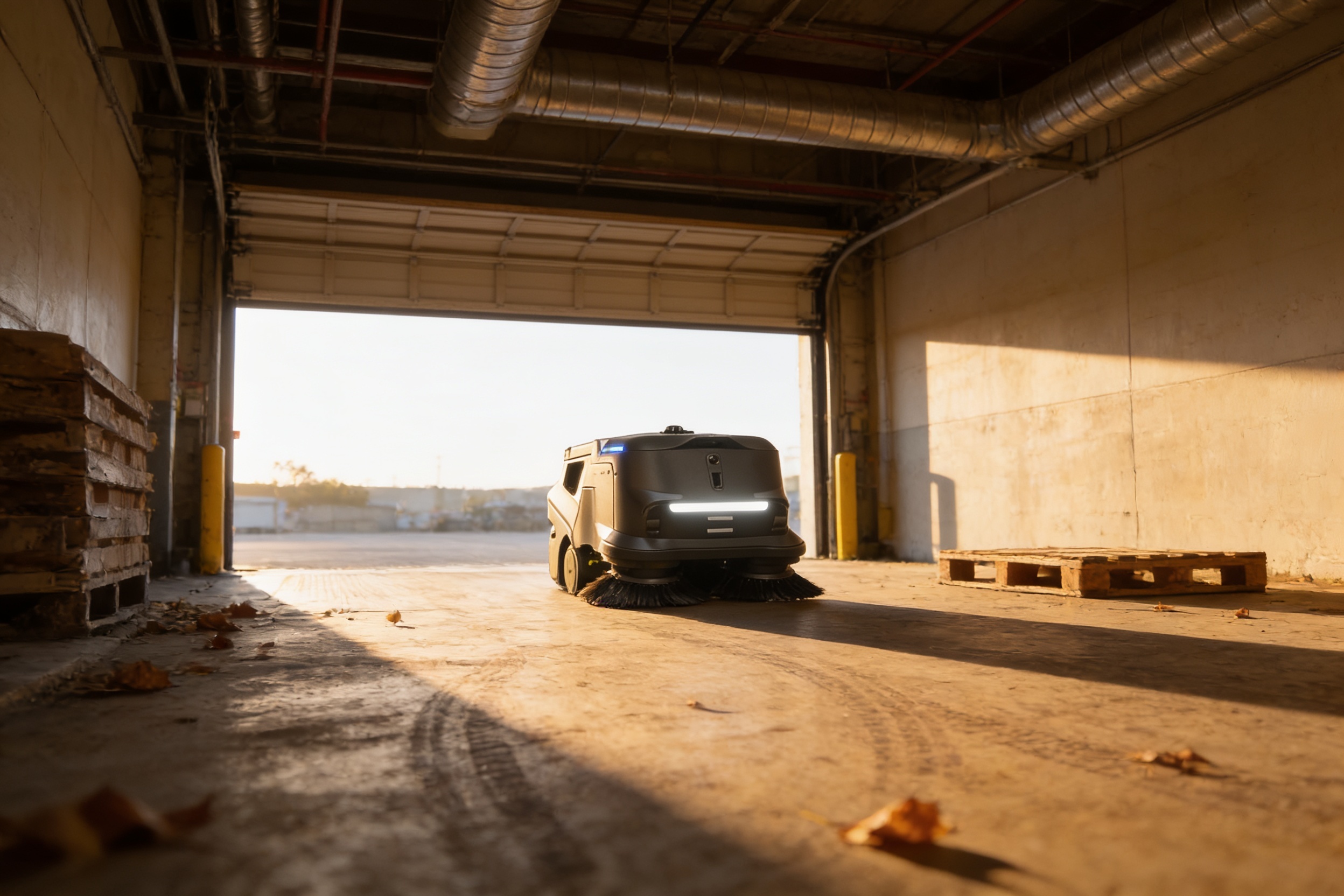
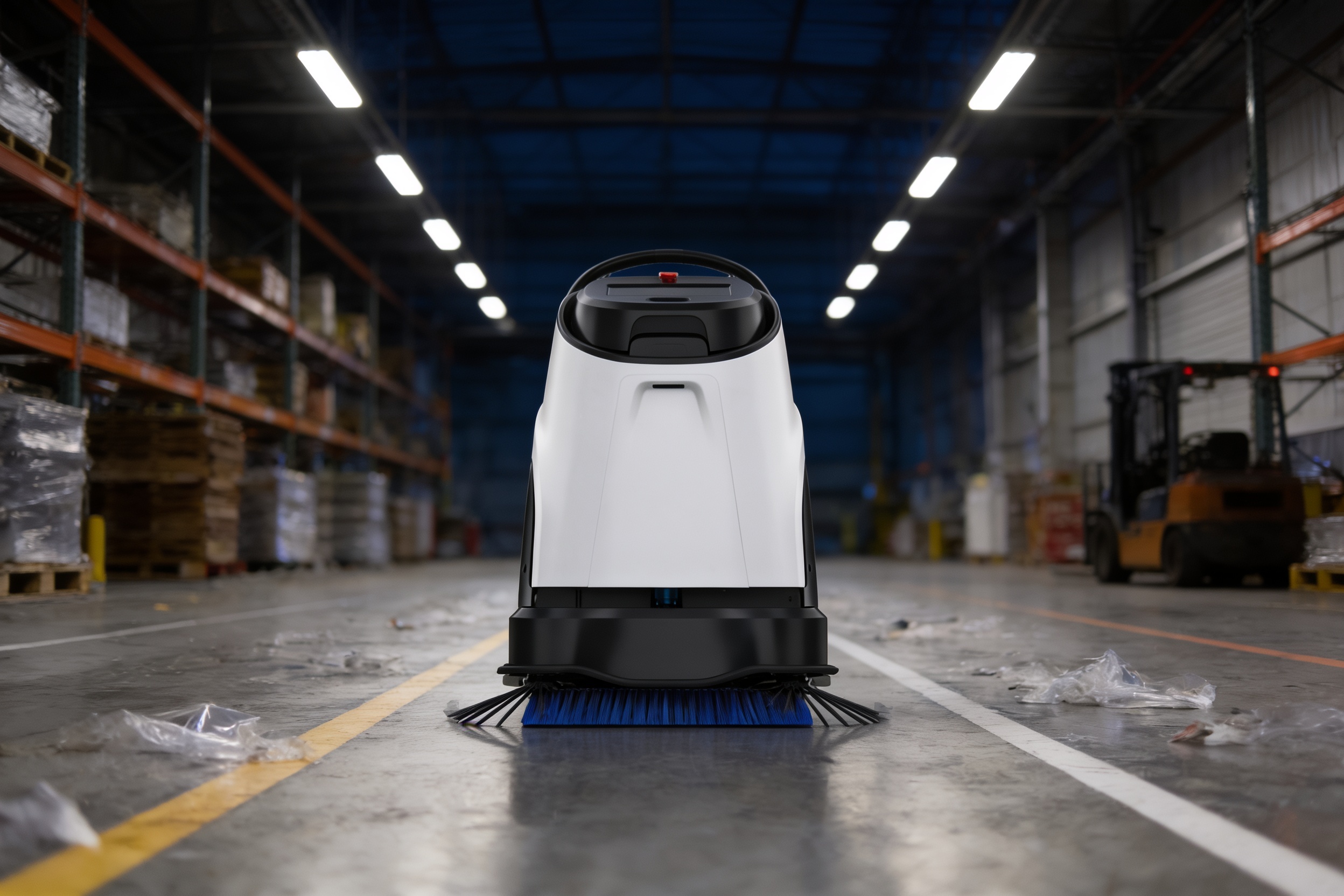
The honest comparison is task by task. A robot runs the same mapped route at the same pace, starts on time and does not call out. A person sees what a floor machine cannot. In a correctional building, that includes anything that bears on security, such as a wet spot near a cell door, a tool out of place, a visitor who needs help or rising tension in a dayroom.
Staff keep supervision and the security judgment in every case. The robot takes a repetitive share off the janitorial roster, which lets facility leaders decide where crew time goes next: restroom detail, carpet work, or other tasks that need hands. The decision is about how cleaning is staffed, not about whether officers should be cleaning.
- Route consistency
Cleaning Robot
Same mapped route, same pace, every run
Staff
Good when staff have time, varies with workload and fatigue
- Off-hours coverage
Cleaning Robot
Scheduled routes can run in quiet periods, subject to security approval
Staff
Needs a crew or overtime for each shift
- Spills, wet corners and stairs
Cleaning Robot
Not the robot's job, so it routes around them
Staff
Handled well by people
- Noticing security concerns
Cleaning Robot
Not a security device and does not replace rounds
Staff
Officers see and act on what matters
- Restroom detail and fine work
Cleaning Robot
Limited to mapped open floor
Staff
Covers the full range of cleaning
- When vacancies rise
Cleaning Robot
Schedule does not depend on how many posts are filled
Staff
Routes slip when posts go unfilled
- Training and turnover
Cleaning Robot
Set up once, with staff trained on checks and charging
Staff
Ongoing training each time someone leaves, since most learn on the job
What changes the number up or down?
Staffing pressure is the biggest swing factor, and it can push the number either way. A 2024 survey by the ACA Research Council, reported in Corrections Today, found security officer vacancy rates reaching a high of 55% and turnover reaching as much as 48% across 23 responding states. North Carolina reported about 39% of correctional officer positions vacant as of February 2024, down from 43% in February 2023. In Ohio, according to a Dayton Daily News analysis of state records at the end of 2025, 7.4% of budgeted positions were vacant statewide, nine of 24 prisons had vacancy rates above 10%, and the correctional officer vacancy rate had been 12.4% in 2022.
Higher vacancy makes the return larger on paper, because floor work does not stop when posts go empty. It also makes the site harder to deploy in, because the people who would train and check the robot are stretched too. Read vacancy figures as a reason to plan supervision early, not as a guaranteed payoff.
Other factors move the number: how much open floor is mapped, how often routes run, how many buildings or floors need coverage, how often lockdowns interrupt routes, the lease term, and how much janitorial work is already handled by outside contractors. Each one should be checked during the site assessment.
What are the risks to the return, and how do you avoid them?
Security is the biggest risk. A robot that the security team cannot explain or approve will not be deployed, and that is the right outcome. Build the security review into the assessment, put every route on a written map that security has approved, and keep the robot clear of controlled doors and restricted zones.
Over-counting hours is the second risk. If the calculator assumes the robot takes every minute of floor work, the return will disappoint. Use the share of work the robot realistically takes, measure that share during the pilot, and add routes only after the measured share supports them.
Downtime and uneven upkeep are the third risk. A robot that sits idle because it was not charged, or because its bin was full, returns nothing. Name an owner for start of shift checks, charging and bin emptying, and use the service coverage in the lease for repairs and dispatch.
Adoption is the fourth risk. Staff who see the robot as a threat will not check it or report issues. Explain plainly what it takes, what stays with them, and what supervision time it frees.
What is the timeline from site assessment to payback?
The timeline runs in three stages, and payback is measured against the hours you actually see after go live, not the ones projected at the start. The site assessment comes first. We walk the building, map the open floor, review proposed routes with security, and compare the janitorial hours your crew and any overtime actually cover.
The pilot follows. One corridor and its adjacent dayroom is a sensible first route, because it tests security approval, charging and the bin cycle on a small area before the rest of the building is added. Staff training happens during this stage, and a day-to-day owner is named for each shift.
Full rollout adds the approved routes in stages, so the janitorial roster can be reduced or reassigned on a schedule that matches the measured share of work. Payback is tracked against the lease payment, the service terms and the hours offset. The first months include setup and learning, so the early return is smaller than the later return.
How do you get a precise figure from a free site assessment?

The free site assessment replaces assumptions with your numbers, so a precise cleaning robot ROI for correctional facilities figure comes from your hours, not from a generic estimate. Bring the floor plan, the janitorial hours logged for a typical week, the list of restricted zones, the count and lockdown schedule, and the staffing trend on your roster. We map the open floor and review proposed routes with your security team.
What you receive is a route map, the share of janitor and building cleaner type work the robot can realistically take, a savings range built from your logged hours and the government wage data on this page, and a fixed lease payment quote with service and dispatch terms. Compare that quote with your present cost to clean the same floors, not with a brochure figure.
We pick the right robot for the site, lease it through financing, deploy and integrate it, train the staff who work alongside it, and service it nationwide. Setup, lease and service come from one partner, so the team that measured your floor is the team that answers when a unit needs attention.
What should a decision memo include before sign off?
Before sign off, the decision memo should show the logged hours, the measured or estimated share of work the robot takes, the security approval for each route, the lease quote and terms, the named owner for daily checks, and the staffing trend for the coming months. A range with its inputs is more credible than a single number.
Treat the pilot as evidence. If the measured share is lower than planned, the rollout can narrow to the routes that performed, and the lease can be sized to match. That keeps the decision adjustable at the stage where changing course costs the least.
Frequently asked questions
Upcoming public sector events
- Trade showAPC/PennDOT/PA Turnpike Fall SeminarNov 18 to 20, 2026Hershey Lodge, Hershey, PA
- Trade showMinnesota Buildings & Facilities Management Trade ShowNov 19, 2026Minneapolis Convention Center, Minneapolis, MN
- ConferenceCASBO CBO Symposium (Executive)Nov 19 to 20, 2026The Langham, Pasadena, CA
- ConferenceVirginia Association of Fairs ConventionJan 14 to 17, 2027Williamsburg Lodge, Autograph Collection, Williamsburg, VA
Want a cleaning robot at your correctional facility?
Tell us about your site. We will recommend the robot, quote the lease, and keep it serviced.
Sources
- US Bureau of Labor Statistics, Occupational Employment and Wage Statistics (OEWS May 2024)
- Bureau of Labor Statistics, Occupational Outlook Handbook: Janitors and Building Cleaners
- Bureau of Labor Statistics, Occupational Outlook Handbook: Correctional Officers and Jailers
- Bureau of Labor Statistics, Injuries and Illnesses Snapshot: Janitors and Cleaners, 2016 to 2020
- ACA Research Council survey, Corrections Today, 2024
- NC News Line, prison job vacancy rates, April 2024
- Dayton Daily News analysis of Ohio state records, end of 2025
- Bureau of Justice Statistics, Prisoners 2022
- Bureau of Justice Statistics, Jail Inmates 2023