
The short answer
Cleaning robot ROI for restaurants comes from dining floor hours handed back to staff, counted as janitors and building cleaners type work the robot takes over and valued at the local wage for that job, less the fixed robot lease payment. The result is a savings range that depends on how much of the open floor the robot covers reliably and how many hours the crew logs today. A lease quote follows a free site assessment that measures your floor.
See what a cleaning robot costsRun the numbers in the ROI calculator
Key takeaways
- Cleaning robot ROI for restaurants comes from dining floor hours that leave the crew's schedule.
- The labor offset is priced on janitors and building cleaners work, using the government wage data on this page.
- The savings range rises or falls with the share of open floor the robot covers reliably.
- Turnover and injury data show the stakes but do not prove a floor care safety saving.
- A lease quote follows a free site assessment that maps your room and times your floor run.
Run the numbers for your site
Pick your city or state for a real regional number - we use the real BLS wage there. (On the live site this auto-detects from your location.)
What do you want to automate?
The robot runs the open floor overnight; your crew keeps detail and edges.
What return can restaurants expect from a cleaning robot?
Cleaning robot ROI for restaurants comes from one place: the floor work on the dining room moves to a machine on a set schedule, so floor and line staff can stay on their assigned work. The return is counted in hours of janitors and building cleaners type work taken over. Those hours are valued at the local wage for that job, using the government wage data on this page, and the fixed lease payment is subtracted.
The result is a savings range, not a promise. The range is only as good as the hours behind it, and the research for this page did not find a published count of hours that restaurants spend sweeping and scrubbing dining floors. We build that input from your own floor records during a site assessment instead of borrowing an average from another site.
A restaurant with a large open dining room and a predictable closing routine usually has the clearest case. A restaurant with many fixed tables and small rooms has less clear floor for a robot to cover, so the number comes out lower. Both cases need the same test: how many hours of floor work leave the schedule once the robot runs.
How many restaurants and staff are in the US?
According to the National Restaurant Association's 2025 State of the Restaurant Industry pocket guide, the restaurant and foodservice industry lists 1M+ locations and 15.9M employees in 2025. That is the best single view of how many sites and workers sit behind this category. It covers a wide range of formats, from counter service to full-service dining.
Counts of restaurants from other sources use different definitions of a location, so compare counts only when their scope matches. Use the NRA figure for industry size and keep narrower counts for specific formats.
Dividing 15.9M employees by 1M+ locations gives roughly 16 people per location across all formats. That is our arithmetic, not a published figure, and it blends very small counter operations with large dining rooms. The average tells you little about one floor, which is why staffing is measured on site.
On the janitorial side, the BLS Occupational Outlook Handbook projects employment of janitors and building cleaners to grow 2 percent from 2024 to 2034, which is slower than average. It estimates about 351,300 openings per year on average. Those openings are mostly replacement needs, which is our inference, so hiring for this work stays ongoing even when total jobs grow slowly.
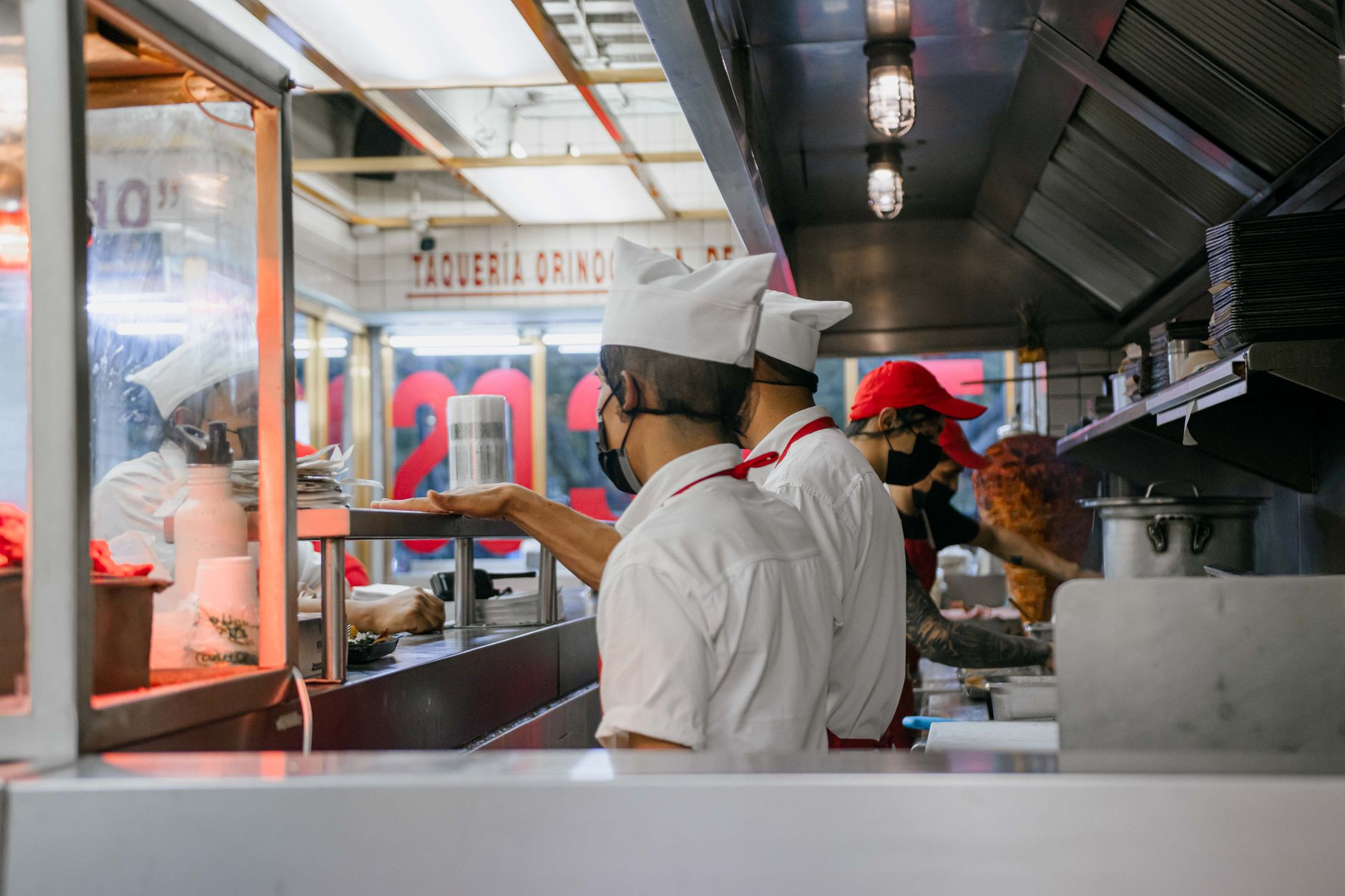
Median hourly wage, Janitors and Building Cleaners
$4,041
Monthly cost of one full-time worker, at the median wage plus payroll costs (an estimate, not a quote).
Where does the return come from on a dining floor?
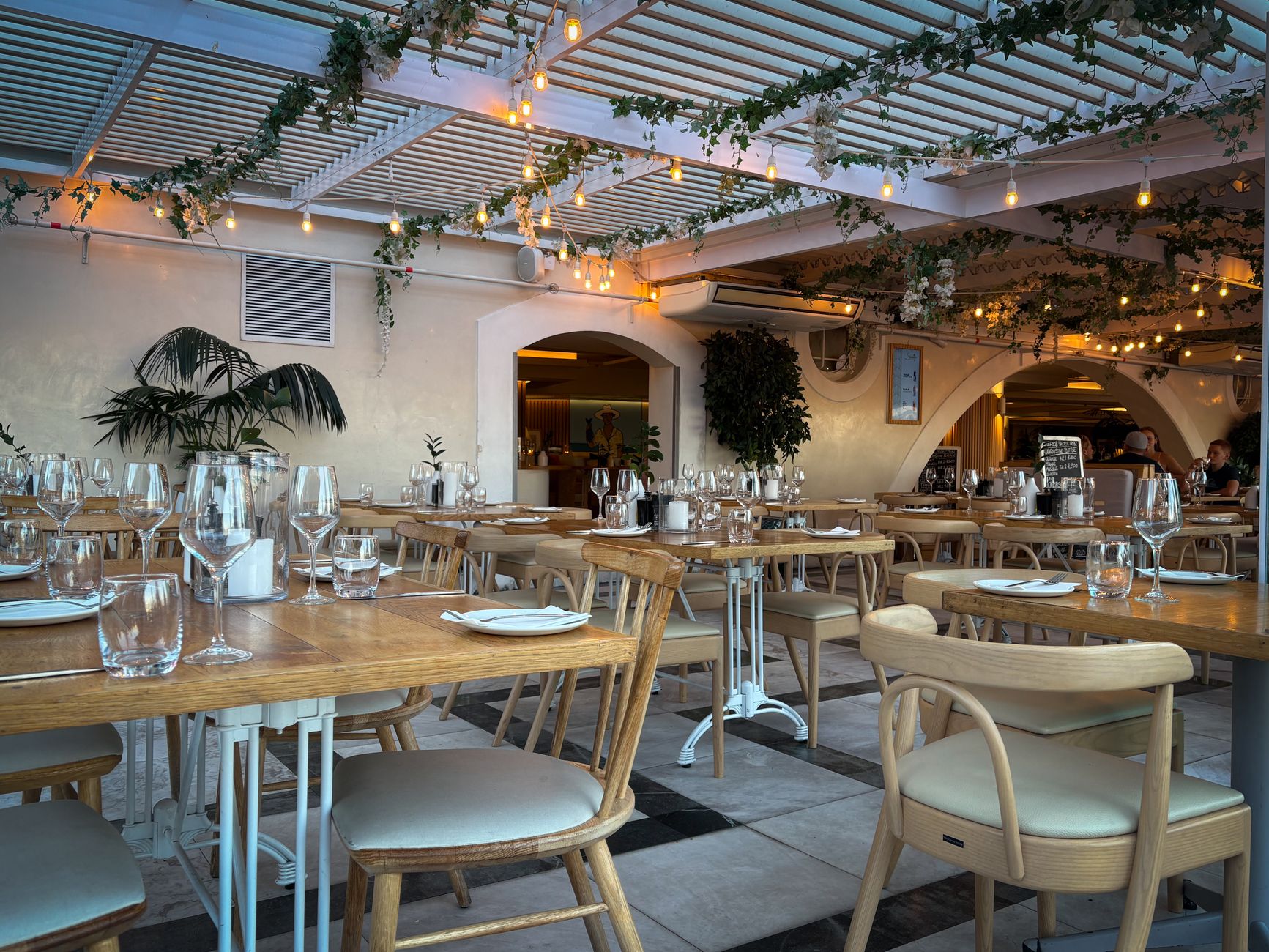
Dining rooms are large open floors that get swept and scrubbed between services, and the work is repetitive. A cleaning robot covers the open floor on a set schedule. That is the part that otherwise pulls a janitor, busser or closer away from assigned work during the busiest part of the day or into the closing window.
The return is strongest on the open run and weakest at the edges. Booth edges, chair legs and the spaces around service stations usually still need a person with a hand tool. The savings math should count only the share of floor the robot covers without that help, and the assessment maps which areas those are.
Floor area for restaurant dining rooms was not published in the research behind this page, so we measure it on site. The labor side of the calculation then reflects your room, not a generic one. Staff time freed from floor care can move to bussing, side work and guest-facing tasks, but the calculation prices only the hours taken over, not those new duties.
How does the cleaning robot ROI math work?
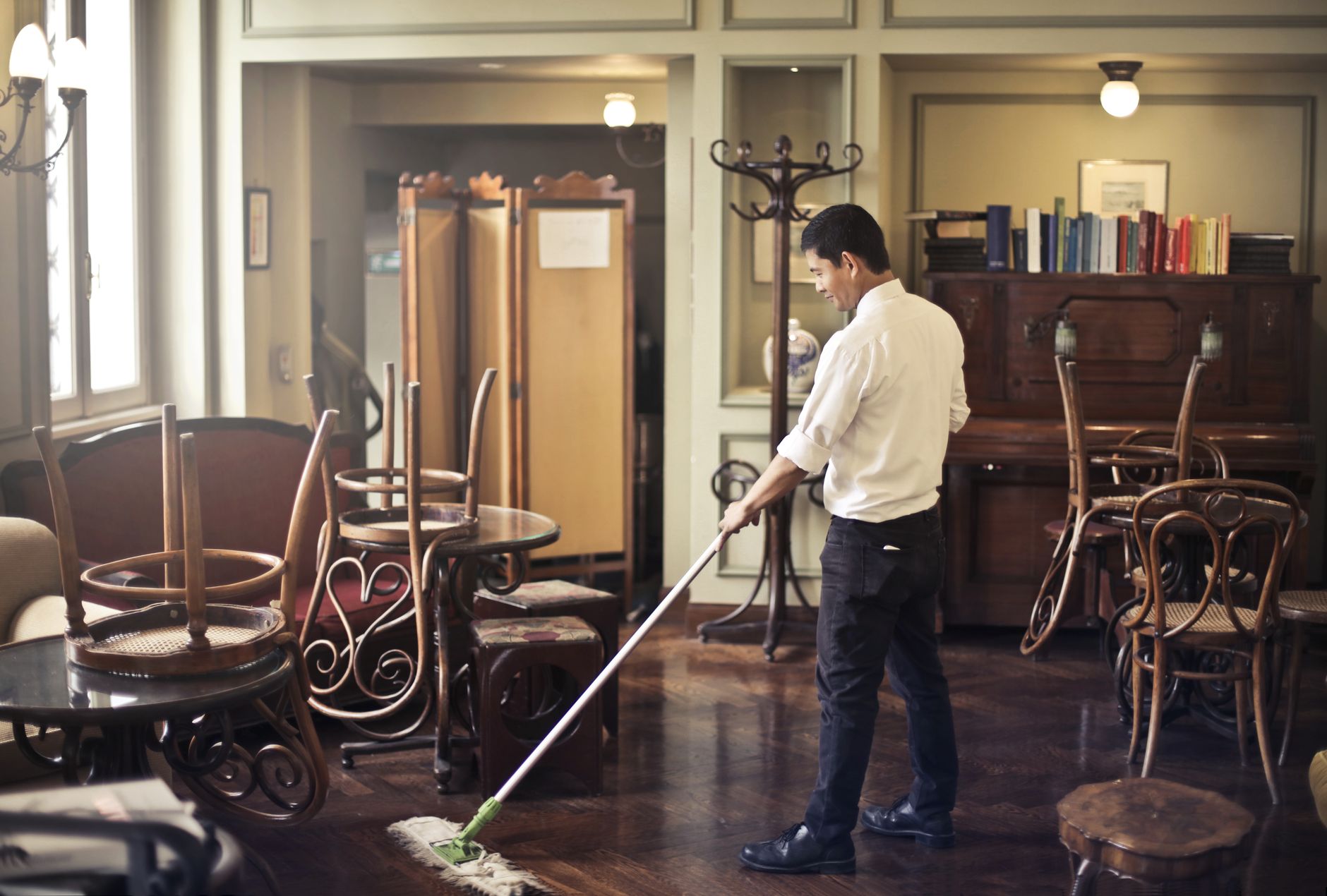
The formula has three parts. First, the hours of janitors and building cleaners type work the robot takes over each week. Second, those hours valued at the local wage for that job from the government wage data on this page. Third, the fixed robot lease payment, quoted after the site assessment, subtracted from that value to leave the range.
The realistic share is the input that matters most. A robot does not take over every minute of floor work, so we count the portion of the scheduled run it completes without a person, plus the spot work it removes from staff. Counting the full floor time as saved overstates the return, and we do not do that.
The range shown with the calculator is the spread between a conservative share and a fuller share of hours taken over. Read it as a planning tool that brackets the outcome. The precise figure comes from your floor, your schedule and the quote, not from this page.
What changes the number up or down?
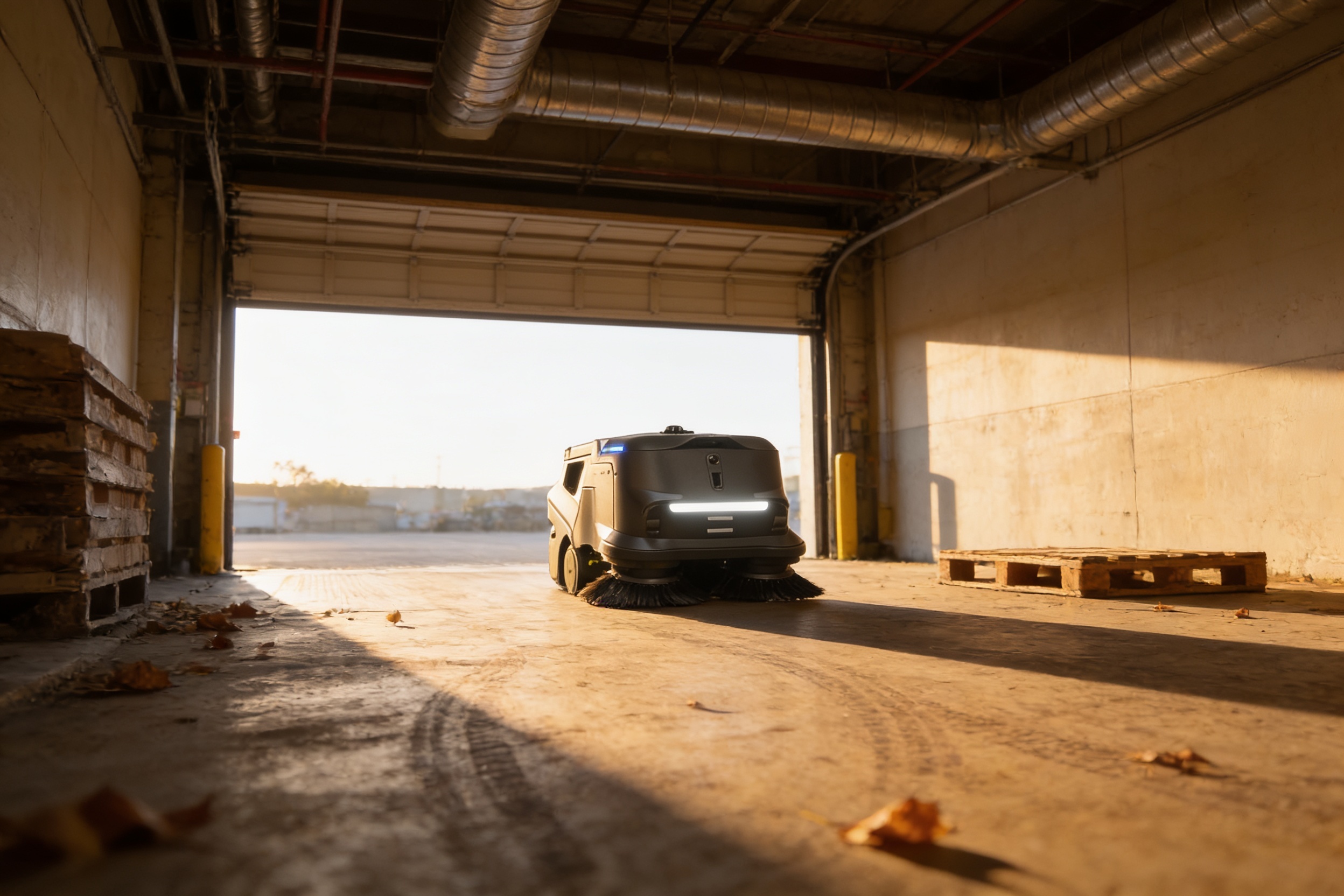
Open floor area and the number of separate dining rooms move the result most. A large open room with clear paths raises the share of hours the robot takes over. A room broken up by fixed fixtures lowers it, and the quote reflects the manual edge work that remains.
The hours your crew logs today on floor work matter as much as the wage. If closing staff already spend a fixed window on the floor, those hours are the offset, but only if the schedule actually removes them. The local wage for the job sets the value of each hour, so the same hours are worth more in a high-wage market. No published janitorial headcount per restaurant was found, so treat one person per site as a planning estimate to confirm.
Site readiness and the lease term also move the number. Clear aisles, consistent floor surfaces and workable doorway widths make the scheduled run reliable, and a reliable run is what lets the crew stop doing the work. Service coverage terms are part of the quote, so compare them along with the lease cost.
What are the risks to the return and how do you avoid them?
The main risk is hours that never leave the payroll. If the floor run is scheduled but the same people do the same floor work afterward, the labor offset is zero. Write the schedule, the reassigned duties and the review step down before go live, and check them against the first few weeks of records.
Staff churn is the other risk. The BLS reported that the quits rate in accommodation and food services was 3.5 percent in August 2026, versus 3.9 percent in August 2025, so churn has eased a little year over year. According to FRED, job openings in accommodation and food services were 780 thousand in February 2026, down from 991 thousand in January 2026. A scheduled run keeps floor care going when a shift is short, which is the practical benefit.
Injury data shows the stakes but does not isolate floor work. BLS reported 93,800 nonfatal injuries and illnesses in full-service restaurants in 2019. The days-away-from-work rate was 88.3 cases per 10,000 full-time workers, against 86.9 for all private industry, and cuts and lacerations ran at 23.6 cases per 10,000 full-time workers versus 7.1. No 2024 restaurant-specific rate was found, so this page does not claim a safety saving from floor care.
Where does a person still beat a cleaning robot?
A person is still the better choice for edge work, spills, broken glass and anything that calls for judgment in a crowded room during service. Those tasks need a hand tool or a quick decision, and a machine on a route does not make them. Keep staff on those duties rather than stretching the robot past its job.
The robot wins on repeatable coverage on a set schedule, and it does not need a shift to be present for a closed window. That combination is where the return comes from. The comparison below sets the two side by side without favoring either.
- Repeatable floor run
Cleaning Robot
Runs the same route on the set schedule
Staff
Does it when the crew has time, so timing varies by night
- Closed or quiet windows
Cleaning Robot
Can run in a closed window without a person on the floor
Staff
Needs a shift to cover the window
- Edges and corners
Cleaning Robot
Covers the open run and leaves edges
Staff
Handles edges, corners and fixed furniture
- Spills and broken glass
Cleaning Robot
Needs staff to flag and clean them
Staff
Responds right away with judgment and the right tools
- Decisions during service
Cleaning Robot
Not suited to crowded room decisions
Staff
Adjusts to guests and changing conditions
- Cost basis
Cleaning Robot
Fixed robot lease payment set after the assessment
Staff
Hourly labor valued at the local wage for the job
What is a realistic timeline from assessment to payback?
The sequence runs from free site assessment to lease quote, then site mapping and deployment, then staff training and a go live window. Each step depends on floor size, access and the terms in the quote, so this page does not state durations. Ask for the schedule in writing with the quote.
Payback is measured against the hours the crew actually stops doing. Track scheduled runs and staff hours across a full set of service days before reading results, because one good week can hide a schedule that is not holding. Review the range against those records and adjust the share of work the robot takes over.
Many sites begin with one leased unit on the main dining floor to test the route and the hours before adding others. A pilot like that gives the offset real records and keeps the first decision small. Your site's readiness sets how long the pilot runs.

How do you get a precise figure from a free site assessment?
A free site assessment turns the range into a figure for your room. We map the dining floor, time the current floor run with your staff, confirm which areas the robot covers, and note fixed obstacles. Then we return a lease quote with the fixed robot lease payment and a savings range based on your hours.
We are a US commercial robot integrator. We pick the right robot for the site, lease it through financing, deploy and integrate it, train the staff and service it nationwide, so one team carries the lease and the service calls. That is the practical reason to ask us before comparing options.
Bring the records you already have: scheduled cleaning times, the opening and closing roster, and the number of separate dining rooms. Those inputs narrow the range faster than any general estimate, and they make the quote easier to check against your own numbers.
Frequently asked questions
Upcoming hotels & hospitality events
- MeetupMPI Virginia Morning Brew Meet-Up, November 2026Nov 10, 2026Hampton, VA
- SummitVA1 Governor's Tourism Summit 2026Nov 18 to 20, 2026Kalahari Resorts & Conventions, Spotsylvania, VA
- ConferenceVirginia Association of Fairs ConventionJan 14 to 17, 2027Williamsburg Lodge, Autograph Collection, Williamsburg, VA
- ConferenceIHLA Convention and Exposition, 2027Feb 8 to 10, 2027Indianapolis, IN
Want a cleaning robot at your restaurant?
Tell us about your site. We will recommend the robot, quote the lease, and keep it serviced.
Sources
- US Bureau of Labor Statistics, Occupational Employment and Wage Statistics (OEWS May 2024)
- National Restaurant Association, 2025 State of the Restaurant Industry pocket guide
- BLS Occupational Outlook Handbook, Janitors and Building Cleaners
- BLS The Economics Daily, Quits rate in accommodation and food services, August 2026
- FRED, Job openings in accommodation and food services
- BLS The Economics Daily, 93,800 nonfatal injuries and illnesses in full-service restaurants in 2019