
The short answer
Autonomous mobile robot ROI for semiconductor fabs comes mainly from carrying wafer carriers and materials along controlled cleanroom routes, so skilled technicians spend more of their shift on process work. The return is a range, not a promise, and it depends on how many moves are repetitive, how many hours of laborer and material mover work the robot takes over, and the lease cost quoted after a free site assessment. The savings range on this page is a starting point that the site assessment narrows.
See what a autonomous mobile robot costsRun the numbers in the ROI calculator
Key takeaways
- The return comes from transport hours that move off skilled technicians, not from cutting a headcount.
- The labor side is priced in hours of laborer, freight, stock and material mover work that the robot takes over.
- Only the share of moves that is repetitive and mapped is realistic to automate.
- Route length, move volume and cleanroom rules move the payback more than any single input.
- A free site assessment turns the range into a lease quote for your fab.
Run the numbers for your site
Pick your city or state for a real regional number - we use the real BLS wage there. (On the live site this auto-detects from your location.)
What do you want to automate?
The robot takes the repetitive cart and pallet moves off the heaviest motion.
Autonomous mobile robot ROI for semiconductor fabs: where the return comes from
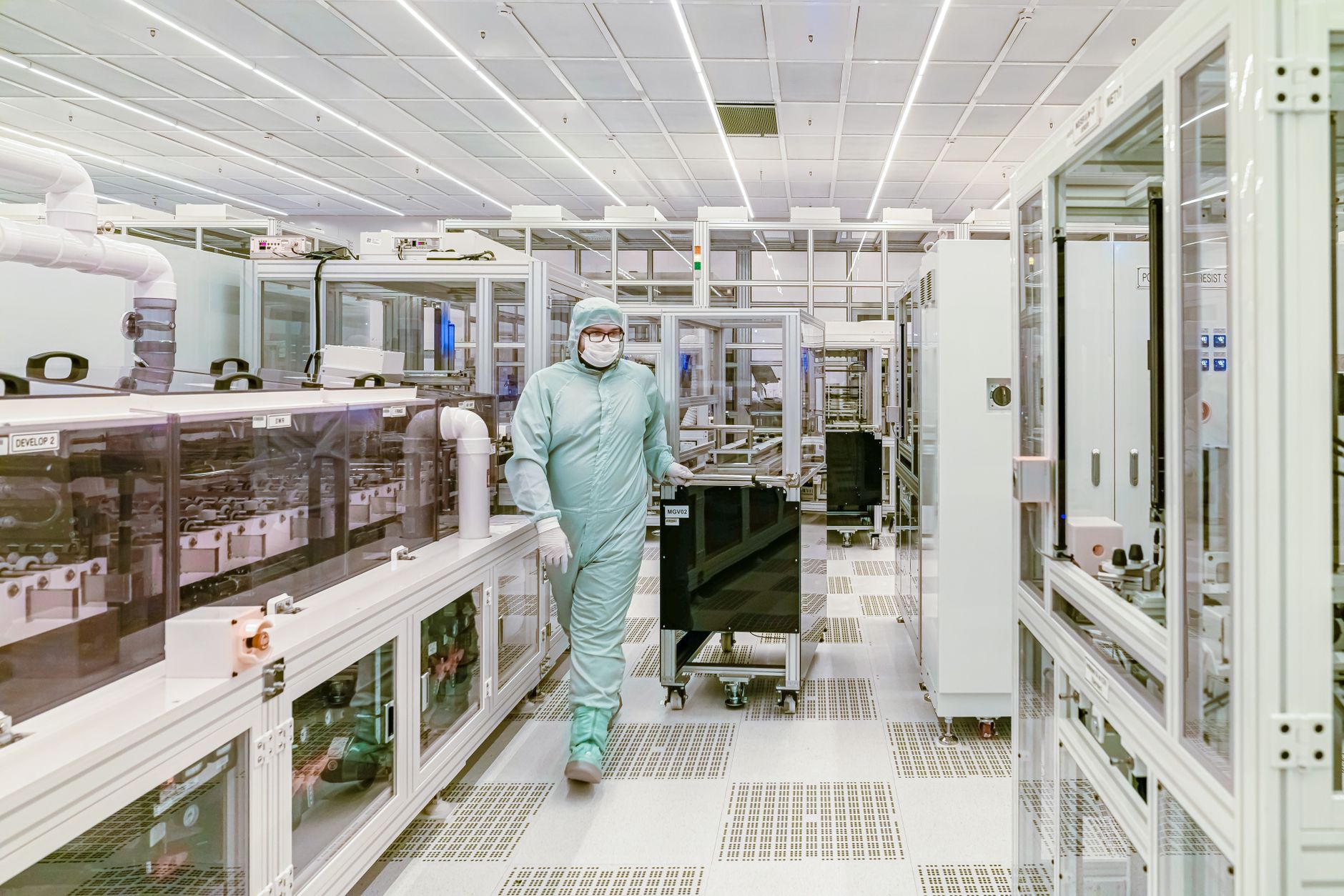
A semiconductor fab moves wafers between process tools in sealed carriers, and each move follows a route that repeats many times a day. Every trip needs gowning, walking, loading, logging and handoff. A trade case study published by Plant Engineering describes workers pushing cassette carts through cleanroom suits over several miles per shift before the site automated transport. Repeated, documented, controlled movement like that is where autonomous mobile robots earn their place.
The autonomous mobile robot ROI for semiconductor fabs comes from the people, not the carts. Semiconductor processing technicians are a small, specialized group. The Bureau of Labor Statistics Occupational Outlook Handbook reports about 31,900 jobs in 2024 and projects 11 percent growth from 2024 to 2034, much faster than average for all occupations. When a technician spends part of a shift on carrier moves, the fab pays a skilled person for work that does not need that skill.
Be precise about what the math prices. The savings figures on this page are priced on the hours of laborers, freight, stock and material mover work that the robot takes over, valued at the local wage for this job shown in the government wage data on this page. Technician time that is freed is real value, but it is not priced into the savings range.
How many people work in US semiconductor manufacturing?
The industry is large enough that staffing matters. According to the SIA 2025 Factbook, drawing on SIA-Oxford Economics, the US semiconductor industry had 345,000 direct jobs across manufacturing and design. The same research projects about 115,000 new US semiconductor jobs by 2030.
That projection is why freed hours matter. A 2023 SIA study, as reported by Fox Business, projected a shortfall of about 67,000 workers by 2030. When hiring is slow and each process technician is hard to replace, the fab gains when routine moves stop competing with process work for the same people. These are industry-wide figures across design and manufacturing, not counts for one fab.
Median hourly wage, Laborers and Freight, Stock, and Material Movers, Hand
$4,380
Monthly cost of one full-time worker, at the median wage plus payroll costs (an estimate, not a quote).
How much technician time goes to moving material?
No published source gives the share of fab labor spent on material moves, or a typical number of people doing material movement at one site. The 1,800 employees in the Plant Engineering case study are total plant staff, not transport headcount. The typical headcount on this page is an estimate of 12 people, not a published figure, and the site assessment replaces it with your own count.
Hours have to be measured on your floor. Log every carrier move for a set number of shifts, with the route, the tool, the time spent gowning and walking, and any wait at a load port or stocker. The table below shows the work task by task. The hour figures are not published for this setting, so the today column is what the assessment measures, and the calculator uses those measured hours instead of a national average.
| Task | Today | With a robot |
|---|---|---|
| Carrier moves between process tools | Measured per shift during the site assessment | Robot runs the mapped route on a schedule |
| Gowning and entry for transport trips | Each trip that needs a gowned person | Routine carrier moves no longer need a gowned trip |
| Pickups from stockers and storage | Staff walk to the stocker and wait | Scheduled pickups with the robot at the station |
| Waiting at load ports | Staff hold until the tool is ready | Robot queues at the tool and reports status |
| Logging each move | Manual records | Fleet software logs each move |
| Exceptions, tool faults and off-route jobs | Staff handle them | Staff still handle them, and the robot pauses and alerts |
No published hour figures exist for this setting. The today column is what the site assessment measures on your floor, and the calculator uses those measured hours.
How does the lease math work?
The math has three parts. First is the labor offset: the hours of laborer and material mover work the robot realistically takes over, multiplied by the local wage for this job. Second is the realistic share: not every move is worth automating, so the assessment sets the share of routes the robot can run safely and reliably. Third is the lease cost: the fixed lease payment in the quote, set after the site assessment and compared against the labor offset over the same period.
The calculator on this page is pre-filled for semiconductor fabs and returns a range, because the inputs are ranges. Change the hours, the share or the lease terms and the range moves. We are a US commercial robot integrator. We pick the robot for the site, lease it through financing, deploy and integrate it, train the staff and service it nationwide, so the same team that maps the routes also writes the lease quote.
Treat the output as a range with a stated basis. Measured hours come from your logs, the share comes from the route map, and the lease terms come from the quote. Label any input that is still an estimate. A range built that way can be tested on a pilot route, which is the point of the phased plan described below.

What changes the number up or down?
Several things push the return up. Long routes with many repeated moves, high move volume per shift, loops across several tools, and transport that needs gowning for each trip all raise the labor offset. A wafer-carrier transfer patent states that human operators increase contamination risk, human error risk and labor cost, so a fab that is cutting contamination exposure gets value beyond hours. The savings range does not price that value.
Other things push it down. Few stations, low move volume, frequent route changes, tight layouts that need rework for the robot path, and work heavy with exceptions where staff still handle most moves all shrink the realistic share. Integration effort also matters: a new tool interface or a fab qualification step adds time before the first hour is saved.
Layout is another lever. Stockers close to the tools give shorter routes and fewer moves to automate per shift, while tools spread across a large bay give a robot more distance to cover on each move. Note which situation your site is in during the assessment, because the same robot can show very different hours from one bay to another.
Robot or person for cleanroom transport: where each one wins
The honest comparison is not robot against person. It is which work the robot should take and which work stays with people. The robot is consistent on a mapped route, logs every move and does not need gowning for a routine trip. A person handles exceptions, judgment calls and tool faults better, and a technician is still the right person to verify a load at a process tool.
The practical split is to give the robot the repeatable middle of the work, the long mapped moves between tools and stockers, and keep people on the first and last steps of each transfer. That split keeps technicians on decisions that need them and removes walking that does not.
Market-research estimates also disagree on how much of the cleanroom transport market overhead transport (OHT) holds. One report, cited by Lucintel, puts OHT at about 62.99 percent of the 2025 worldwide semiconductor cleanroom transport system market, while other estimates give OHT 34 percent of AMHS share. Treat such figures as signals about the market, not as inputs to your return.
- Routine carrier moves on a mapped route
Autonomous Mobile Robot
Repeats the same route consistently and logs each move
Staff
Slower on repeat work and needs gowning for each trip
- Entry and gowning for transport trips
Autonomous Mobile Robot
Routine moves need no gowned trip
Staff
Gowning is required and adds time to every trip
- Exceptions and tool faults
Autonomous Mobile Robot
Pauses and alerts staff, but does not diagnose the fault
Staff
Diagnoses the fault and decides what to do next
- Verifying a load at a process tool
Autonomous Mobile Robot
Delivers the load and reports status
Staff
Verifies the load and the tool state before processing
- Changes to routes or layout
Autonomous Mobile Robot
Needs remapping and reprogramming before the change runs
Staff
Adapts on the day without setup
- Contamination and human error on routine moves
Autonomous Mobile Robot
Fewer human entries into the cleanroom on routine moves
Staff
Carries the contamination and error risk described in the wafer-carrier transfer patent
What are the risks to the return and how do you avoid them?

The main risk is underuse. A robot on a route that moves little material will not repay its lease. Map the routes before deployment, measure move volume over several shifts, and start with one unit on the busiest route before adding more. A phased rollout protects the return if the first route proves smaller than expected.
The second risk is cleanroom and tool integration. A robot has to fit the fab's clean class, its door and elevator interfaces and its load points at the tools. Confirm those requirements during the assessment and include qualification steps in the plan, so the timeline does not slip into the payback period. The third risk is staff who see the robot as a threat. Train technicians on the exception workflow and on what the robot will and will not do.
Safety belongs in the plan too. The Bureau of Labor Statistics reports a total recordable case rate of 0.9 for computer and electronic product manufacturing in 2024. That is a broader group than chipmaking, so use it as context for safety planning, not as a measure of fab transport risk.
What is a realistic timeline from assessment to payback?
The timeline runs in phases rather than a fixed number of weeks, because qualification and integration work varies by fab. A typical path runs from the free site assessment and route mapping, to a quote and lease agreement, to integration and fab qualification, to a pilot on one route, and then to phased expansion. Payback starts when the pilot route runs reliably on measured hours, not on the day the robot arrives.
Plan for the pilot to prove the realistic share before any expansion decision. If the measured hours on the pilot route match the assessment, the expansion case rests on data. If they do not, fix the inputs before more units are leased. Ask for the payback math in the quote using your own measured hours.
Keep a running record from the first shift. Compare measured hours on the pilot route against the assessment at regular intervals during the first months, and note every exception, since exceptions are the cost that most often shrinks the share after launch.
How do you get a precise figure from a free site assessment?
A free site assessment turns the range on this page into a figure for your fab. We map the routes, count carrier moves by shift, time gowning and walking at the stations involved, and confirm cleanroom and tool requirements. The output is a lease quote with a fixed lease payment, a deployment and training scope, and a service plan for your site.
Bring the data you already have: move logs, tool layouts, shift schedules, and any records of contamination events or transport incidents. The more measured hours we have, the narrower the savings range becomes. Nothing on this page replaces that measurement, and any figure you see before the assessment is a range to test, not a promise.
Frequently asked questions
Upcoming manufacturing events
- Trade showBrats & RobotsNov 10, 2026Alliant Energy Center Exhibition Hall, Madison, WI
- Trade showMATE Farm & Ranch ShowFeb 11 to 13, 2027MetraPark, Billings, MT
- ExpoPFMA Expo 2027Feb 17 to 18, 2027Washington County Fair Park, West Bend, WI
- ExpoLouisville Facilities Maintenance ExpoApr 15, 2027Mellwood Art Center, Louisville, KY
Want a warehouse robot at your semiconductor fab?
Tell us about your site. We will recommend the robot, quote the lease, and keep it serviced.
Sources
- US Bureau of Labor Statistics, Occupational Employment and Wage Statistics (OEWS May 2024)
- Plant Engineering
- U.S. Bureau of Labor Statistics, Occupational Outlook Handbook: Semiconductor Processing Technicians
- U.S. Bureau of Labor Statistics, Occupational Outlook Handbook: Hand Laborers and Material Movers
- SIA 2025 Factbook (via Libertify)
- iConnect007 (SIA-Oxford Economics workforce analysis)
- Fox Business (2023 SIA workforce study)
- U.S. Bureau of Labor Statistics, Industry at a Glance: Computer and Electronic Product Manufacturing
- Lucintel, semiconductor cleanrooms market