
The short answer
Cleaning robot cost in Madison, WI is set by how much open floor the robot must cover, how many unattended hours it can run, which surfaces and traffic it meets, how much mapping and integration the site needs, and how many units and service visits you require. A lease quote after a free site assessment turns those inputs into a fixed robot lease payment and lists what the lease covers.
See what a cleaning robot costsRun the numbers in the ROI calculator
Key takeaways
- Floor area and rated coverage set how many scrubbing hours a robot can replace.
- Overnight runs with no operator on site are where the labor case is strongest.
- Mapping, integration, training and service are the costs operators most often miss.
- Janitorial turnover is high enough that staffing gaps carry a measurable cost.
- The lease quote follows a free site assessment, so the number reflects your building.
Cleaning robot cost in Madison: what the number depends on
A cleaning robot cost in Madison, WI is not a figure you can read off a list. It is the fixed robot lease payment for the unit, plus what the site needs to run it, measured against the staff hours the robot takes off the floor. Each part moves with the building, so two offices of the same size can come out very differently.
The local base is large enough to matter. According to USAFacts, the Madison metro population reached about 707,600 in 2024, up from about 606,900 in 2010, a 16.6 percent increase. Typical sites here include office buildings, clinics, schools, grocery and retail stores, fitness centers and warehouses, and each one has its own floor, hours and traffic pattern.
We take those inputs on site and quote a lease with the service and training listed. The sections below explain each input so you can check any quote against your own building.
Which factors move the cost up or down at a Madison site?
Floor area matters most, and it matters through rated coverage. According to a janitorial equipment retailer's guide, walk-behind scrubbers with compact 14 to 17 inch decks clear about 8,000 to 12,000 square feet per hour, mid-size 17 to 22 inch decks about 12,000 to 20,000, and large 20 to 28 inch decks about 20,000 to 35,000. Ride-on units with 28 inch decks and up are listed at 35,000 to 70,000 square feet per hour or more. Those are ideal maxima, and the same guide says real output falls with turns, obstacles, layout and operator experience.
Surfaces and obstacles come next. Sealed concrete, tile and carpet do not take the same route or the same number of passes, and racks, islands, thresholds and ramps cut into the open floor a robot can cover. A floor that looks large on a plan can drop well below its rated coverage once every fixture is counted.
Traffic and shift timing decide when the robot can run. An empty building gives an uninterrupted overnight window, while a clinic or school busy until late may need a split schedule or a smaller unit. Every hour the robot must pause or wait for people adds planning and supervision that the quote has to account for.
Mapping, integration and unit count finish the list. The first map takes site time, and layout changes require the map to be updated. Connecting the robot to a work order or building system adds setup and testing. Running two or more units to cover a split floor, or keeping a spare for downtime, raises the total, and how often you need on-site visits decides how large the service plan must be.
How much labor does floor care take in Madison?
Madison has a sizable janitorial workforce. According to Stacker, the Madison metro had about 5,950 janitors and cleaners, except maids and housekeeping cleaners, in its count. Stacker does not give a clear survey year, so treat that count as a local snapshot rather than a fixed benchmark. Statewide, according to WageDex, Wisconsin has about 45,640 jobs in the same occupation, using the May 2025 Occupational Employment and Wage Statistics release.
Official Madison-only tables from the Bureau of Labor Statistics were not retrieved for this page, so the metro count comes from a secondary source. Use it to judge scale, not to set a budget line. The wage figures shown alongside this page come from the government data displayed there.
Labor is the cost a robot touches directly. Each pass a robot runs is a pass a person does not run that night. The question for a site manager is whether the hours removed, plus the attention freed for detail work, outweigh the lease and the support the robot needs.
How does turnover add cost to manual cleaning?
Turnover is the cost most sites underweight. A building services staffing vendor's report, citing ISSA and BSCAI data, puts frontline turnover at multi-site operators at 150 to 200 percent. That source is a vendor, not a government agency, so read the range as a warning sign rather than a measured rate for any one employer.
The same report says most separations in building services happen within the first 90 days of employment. A crew can look full on paper while a large share of its members are still learning the route, the chemicals and the equipment. Each new hire takes time off the floor during that learning period.
For an all-industry view, the vendor report gives average voluntary turnover of about 17 to 20 percent, citing BLS JOLTS for 2025, though the report itself did not verify that figure. The gap between that and the frontline range is why an overnight crew is hard to hold steady, and why a fixed lease payment is easier to plan around than headcount that changes every few months.
How many hours does a cleaning robot take over each night?
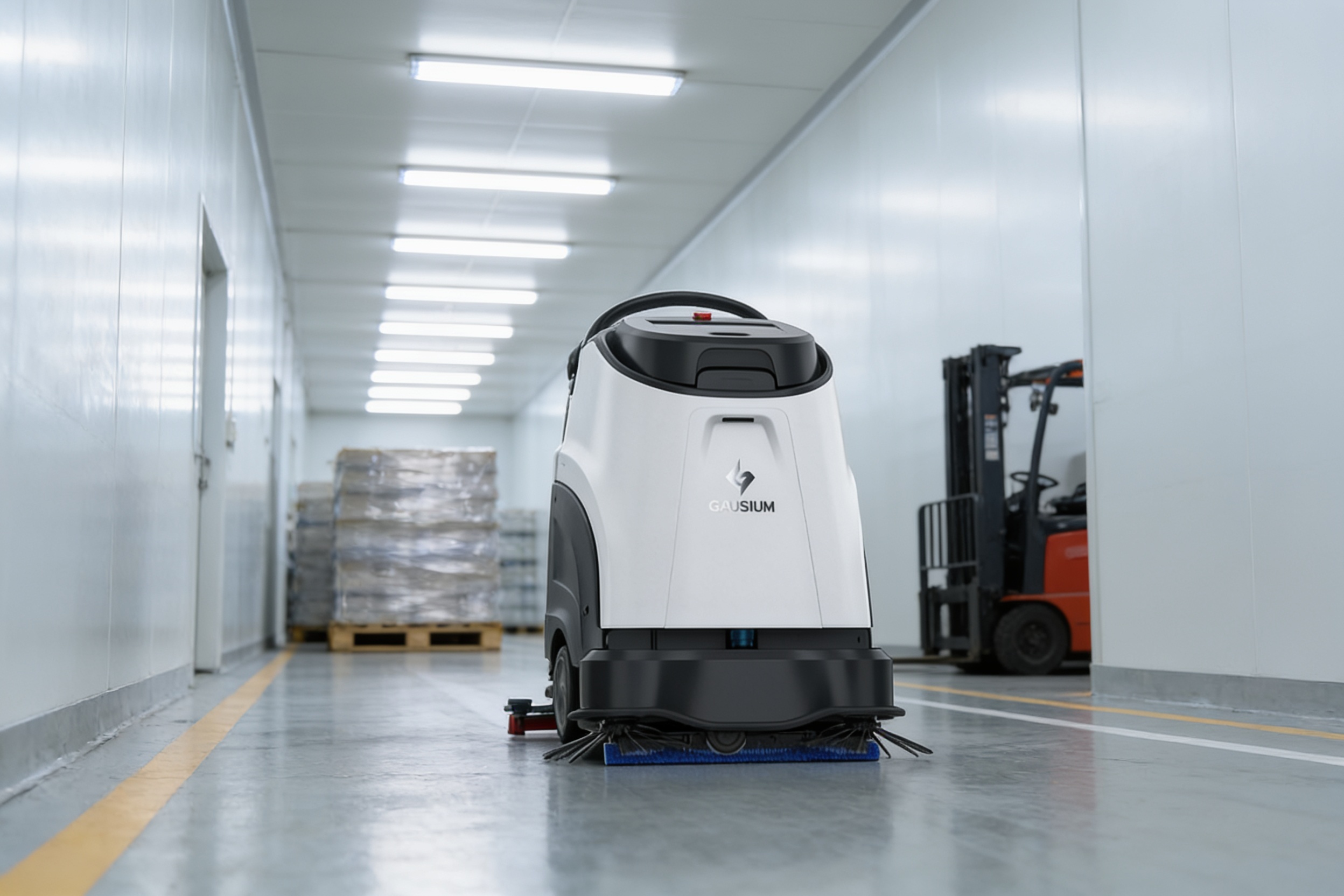
No independent measured figure for hours saved per shift was found for 2025, so this section works from coverage rates and says so. Take an example floor of 40,000 square feet. At the rated range for a mid-size walk-behind, about 12,000 to 20,000 square feet per hour, one clean pass takes about 2 to 3.3 hours before turns and obstacles. A compact unit at 8,000 to 12,000 takes about 3.3 to 5 hours, and a large ride-on at 35,000 to 70,000 takes about 0.6 to 1.1 hours.
Real output runs lower. Turns, obstacles and layout pull the effective rate down, and a second pass or a rinse step adds time. Plan for longer runs than the rated math suggests, and let the site assessment time the actual route rather than trusting the maximum.
The labor side is what moves the decision. Walk the floor, record which passes staff run each night, and count the minutes spent on setup, supervision and equipment cleanup. Those are the hours the robot can take over, and they are what the quote is weighed against.

How common is autonomous floor cleaning, and what do operators worry about?
Adoption is still early. A joint survey by AACEM and ISSA went to about 23,000 contractors, in-house providers and facility managers. About two-thirds had not used autonomous cleaning equipment. A follow-up reported that 27 percent of responses came from existing users, and respondents named cost and return on investment as recurring concerns.
Two caveats matter. The survey date is not confirmed in our notes, and it appears to be from the late 2010s, so it describes earlier conditions. The full report sits behind ISSA membership, so the figures here come from a summary. Read them as a sign of where the market started, not a measure of today.
For a Madison operator, those concerns map onto the same inputs covered above. Return on investment depends on hours removed, floor area covered and the service a site needs, not on one headline figure.
How does leasing through financing work, and what does the quote include?
You lease the robot through financing. The lease spreads the equipment cost into a fixed robot lease payment over the term, so the budget line is predictable. Our quote states the payment, the term and what the lease covers, and it is prepared only after we have assessed your site.
Financing programs vary, so ask for the terms in writing. The quote should show the payment, the lease length, the proposed start date, deployment and integration items, training, and the service plan with its response expectations. It should also say what happens when a unit fails, including whether a spare is available.
A fixed payment is easier to compare with the labor hours you carry today than a headcount that moves with turnover. Put the quote beside your overnight hours, your vacancy rate and your overtime, and the comparison will show where the robot pays its way and where it does not.
What can a cleaning robot not do, and how do I get a quote?
A floor robot covers the open floor. It is not a replacement for every cleaning task. Restrooms, glass, high dusting, detailed corner work, stairs and cleanup of spills or large debris generally still need people or other equipment. A scrubber that handles a main corridor overnight does not clean the restroom beside it.
Entrances deserve a close look. In cold seasons, grit and moisture come indoors on shoes and carts, so entry mats and thresholds need review during the assessment. We did not verify local climate or building stock data for this page, so we treat entrances as a site question rather than a stated figure.
To get a quote, request a free site assessment. Send the floor plan, rough square footage, the hours the building is empty, any systems the robot must connect to, and how many units you think you need. We measure the rest on site and return a lease quote with the fixed robot lease payment and the items it covers.
Frequently asked questions
Upcoming events in Madison, WI
Put a robot to work in Madison.
We walk your site, learn the job, and recommend the unit that fits. Then we quote the lease, deploy it, and keep it serviced.
Sources
- Stacker: lowest-paying jobs in Madison
- WageDex: janitors and cleaners in Wisconsin
- BLS Injuries, Illnesses and Fatalities snapshot: janitors and cleaners
- Business Insurance: 2024 work injury rates
- Building services attrition report (vendor)
- Janitorial equipment retailer guide: scrubber coverage per hour
- USAFacts: Madison metro population
- AACEM and ISSA autonomous cleaning survey