
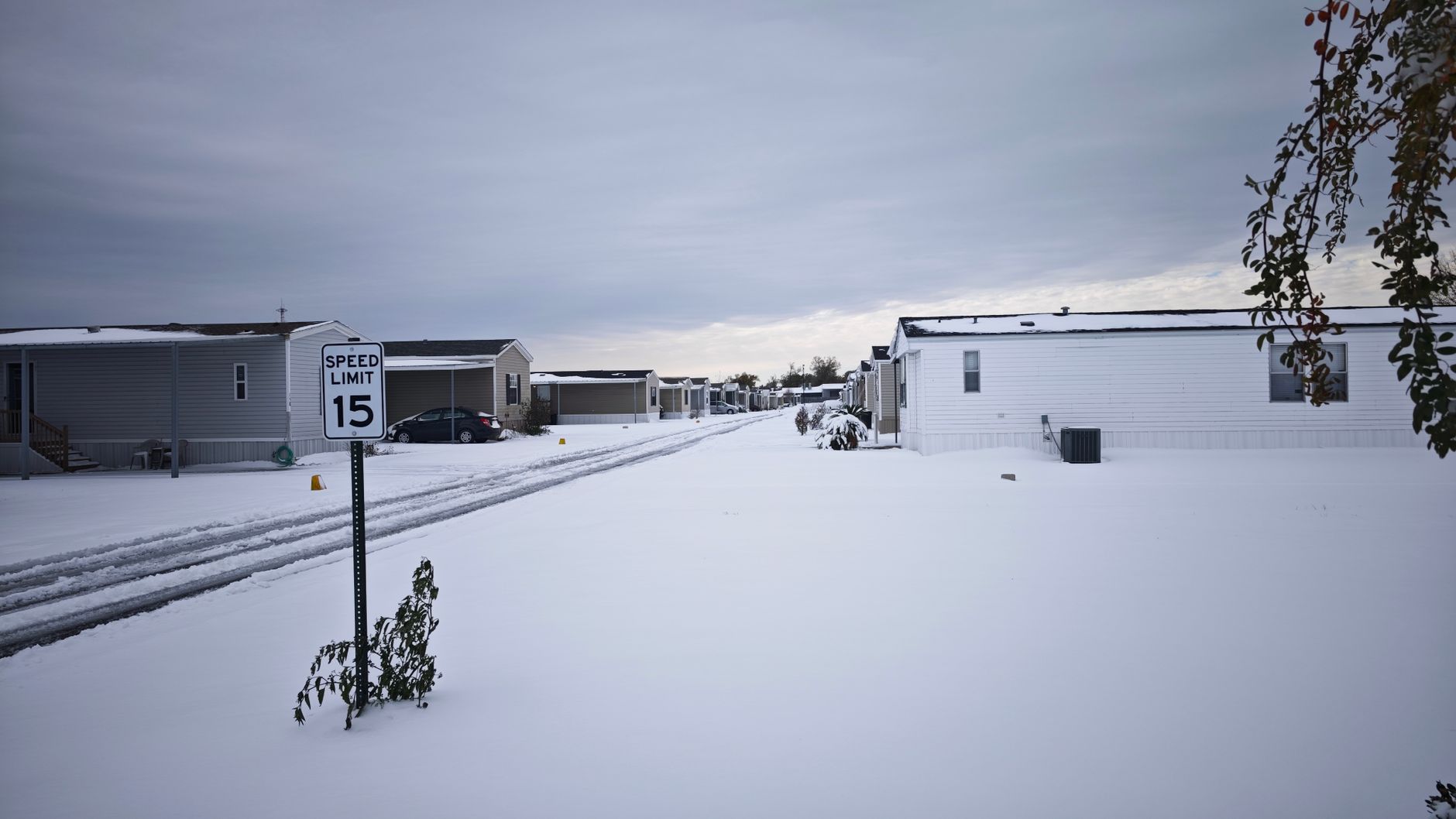
The short answer
A robotic lawn mower vs groundskeeper decision at a manufactured home community comes down to whether the open turf between homes is a steady, repeating weekly job. A robot makes sense for that open turf and for community roadside strips when staff time is short, and it does not make sense as a full replacement for grounds work. A groundskeeper still handles edges, obstacles, drainage, litter, and resident requests, so the workable setup is one robot plus fewer staff, never zero staff.
Key takeaways
- A robot takes the repeating open-turf mowing; a person still handles edges, obstacles, drainage, and residents.
- The workable model is one robot plus fewer staff, never zero staff.
- No verified source gives mowing hours or staffing for these communities, so time your own crew first.
- Grounds work carries real injury risk, so reducing hand mowing is a safety question as well as a labor one.
- Service Robot Co. quotes a lease through financing only after a free site assessment.
Robotic lawn mower vs groundskeeper: which makes sense at a manufactured home community?
A robotic lawn mower makes sense at a manufactured home community when the open turf between homes and along community roads is a steady, repeating job. Mowing the same ground on a fixed weekly cycle is the kind of work a robot handles well, and that is the part of a groundskeeper's week where a machine can free up real time. It does not make sense as a replacement for the whole grounds function, and it is a poor fit for grounds that change shape from week to week.
The Manufactured Housing Institute estimates there are about 40,000 manufactured home communities in the United States, and it notes that this is an industry estimate rather than an official federal count. A 2016 Fannie Mae commentary said there may be as many as 50,000, while identifying about 37,300 from third-party data. The gap shows why local counts matter more than national totals when you plan a crew.
The question is not whether the machine can cut grass. The question is which share of the grounds work is repeatable, how much of that repeatable work is mowing, and whether the people who remain can handle edges, obstacles, drainage, and resident requests. The practical way to answer that is to time the crew for a full week, not to guess.
What does a groundskeeper actually do in a shift at a manufactured home community?
A groundskeeper at a manufactured home community works a mix of tasks that do not repeat on a clock. Mowing and trimming are the visible part, but the shift also covers edges along home pads and fences, bed and shrub care, litter and debris pickup, watering and irrigation checks, seasonal leaf or snow clearing, and small repairs to signs, curbs, and common-area fixtures. Those tasks move with the weather, with resident complaints, and with whatever broke that day.
Much of the shift is spent moving between those jobs. A person who mows the open turf in the morning may be called to a flooded low spot after lunch, then to a fence line before the end of the day. That switching is where time disappears, and it is why a single fixed mowing route does not capture the whole job.
According to the U.S. Bureau of Labor Statistics, grounds maintenance workers held about 1.3 million jobs in 2024, and about 1,192,500 of those were landscaping and groundskeeping workers. Those figures describe the national workforce, not a community crew, but they show how many people do this kind of work and how many employers compete for them. If your crew is small, the same person usually covers mowing and every other task, which makes mowing hours hard to pull out of a timesheet.

Which grounds tasks can a robot take, and which can it not?
A robotic lawn mower takes the open turf that repeats on a schedule. That means the broad lawn areas between homes, the strips along community roads, and common lawns cut on a fixed weekly cycle. The robot runs its route, returns to its charging point, and covers the same ground on the next scheduled run.
It does not take edge work. Trimming around home pads, skirting, fences, mailboxes, and utility boxes still needs a person with a hand tool. The same is true of beds, shrubs, trees, leaves, litter, and anything that has to be looked at before it is cut. A robot can mow past these areas, but it does not decide what needs attention.
Drainage, irrigation heads, and debris matter too. A robot needs a clear run, so someone has to check for objects on the turf, sprinkler heads that stand up above the grass, and low areas that hold water. Those checks are short, but no one else is positioned to do them.
How many hours does mowing take, and what does the labor picture look like?

No verified source gives mowing hours per week, staffing levels, or acreage for manufactured home communities. That means the number has to come from timing your own crew, which is exactly what a site assessment does. Any hour figure that appears without a local measurement should be treated with suspicion.
What the data does show is how the grounds workforce is expected to change. The Bureau of Labor Statistics projects employment of grounds maintenance workers to grow 4 percent from 2024 to 2034, about as fast as the average for all occupations. Growth at roughly the national average means the same workers are being sought by many employers, including the other properties and contractors in your area.
Measure the mowing portion of the week by listing each task, how long it takes, and how often it happens. Subtract the open-turf mowing that a robot would take over. What remains is the work your team still has to do, and that residual determines how many people you can reduce, and whether you can reduce at all.
How do turnover, overtime, night shifts, and sick days affect grounds coverage?
Turnover is where grounds coverage most often breaks. A Parks Associates survey, reported by Bisnow, found that almost half of multifamily owners and managers said hiring maintenance staff was difficult, 45% said retaining them was difficult, and just under 25% reported being understaffed. Those findings cover multifamily apartments, not manufactured home communities, so treat them as a signal rather than a local count.
An industry survey published by Greenius in its 2023 Landscaping Industry Trends Report, based on 450 professionals, found that 32% had lost a significant number of staff over the past year. The publisher is tied to the landscaping trade, so read it as a view from inside the industry. It points the same direction as the multifamily data.
When one person leaves, the mowing does not stop. It moves to whoever is left, often as overtime or as a weekend or evening shift. Sick days do the same thing on a smaller scale. A robot covers the repeating open-turf cycle on its own schedule, so a missed week does not depend entirely on one employee's calendar. That is the strongest practical reason to consider a robot, though it does not remove the need for people.
How does a team work with a robot, and how is staff trained?
The team pattern that works is a robot plus fewer staff, never zero staff. The robot takes the repeating open-turf cycle, and the people who remain take edges, obstacles, drainage, resident work, and the daily checks the robot needs to keep running. Those roles are planned into the schedule from the start.
Service Robot Co. is a US commercial robot integrator. It selects the robot for the site, provides robot lease options through financing, deploys and integrates the unit, trains staff on daily checks and basic recovery, and services the robot nationwide. Training reduces early friction, because a crew that knows what to look for each morning does not need a service call for every small stop.
Ask the crew to keep a short log for the first several weeks, noting what the robot missed, what it struck, and what needed a person. That log is the basis for adjusting the route and the schedule, and it shows the staff what they should own going forward.
What can a robotic mower not do?
A robotic mower cannot judge what it is cutting around the way a person can. It does not trim edges along home pads, fences, or utility boxes, it does not pick up litter or fallen limbs, and it does not decide when a low spot is flooding. Any task that needs a decision, a second look, or a hand tool stays with a person.
It also depends on the site. Steep slopes, uneven or unmapped turf, saturated ground, and dense overhanging plants can stop a route, and each stop needs attention. A robot left to run on wet ground can also leave ruts or compacted patches that a crew then has to repair.
Residents are part of the job. A robot cannot answer a question at a home door, explain a schedule, or take a complaint. Those conversations are part of why a groundskeeper is useful at a community, and they are work a machine does not replace.
What are the injury and safety considerations for grounds work?
Grounds work carries real injury risk, and that is part of the case for reducing hand-operated mowing, not just a labor count. The Bureau of Labor Statistics reported 185.0 nonfatal injury and illness cases involving days away from work per 10,000 full-time equivalent workers in landscaping and groundskeeping in 2019. Across 2015 to 2019, that rate ranged from 149.0 in 2018 to 218.8 in 2016.
Fatal risk is a separate and older series. A Bureau of Labor Statistics Monthly Labor Review article reported that the groundskeeper fatality rate rose from 7.3 per 100,000 workers in 1992 to 15.0 in 2002. Those figures are more than two decades old and should be read as a trend, not as a present rate.
A robot does not remove the hazards of edge trimming, lifting, or working near traffic on community roads. The staff who remain still need protective gear, training, and clear routes. Reducing hours on hand-operated equipment is a reasonable goal, but the aim is to change the work, not to assume the risk is gone.
How do you get started with a robot lease at a manufactured home community?
Start by measuring the work as it runs today. Time the full mowing cycle for a week, list the edges and obstacles, note the drainage problems, and record who covers each task. That baseline is what the site assessment checks against, and it is what makes a robotic lawn mower vs groundskeeper comparison honest.
Service Robot Co. offers a free site assessment. The team maps the turf, notes obstacles and the route, and provides a lease quote through financing after the assessment, with lease options laid out in writing. The payment comes in that quote, because turf size, edges, and service needs differ from one community to the next.
Consider starting with one robot on one section of turf, running a pilot, and keeping the staff who handle edges and everything else. Expand only when the log shows the robot covering the cycle reliably. Service matters as much as the machine, so ask how quickly a visit happens and whether a spare unit or loaner covers downtime.
Frequently asked questions
Want a robotic mower at your manufactured home community?
Tell us about your site. We will recommend the robot, quote the lease, and keep it serviced.
Sources
- Manufactured Housing Institute, community research
- Fannie Mae, 2016 commentary on manufactured home communities
- U.S. Bureau of Labor Statistics, Occupational Outlook Handbook: Grounds Maintenance Workers
- U.S. Bureau of Labor Statistics, Landscaping and Groundskeeping Workers injury and illness data
- U.S. Bureau of Labor Statistics, Monthly Labor Review: Occupational Injuries Among Groundskeepers, 1992-2002
- Bisnow, Parks Associates maintenance labor survey
- Greenius, 2023 Landscaping Industry Trends Report