
The short answer
A drone vs overnight security guard decision at a lumber yard usually favors the drone for open ground, since it can fly the perimeter and yard aisles that a guard would otherwise walk on foot all night. It does not replace a person for alarm response, gate decisions or anything that needs someone on the ground who can act. For most yards the practical answer is a drone plus fewer guard hours, with a staffed person still on every shift.
Key takeaways
- A drone covers open lumber stock faster than a guard walking on foot, but it cannot open a gate or confront anyone.
- The drone case is strongest where the yard is large, open and too long to walk every night.
- Security guard turnover in the US is high, so the staffing risk behind night coverage is real.
- Beyond line of sight drone flights still need an individual FAA waiver under Part 107 today.
- Start with a free site assessment and one pilot area before deciding on the whole yard.
Is a drone vs overnight security guard setup worth it for a lumber yard?
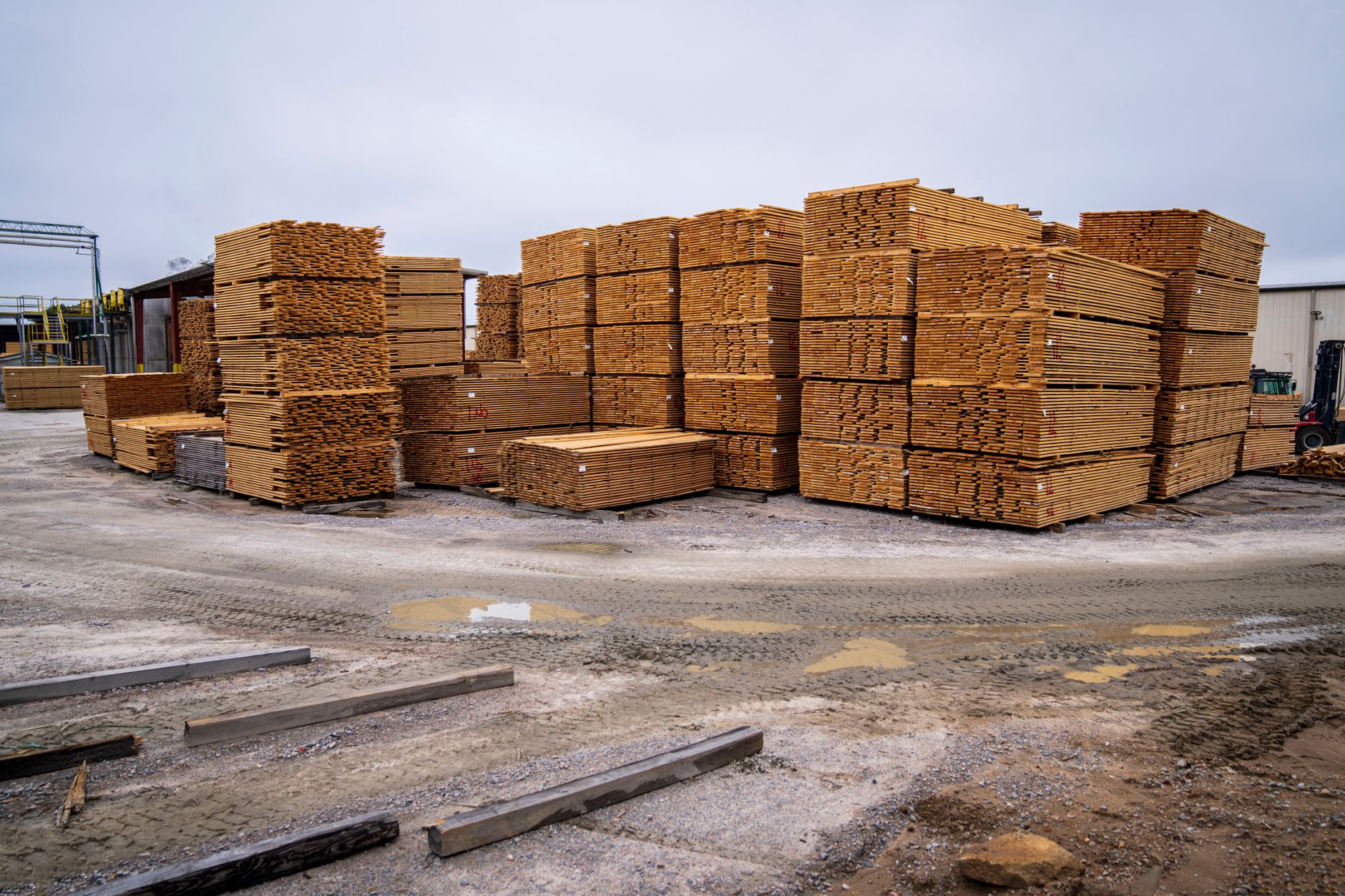
For most lumber yards, a drone makes sense as the patrol layer over open ground, and a person still makes sense as the response layer. Stock sits in long outdoor rows of timber, bundles and sheet goods, exposed to the weather and to the road. A guard walking those rows on foot covers them slowly, one lane at a time. A drone can fly the same perimeter and aisles in less time, provided the route is planned and the flight is permitted.
A drone makes less sense when the yard is small, when most stock sits under roof, or when the main exposure is a closed building with doors and windows. It also cannot be the only protection at a site with no staffed alarm response, because a drone can see a problem but cannot stop it.
What does an overnight security guard actually do in a lumber yard shift?
A night guard at a lumber yard usually starts at the gate, walks the perimeter fence and the main aisles, checks loading docks and any sheds, responds to alarms, and writes a log of each round. Much of the shift is walking, because the stock is laid out in rows and the guard follows the same loop more than once.
The guard also handles people. A visitor after hours, a truck that is not on the schedule, or a contractor who needs the gate opened all require a decision by someone who can be seen and questioned. That judgment is a large part of the job, and it is the part a drone cannot take over.
Since most of the shift is walking, judgment and calls to the office, the real question is which of those tasks can move to a drone without losing the person who makes the decisions.
Median hourly wage, Security Guards
$4,317
Monthly cost of one full-time worker, at the median wage plus payroll costs (an estimate, not a quote).
- Covering open stock rows
Drone
Flies a planned route over open rows and the perimeter without walking each aisle
Overnight Security Guard
Walks rows slowly, one lane at a time, but can check details up close
- Hours it can work
Drone
Works on a set schedule when weather and flight approval allow
Overnight Security Guard
Works the full shift when staffed and can respond at any hour the shift runs
- Response to an alarm
Drone
Flies to the alarm point to look, but cannot open a gate or stop anyone
Overnight Security Guard
Walks to the alarm, checks the gate and decides what to do
- Visitors and trucks
Drone
Cannot approach or question a person
Overnight Security Guard
Can ask who is there, check paperwork and decide on entry
- Weather
Drone
Can be grounded by wind, rain or low visibility
Overnight Security Guard
Keeps working through most weather with the right gear
- Staffing risk
Drone
Does not quit, but still needs a trained operator on site or on call
Overnight Security Guard
Turnover in the industry is high, so the post often changes hands
Which parts of a lumber yard can a drone cover at night?
A drone suits the open ground: the outer fence line, the long aisles between stock lots, uncovered stacks and the yard edge along the road. On a set route it covers those areas in each pass and sends its images or sensor data to a staffed point, so the person on duty sees what the flight saw.
The route has to match the yard's real layout. Tall stacks can block sightlines, roofed areas need a separate plan, and yard edges that touch a neighbor's property or a public road need checking before the first flight. In phase one of a randomized trial run with Montgomery County, Maryland police, the University of South Carolina reported that drones reached the scene before patrol units about 74 percent of the time when both were sent. That is police response, not yard patrol, but it shows what a drone can do as the first set of eyes.
What can a drone not do at a lumber yard?
A drone cannot open a locked gate, enter a closed building or approach a person to ask who they are. It cannot decide whether an alarm is real, and it cannot physically stop someone from taking material off a truck. Those are the moments when a guard matters most, and a yard that drops its guard entirely loses the response step.
Weather is the second limit. Wind, rain and low visibility can ground a drone on some nights, which means the yard still needs a staffed fallback for those nights. The drone also needs a charged battery and a working link to the monitoring point before each shift, so the night starts with a check, not an assumption.
Night operations and flights beyond line of sight are also governed by FAA rules, covered in a later section of this page.
How many guard hours does a lumber yard depend on, and why is staffing hard?
According to the UC Berkeley Labor Center report, as summarized in a UC Berkeley news release dated April 23, 2026, annual turnover in the US security guard industry was 89 percent in 2024, against 66 percent across the private sector. For a yard that keeps a guard on nights, that means a steady cycle of hiring and training, and a new night guard may not yet know the yard's layout.
Pay is part of the staffing problem. According to standforsecurity.org, which summarizes the same Berkeley-linked research, 71 percent of security officers earn less than the MIT living wage for a single adult. The government wage data on this page gives the local wage for this job, and the staffing question depends on that wage level and on how many shifts the yard can actually fill.
Industry employment figures point the same way. A buildingsecurity.com compilation puts security guard employment at about 1.24 million in 2024, with about 161,000 to 162,300 openings a year and projected growth of 0.4 percent from 2024 to 2034. That is an aggregator page, so treat it as context rather than a yard-level count.
The research did not turn up verified overtime or sick-day figures for lumber yard guards. Pull overtime, sick-day and unfilled-shift numbers from your own timesheets before you decide.
How many lumber yards are there in the US, and how big is the theft problem?
IBISWorld, a private research firm, estimated 34,448 lumber and building material store businesses in the US in 2026. That figure counts stores, not outdoor yards, so the share with open stock is smaller. Older Census-based tables give different counts, and their years are unclear, so the 2026 estimate is the better starting point for scale.
Theft losses are harder to pin down. No verified US loss figure specific to lumber yards was found. Builder's Daily notes that jobsite theft statistics are hard to get, because many incidents fall below insurance deductibles and go unreported. Your own incident log and insurance claims history will tell you more than any national number.
How does a drone and guard team work together on a lumber yard?
The model we recommend keeps a person on every shift, with the drone taking the open-ground rounds. The drone covers the perimeter and aisles on a schedule, a trained staff member or guard handles alarms and gate decisions, and any visit by a person goes to someone on the ground. The team never goes to zero staff.
Drones also screen calls well when they serve as the first set of eyes. In the same Montgomery County trial, pilots judged an in-person response unnecessary in 19.5 percent of deployments, according to the University of South Carolina. A yard can use the same logic: a drone check on an alarm point may show a false alarm, so the person on duty goes only when needed.
Service Robot Co. is a US commercial robot integrator. We pick the right robot for the site, lease it through financing, deploy and integrate it, train the staff and service it nationwide. For a yard, that means the flight route, alarm link and staff training are set up before the first night, not left for the yard team to work out.
Are night drone flights at a lumber yard allowed under FAA rules?

According to airdata.com, beyond visual line of sight flight still requires an individual FAA waiver under Part 107. A perimeter flight can easily go beyond the pilot's line of sight, so the waiver has to be in place before the flight is scheduled, not after the first incident.
A proposed rule, Part 108, was issued in August 2025. It would cover drones up to 1,320 pounds, compared with 55 pounds under Part 107. An October 2026 article reports that no final rule has been published in the Federal Register yet, and AIN reports that the overhaul is approaching its finish line. Plan around the rule in force on the day of the flight.
Whoever flies the drone should check waiver status and any local limits before each shift, and the yard should keep those records.
How do we decide, and how do we start with a drone at a lumber yard?
Start with the yard's open ground and your incident log. If most of your exposure sits in open stock that goes unwatched overnight, a drone pilot on that area is the right first test. Before any lease decision, a free site assessment maps the flight route, the alarm link, the weather exposure and the staffing plan.
The lease is quoted after the site assessment, so the fixed robot lease payment reflects the actual route and scope rather than a guess. Service Robot Co. offers lease financing, and we handle deployment, integration, staff training and nationwide service. Most yards should start with one unit and expand only if the first nights show that it works.
Frequently asked questions
Want a drone at your lumber yard?
Tell us about your site. We will recommend the robot, quote the lease, and keep it serviced.
Sources
- US Bureau of Labor Statistics, Occupational Employment and Wage Statistics (OEWS May 2024)
- UC Berkeley news release on the Labor Center security guard report
- standforsecurity.org summary of the UC Berkeley Labor Center security officer report
- buildingsecurity.com security guard employment statistics
- IBISWorld lumber and building material stores number of businesses
- University of South Carolina news on drone first responder research
- airdata.com Part 108 article
- AIN FutureFlight article on the BVLOS overhaul
- Builder's Daily on jobsite theft statistics