
The short answer
The drone vs overnight security guard question at a fairgrounds usually ends in a team, not a swap. A drone flies scheduled perimeter and building patrols over open acreage and streams live video to a monitoring desk, which covers the watch work one guard cannot do alone, but it cannot test a locked door, deal with a person at a gate or respond on foot. Drone patrols at fairgrounds depend on flight approvals for your site, and in the most recent reports we reviewed, the federal rule that would simplify beyond-visual-line-of-sight flights was still under review.
Key takeaways
- A drone covers scheduled perimeter and building patrols over open acreage and streams live video to a monitoring desk.
- Guards still handle gates, locked doors and any response on foot, so plan for a drone plus fewer staff, not zero staff.
- Reported security industry turnover was 89 percent in 2024, which makes staffing gaps a constant operating issue.
- Beyond-visual-line-of-sight flights need approval, and the Part 108 rule was still under federal review in the most recent reports we reviewed.
- Start with a site map and a one-zone pilot before committing the whole grounds.
Can a drone replace an overnight security guard at a fairgrounds?
The drone vs overnight security guard question comes up often for fairgrounds, and the usual answer is not a straight swap. A fairgrounds after dark is a large, mostly empty site with long fence lines, open acreage, barns, exhibit halls and administration buildings spread across it. One guard cannot watch every gate and building at once, so the real question is which parts of the watch work a drone can take and which still need a person.
A drone fits the open ground and the scheduled walk around buildings. It can fly the same perimeter on a fixed route, check building exteriors and send live video to a monitoring desk, which is the watching a guard does on grounds. It is a poor fit where the job is physical or a matter of judgment: testing doors, responding to an alarm on foot, dealing with a person at a gate, or deciding whether someone belongs on site.
When does a drone make sense at a fairgrounds, and when does it not?
A drone case is strongest when the grounds are large, lightly lit after dark, and the number of gates and buildings is more than one guard can watch. Most fairgrounds fit that profile on ordinary nights, though event weeks change the layout and the crowd. According to Amusement Today's report on the IAFE 2025 economic impact study, there are nearly 1,400 fairgrounds nationwide. That count comes from the study database, and no source in our research says any count is exhaustive.
The case is weaker where the site is compact, where fixed cameras and locked fencing already cover most of the grounds, or where the owner expects a guard to handle access control. In those cases a camera upgrade plus a guard may be the better first step. Weather also limits drone hours, so a site with frequent high wind or low cloud gets fewer usable flight hours than a calm, dry one.
Median hourly wage, Security Guards
$4,317
Monthly cost of one full-time worker, at the median wage plus payroll costs (an estimate, not a quote).
What does an overnight security guard actually do in a fairgrounds shift?
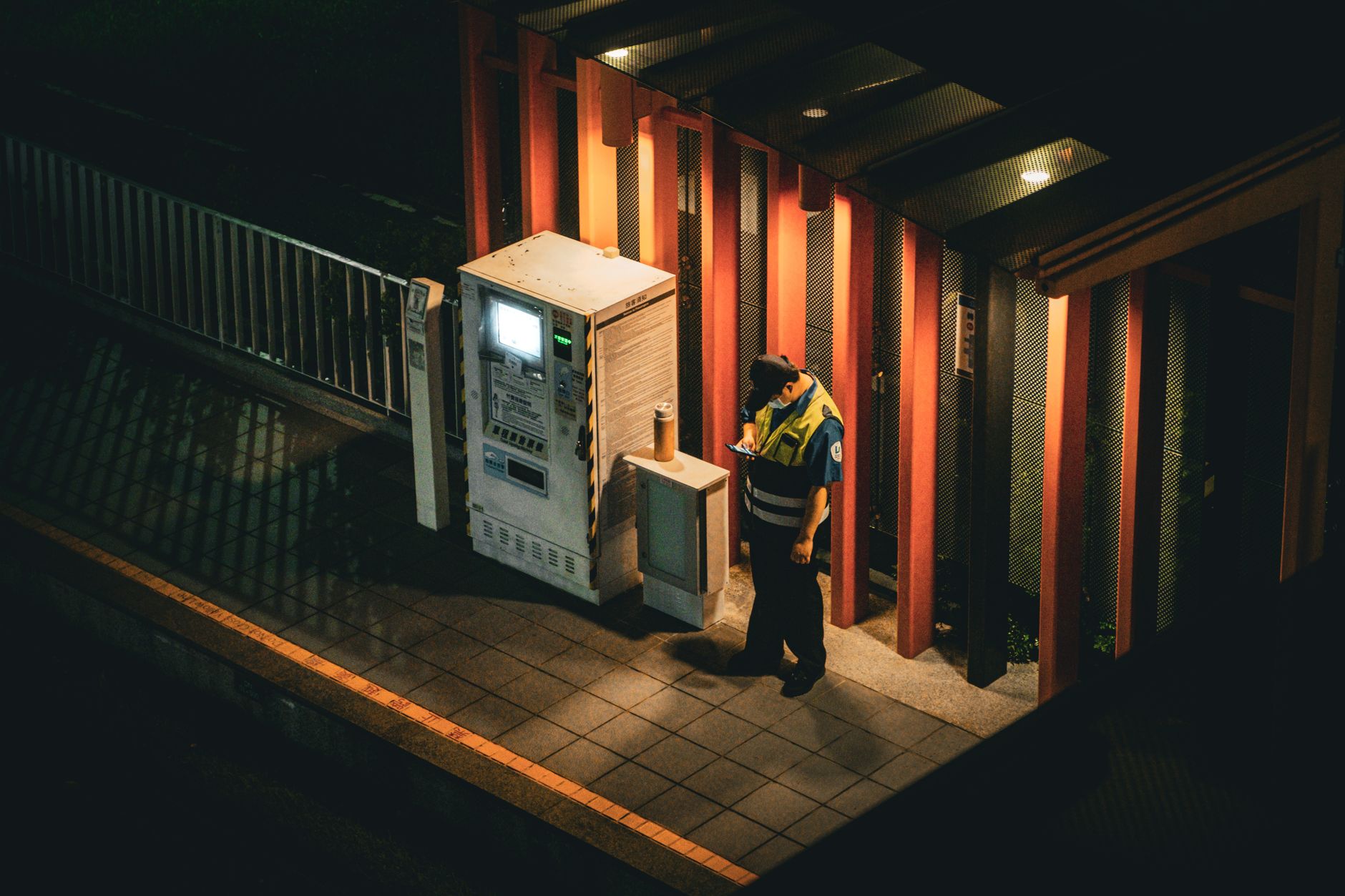
The guard job at a fairgrounds is a mix of patrol, post and response. A guard checks gates and locked doors, walks or drives the grounds, watches camera feeds where they exist, logs findings, and responds when an alarm or radio call comes in. Many sites also ask the guard to verify who is on property and to report facilities problems such as a gate left open or a dead light.
The labor base for this work grows slowly. According to the Bureau of Labor Statistics Occupational Outlook Handbook, there were 1,304,000 security guard jobs in 2025, and the bureau projects 1 percent growth for 2025 to 2035, which it describes as slower than average. A slow-growing pool makes it harder to add a guard quickly when a night shift has a gap.
For budgeting, the government wage data panel on this page gives the local wage for this job. Start the guard side of the budget there, then add overtime for call-outs and the time spent covering sick days, rather than guessing.
Which parts of the guard job can a drone take, and which can it not?
A drone takes the repetitive, visual part of the patrol. It flies a fixed route over open ground, checks building exteriors and roofs on a schedule, and streams video to the monitoring desk. A trade article on large sports venue security describes venue staff getting live video from drones streamed to ground stations, which is the link a monitoring desk needs.
A drone does not take the physical or judgment parts. It cannot open or test a door, search the inside of a dark building, sort out a confrontation, or decide whether a person belongs on site. Those tasks still need a guard or staff member who can reach the spot the drone flagged, and the handoff from the feed to a person is where most patrol plans succeed or fail.
- Open acreage coverage
Drone
Flies a fixed route over empty ground and sees from above
Overnight Security Guard
Walks or drives the route, and fatigue grows over a long shift
- Gates and locked doors
Drone
Cannot test, open or lock anything
Overnight Security Guard
Checks, locks, logs and reports what is wrong
- Response to an alarm
Drone
Sends live video but cannot reach the spot
Overnight Security Guard
Reaches the spot and decides what the alert means
- Route consistency
Drone
Runs the same route every time with no skipped checks
Overnight Security Guard
Route quality varies with workload and fatigue
- Weather and daylight
Drone
Limited by wind, rain, low cloud and flight rules
Overnight Security Guard
Works in most weather with the right gear
- Judgment with people
Drone
Cannot decide whether someone belongs on site
Overnight Security Guard
Can talk to people and apply site rules with training
What does the labor data say about turnover and staffing?
Turnover is the staffing problem buyers feel first. According to UC Berkeley Labor Center figures reported by a tech news outlet, security industry annual turnover was 89 percent in 2024, compared with a 66 percent private-sector average, and the industry stayed above the private-sector average every year for a decade. The same report puts the peak near 99 percent in 2022.
Figures for the same year vary by measure, so confirm the definition before a number goes into a budget memo. The 89 percent figure is one reported measure, not a precise count of every guard who left. The direction is the point: security work turns over faster than most private jobs.
Pay is part of the picture too. According to the same report, 71 percent of security officers earn less than the MIT living wage for a single adult. A site with that turnover should expect to train new night staff often, and should treat that training as a recurring part of the operating plan.
The most recent federal violence rate in our research is old. A BLS factsheet from 2007 put the assault and violent-act rate for security guards at 14.4 per 10,000 full-time workers, against 2.6 for private industry overall. It is dated, but it is a reason to keep a second person or a camera on any response.
The research we gathered did not include overtime or sick-day rates for fairgrounds guards, so measure those on your own schedule and roster before deciding the staffing mix.
How does a team work with a drone on night shift?
The right setup is always a drone plus fewer staff, never zero staff. The drone covers open ground that one guard cannot reach in time, but a person still has to be on site or close enough to respond, hold a gate and decide what an alert means.
A workable pattern puts one monitoring operator on the video feed, one guard on gate and building response, and the drone on scheduled patrols between them. The guard count can drop, but it does not reach zero. Staff need training on reading the feed, on when to dispatch, and on what to log, because a patrol with no one watching the feed is only a recording.
We are a commercial robot integrator. We assess the site, pick the right equipment for it, lease that equipment through financing, deploy and integrate it with your monitoring process, train your staff and service it nationwide. The lease payment comes in a quote after a free site assessment, so the first conversation is about your grounds, not a catalog.
What can a drone not do at a fairgrounds?
Weather is the first limit. High wind, rain, low cloud and darkness rules all cut usable hours, and a drone will not fly when conditions make it unsafe. Battery and flight time also cap how much ground one aircraft covers in one sortie, so large grounds need a charging plan or a second aircraft.
Coverage is the second limit. A drone sees what its route and camera point at. It can miss a person behind a trailer, under a canopy or inside a barn unless a fixed camera or a guard covers that spot. A patrol plan is only as good as the blind spots you map before the first flight.
Approval is the third limit. Flights beyond the operator's visual line of sight need approval under current rules, and the rule that would simplify them was still in federal review in the most recent reports we reviewed. The next section covers the details.
What flight rules apply to a drone patrol over a fairgrounds?
Flight rules gate most fairgrounds plans. A patrol over open acreage often needs flights beyond the operator's visual line of sight, and there is no simple standard rule for that yet. According to uavcoach, the FAA proposed a rule for these flights, called Part 108, in August 2025. The same report says the final draft went to the White House regulatory review office on July 10, 2026, and that review was still underway in the latest reports.
Until a final rule takes effect, BVLOS flights need a Part 107 waiver or a public aircraft certificate of authorization with BVLOS provisions. Check local airspace limits near the site before any flight plan is filed. Do not set a launch date on a rule that has not been published.
How do you get started with a drone patrol at a fairgrounds?
Start with a site map. List every gate, building, dark area and camera gap, and mark the spots that need a person within a set response window. That map tells you what the drone should cover and what a guard must still cover on foot.
Then run a limited pilot. A patrol over one zone, with the monitoring desk trained on it, shows the real response time, the blind spots and the weather hours before you commit the whole site. Our team runs the site assessment and maps the route, and any lease quote follows that assessment.
Plan the event calendar and the approvals in parallel. According to the University of Maryland police news office, the university would use an authorized drone and drone detection around its stadium from August 30, 2025, which shows venue operators are building drone plans into game day operations. Fairgrounds can borrow the same pattern: scheduled routes, a monitoring desk, and staff who respond.
Frequently asked questions
Upcoming event venues & stadiums events
- Trade showBrats & RobotsNov 10, 2026Alliant Energy Center Exhibition Hall, Madison, WI
- MeetupMPI Virginia Morning Brew Meet-Up, November 2026Nov 10, 2026Hampton, VA
- SummitVA1 Governor's Tourism Summit 2026Nov 18 to 20, 2026Kalahari Resorts & Conventions, Spotsylvania, VA
- ConferenceVirginia Association of Fairs ConventionJan 14 to 17, 2027Williamsburg Lodge, Autograph Collection, Williamsburg, VA
Want a drone at your fairground?
Tell us about your site. We will recommend the robot, quote the lease, and keep it serviced.
Sources
- US Bureau of Labor Statistics, Occupational Employment and Wage Statistics (OEWS May 2024)
- U.S. Bureau of Labor Statistics, Occupational Outlook Handbook: Security Guards
- TheNextWeb report on security guard turnover
- UC Berkeley news release on security guards
- U.S. Bureau of Labor Statistics, 2007 security guard injuries factsheet
- Amusement Today report on IAFE 2025 economic impact study
- uavcoach on FAA Part 108 status
- Security 101 on drones at large sports venues
- University of Maryland Police news on game day operations