
The short answer
An autonomous mobile robot makes sense in Nashville when a site moves the same totes, carts or pallets along fixed routes many times a shift, especially on night or hard-to-staff hours. A material handler is still the better choice for irregular loads, one-off freight, and work that needs a person to judge, read labels or handle goods by hand. For most Nashville operations the practical answer is one or more robots working alongside fewer handlers, not a robot in place of the team.
See what a autonomous mobile robot costsRun the numbers in the ROI calculator
Key takeaways
- A robot fits repeat, fixed-route moves; a material handler fits irregular, judgment-heavy work.
- Quits in transportation, warehousing and utilities ran at 2.2 percent a month in 2025, so backfilling handlers is a recurring task.
- Schedules vary for 65.1 percent of these workers, which makes a fixed overnight route hard to staff with the same people.
- Keep at least one trained person on every shift: a robot plus fewer staff, never zero staff.
- The lease quote comes after a free site assessment, built on your actual routes and hours.
Autonomous mobile robot vs material handler in Nashville: which fits?
A robot makes sense when a site repeats the same moves all day: carts from receiving to staging, totes from picking to packing, pallets from a dock to a fixed storage zone. Those routes are predictable enough to map, and the hours they take are easy to measure. The fit is strongest where those moves fall on night or weekend shifts that are hard to staff.
A robot is a weak fit when the work changes every hour, when loads are irregular or damaged, or when the floor is cluttered enough that a clear path cannot be kept. A material handler stays the better choice for one-off jobs, low volume, and any task that needs a person to read a label, decide what to do about a problem, or handle goods by hand. The test is the share of a handler's shift spent on repeat moves along fixed routes, and the site assessment measures that share.
What does a material handler actually do in a shift in Nashville?
Hand laborers and material movers load, unload, move and stack goods by hand or with hand tools. According to the Bureau of Labor Statistics Occupational Outlook Handbook, the occupation covered about 7,105,700 jobs nationally in 2023, with a projected 4 percent change from 2023 to 2033, about 283,200 jobs.
In a Nashville warehouse or distribution site, a shift usually means staging inbound freight, pulling orders to carts, moving pallets between receiving, storage and shipping, and restocking the locations pickers draw from. Much of that time is short trips with a loaded cart, repeated many times, with waits at doors, lifts and staging lanes in between.
The handler also absorbs the exceptions: a mislabeled pallet, a short shipment, a blocked aisle, a jam at a conveyor. Nashville holds a large share of this work. BLS Nashville metro data shows about 29,580 people in the occupation in May 2023 and about 33,120 in May 2025, with a location quotient of 1.59 in May 2025, meaning the metro holds more of this job than the national average would predict.
The wider sector is also sizable locally. A FRED series for transportation, warehousing and utilities in Nashville shows 77.1 thousand jobs in December 2025 against 72.9 thousand in 2024, but that series includes utilities, so it overstates warehousing alone.
Median hourly wage, Laborers and Freight, Stock, and Material Movers, Hand
$4,427
Monthly cost of one full-time worker in Nashville, TN, at the median wage plus payroll costs (an estimate, not a quote).
Which parts of the work can a robot take, and which can't it?
A robot can take the repeat point-to-point moves: carts or totes from one station to another along a mapped route, pallets from a staging lane to a fixed storage zone, and replenishment trips that run on a schedule. These moves are the same each time, which makes them easy to map and to time, and they are often the moves that tie up a person for long stretches.
A robot cannot reliably take the work that depends on judgment or on the truck. Hand unloading of irregular trailer loads, sorting mixed freight, deciding what to do with a damaged or mislabeled item, and reaching into unstructured racks still need a person. Some tasks sit in between, such as moves that need elevator access, a lift or a special attachment, and the site assessment decides whether they can be included.
- Repeat moves on fixed routes
Autonomous Mobile Robot
Runs the same loop each time, paced by its charge cycle
Material Handler
Covers the loop well, but needs breaks and slows late in a long shift
- Night coverage
Autonomous Mobile Robot
Runs a scheduled route with no operator on site, if a trained person is on call
Material Handler
Present on site and able to respond to any problem
- Blocked aisles and faults
Autonomous Mobile Robot
Stops and alerts, then waits for a person to clear the path
Material Handler
Clears the blockage and reroutes the job on the spot
- Damaged or mislabeled goods
Autonomous Mobile Robot
Cannot judge the item or decide what to do with it
Material Handler
Checks the item and makes the call
- Irregular trailer unloading
Autonomous Mobile Robot
Not the main fit for mixed or irregular loads
Material Handler
Handles the load by hand and adapts to each pallet
- Consistency across the shift
Autonomous Mobile Robot
Same route and speed at 4 am as at 4 pm
Material Handler
Pace and attention vary with fatigue and the hour
What does the labor picture look like for this work in Nashville?
The government wage data on this page gives the local wage for this job, but the hours and staffing around that wage decide what a robot is worth. Turnover is the staffing number that matters most. A workforce analysis of JOLTS data reports that quits in transportation, warehousing and utilities averaged 2.2 percent a month in 2025, compared with 2.0 percent for total nonfarm employment, roughly 26 percent annualized on a derived basis.
Those are quits only, so backfilling a handler also carries hiring and training time that the quit rate does not show. Each open shift on a hard-to-fill route is a recurring cost, and that is where a fixed robot route is most useful to compare.
Schedules are hard to hold steady. The BLS Occupational Requirements Survey reports that work schedules vary for 65.1 percent of transportation and material moving workers in 2025. That measures variability, not the share on night shifts. The Occupational Outlook Handbook says shifts over 8 hours are common, overtime is sometimes available, and round-the-clock shipping means overnight shifts, especially in warehousing.
We could not find an up-to-date public figure for overtime hours or the night-shift share in warehousing, and no verified national figure for sick days in this occupation. Pull those three numbers from your own timekeeping and absence records before you compare options.
Does the injury and incident picture change the math?
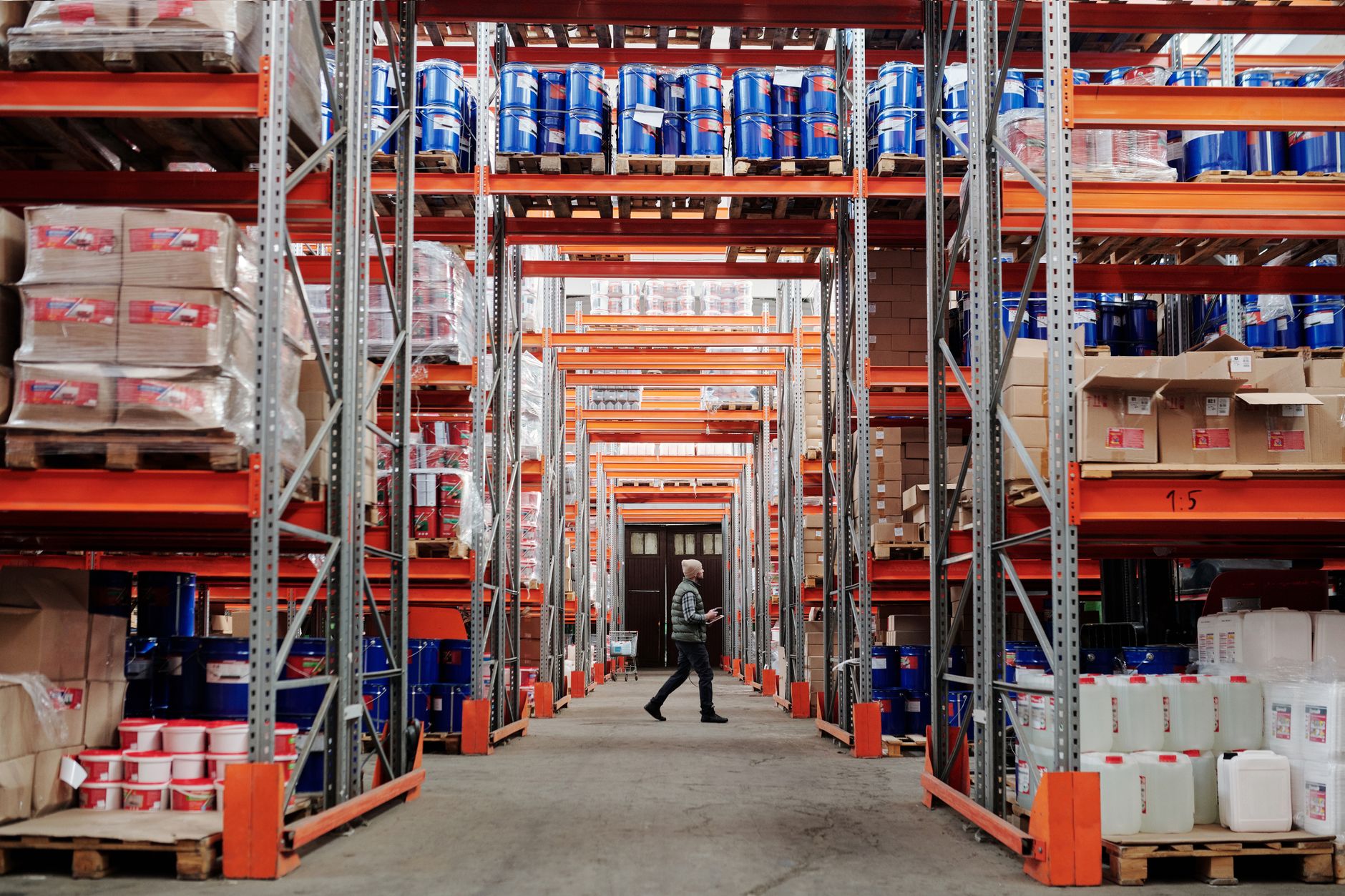
Warehousing carries real injury exposure. An industry analysis of peak-season warehouse injury statistics, citing BLS data, puts the warehousing and storage total recordable rate at 4.8 per 100 full-time workers in 2024. A GAO report using 2022 BLS data put general warehousing and last-mile delivery at a serious injury and illness rate of 3.8 per 100 workers, the highest of 19 sectors it reviewed.
Those rates measure different things, so do not line them up as if they were one measure. A robot does not take over lifting at a dock or awkward reaches on a rack, which are the tasks a person still does. What it can take off a handler is some of the repeat cart pushing on the same route. Whether that moves your own incident rate depends on your own logs, which the site assessment reviews.
How does a team work with a robot?
The workable model is one or more robots plus fewer handlers, not a robot in place of the team. The robot takes the repeat route moves, while staff keep unloading, exceptions and judgment work, and someone supervises the fleet and the charge plan. A site with zero staff has no one to clear a blocked aisle or reload a station, and that is the failure the staffing plan is built to prevent.
Staffing does change. Fewer handlers are needed on the routes the robot covers, and the hours saved often go to the exception work that handlers were already doing in the gaps. Staff need training on the stop control, clearing a path, the charging cycle and what to do when the robot alerts. Our team trains the staff as part of deployment, so the people on shift know the job before go-live.
What can't a robot do on this kind of site?
A robot cannot repair itself when a sensor, wheel or battery fails, so it needs on-site dispatch and a service plan. When the network or the charging station fails, the robot may stop, and a person has to respond. It cannot read a damaged or unfamiliar item and decide what to do with it. It also cannot run well on paths that are not kept clear, so floor discipline is a real condition of the fit.
Savings are not guaranteed. If your volume is low or irregular, or the route is short, a robot may sit idle and a handler may be the better use of the money. Be wary of any plan that assumes a robot removes the need for people entirely. Our view is that a robot earns its place on repeat, fixed routes and stays a team member, not a replacement for the team.
How many hours could a robot take over, and how do you measure them?

No verified national figure exists for hours per task in this work, so the number has to come from your own floor. Start with a time study of the repeat moves: count the trips, the route length, the minutes per trip and the shifts a week. Multiply those out and you have the hours that are candidates for the robot, before any exceptions are removed.
How many hours the robot actually covers depends on the charging plan, route length and fleet size, which the site assessment sets. A short route with long charge times covers fewer hours than a longer loop with a quick charge. Measure the handler's time the same way, so the comparison is between hours you can see, not an estimate.
How do you get started with a robot lease in Nashville?
Start with a free site assessment. We map the floor, time the routes, check aisles and doors, and identify which moves are candidates for a robot and which are not. The lease quote comes after that assessment, because the route, fleet size and financing term all change the number. No quote is given before the floor has been measured.
We lease the robot through financing, so there is no large upfront capital, and the fixed robot lease payment is set in the written quote. We deploy and integrate the robot, provide go-live support on site, train the staff and service the unit nationwide. A common first step is one leased unit on one route, a pilot that shows real hours before any larger fleet is discussed.
What changes the cost and payback of a robot lease?
The biggest drivers are the number of repeat hours on fixed routes, the open shifts and overtime the robot can offset, and how often the route runs across the week. A route that runs every shift in a hard-to-staff window pays back faster than one used a few hours on weekdays. Adoption is also growing: a trade news report on A3 data put industrial robot orders in North America at 8,806 in Q3 2025, up 11.6 percent in units. Those figures cover industrial robots broadly, not AMRs specifically.
Watch for costs that are easy to miss: floor preparation, path clearing, charging access, training time and the handler time spent on exceptions. Plan for downtime as well, since a unit that goes out for service leaves a gap in the route. Compare the lease quote with the hours you measured, not with a guess.
Frequently asked questions
Put a robot to work in Nashville.
We walk your site, learn the job, and recommend the unit that fits. Then we quote the lease, deploy it, and keep it serviced.
Sources
- US Bureau of Labor Statistics, Occupational Employment and Wage Statistics (OEWS May 2024)
- BLS Occupational Outlook Handbook, Hand Laborers and Material Movers
- BLS regional release, Nashville metro occupational employment and wages (May 2025)
- BLS Occupational Requirements Survey factsheet, transportation and material moving occupations
- Peak-season warehouse injury statistics analysis (citing BLS data)
- GAO-24-106413 report
- Warehouse turnover rate analysis (JOLTS data)
- A3 North American robot orders, Q3 2025 (trade news report)
- FRED, transportation, warehousing and utilities employment, Nashville