
The question, in the buyer's words
I run a 60,000-square-foot fertilizer blending plant outside Houston, TX and our night shift is down to two loaders, so could autonomous forklifts move bagged product from the blending line to staging racks while we stay short-handed?
Key takeaways
- Autonomous forklifts fit fixed, repeat pallet moves, not every loader task.
- Loose bags on the floor must be palletized before any robot can help.
- Texas has a deep pool of trained operators according to BLS data, which helps with hiring.
- Hurricane season runs through November 30, so write the shutdown and restart plan now.
- Start with one route and one leased unit, with the lease quoted after a free site assessment.
Can autonomous forklifts replace night loaders at a Houston fertilizer plant?
Two loaders for a night shift at a 60,000-square-foot fertilizer blending plant is a thin crew. When those two people are also the ones moving bagged product from the blending line to staging racks, every stall in that move leaves product sitting on the floor and pushes the blending line back. The question is whether an autonomous forklift can take the repeat part of that work so your two people can handle what a machine cannot.
Break the job into pieces before you look at robots. Pallet moves along a fixed path from a known point to a known rack are the easiest part to automate. Anything that needs judgment, such as a torn bag, a leaning pallet, a spill or a blocked rack slot, still needs a person. Autonomous forklifts handle repeat work well and exceptions poorly, so in most plants a robot adds capacity to the night shift rather than replacing a position.
Safety belongs in the decision from the start. An industry summary of OSHA estimates reports about 34,900 serious forklift injuries per year, a figure you should confirm against OSHA before using it internally. A robot changes who is at risk on the floor and how the lanes are laid out, but it does not remove the need for floor rules.
Which part of the bagged product move can a robot handle?
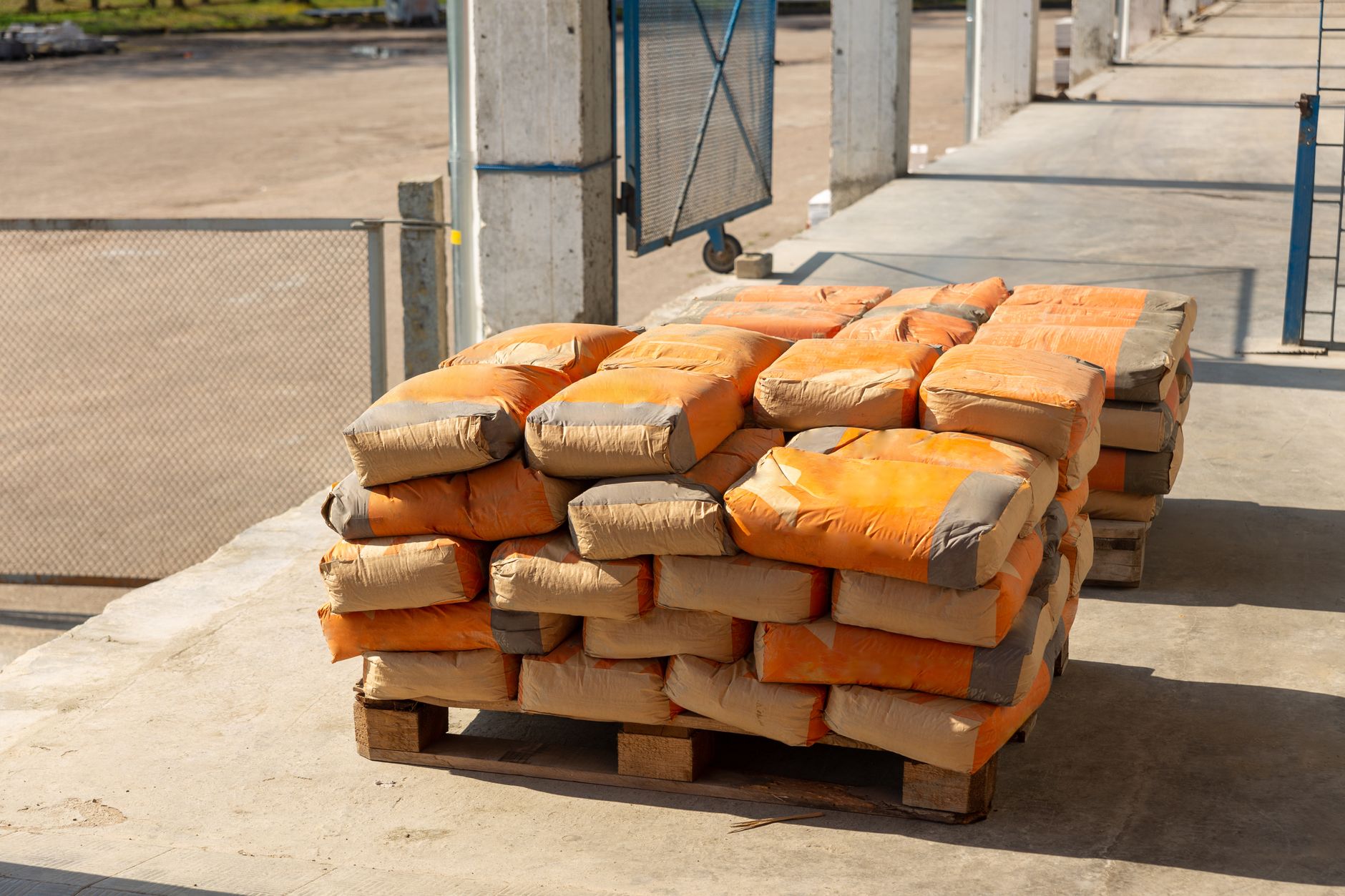
Autonomous forklifts carry pallets, not loose bags. If your bagged product sits on the floor, the first job is getting it onto stable pallets that the robot can pick, using palletizing equipment or a trained crew. Without that step, the robot has nothing to lift, and the stall stays exactly where it is.
Then check the route. Does it run the same path each shift? Do the staging racks have drop heights, aisle widths and clear approach space that the robot can meet? Are loads uniform in weight and footprint? If any answer is no, the robot will spend more time waiting than moving, so a site assessment should measure these points rather than guess at them.
The answers decide the scope. A plant with one stable route from the blending line to staging is a good first test. A plant with several routes, mixed pallet sizes and frequent rack changes needs more mapping and more supervision before the robot earns its place.
Watch the bag weight and stack height as well. A pallet built by hand for a loader may not match the stacking pattern a robot expects, and an uneven stack can shift in transit. Ask the integrator to measure a sample of real pallets during the assessment rather than clean test loads, because the field pallet is where trouble shows up.
How tight is the night labor market for forklift operators in Texas?
Texas had 106,350 industrial truck and tractor operators in May 2024, the highest count of any state, according to the Bureau of Labor Statistics Occupational Employment and Wage Statistics. The same data lists 224,960 hand laborers and material movers in Texas, second only to California. That is a deep pool of people who already work around powered trucks, which helps when you recruit for nights.
Turnover is the harder signal. The 2025 materials handling salary survey reported average departmental turnover of 11.6%, up from 8.6% the year before. Forty percent of respondents reported 1% to 9% turnover, 16% reported 10% to 19%, and 20% reported none. That survey covers materials handling professionals rather than hourly loaders, so read it as a direction, not a rate for your crew.
We did not verify Houston metro labor data in this research, only statewide Texas figures. Pull your own night shift turnover and time to fill for the last year before you decide. Those numbers will tell you more about your open night roles than any state average.
Night hiring has a timing problem too. Open roles that stay unfilled through a shift push the work back onto whoever is left, which makes stalls more likely. A robot will not fill that gap by itself, but it can take the repeat moves while you recruit, so the remaining loaders spend their hours on exceptions and training.
How common are autonomous forklifts and mobile robots in plants like this?
Adoption is growing, but it is still early. The 2025 Industry Outlook survey, with 110 qualified respondents surveyed in December 2024, found the share of companies planning to evaluate AMRs and AGVs rose from 20% in 2023 to 30% in 2025. The same survey found the share actually using them had declined since 2023, which suggests many operations are still testing rather than scaling.
The research we reviewed did not include a 2025 survey that breaks out autonomous forklift adoption on its own, so treat warehouse-wide mobile robot figures as context rather than proof for a fertilizer blending plant. Several vendor-sponsored studies report that most companies have never deployed an AGV or an AMR. Those figures come from sellers with a stake in the result, so we did not lean on them here.
What matters for you is the sequence most plants follow: map the route, run one unit, measure the stalls it removes, then decide on a second. A pilot is easier to correct than a fleet, and the first route will show you whether the next one is worth the work.
What do the forklift safety numbers mean for a night shift?
An industry summary of OSHA's commonly cited estimates puts forklift losses at about 85 fatalities, 34,900 serious injuries and 61,800 non-serious injuries per year. The same summary says about 1.5 million US workers operate over 855,900 powered industrial trucks. Those are secondary figures, so confirm them against OSHA directly before they appear in an internal memo.
A safety summary of OSHA 2020 data reports forklifts as the source of 78 work-related deaths and 7,290 nonfatal injuries involving days away from work. Those numbers are a reason to plan the floor before the robot arrives. Marked lanes, pedestrian separation, speed limits and a clear stop point at each rack do more for a night crew than any single vehicle feature.
Night work adds fatigue and low light to the risk. Ask any vendor how its unit behaves near people in dim aisles and how it signals a stop, and insist on a site test rather than a brochure claim.
Training matters as much as hardware. Crew members who walk the route near a moving unit need to know its stop behavior, its warning signals and what to do when it pauses. Train the night crew on the same route the robot runs, and include the shift lead in the walkthrough.
How does Houston weather change a night shift robot plan?
Houston's Atlantic hurricane season runs June 1 through November 30, according to a Houston TV station report on the 2026 season start. NOAA's 2026 outlook called for a below-normal season with 8 to 14 named storms, which is a forecast rather than a measured result. Today is early November, but the season still has weeks left, so the shutdown and restart plan should exist before any storm watch arrives.
Heat matters too. According to a Houston TV station review of July 2023, the city's average high was 97.7 degrees against a normal high of 94.5, and the month logged seven 100-degree days. Battery charging, cabinet temperatures and any enclosed operator position need checks during the hot months, not only in winter.
Plan for power loss the same way. A storm or grid event can stop charging and leave loads stranded in the aisle. Write down where each unit parks, how staging is cleared and who restarts the route, then test that plan with the crew before the next season begins.
Where do two night loaders still beat a robot?
Two loaders are more flexible than any robot on a night shift. They can clean a spill, step around a blocked lane, check a bag, or pull a pallet from an unexpected spot without a mapped route. A robot needs its path clear and its load to match what it was taught, and it waits when neither is true.
Human crews also win when volume is uneven. If the blending line runs in campaigns, the route may be busy one night and quiet the next. A robot idles on an empty route, while a loader can be sent to the most urgent task. Keep the people you have, and use the robot to cover the repeat moves rather than the whole job.
The honest test is which hours of the night shift stall because of repeat moves and which stall because of exceptions. Repeat-move stalls are the robot's to fix. Exception stalls belong to the crew, and a robot does not change them much.
- Repeat pallet moves on one fixed route
Autonomous Forklift
Runs the same path once mapped and does not tire
Staff
Works steadily but needs breaks and rest
- Torn bags, spills and blocked lanes
Autonomous Forklift
Pauses and waits for a person
Staff
Handles it on the spot
- Changing volume or route
Autonomous Forklift
Needs remapping or reprogramming when the path changes
Staff
Adapts within the shift
- Night coverage
Autonomous Forklift
Runs with no driver in the cab once the route is set
Staff
Depends on finding and keeping night hires
- Hiring pool
Autonomous Forklift
No hiring needed for the unit, but supervision and exception handling still need people
Staff
Texas had 106,350 operators in May 2024, according to BLS data
- Setup time
Autonomous Forklift
Mapping, testing and integration come before go live
Staff
Can start on the first shift
- Work near people
Autonomous Forklift
Needs marked lanes, speed rules and stop signals
Staff
Judges pedestrians and tight spaces in the moment
How do you scope a pilot before you commit to a lease?
Start with one route. Choose the path from the blending line to the staging racks that has the most repeat pallet moves and the fewest exceptions. Measure move counts and stalls over several full night shifts. Then decide whether one robot can carry that route without a second person stacking on the floor.
We begin with a free site assessment. We map the floor, check the racks, and review pallet and bag handling, and the lease payment comes in a quote after that assessment. We pick the unit across manufacturers for your floor, then lease it through financing, deploy and integrate it, train your crew and service it under our service plan, so one partner covers the life of the unit.
A phased deployment, starting with one leased unit, lets the plant keep running the night shift during setup. Ask how a stopped unit gets dispatched and how a backup unit keeps the route moving while it is repaired. Our service plan includes on-site dispatch, remote triage and spare unit coverage, and we will put response terms in writing before you sign.
Measure the pilot against what you wrote down. Compare the stalls on the route before and after, and count the exceptions that still need a person. If the numbers do not move, the honest result is that one robot is not the fix, and the lease should not expand.
Frequently asked questions
Upcoming manufacturing events
- Trade showBrats & RobotsNov 10, 2026Alliant Energy Center Exhibition Hall, Madison, WI
- Trade showMATE Farm & Ranch ShowFeb 11 to 13, 2027MetraPark, Billings, MT
- ExpoPFMA Expo 2027Feb 17 to 18, 2027Washington County Fair Park, West Bend, WI
- ExpoLouisville Facilities Maintenance ExpoApr 15, 2027Mellwood Art Center, Louisville, KY
Put a robot to work in Houston.
We walk your site, learn the job, and recommend the unit that fits. Then we quote the lease, deploy it, and keep it serviced.
Sources
- Industry summary of OSHA forklift estimates
- Industry safety summary of OSHA 2020 forklift data
- Bureau of Labor Statistics OEWS, May 2024, Texas
- 2025 materials handling salary survey
- 2025 Industry Outlook survey, AMR and AGV plans
- Houston TV station report on NOAA 2026 hurricane outlook
- Houston TV station review of July 2023 heat
- Houston TV station report on 2026 hurricane season start