

Key takeaways
- Delivery robots for museums move paper goods, meals and mail along mapped back-of-house routes.
- Staff keep curatorial, visitor and collections work, while the robot covers repetitive supply runs.
- Museums run lean teams, so even a few recovered hours per shift matter to the people on duty.
- Hospital case data suggests the hours saved can be large, but those figures are cumulative and not museum data.
- Start with a free site assessment, then receive a lease quote built around your building.
How can delivery robots for museums help back-of-house work?
Delivery robots for museums take over the repetitive carrying that fills the hours behind the galleries. A museum runs on two kinds of work: the public side, where guests, educators and curators need attention, and the back-of-house side, where paper goods, meals, mail and supplies move through staff corridors all day. A delivery robot follows mapped routes between a receiving area, the offices, the break room and the mailroom, carrying lightweight loads so people can stay where their skills matter most.
The fit is practical rather than dramatic. Lightweight supplies such as paper goods, meals and mail follow the same paths every day, which makes them a good match for a robot that repeats a known route. The main benefit is time returned to staff. Each trip the robot makes is a trip a staff member does not have to make, and those trips add up across a large building.
Pairing a robot with the team you already have is the approach we recommend. The robot handles the runs, and staff focus on exhibits, visitors and collections. Service Robot Co. helps museums decide whether the fit is right through a free site assessment before any lease is quoted.
What does back-of-house work look like at a museum today?
The US museum sector is large and spread across many building types. According to the Institute of Museum and Library Services, the country had 35,144 active museums in its 2014 estimate, more than double the working estimate of 17,500 used in the 1990s. The 2014 date matters, since no newer national total was found for this page, and the agency has cautioned that its file includes inactive or non-museum entities.
Inside a museum, back-of-house work is steady and easy to underestimate. Supplies for gallery education, paper goods for the office, meals for staff on long days and internal mail move along the same corridors visitors never see. Often one or two people carry it between the dock, the offices and the public floor, on top of their main jobs.
When the same people are stretched across both jobs, the supply runs are the first thing to slip. A missed meal drop or a late mail round rarely looks serious on its own, but across a week it pulls people away from the work the museum exists to do.
Which areas of the museum does the robot work in?
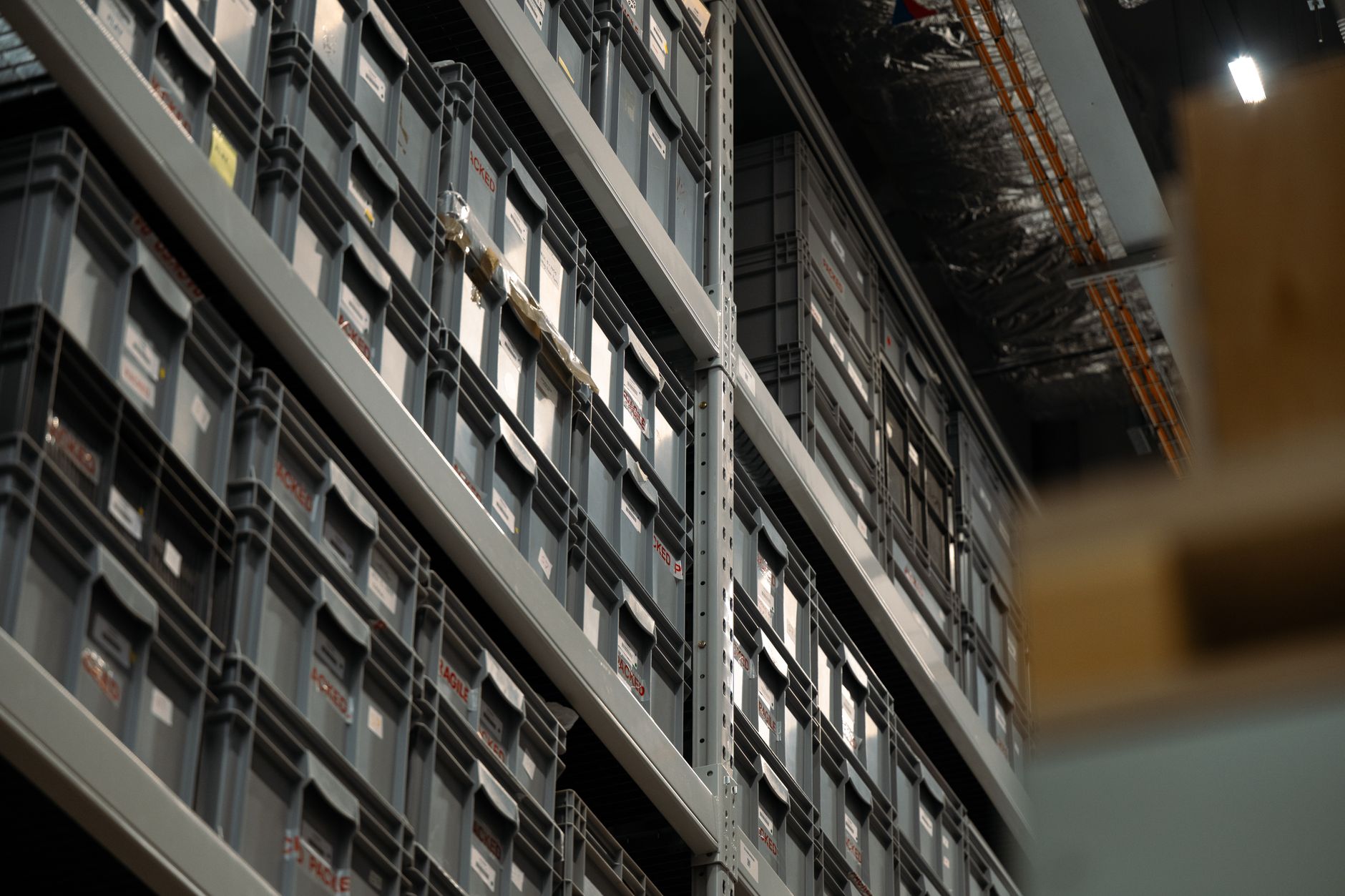
The robot works on the back-of-house side of the building, in the areas where a staff member would otherwise walk a supply run. It stays out of public galleries and out of rooms where collections are kept, and it works within routes the site team agrees on during mapping.
Six zones cover most of the work at this kind of place. The zones below show where the robot goes, what it carries there and which areas it should not enter.
Routes are set during the site assessment, so the robot knows which doors, elevators and dock approaches it may use. Any space that needs key access or climate care stays off the route.
What benefits does a museum gain from delivery robots?
The main benefit is time. Staff who no longer carry boxes of paper or trays of meals across the building can spend that time on tasks only people can do: answering a visitor question, preparing a loan or supporting an education program. The gain shows up as staff attention rather than as a change in headcount.
Consistency is the second benefit. A robot follows the same route at the same time each day, so supplies arrive on schedule even when a team member is busy or out sick. Deliveries that once depended on whoever happened to be free now run on a route the museum can see and adjust.
A third benefit is quieter corridors. Fewer people hauling carts through staff spaces means fewer interruptions in offices near the galleries, which helps people doing focused work. The benefit is real, but it is best checked against how your own building runs.
How does the robot work day to day?
Day to day, the robot runs on a schedule and on calls. Staff request a delivery through a simple request method agreed during setup, the robot picks up the load at the dock or pantry, and it travels a mapped route to the drop point. When it arrives, the recipient confirms receipt and the robot returns to its charging point.
Scheduled runs handle the predictable work, such as morning meal drops or the internal mail round, while on-demand calls cover the rest. The robot waits at a set point between tasks, which keeps the route clear and makes arrivals easy to predict.
A remote team watches fleet status, and our on-site dispatch can respond if a unit needs attention. Remote triage catches many issues before anyone has to visit the building.
What does the staffing picture look like?
Staffing is the pressure point. Museums Moving Forward reported in its 2025 report that 49% of art museum workers had actively looked for another job in the last year, and that 54% had considered leaving the field in the last five years. The same source reported that art museums lost 30% of full-time employees hired between 2020 and 2022.
The AAM and Wilkening Consulting 2023 snapshot found that 36% of responding museums were still at the same staff size as in 2019. A news summary of the AAM 2025 national snapshot of 511 museum directors reported that 5% of all museums had laid off staff as a direct or indirect result of executive orders or actions. These are separate measures, so read them side by side rather than as one trend.
For an operator, the point is simple. When teams are thin and hard to hire, every hour spent on a cart is an hour that cannot go to the galleries. A robot cannot fill an open role, but it can take repeated walking off a team that is already stretched.
What drives the savings, and what does the evidence show?
Savings come from hours, not from a promise. The main driver is the number of supply trips the robot takes over a week, multiplied by the time each trip would take a staff member. Measure those hours in your building before any lease is quoted.
Hospitals have the nearest published evidence, though they are not museums. At a children's hospital in California, one robot made more than 1,400 deliveries over about two and a half months and freed about 900 staff hours, with staff estimating 20 to 30 minutes recovered per delivery, according to a news report on vendor-supported case data. A hospital in Missouri saved employees more than 315 hours in its first 20 days, and bedside workers saved 30% of their time, according to Becker's Hospital Review. Two Illinois hospitals logged 7,298 and 9,813 deliveries and saved 4,125.5 and 5,345 clinical staff hours from August 2022 to March 2023, according to a vendor case study.
Read these numbers with care. They are cumulative totals or hospital tracking data, not per shift figures, and they come from hospitals, where the delivery pattern differs from a museum's. For your site, the useful question is how many supply trips the building makes in a typical week and how long each one takes.
What can the robot not do?
The robot has clear limits, and a good plan respects them. It does not handle fragile or high-value objects, such as artwork, objects in transit or any item that needs careful human handling. It does not lift heavy crates, and it should not be assigned work that requires climbing stairs or entering rooms that need key access and climate control.
It also does not replace curators, educators, security or guest-facing staff, and it cannot answer a visitor's question. A delivery robot is a supply tool. It does not make judgment calls about collections, and it is not a guard.
The building matters too. Routes need clear paths, workable doors and elevators the robot can use, and a route blocked by a cart or a propped door stops the run until someone clears it. Plan a human fallback for those moments.
How do we get started?
Start with a free site assessment. Our team walks the building with you, maps the back-of-house routes, identifies the supply runs that repeat most often and notes doors, elevators and areas that stay off limits. That information shapes the robot type and the number of units.
Robots are only leased, through financing. Lease options are quoted after the site assessment, so the payment comes in the quote and reflects your building, your routes and the service plan. Service Robot Co. is a US commercial robot integrator: we pick the right robot for the site, lease it through financing, deploy and integrate it, train staff and service it nationwide.
After deployment, go live support helps the team settle into the routine, backed by a robot maintenance service plan, on-site dispatch when needed and spare unit coverage for the times a unit is out for service. A single unit and a short list of routes is a practical place to start, and the hours can be counted before any wider plan.
Frequently asked questions
Want a delivery robot at your museum?
Tell us about your site. We will recommend the robot, quote the lease, and keep it serviced.
Sources
- Institute of Museum and Library Services, museum count
- Engaging Places, on the IMLS museum count
- Museums Moving Forward, 2025 report
- CT Public, summary of the AAM 2025 national snapshot
- AAM and Wilkening Consulting 2023 snapshot report
- News-Medical, hospital delivery robot case data
- Becker's Hospital Review, delivery robot time savings
- AWS case study, hospital delivery robot vendor report