
Key takeaways
- Floor cleaning robots can cover main corridors and open lab floor areas on a set schedule.
- Trained staff keep the detailed cleaning that sensitive lab spaces need.
- Labor hours are the measure that matters, and results depend on your own site.
- Vendor-reported case studies show hours falling, but they are not guarantees.
- Start with a free site assessment, then review a quote for a leased robot.
How can cleaning robots benefit research laboratories?
A floor cleaning robot can take over the repeating floor work in the shared parts of a research building: main corridors, hallways, lobbies and the open floor areas between lab bays. That frees your custodial staff for the detailed cleaning that sensitive lab spaces need. For most operators, this is the real case for cleaning robots for research laboratories. The robot does not replace careful lab cleaning. It makes sure the routine floor passes happen on time, every time.
The fit is strongest where custodial coverage is thin. A short shift or one sick call can leave corridors unattended until someone is free, and staff get pulled off the work they were hired to do. A robot runs the same mapped route on the same schedule, so corridor upkeep becomes a known quantity instead of a daily staffing question.
We lease these robots through financing, then deploy and integrate them, train your staff and service them nationwide. We start with a free site assessment, map the routes, and then prepare a quote. The payment comes in that quote, with lease options set for your building rather than a generic plan.
What problem does this kind of place face today?
Research buildings combine two cleaning jobs that rarely share a schedule. The first is general upkeep of hallways, stairwells, lobbies and open floor, which has to happen every day for traffic and safety. The second is controlled cleaning of benches, sinks and lab floors, which must follow safety and contamination rules. The same few people often cover both.
Service guides from universities show how careful that schedule has to be. One guide sets research labs at one cleaning per week for trash, dusting and wet-mopping, with lab supplies stocked daily, according to a university service level guide. Another says floor stripping and waxing are scheduled in advance so samples are not contaminated, and that lab staff remove their own trash and recycling, according to a university facilities custodial guide. A third lists weekly mopping of laboratory floors and daily spot mopping of hard-surface lab floors, according to a university custodial service policy.
Labor is the pressure point. According to the U.S. Bureau of Labor Statistics, employment of janitors and building cleaners is projected to grow 3 percent from 2023 to 2033, about as fast as the average for all occupations. That is steady demand for this work, so the hiring pressure will not ease on its own. Plan floor coverage around that reality.
What are the main benefits of cleaning robots for research laboratories?
The first benefit is predictable coverage. A scheduled route runs at the same time each night or early morning, even when a shift is short. Corridor upkeep stops depending on who happens to be in the building that day.
The second is time. When the routine passes move to the robot, your team spends its hours on rooms that need trained hands: lab interiors, spills, waste handling and the cleaning that sensitive equipment areas need. Staff stop breaking off lab work to walk floors.
The third is consistency. The robot follows the same path with the same coverage on each run, which gives your facilities lead something concrete to check. A floor cleaned on schedule is easier to manage than one cleaned when someone has time, and it leaves fewer surprises for the people who work there.
How does the robot work there day to day?
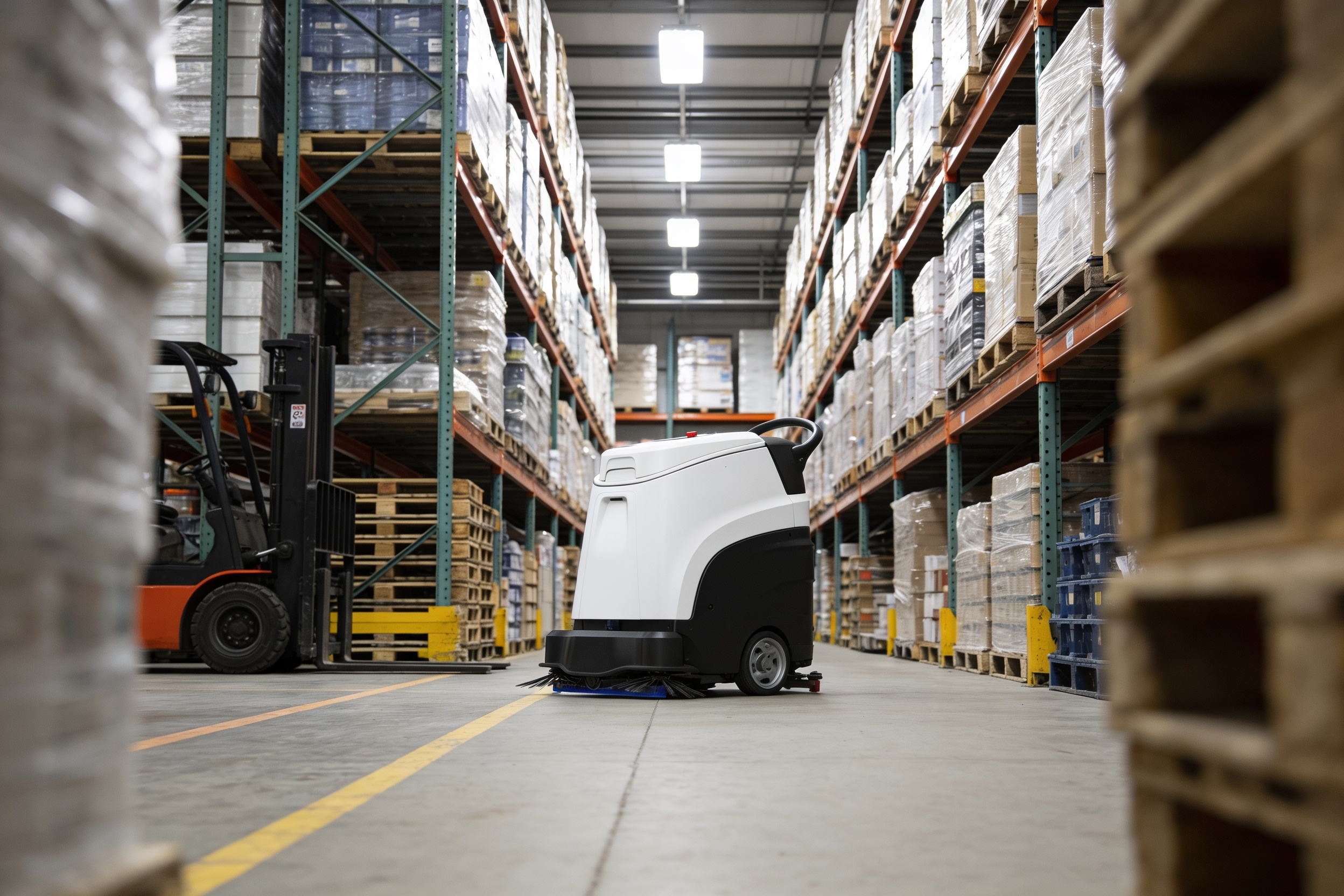
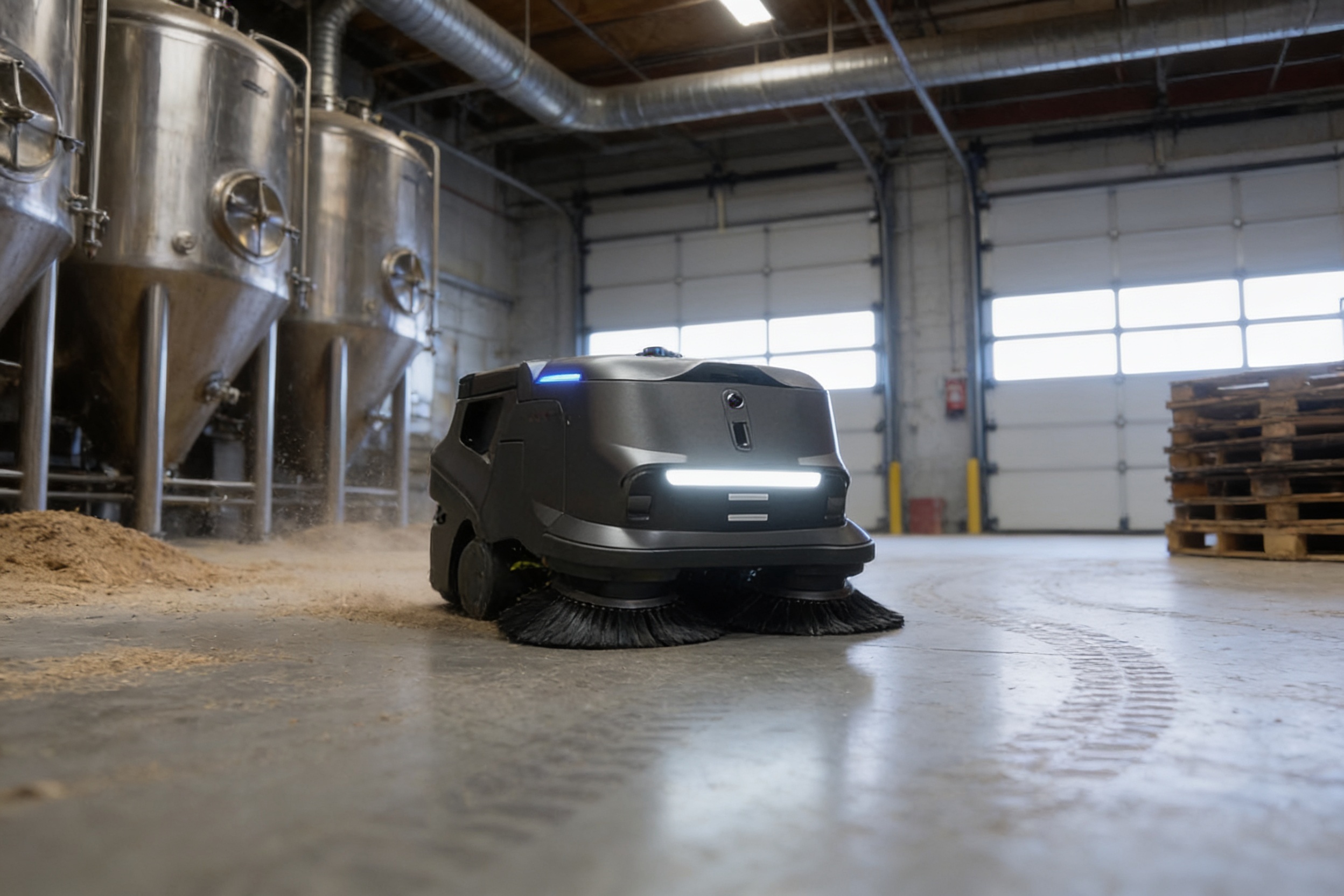
Before it runs, the robot is mapped to the building. During the site assessment we map the routes, mark the off-limits rooms and choose where the dock and charging point should sit. Staff set the schedule, usually in an overnight or early window that stays clear of active lab work and deliveries.
During a run, the robot follows its mapped route, keeps clear of people and obstacles, and returns to its dock when the pass is done. Doors, elevator thresholds and carts left in aisles are the usual points where setup matters, so we test them during commissioning. Someone on your team checks the robot at the start and end of each run, clears any blocked route and confirms the floor is clean where it should be.
Training matters as much as the hardware. Your staff learn how to start a run, read the status, clear a block and report a fault, and our team stays on hand through go live support.
Which areas does the robot work in?
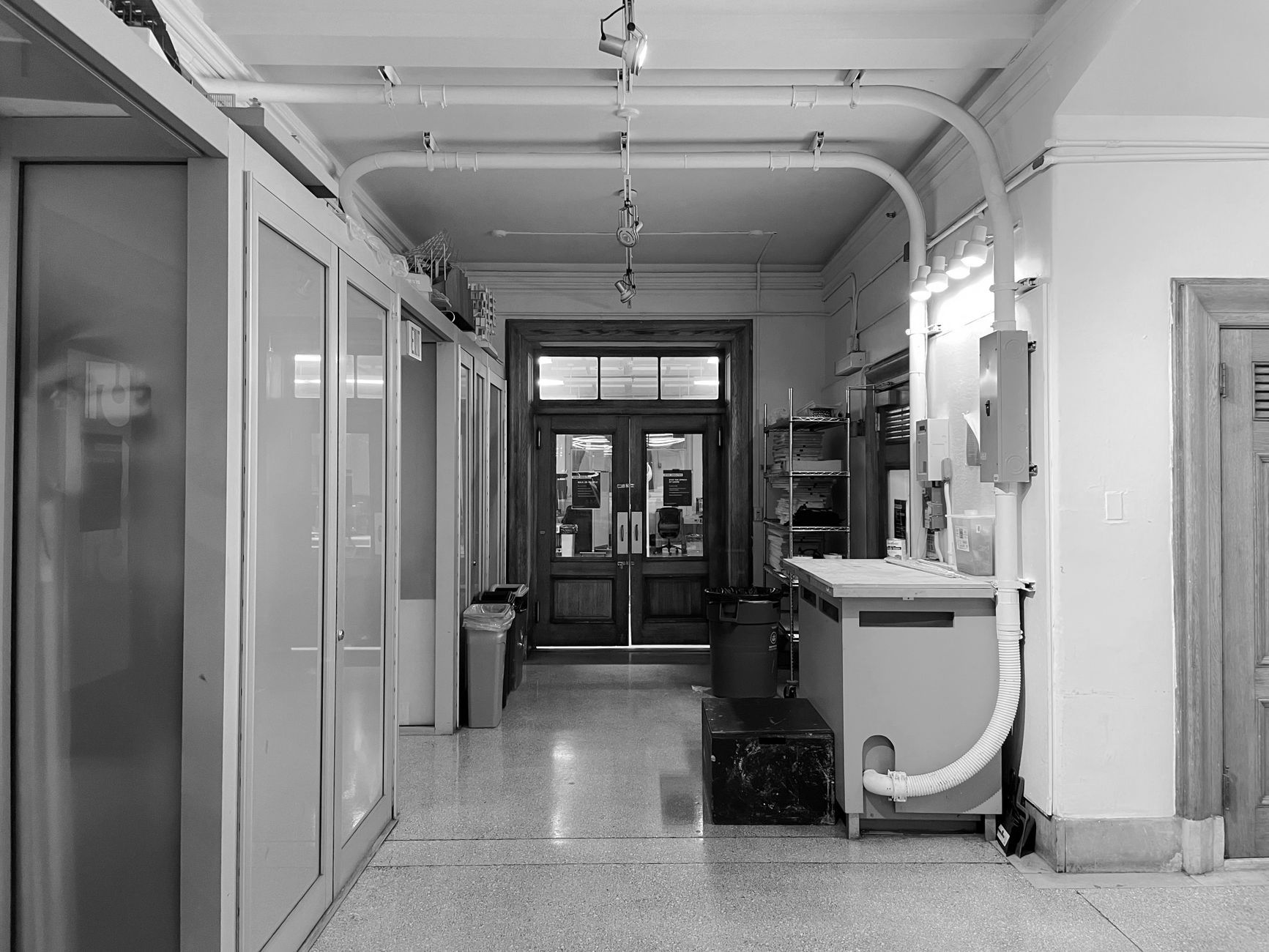
The robot works in the open, repeatable parts of a research building. Main corridors, lobbies, elevator lobbies, stairwell landings, the freight corridor near receiving and open floor in lab bays with clear walkways all fit a route. The zones below show how that usually breaks down.
Keep the robot out of benches, fume hood areas, cold rooms and any space where a spill response is underway. Those rooms need trained staff who know the protocol, and no route should be planned through them. Shared write-up and seminar rooms with open floor are a good middle ground, since they get the scheduled pass while equipment-heavy rooms stay with people.
How does it work alongside existing staff?

A robot does not replace the whole team in a research building, and the setup should never be zero staff. The realistic model is a robot plus a smaller team. Staff cover lab rooms, spills, waste handling and the detailed cleaning sensitive areas need, while the robot handles the scheduled floor passes that otherwise pull people away from that work.
Plan the handoff before go live. If your lab staff keep their own trash and recycling, as one university guide describes, the route must avoid bins staged on the floor. Agree in writing who clears blocked routes, who checks a unit at the start of a run and who calls for on-site dispatch when a unit stops.
Most teams find the change is about the schedule, not the job. Custodians move from walking routine floors to checking the robot, clearing blocks and doing the hands-on work a lab needs. That shift is what makes a smaller team workable.
What drives the savings, and by how much?
Savings come from hours moved off the schedule, not from a promise. The main drivers are how many hours of scheduled floor work move to the robot, how many shifts stay short, and how much floor area the route covers. Measure your own hours before and after go live, because your building and schedule decide the result.
Vendor-reported results give a sense of the range. In one vendor case study from a healthcare facility, labor fell from 16 hours per night to 5, and the floor team shrank from 3 people to 2. In a vendor case study from a school district, the robot saved 4 to 6 hours per day, and the building services contractor projected 20 to 30 hours per week at full capacity, which was an estimate and not a measured result.
A trade press report on a warehouse floor scrubber deployment said the robots saved more than 300 labor hours versus conventional cleaning over roughly the first year. A warehouse is not a lab, so treat that as a sense of scale only. Square footage sets the size of the job. According to the National Science Foundation, research-performing universities and colleges reported 240.2 million net assignable square feet of science and engineering research space in FY 2023, up from 236.1 million in FY 2021. The larger the floor area on a route, the more hours a robot can take off the schedule.
What can the robot not do?
The robot cannot clean everything in a research building, and it should not try. It does not handle spill response, benchtops, glassware, fume hood areas or the decontamination that sensitive rooms require. It cannot judge what a room needs, so staff must decide which spaces are off-limits and keep them out of the route.
It also depends on the building. Propped doors, carts left in aisles, thresholds it cannot cross and stairs are all points where a route can stop, and someone must clear them. A cleaning robot is a floor care tool that covers the scheduled passes. It is not a full custodial program, and it does not replace the lab-specific work your protocols require.
How do you get started with cleaning robots for research laboratories?
Start with a site walk and a free site assessment. We map the floors, identify the routes and off-limits rooms, and check doors, elevators and the charging space. Then we prepare the quote, with the lease options and the payment laid out for your building.
Many operators begin with one leased unit in a pilot program on a single floor or building wing. If the route works, you can add units, and a spare unit can keep a route running while another unit is serviced. Our team handles robot deployment and integration, staff training and go live support, and we service the units nationwide, with on-site dispatch when hands-on repair is needed.
Keep the decision practical. Pick one building or floor band, name the hours you want to move, and track them for a few weeks before and after go live. Your own numbers will tell you more than any case study, including the ones quoted here.
Frequently asked questions
Want a cleaning robot at your research laboratory?
Tell us about your site. We will recommend the robot, quote the lease, and keep it serviced.
Sources
- U.S. Bureau of Labor Statistics, Occupational Outlook Handbook, janitors and building cleaners
- National Science Foundation, Survey of Science and Engineering Research Facilities
- University facilities custodial services guide
- University service level guide for basic cleaning
- University custodial service level policy
- Trade press article on a warehouse floor scrubber deployment
- Vendor case study, healthcare floor scrubber, 2023
- Vendor case study, school district floor scrubber