

Key takeaways
- A floor cleaning robot covers the sales aisles and waiting area in the gaps between customer peaks.
- Pharmacy technicians are a large and growing workforce, so keeping them at the counter matters.
- The robot works alongside a smaller team and does not replace the people who run the store.
- Savings depend on hours you measure yourself, and no savings figure is promised here.
- Start with a free site assessment, then receive a lease quote through financing.
How can cleaning robots for pharmacies help a busy store?
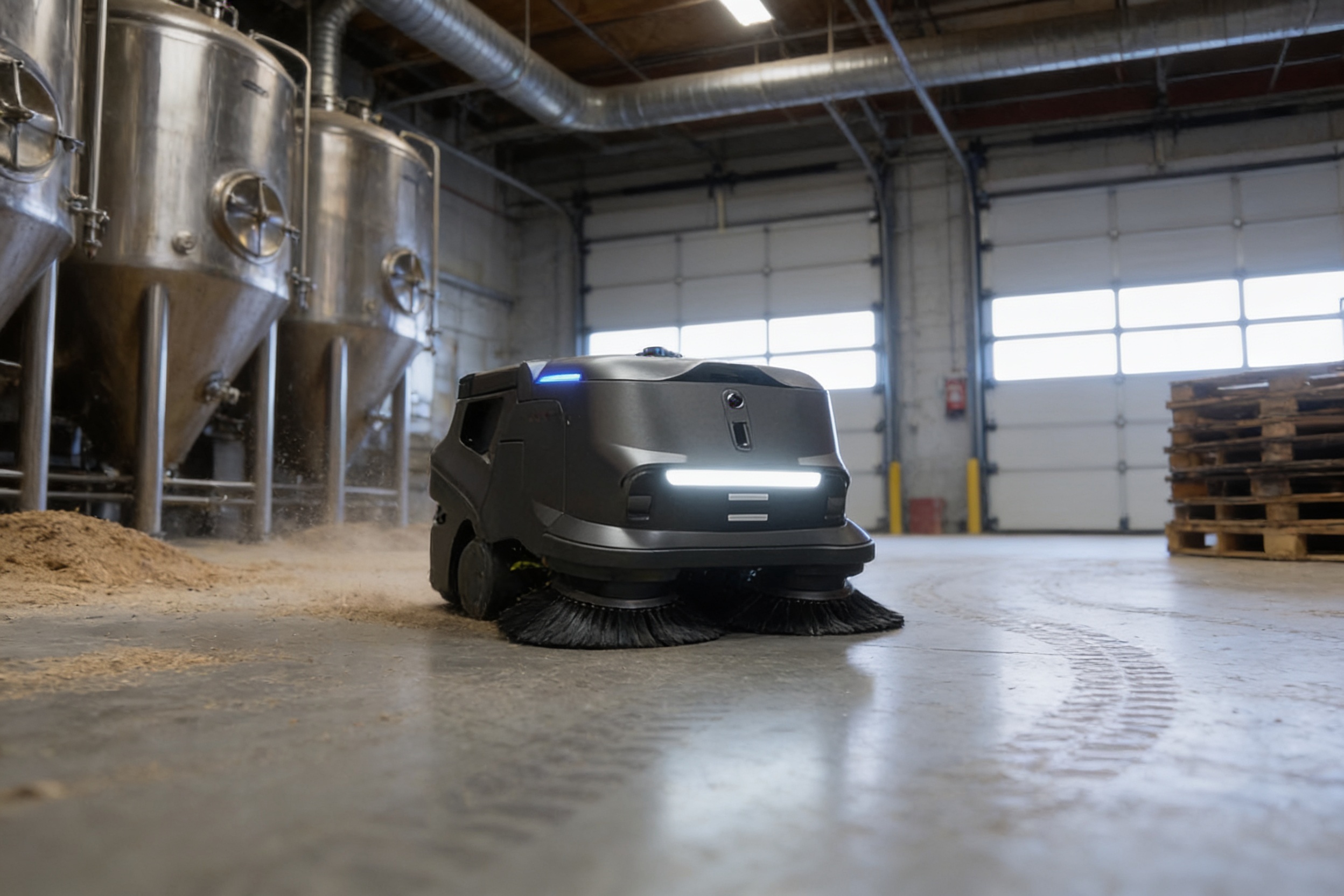
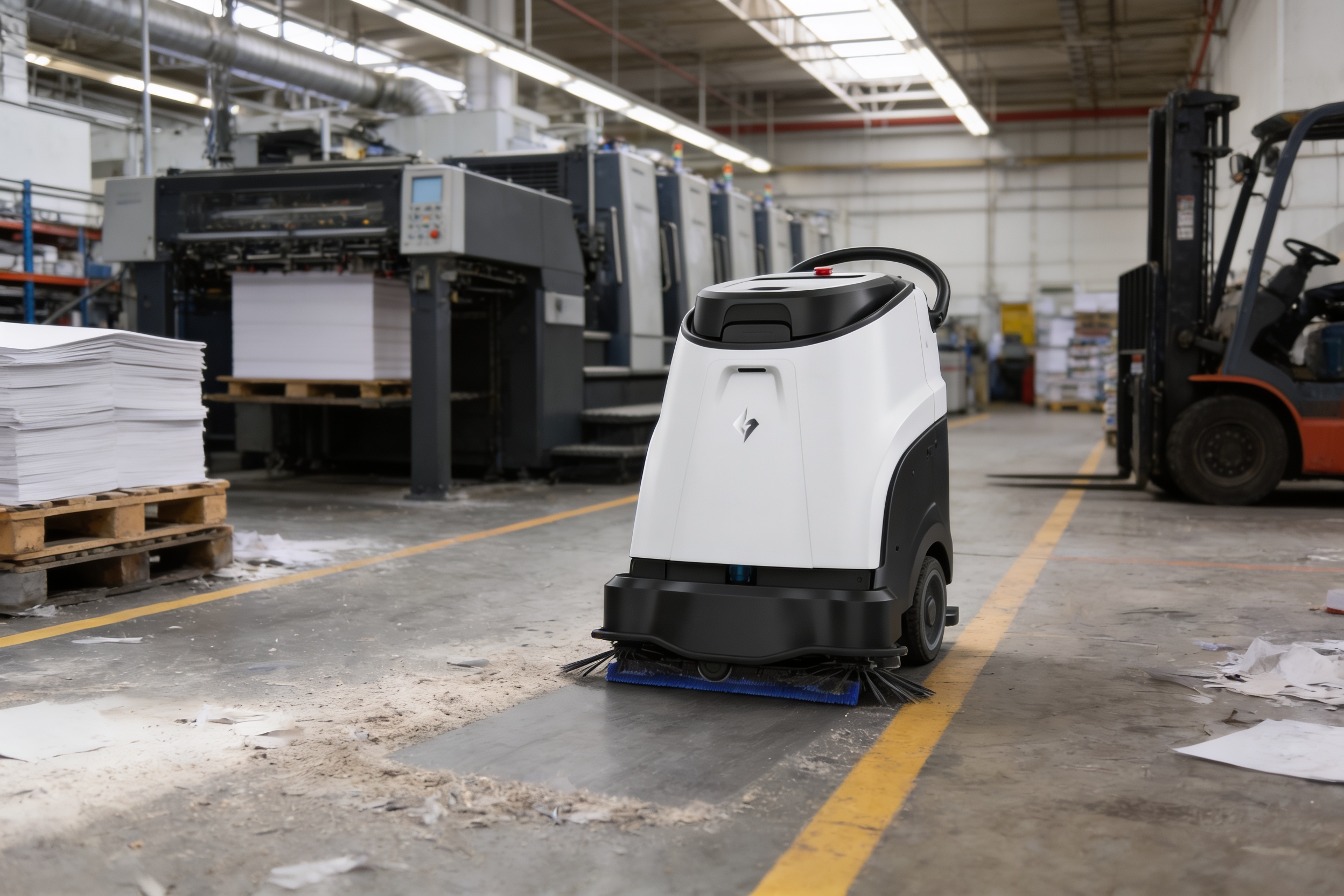
A floor cleaning robot can keep the sales floor, aisles and waiting area clean without pulling staff away from the prescription counter. The fit is practical. Floor work at a pharmacy tends to happen in short windows between customer peaks, and those windows rarely line up with a free team member. For the operator, the real question is when floor care gets done, and cleaning robots for pharmacies are designed to run in those gaps.
The robot follows a route the team sets. After a site assessment maps the store, it covers the front end aisles, the waiting area and the entrance on a schedule, then returns to its charging base. Nobody has to stop filling a prescription to push a scrubber through the lane near the register.
Below, we cover the problem at this kind of store, the main benefits, the areas the robot works in, how a day runs, how it works with your staff, what drives the savings, what it cannot do, and how to get started.
What makes floor care hard at pharmacies today?
Pharmacies run long hours, and the people who keep them open are often the same people who handle the counter. According to the U.S. Bureau of Labor Statistics, there were 471,200 pharmacy technician jobs in 2025, and the BLS projects 6% growth over 2025 to 2035, which it labels faster than average. The field is growing, which means many stores are still working to fill and keep these roles.
The same BLS handbook notes that pharmacy technicians may work nights or weekends, since pharmacies may be open at all hours. That schedule spreads coverage thin. A floor that needs attention in the morning may also need it after a heavy afternoon of pickups, and one technician may be the only person free to handle both.
The number of stores is shifting too. According to PCMA, citing NCPDP data, there were 23,046 independent retail pharmacies in 2026, up 67 stores (0.3%) from the prior year. The National Community Pharmacists Association counted 18,960 independent locations as of July 2025, down from 18,984 in June 2024. The two counts use different methods, so they do not match.
Staffing pressure shows up in job postings as well. Becker's Hospital Review, citing posting data, counted 43,880 technician postings in Q4 2025, up from 41,055 in Q4 2024. Postings are not vacancy or turnover rates, but they show that employers are still looking for help at the counter and on the floor.
What are the main benefits of cleaning robots for pharmacies?

The first benefit is counter time. When floor care runs on a schedule the team sets, technicians and pharmacists keep their attention on prescriptions, insurance questions and the customer at the window.
The second is consistency. Floor work that depends on who is free tends to slip during the busiest hours. A robot runs the same route each time, so the waiting area and main aisles still get attention on a crowded weekday.
The third is a better first impression. Entrances, front aisles and the waiting area are where customers notice dirt first. Keeping those zones clean supports the store's image without asking anyone to stop serving people.
The fourth is coverage across more of the day. Because the robot can run in quieter periods, and after close where the store allows it, the day team is not the only group keeping the floor in shape.
Which areas of a pharmacy does the robot cover?
The best candidates are open, reasonably level floor areas that are walked often and have few obstacles at set times. In a pharmacy, that usually means the zones below.
Routes avoid areas where staff are actively stocking shelves or working at a counter when a pass is scheduled. The site assessment marks which zones suit the robot and which need a different plan, such as a staff sweep.
How does the robot work day to day?
Day to day, the robot is a routine task that runs alongside the store's other work. The team sets routes and times when the store is set up, then checks the robot's status at the start and end of each shift.
A typical flow starts before the first customers arrive, when the robot runs a pass over the entrance and front aisles. Midday passes wait for lulls. When a person or cart enters its path, the robot pauses and resumes once the path clears, and the final pass runs after the rush before the unit returns to charge.
Staff watch for alerts but do not steer the unit. If it stops or meets a blocked spot, a status message shows the issue and a team member clears it. That keeps the people who run the store in charge of the store.
Does the robot work alongside existing staff?
Yes, and a pharmacy should plan it that way. The robot takes over the floor pass, not the people. The realistic model is a robot plus a smaller team, not an empty store. The team still opens the doors, runs the counter, reads the status log and clears blocked paths.
For staff, the change is small but real. Floor work moves from a task someone must stop for to a task that runs in the gaps. Technicians keep their focus on the pickup line, and the store keeps a regular floor schedule even on a short-staffed day. The aim is to protect counter time, not to cut the team.
Training matters. Staff learn to start a route, read a status message and move a cart out of the robot's path. We train the people who will run the unit as part of deployment, so the first week is supported.
What drives the savings, and what should you not expect?
Savings come from hours and labor. The hours that matter are staff minutes now spent on floor care during shifts, plus the time lost when a task slips and has to be caught up later. Those hours vary from store to store, so the most reliable figure is one you measure yourself across two or three typical weeks.
We do not promise a savings figure, and we do not offer a range for this kind of store, because we have not verified one that fits a pharmacy floor. Floor area, route length, store hours and time spent on floor work all move the result, and the site assessment captures those inputs.
The labor context still matters. With 471,200 pharmacy technician jobs and a projected 6% growth rate to 2035, according to the BLS, trained technicians are a resource many stores compete for. The Pharmacy Technician Certification Board's 2025 workforce survey, drawn from 17,112 responses across all 50 states, D.C., Guam and Puerto Rico, frames retention as the main opportunity for the field. Keeping existing staff focused on the counter is a retention argument as much as a cost argument.

What can the robot not do?
The limits are real, and they shape the plan. A floor cleaning robot works open, level space well. It is not the right tool for everything a pharmacy needs cleaned.
- It does not handle liquid spills, broken glass or sharp objects, so staff handle those first.
- It does not clean restrooms or any space that needs medical or sterile cleaning.
- It does not serve customers, take prescriptions or answer questions.
- It does not climb stairs, cross high thresholds or enter areas it has not been mapped for.
- It does not clear a blocked path on its own, so a team member has to do that.
How do you get started with a robot lease?
Start with a free site assessment. We review the layout, map the routes, note the store hours and the zones that matter, and recommend the right floor cleaning robot for the space. We are a US commercial robot integrator, so the unit is chosen for your store, not the other way around.
The robot is leased through financing, and the payment comes in the quote after the site assessment. Deployment and integration, staff training and nationwide service are part of the work, so you start with a working route and a named point of contact.
Many stores begin with one unit on the main sales floor, then add zones once the first routes run well. Ask for the quote in writing and compare the hours it covers with the hours you measured before you commit.
Frequently asked questions
Want a cleaning robot at your pharmacy?
Tell us about your site. We will recommend the robot, quote the lease, and keep it serviced.
Sources
- U.S. Bureau of Labor Statistics, Occupational Outlook Handbook: Pharmacy Technicians
- PCMA press release: Independent pharmacies increase in 2026
- National Community Pharmacists Association: 2025 Digest report
- Pharmacy Times: PTCB 2025 workforce survey
- Becker's Hospital Review: 5 numbers defining the pharmacy staffing crisis